 THE GAME ARCHIVE
A Procedurally Generated Sandbox: Environ and the Overlord
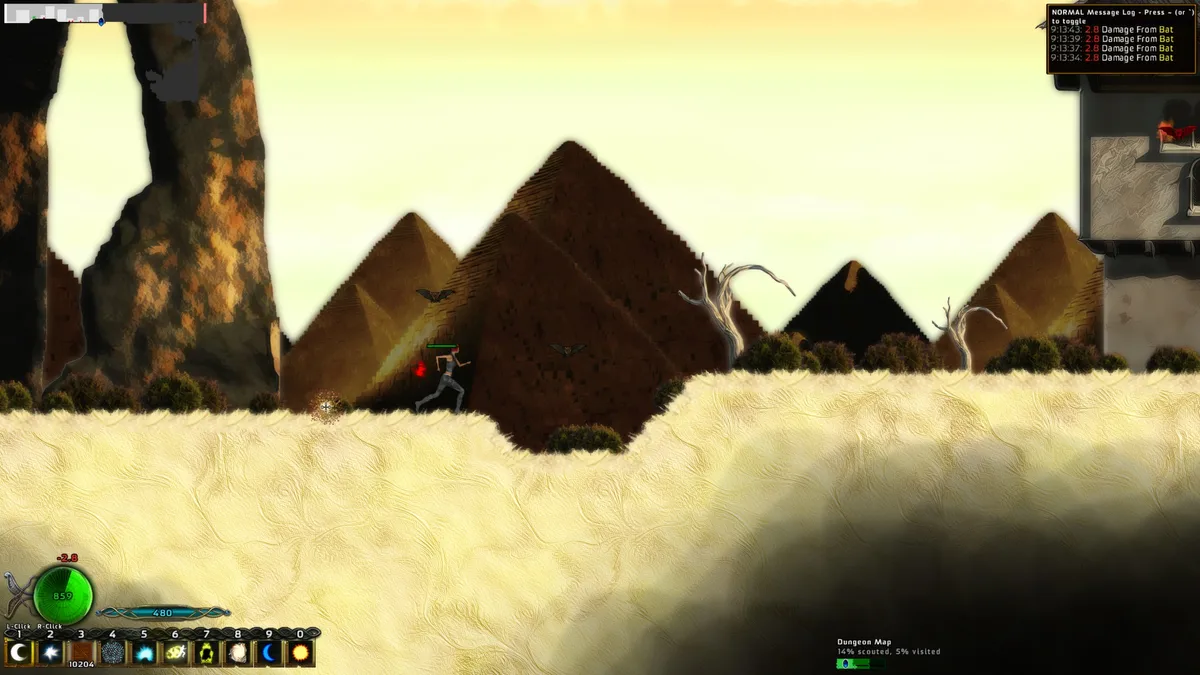
Environ is a 2D side-scrolling world that is procedurally generated as a sandbox rather than arranged along a linear path. The player can travel anywhere visible, including directly into the Overlord's keep at any moment, though the Overlord is described as vastly stronger than the starting character. Because the world is endless, saving one continent from its Overlord causes a larger and more complex continent to appear, continuing the structure of exploration and confrontation.
Preparation for the Overlord is left to the player, who can take missions to earn new spells or roam the wilds to uncover secret missions and stashes of magical crafting materials. The game also applies a logical progression in difficulty and offers tips and checklists to guide travel when needed. It further adapts to demonstrated proficiency: monsters and missions upgrade accordingly, with the example that defeating 100 bats leads to bats on fire.
Endless Continents and Adaptive Difficulty
Saving a continent from its Overlord does not end the sandbox; it replaces that continent with a larger and more complex one. Because Environ is endless, this cycle continues through ever-expanding terrain filled with dangerous creatures, powerful magic, high technology, and mysteries. The player is not forced along a linear route across these continents, since Environ is a procedurally generated sandbox open to anywhere visible on screen. That openness remains in place after each Overlord falls, as the next continent offers more ground to explore and greater complexity to confront.
The game adapts to how the player plays: as proficiency is demonstrated, monsters and missions upgrade accordingly. One concrete example is that defeating 100 bats leads to bats on fire. Progress also follows a logical progression in difficulty, paired with helpful tips and checklists that guide travel when the player needs them. Preparation to face the vastly stronger Overlord is the player's own choice, whether by completing a variety of missions to earn new spells or by roaming the wilds to uncover secret missions and stashes of magical crafting materials.
Permadeath and the Long Line of Adventurers
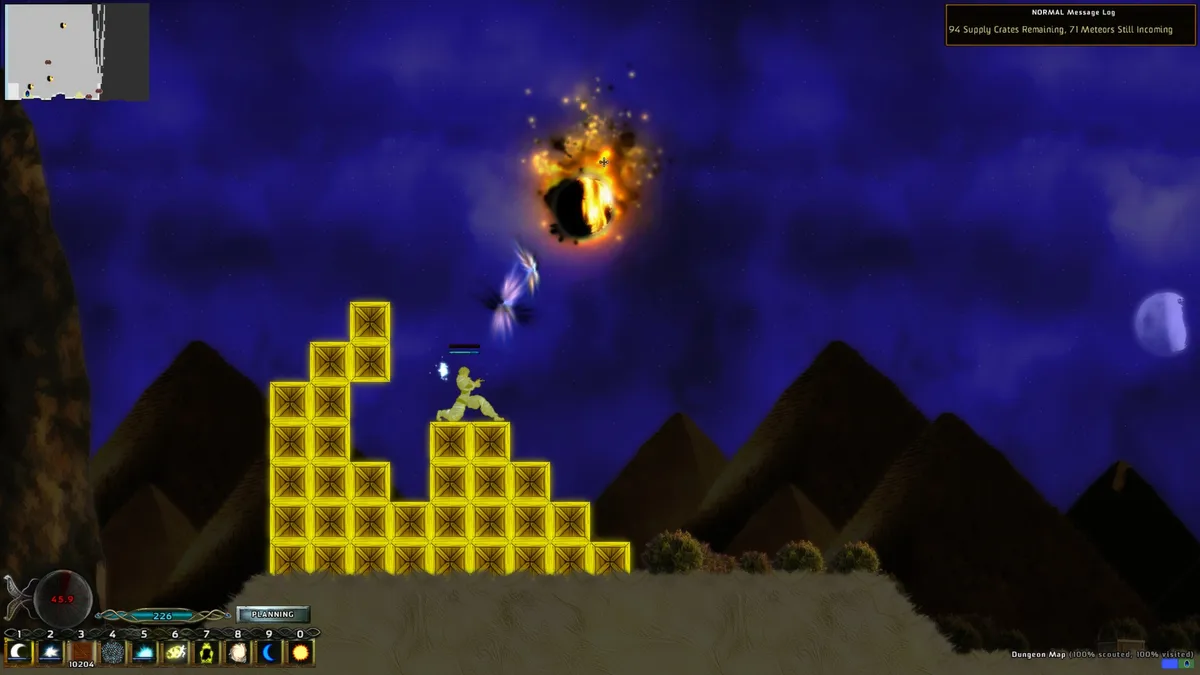
Death is not an exceptional failure state in this sandbox but the expected end of each character. The game frames the player as guiding a long line of brave adventurers, and any character who dies is permanently lost, with no reload or revival described. That rule gives every expedition weight, yet it does not erase accumulated work: inventory, enchants, and general progress in the game carry over to the adventurers who follow. The death of one character therefore closes that individual's story while the broader campaign continues through successors who inherit the stockpile and standing the fallen adventurer helped build.
Each new adventurer in that line can be shaped through extensive character customization. Builds are assembled by combining a multitude of spells, enchants, and equipment, so a successor need not mirror the character who died; the retained inventory and enchants feed directly into the next set of choices. This makes the permanent loss of a character a prompt to re-outfit rather than a reset, since the stores gathered earlier become the materials for a differently specialized build. The result is a loop in which each death ends one build and the accumulated gear and enchantments seed the next one.
Settlement Building, Rescued NPCs, and Dispatch Missions
Rescued people are not merely bystanders in this sandbox; the game lets the player bring them back to a settlement so they can be sent on dispatch missions, easing the burden on a fledgling civilization. Once those survivors are in place, the settlement side opens up: the player can construct buildings for them and work on improving both their skill and their mood. Those two tracked qualities, skill and mood, are the documented levers for developing residents, and they connect back to dispatch missions, since improved settlers are the ones available to send out on the player's behalf.
The citybuilding layer is deliberately kept separate from the other challenge dials: difficulty levels run from casual to hardcore, and platforming, combat, and citybuilding each carry their own independent setting. That means a player can tune settlement management without necessarily changing how harsh the jumping or fighting is. Settlement work also sits alongside the broader problem-solving ethos, in which challenges have more than one solution, each with its own pros and cons, so the player figures things out instead of following a fixed sequence of hoops. Rescuing people, housing them, raising their skill and mood, and dispatching them form one such problem with room for different approaches rather than a single prescribed path.
Missions, Secret Caches, and Multiple Solutions
Preparation against the vastly stronger Overlord is a decision the player makes rather than a scripted sequence. A player can complete a variety of missions to earn new spells, roam the wilds to uncover secret missions, or locate stashes of magical crafting materials. These options let a character build up offensive and crafting resources before reaching the keep. Traveling the open 2D side-scrolling world also exposes those hidden objectives, so exploration and mission-taking serve as parallel paths toward the same confrontation.
Challenges are structured around multiple solutions, each carrying its own pros and cons, rather than a fixed sequence of hoops. The same flexibility applies to the settlement layer: rescued NPCs can be housed, given buildings, and developed through their tracked skill and mood, then sent on dispatch missions. Because platforming, combat, and citybuilding each carry independent difficulty settings from casual to hardcore, a player can adjust how harsh settlement management feels without changing the challenge of jumping or fighting, and vice versa.
Co-op Travel and Independent Difficulty Levels
Travel through the ever-expanding world can be undertaken alone or with friends, so the campaign supports cooperative play as well as solo exploration. The characters themselves are customized through unique combinations of enchantments and spells that change how they move, jump, and fight, giving each traveler a distinct set of capabilities in the same dangerous terrain. Because the world keeps growing, the shared journey continues across new ground filled with powerful magic and high technology, and the player chooses how to play while the world adapts around them.
Difficulty is split into separate dials rather than one global setting: platforming, combat, and citybuilding each run independently from casual to hardcore. A player can therefore soften the jumping and fighting while leaving settlement management harsh, or reverse the arrangement. This separation sits alongside the game's emphasis on challenges that have more than one solution, each with its own pros and cons, so players figure things out instead of jumping through a set of hoops. Rescuing survivors, building for them, raising their skill and mood, and sending them on dispatch missions form one such problem with room for different approaches.
Sources & further reading.
- A Valley Without Wind — official game profileRetrieved Oct 26, 2026
First published .