 THE GAME ARCHIVE
A Fall Through a Floating City
AaAaAA!!! - A Reckless Disregard for Gravity is a 2009 Windows action-sports game from Dejobaan Games, LLC, built around a single, repeated act: a BASE jump through a floating city. The player does not run a course or drive a vehicle; the player falls, steers through the architecture, and performs stunts on the way down to delight fans. The floating city is built from billboards and buildings, and its defining obstacle is an intricate tangle of girders that the player must negotiate. The result is a game of airborne positioning, where the skyline is both the track and the scoreboard.
What makes the game distinctive is how tightly it ties movement to performance. The player dives off a skyscraper, relying on quick reflexes to negotiate the girders, while judges mark the score. Stunts are not selected from a menu; the game describes unique mechanics that allow the player to create their own stunts to score. Quick reflexes are important, but it is quick thinking that gets the win, which means the fall is not just a reaction test but a series of split-second decisions about where to go and what to do next. This profile explains the documented rules of that fall, from the scoring contacts to the protesters, the spray paint, and the two meditation modes.
The Core Loop: Fall, Thread the Girders, Land
Each jump follows the same basic sequence. The player dives off a skyscraper and falls through the floating city, using quick reflexes to negotiate the intricate tangle of girders. The judges mark the score during the descent, and the jump ends with a landing that must be made without ending up a loose sack of broken bones. The game ships with 80 levels that take the player through cities of floating billboards and buildings, and some levels fly the player inches away from the side of a mountain. That structure means the loop is short and repeatable: read the geometry, choose a line, commit to stunts, and recover in time to land.
The landing requirement adds a clear risk-reward layer. A player can chase contacts and reactions during the fall, but the jump is not complete until the landing is survived. Because the game documents that task explicitly, it is reasonable to treat every stunt as a commitment that must leave enough room to recover. The core loop therefore alternates between expressive scoring attempts and a final, unavoidable test of control.
Stunt Scoring: Strut Hugs, Building Kisses and Billboards
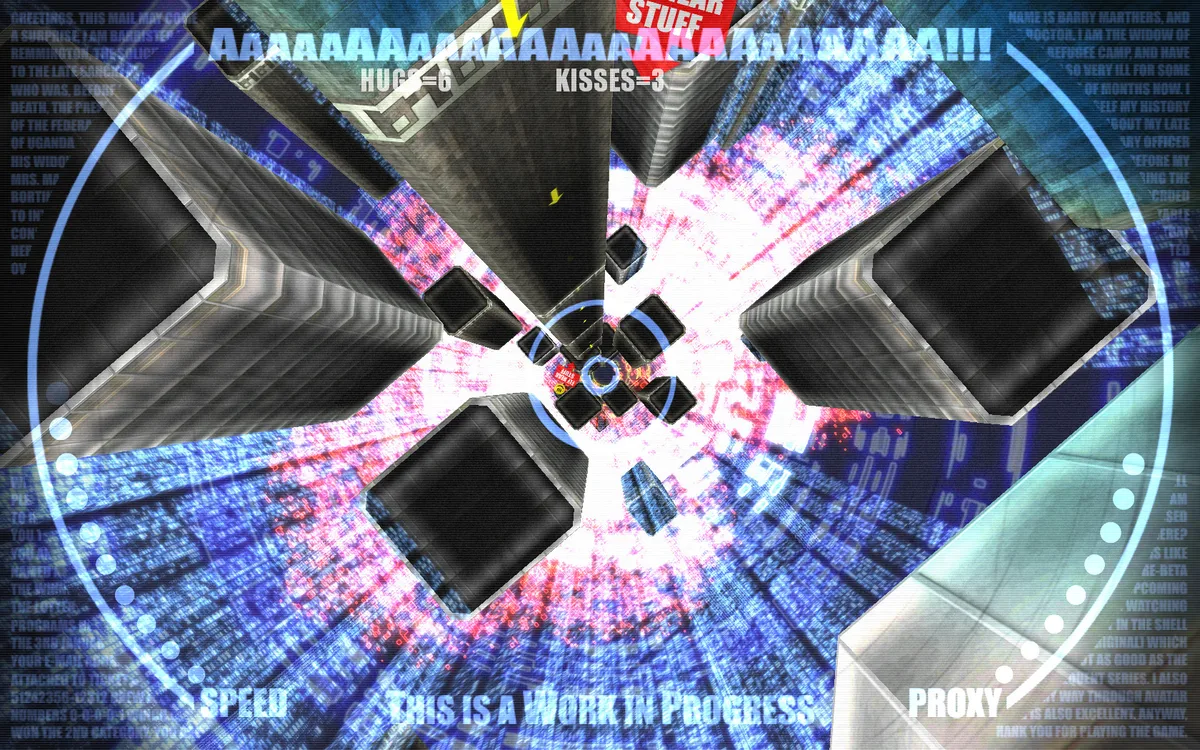
Scoring rewards specific contacts with the floating city's architecture. Hugging exposed struts as you fall is worth one hundred points, while planting a kiss on the side of a building earns one thousand. Twisting and turning to thread the needle between two billboards earns cheers from fans, and all eyes are on the jumper as the judges mark the score. These values create an obvious hierarchy: the building kiss is the bigger prize, but the strut hug is the more frequent opportunity in an environment defined by an intricate tangle of girders. The documented rules make the choice between safe contacts and riskier ones a real part of play.
Stunts are not limited to a fixed list. The game's unique mechanics allow the player to create their own stunts to score, which means the scoring system is designed to accommodate improvised performances rather than a checklist. The billboard thread is a documented example of that improvisation: twisting and turning between two billboards is a maneuver the player constructs from the fall, not a button prompt. Practically, this pushes the player to read the city as a set of scoring surfaces and gaps, and to decide in the moment whether a given line is worth the commitment.
Protesters, Rude Gestures and the Quick-Thinking Win
The documented scoring system extends beyond clean lines through the girders to encounters with the people below. One block away, the player can spot a crowd of protesters decrying the sport. That sight creates a split-second decision during the fall. The player breaks off course, stares the protesters straight in the eye, and flips them the finger. The crowd explodes into a burst of fury, but the judges absolutely love it, bumping the jumper up to first place. The same rules that tie ordinary stunts to delighting fans also reward offending the critics, so the aerial performance is judged on reaction and nerve, not just posture.
This episode sets quick thinking against reflexes as the route to a win. Threading between billboards with twists and turns earns cheers from fans, and quick reflexes are important for navigating the girders, but the game states plainly that quick thinking is what gets you the win. The protester stunt is the documented example: the player abandons the course for a split-second decision, and the resulting fury from the crowd combines with approval from the judges to produce a first-place bump. After the scoring, the final task remains the landing, which must be made without ending up a loose sack of broken bones.
Spray Paint Tagging and Extra Challenges
Beyond the aerial stunts, the game offers a distinct challenge: snag a can of spray paint and use it to tag government buildings. This tagging objective is documented as an extra challenge, giving the player a reason to interact with the floating city's surfaces in a way that differs from hugging struts or kissing walls. The spray paint must first be acquired, and the target is specifically government buildings, so the action is directed at particular structures rather than any surface at random. In a game otherwise built around passing through architecture at speed, the tagging challenge asks the player to treat the city as a place with surfaces to mark.
Meditation and Anti-Meditation Modes
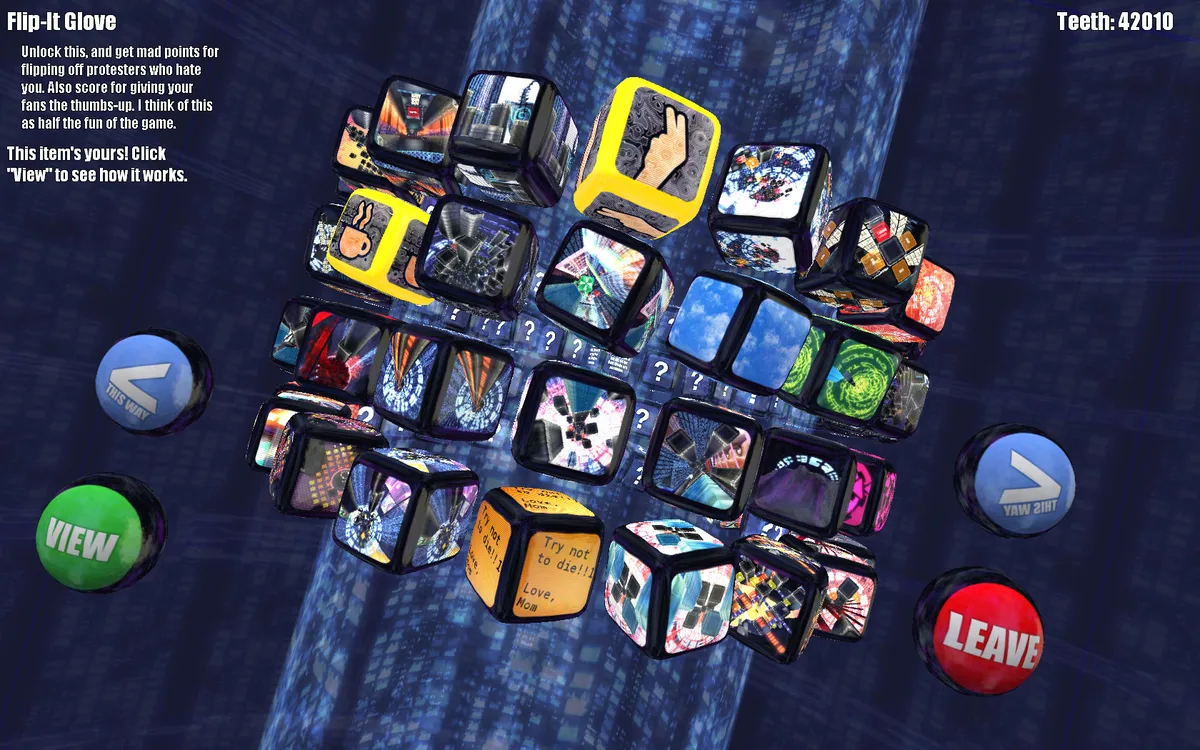
Two named modes bracket the game's tone. A special meditation mode helps you relax, while a free anti-meditation mode helps you stop relaxing. These are presented as distinct options: one calms, the other does the opposite by design. The game lists them alongside the 80 levels, the custom stunts, the fan-thumbs-up and protester gestures, and the spray-paint challenge, which places them in the same feature set as the core jumping. What each mode contains beyond that contrast is not detailed in the available material, so the practical difference for the player is the intended direction of the experience rather than a documented set of rules.
What the Floating City Looks Like
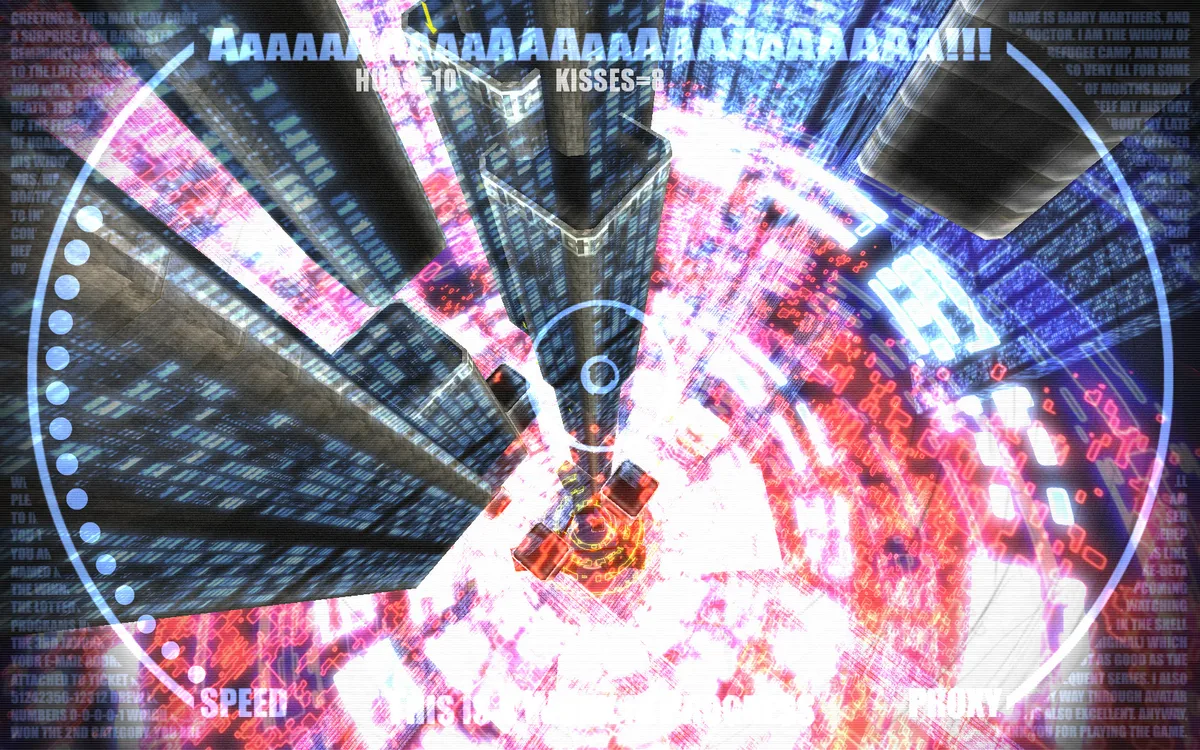
The game's visual identity is bound to its premise. The floating city is made up of billboards and buildings, with an intricate tangle of girders weaving through it. Levels take the player through cities of those floating billboards and buildings, and some flights bring the player inches away from the side of a mountain. Because the scoring is attached to the architecture, the look of the city is also the rule set: exposed struts are both scenery and one-hundred-point contacts, building sides are both background and thousand-point kisses, and the girders are both decoration and the obstacle course. This is a case where the environment description and the mechanics cannot be separated cleanly, which is why the floating city is the game's most important design element.
Across 80 Levels
The documented progression is level-based: 80 levels take the player through cities of floating billboards and buildings and past mountain faces. The available material does not specify a difficulty curve, unlock order, or scoring thresholds for advancing, so it is not possible to describe how the levels escalate in detail. What is documented is the variety of situations: falls through girder tangles, flights close to a mountain, protester encounters, and extra challenges such as tagging government buildings. The level count is the clearest measure of the game's scope, and each level is a fresh arrangement of the same core loop rather than a new mode of play.
Source-Backed Starting Guidance
- Treat the fall as a scoring run, not just a descent: the judges are marking the score during the dive, so contacts and maneuvers are the point. Use quick reflexes to negotiate the girder tangle, but remember that the game states quick thinking gets the win. Look for exposed struts and building sides as the documented scoring surfaces, with strut hugs worth one hundred points and building kisses worth one thousand. Watch for split-second opportunities such as the protester crowd, because breaking off course for a rude gesture can bump the score to first place. Leave room to make the landing without ending up a loose sack of broken bones.
Original Game and Current Access
The game profiled here is the 2009 Windows release from Dejobaan Games, LLC. The source material also references a separate version, Aaaaa! for the Awesome, described as a way to BASE jump on Mac or Linux, but this profile covers the original Windows title and its documented feature set: 80 levels, custom stunt creation, protester gestures, spray-paint tagging, and the two meditation modes. Players looking for the game should use official storefronts and publisher channels rather than unauthorized downloads.
Fact table — Title: AaAaAA!!! - A Reckless Disregard for Gravity | Release year: 2009 | Platform: Windows | Developer and publisher: Dejobaan Games, LLC | Genres: Action, Indie, Sports | Levels: 80
Sources & further reading.
- AaAaAA!!! - A Reckless Disregard for Gravity — official game profile Retrieved Oct 17, 2026
First published .