 THE GAME ARCHIVE
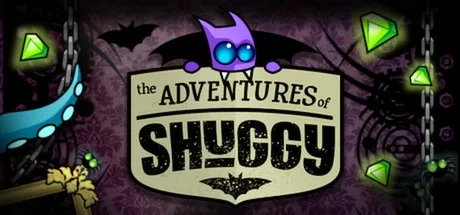
Adventures of Shuggy is built on a simple premise that produces a very large amount of work: Shuggy has inherited a castle full of goblins, ghouls, zombies and robots, and the player is asked to clear out over 100 rooms to make the new home liveable again. That framing matters, because it tells you the game is a room-by-room sweep rather than one continuous stage. Each room is a self-contained problem, and the official material states plainly that every room in the castle is different, letting Shuggy fly, float, swing, spin, change size, time travel and more as he explores the Dungeon, Boiler Room, Clocktower, Gallery and Graveyard.
What makes the game distinctive is how many different rules a room can impose. The documented feature list does not describe a single control scheme used identically throughout; it names separate mechanics — time travel, rotation, seeing double, teleportation, rope swinging — and the store description says the five named areas are explored with rooms that each do something different. The player's job in any given room is therefore to read which ability that space is built around and use it, rather than to grind through identical corridors with the same trick.
Co-operating With Your Past Echoes
The most unusual mechanic in the documented set is time travel, described as getting caught in a time loop and co-operating with your past echoes. That phrasing is the whole rule: the player's earlier pass through a room persists as an echo, and the current Shuggy works alongside it. For a player, that turns a room into a coordination problem in which two versions of the same character act together, and the puzzle is solved by arranging what the past self does so that the present self can use it.
This is distinct from another documented trick, 'seeing double', which uses multiple Shuggys under the influence of different gravities. The two should not be conflated. A time-loop room works through the loop and the past echo; a seeing-double room works through several bodies pulled by different gravities. The feature list keeps them as separate entries, and the room-variation premise is what allows both to coexist across the castle without one replacing the other.
Rotation Rooms and the Gem Target
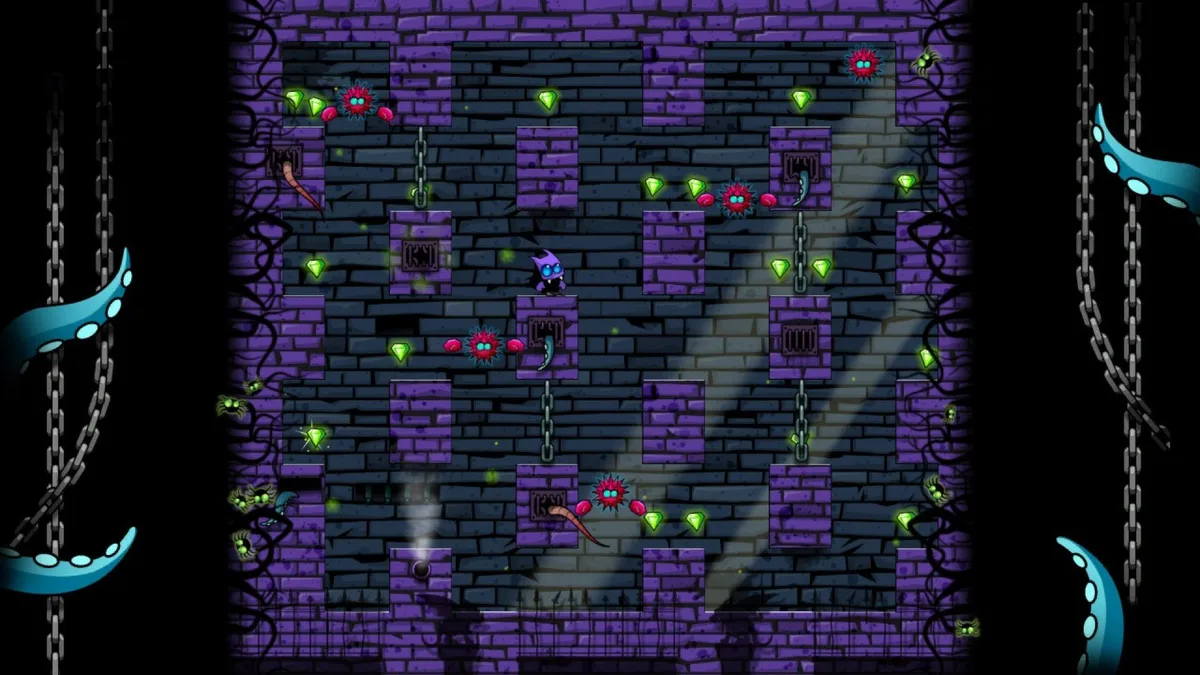
Rotation is described as spinning whole levels or interlocking puzzle sections to grab all the gems. That makes gem collection the documented goal of these rooms, and the spinning the means of reaching it. Because the description covers both whole levels and interlocking puzzle sections, the player can expect rooms where turning the environment reorients pieces relative to one another, not merely rooms where the camera swings. The clear distinction is that this mechanic acts on the level itself, while seeing double acts on Shuggy by multiplying him under different gravities.
Teleporters and the Magic Rope
Teleportation is framed as a problem-solving tool: Shuggy uses his teleporter to solve tricky conundrums. Rope swinging is framed as movement to victory: grabbing the magic rope and swinging your way to victory. The two are listed as separate abilities, and the level-pack material shows they can be combined, since the Teleporting Troubles pack mixes the teleporter with rope swinging among other main-game mechanics. A room in that pack can therefore require more than one of these tools rather than rewarding one simple input.
The Non-Linear Map and Boss Encounters
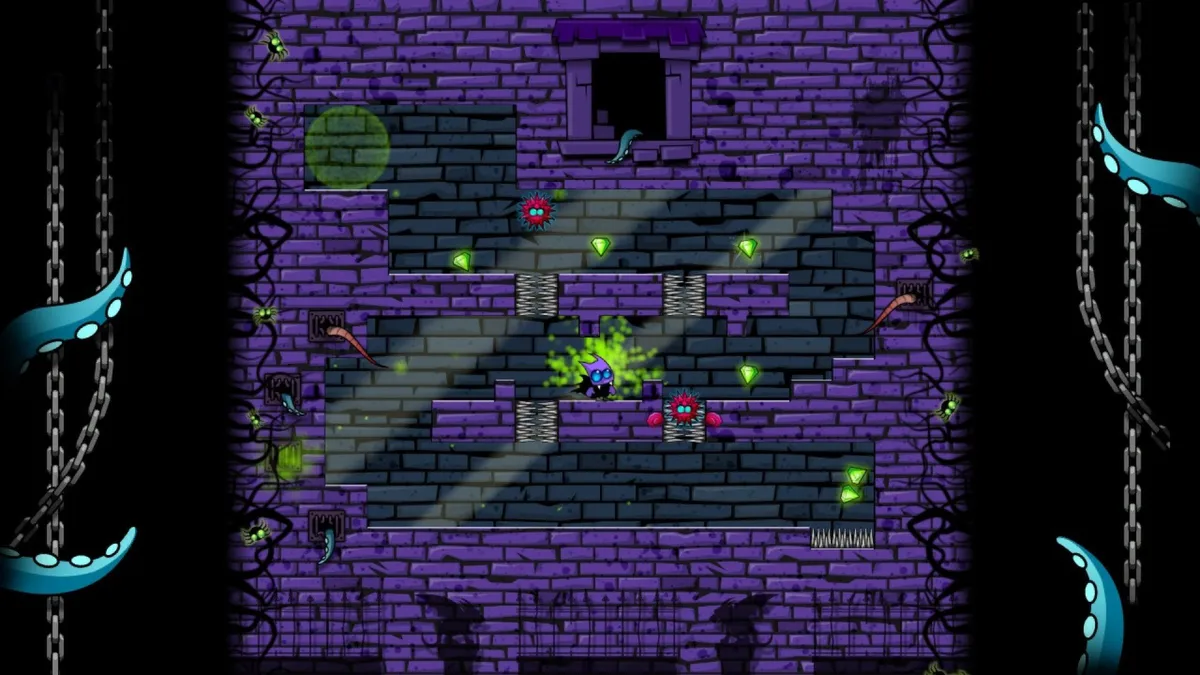
Progression is governed by a non-linear map screen, and the documented reason for it is practical: multiple routes through the castle ensure you can find another route if you get stuck. For the player, that is a genuine decision, because the varied room types mean a route that suits one set of abilities may not suit another. The same map carries boss encounters, where the instruction is to use wit and cunning to defeat the dastardly bosses in each area of the castle. Since bosses are documented as being in each area, and the areas are the Dungeon, Boiler Room, Clocktower, Gallery and Graveyard, those five stretches are where boss encounters are located.
Co-op and the Free Teleporting Troubles Pack
Beyond the main castle, offline co-op mode offers 36 twisted two-player levels, and the documented design intent is that their puzzles can only be completed through cunning and teamwork. That word 'only' is worth noting: these are not the main rooms with a second body added, but a dedicated set of 36 levels built around joint action. The main campaign's over-100-room sweep and the co-op set are therefore separate offerings, each with its own content count.
Scattered through the castle and the add-on are the movement and puzzle options. The rope and the teleporter are separate tools, the floaty jump is listed by name as a main-game mechanic, and rotation, seeing double and the time loop each appear as named features. Shuggy's documented abilities also include flying, floating, swinging, spinning and changing size, so the playable vocabulary is broad. Each of those helps address the 100+ puzzles; each is the one you need when the puzzle calls for it, per the room-variation premise.
The Teleporting Troubles Add-On
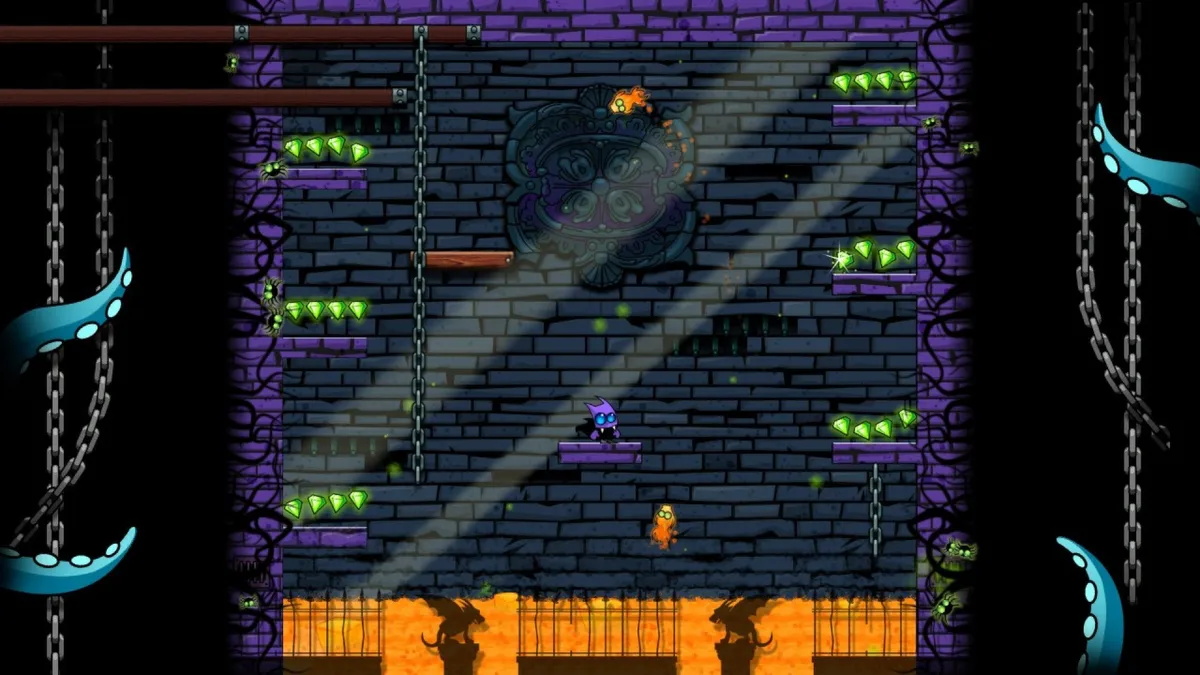
'Shuggy's Teleporting Troubles' is a level pack of 40 single-player levels that is included as part of the main game, making it free for everyone who already owns it. Its documented design throws double teleporters into the mix and combines the teleporter with main-game mechanics: level rotation, zombie Shuggy, the floaty jump, rope swinging and multi-Shuggy. The zombie Shuggy mention is the one named variation tied specifically to this pack in the available material, and 'double teleporters' signals that the pack increases teleport complexity rather than simply repeating the base-game tool.
Starting Guidance From the Documented Rules
Several pieces of advice follow directly from the documented rules. First, treat each room as a fresh question rather than assuming the last ability applies, because every room is different. Second, use the map: multiple routes exist specifically so that a stuck player can find another. Third, when a room is not yielding, check whether it wants a loop-and-echo solution, a rotation and gem sweep, a teleporter fix, or a rope swing, since these are named as separate mechanics rather than interchangeable ones. Fourth, in co-op, expect teamwork to be mandatory, because the 36 two-player levels are described as solvable only through cunning and teamwork.
Scroll sideways to see the full table →
| Fact | Documented value |
|---|---|
| Developer / publisher | Smudged Cat Games Ltd |
| Release year | 2012 |
| Platforms | Windows, macOS, Linux |
| Genre | Indie |
| Main castle rooms | Over 100 to clear |
| Areas | Dungeon, Boiler Room, Clocktower, Gallery, Graveyard |
| Offline co-op | 36 two-player levels |
| Teleporting Troubles pack | 40 single-player levels, free with main game |
Sources & further reading.
- Adventures of Shuggy — official game profileRetrieved Oct 27, 2026
First published .