 THE GAME ARCHIVE

Mouse-Click Army Command, Sideways Scrolling and Wheel Zoom
Alien Hallway puts an entire army under mouse control in its single-player campaign. Clicking is the common input for attacking, buying items and upgrading, bringing combat commands and purchasing actions into the same mouse-led setup. The battlefield is three-dimensional, but the documented command scheme centres on clicks rather than a list of keyboard commands. For this section, the useful distinction is between issuing those commands and moving the view: clicking handles actions, while separate mouse movements let you look across the battlefield.
To explore the battlefield, move the mouse sideways; to change the zoom, scroll its wheel. These are distinct navigation functions: sideways movement changes which part of the battlefield you are viewing, whereas the wheel changes the viewing scale. Alongside click-based army commands, they give the mouse three documented jobs—issuing actions, scrolling across the field and adjusting zoom. The concrete control pattern is therefore to use lateral movement for battlefield navigation and the wheel for zoom, with clicks reserved for actions such as attacking or purchasing.
Unknown Planets and Streams of Green Aliens, from Larvae to Adults
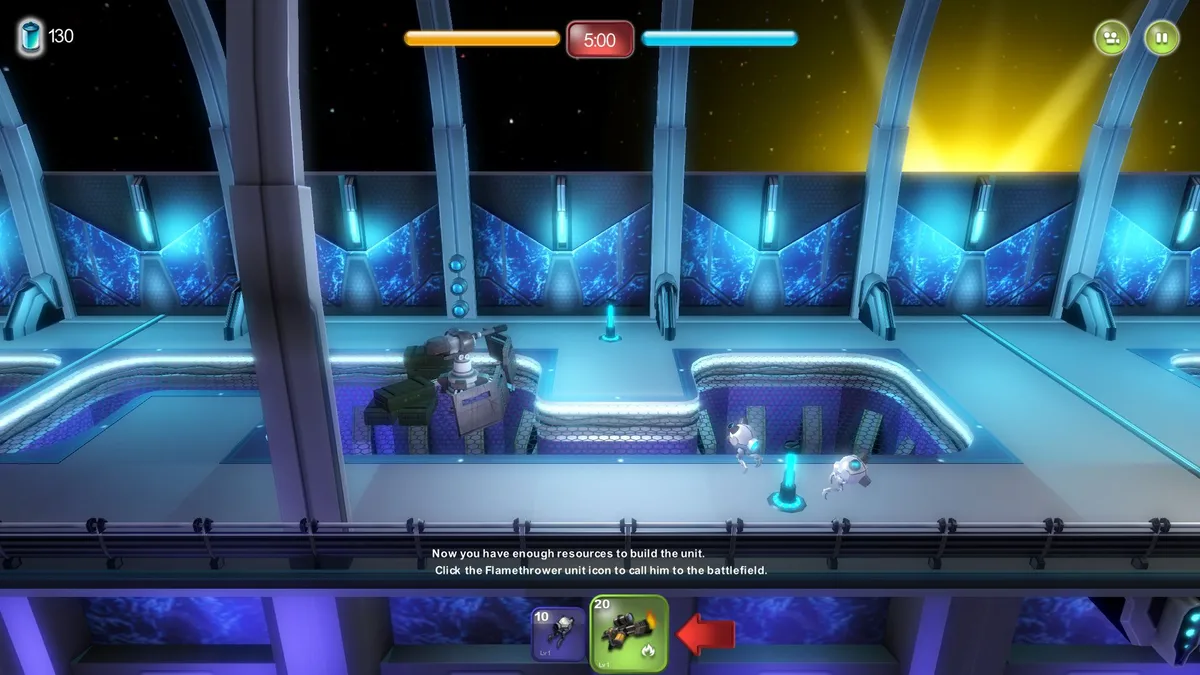
Alien Hallway places its single-player campaign on unknown planets, where humans and aliens fight amid an atmosphere described as suspenseful and tense. These unfamiliar worlds provide the setting for a special military mission whose opposition is a never-ending stream of green creatures. The emphasis is on sustained confrontation: the official description frames that stream as a test of the player’s stamina, connecting the planetary setting with the pressure of an ongoing alien presence. Rather than presenting the premise as one isolated encounter, it describes endless fighting between the two sides. That establishes the campaign’s central backdrop without identifying particular planets or giving them individual histories: unknown territory, human-versus-alien conflict and a continuing flow of enemies are the supported ingredients.
The alien population has a familiar visual starting point: classic green-headed creatures. Its depiction nevertheless extends beyond fully grown invaders, encompassing life stages from larvae to adults. This gives the opposing race a broader visible identity while keeping it within the campaign’s green-alien premise. The distinction here is about which forms are represented, not a documented division into combat roles. The supplied description establishes that immature and adult forms appear, but does not explain whether they behave differently or whether individual creatures develop during play. Read at that level, the detail adds specificity to the opposition without requiring an invented life-cycle mechanic: the stream of green creatures belongs to an alien race portrayed across multiple stages of life.
Weapons, Grenades and Airstrikes: Saving Soldiers and Earning Gold
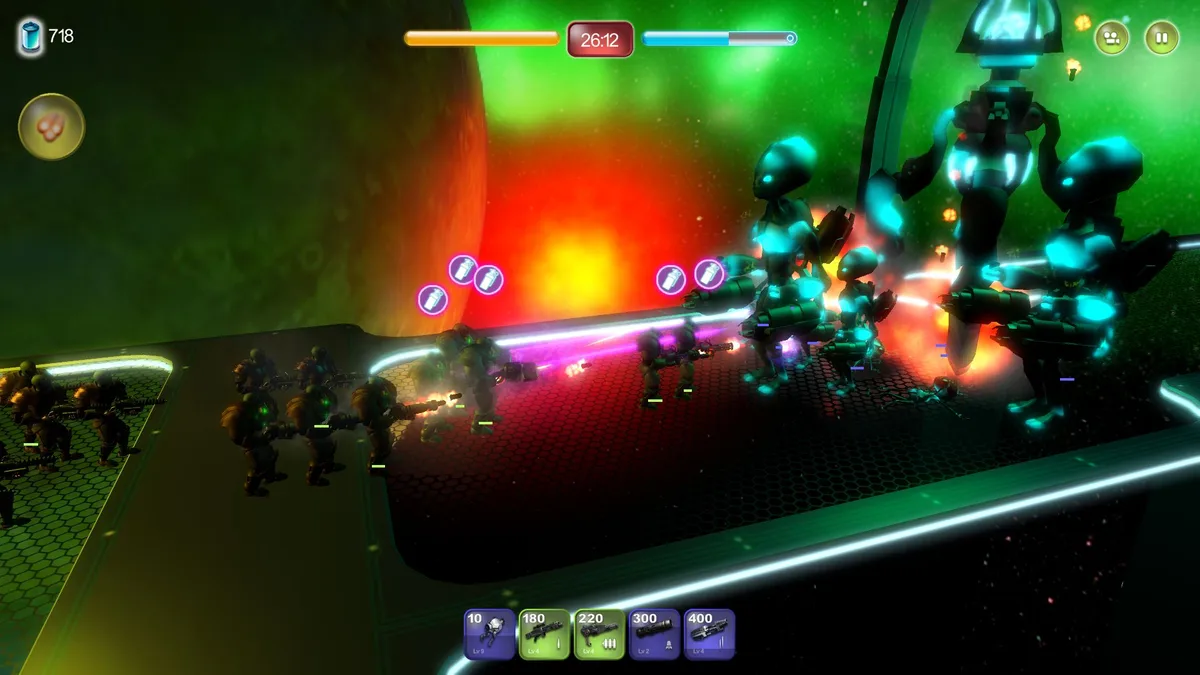
Alien Hallway’s combat tools include high-powered weapons, several types of throwable grenades and an airstrike skill. Across its three-dimensional battlefields, you can destroy enemies with weapons, throw grenades or use an airstrike, giving the army support beyond weapon fire alone. Grenades are presented as a varied category of equipment, while the airstrike is a skill that can also be improved through upgrades.
Combat decisions also involve saving soldiers and earning gold bonuses, so destroying enemies is not the only concern during a battle. Keeping soldiers alive sits alongside collecting those bonuses as a stated priority. Airstrike development provides a connection between battlefield support and the shop: upgrades can increase airstrike skills. That makes the airstrike both an action available in combat and an ability covered by the game’s upgrade system.
The Upgrade Shop: Base and Units, Slots, Turrets and Energy Capacity
Alien Hallway’s shop covers upgrades for both the base and its units. One available improvement opens blocked slots; another upgrades turrets. These are separate parts of development: unlocking a slot changes its availability, while turret upgrades improve an existing element of the army’s equipment. The shop therefore offers more than unit improvements alone, with base development and slot access included in the same upgrade system.
Other shop improvements address capacity and timing: you can expand energy cell capacity and reduce cooldowns. These upgrades change different limits, increasing how much the energy cells can hold or shortening cooldown periods rather than opening slots or upgrading turrets. Gold bonuses are also part of the shop’s upgrade options. Together, these give base and unit development several distinct targets: available slots, turrets, energy capacity, cooldown timing and bonuses.
Sources & further reading.
- Alien Hallway — official game profileRetrieved Nov 8, 2026
First published .