 THE GAME ARCHIVE
Binary Domain is a 2012 action game for Windows, developed by Devil's Details and published by SEGA. Its official store description frames it as a squad-based shooter set in a futuristic Tokyo, in a world where a robotic community has begun to infiltrate society and slowly take over, leaving humans redundant. The premise places the player in command of a squad sent to bring that robotic community under control.
That framing matters because Binary Domain is not presented as a lone-wolf shooter. The store description emphasizes squad command, tactical thinking, real-time moral decisions and building trust with teammates as the route to safety and success. The systems it names — the Consequence System, procedural damage, weapon modification and skill selection — are the article's real subject, because they describe how the game expects you to play rather than what it is called.
The premise: a city split in two
The game is set in 2080 in a futuristic Tokyo. The story begins when Dan Marshall and his squad are sent to bring the robotic community under control as robots begin to infiltrate society and slowly take over undetected. The official description casts the squad's mission as one of regaining control from an emerging robotic threat.
The setting is not a single uniform city. The store description highlights a dual-layered Tokyo: a run-down, derelict lower city and a clean, affluent upper city. That vertical division is one of the game's stated visual and design identities, and it gives the squad's advance a social contrast — the same metropolis experienced as decay below and prosperity above.
The robotic threat is described as highly intelligent. Encounters with these enemies are presented as requiring tactical thinking, so the premise and the combat design are connected: the enemy's intelligence is the reason the game asks you to think about how you fight rather than simply how much you shoot.
The core loop: move, analyse, decide, adapt
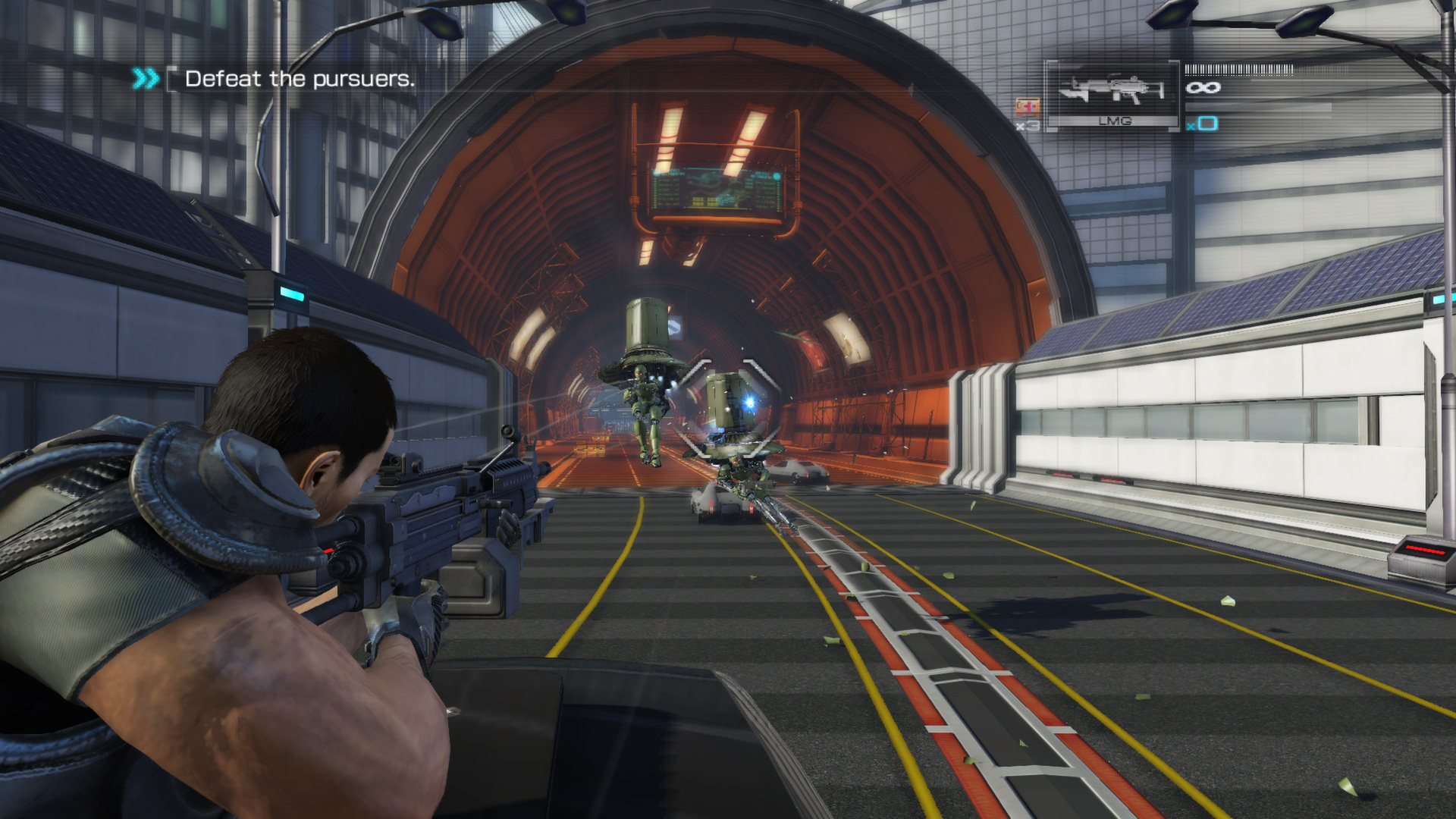
The documented core loop combines three pressures. First, combat against intelligent robotic enemies rewards tactical thinking. Second, decisions made under the pressure of battle feed into the Consequence System, where — in the description's own terms — every action, every choice and every word affects everything. Third, the relationship with your squad is part of the loop, because building trust with teammates is presented as necessary to guide the squad to safety and success.
Moral decisions are explicitly part of this system and are described as real-time, meaning they occur while the fighting is ongoing rather than in a detached menu pause. The practical implication of the documented rules is that the player is asked to weigh choices without stepping out of the pressure of battle, and that those choices carry forward through the Consequence System.
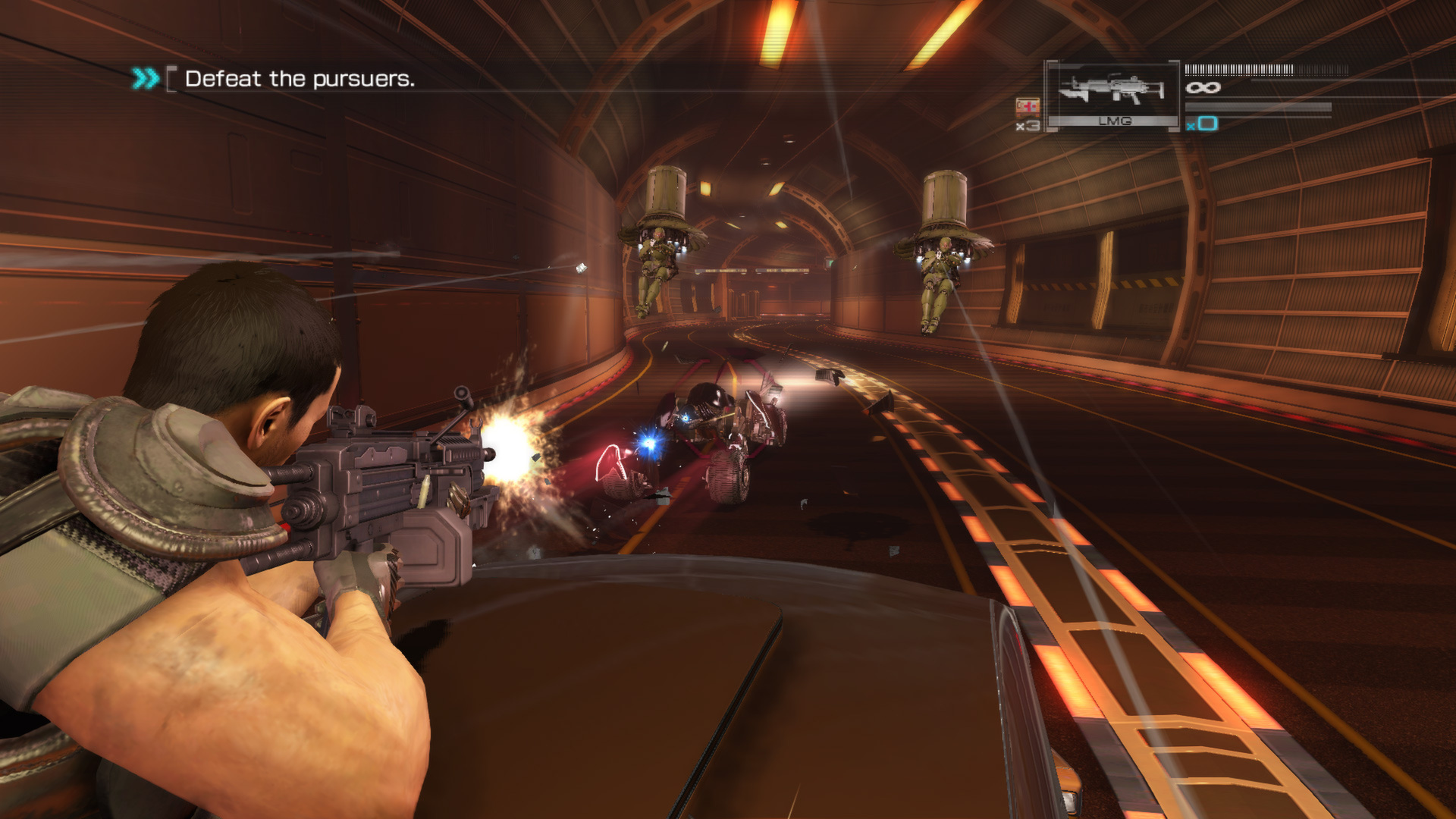
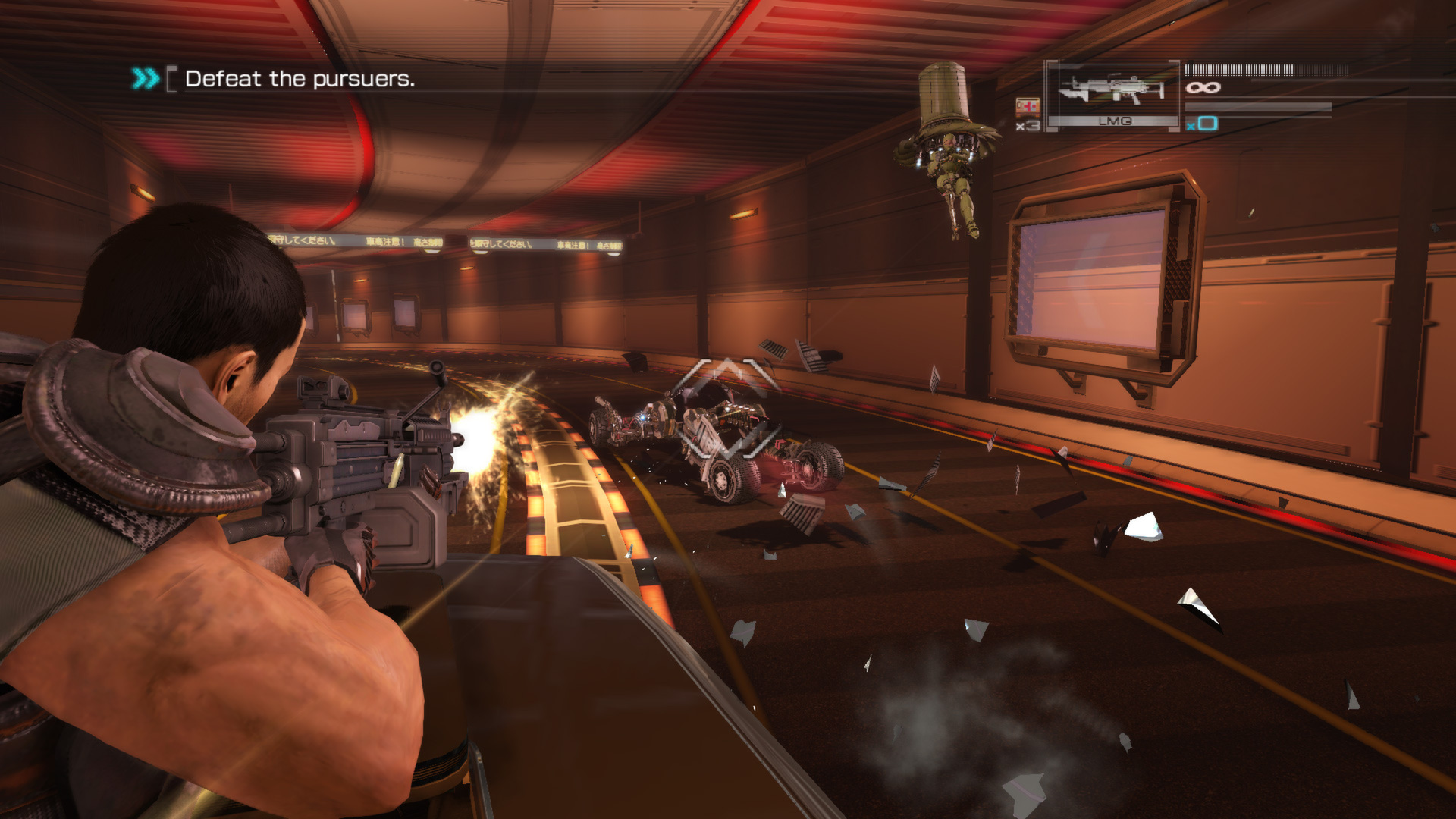
Procedural damage closes the loop on the enemy side. Robots are described as fully destructible and highly resilient, adapting to the damage they sustain. The documented design intent is that this encourages the player to analyse each enemy, find its weakness and dispose of it in the most efficient way. In other words, an enemy is not a fixed health bar with one answer; the described system rewards reading the target.
Arsenal and skills: building the squad's answer
Binary Domain includes a full armoury of unique weapons alongside weapon modification, and separately offers skill selection. The store description groups these together under weapon modification and skill selection, with the instruction to put emphasis on the skills that will benefit you. That wording implies a build choice layered on top of the shooting: you are not only picking what to carry but which capabilities to invest in.
Because procedural damage rewards finding weaknesses, there is a coherent relationship between the named systems: weapon modification and skill selection are the player-side levers, while procedural damage is the enemy-side response. The description frames the goal of the combat layer as disposing of enemies in the most efficient way, which makes adaptation to a specific target more valuable than habitually repeating one approach.
Modes and progression: what the source confirms
The source-supported modes are straightforward. Binary Domain is described as a squad-based shooter, so the campaign structure is built around leading a squad rather than operating alone. Progression is expressed through team trust, which the description ties to keeping the squad safe and successful, and separately through skill selection.
Beyond that, the supplied evidence does not document separate cooperative, survival or competitive modes, nor does it detail how leveling, skill trees, saving, achievements or online features work. Those gaps are noted later rather than guessed at here. Readers looking for a full mode breakdown should treat the squad campaign and the named systems as what the official profile actually establishes.
How to approach the documented systems
The description does not provide a walkthrough, a control scheme or a level-by-level route, so any starting advice has to stay at the level of the documented systems. Taken at face value, the profile suggests three habits: treat fights tactically because the enemies are described as intelligent; analyse individual robots rather than treating them as interchangeable; and pay attention to squad-facing choices, because the Consequence System is said to register actions, choices and words alike.
On the player-side systems, the profile explicitly directs you to emphasize the skills that will benefit you, and it presents weapon modification as a supported layer alongside a full armoury of unique weapons. The safe reading is that both are intended as deliberate choices rather than background noise; the source does not specify which skills or modifications exist, so this article does not list any.
Why the design still reads as distinctive
Most of what makes Binary Domain identifiable in this source is the way its systems are meant to talk to each other. A squad-based shooter with a consequence system is a design that makes the people around you part of the combat problem. Adding procedural damage to resilient robots adds a second layer: the enemy is not static, so the most efficient kill is discovered rather than memorized. Together they point toward combat where reading both the target and the team is the skill being tested.
The dual-layered Tokyo supports that reading visually. A derelict lower city and an affluent upper city give the game a built-in contrast between decline and privilege, which is a more specific identity than a generic futuristic skyline. The description treats this as a key feature in its own right, not merely a backdrop.
Access and edition scope
The supplied evidence covers a Windows entry for Binary Domain, published by SEGA and developed by Devil's Details, and does not describe other platforms, re-releases, remasters or bundled additions. Nothing in the source establishes original release history beyond the listed year, so this feature avoids claims about earlier versions or later package contents. Treat the facts here as belonging to this official store listing rather than to every edition of the game.
Binary Domain is documented here as a squad shooter whose identity rests on consequence, adaptive machines and a split city. That is a narrower picture than a full systems manual, but it is a coherent one: the game's pitch is that how you fight, what you choose and who you keep with you matter under pressure.
Scroll sideways to see the full table →
| Field | Value |
|---|---|
| Game | Binary Domain |
| Release year (this listing) | 2012 |
| Platform (this listing) | Windows |
| Developer | Devil's Details |
| Publisher | SEGA |
| Genre | Action |
| Setting | Futuristic Tokyo, 2080 |
| Named systems | Consequence System, procedural damage, weapon modification, skill selection |
Sources & further reading.
- Binary Domain — official game profile Retrieved Oct 11, 2026
First published .