 THE GAME ARCHIVE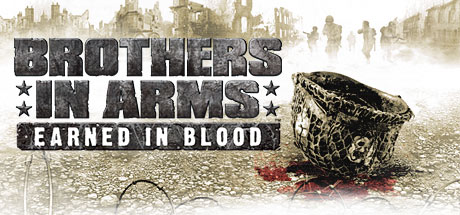
Brothers in Arms: Earned in Blood is a squad-based military action game developed by Gearbox Software and published by Ubisoft. It belongs to the Brothers in Arms franchise, and this Steam entry lists Windows as its platform with a release year of 2008. The game continues the series' focus on leading a small group of soldiers through the Normandy campaign, blending third-person shooting with tactical squad control.
Premise: Beyond Hill 30 with Sergeant Hartsock
The single-player narrative moves the series beyond the events of Hill 30. Players take the role of Sergeant Joe Hartsock and lead a squad past Carentan, pushing toward the last enemy strongholds in Normandy. The framing is deliberately military and historical: the campaign is presented as an extension of the airborne infantry experience, with the squad's progress tied to named locations and objectives rather than an anonymous battlefield.
The store description emphasizes an unprecedented combination of authenticity, a compelling story, and squad-based action. That triad is the design statement behind the game: the shooting is meant to feel grounded in a historical account, while the story gives context to each engagement. The result is a campaign that asks the player to think about the squad as a tool, not just a collection of friendly units.
Core Gameplay Loop: Command, Suppress, Advance
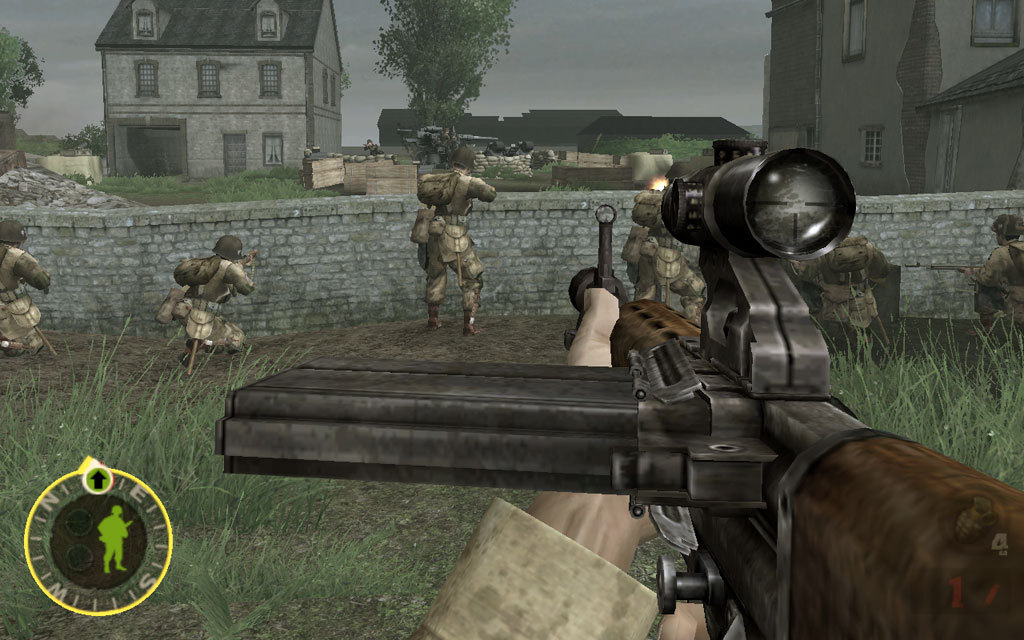
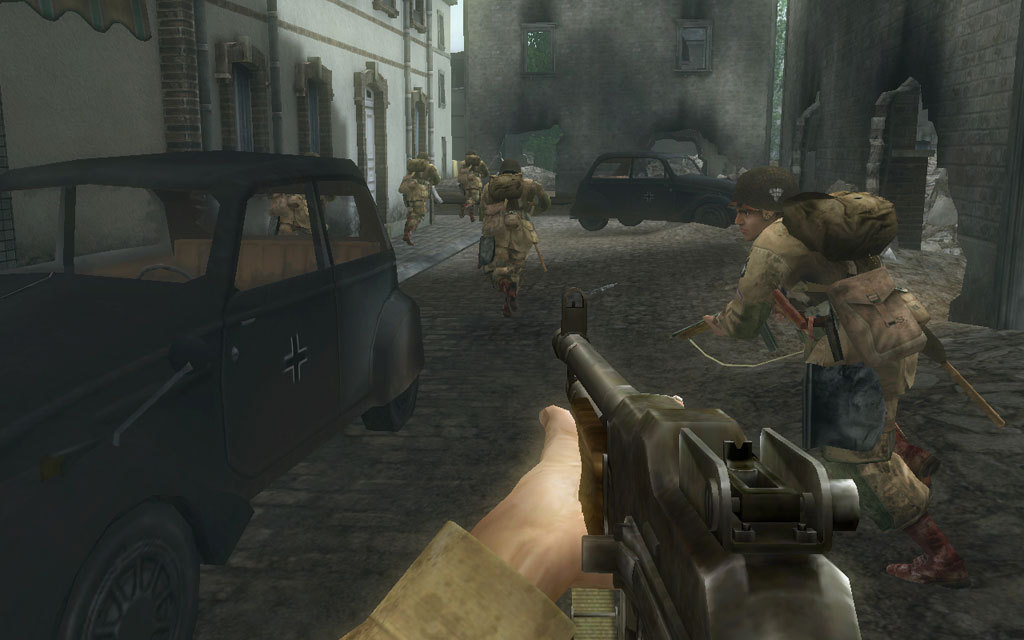
At its core, Earned in Blood is a squad-based action game. The player directs soldiers under their command while participating in the fighting directly. The documented mechanics describe close-quarter urban environments, dynamic combat, and a next-generation artificial intelligence system, all of which shape how engagements unfold. The loop implied by these systems is one of reading the terrain, positioning the squad, and using the available firepower to overcome defended positions.
The game adds new weapons and vehicles to this formula. Among the weapons is the M3 grease gun, and among the vehicles is the M10 "Wolverine" Tank Destroyer. These additions are not cosmetic: they broaden the tactical options available in a mission and give the player more ways to break a stalemate or support an advance. The M10 in particular suggests that armored support becomes part of the squad's toolkit rather than a background element.
Authenticity as a Design System
The game's authenticity is presented as a deliberate research effort. The battles are described as actual Airborne Infantry engagements of D-Day, recreated under the direction of author, historian, and Airborne Ranger Col. John Antal, using thousands of official photos, maps, After-Action Reports, and eyewitness accounts. This is not simply marketing language about a historical setting; it describes a production process in which source material informed the layout and content of the missions.
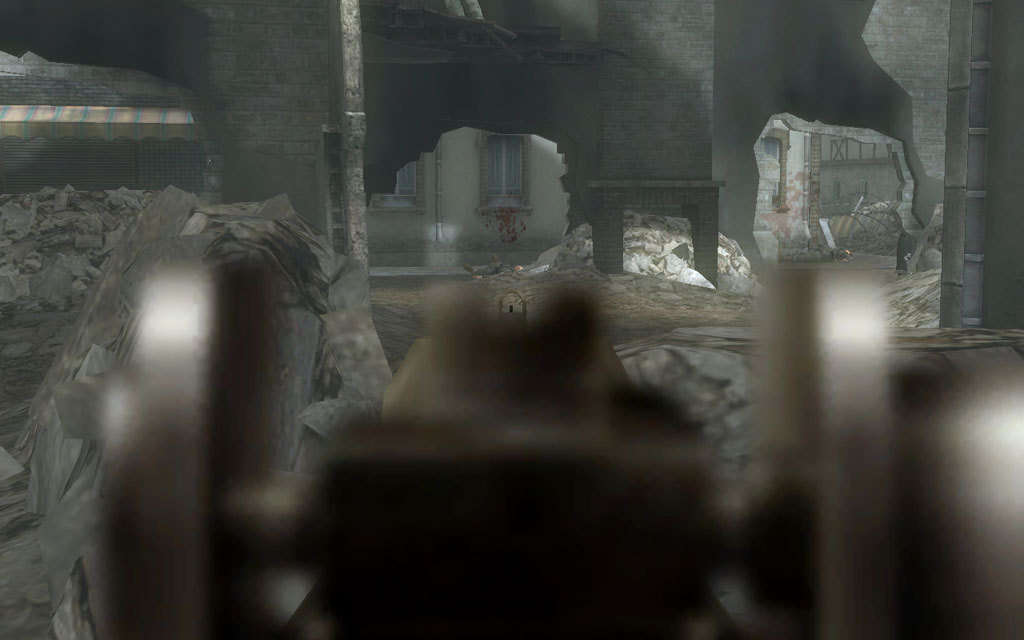
That research feeds into the visual and environmental design. The store text describes historically accurate visual recreation, which in practice means the environments are built to resemble the real places and conditions of the campaign. For a squad-based game, this matters because the terrain is where tactics happen: buildings, streets, and cover determine how a squad can move and where it can be pinned.
Modes and Progression: Campaign, Cooperation, Skirmish
The game supports several ways to play. The single-player narrative is the backbone, following Sergeant Hartsock's squad through the campaign. Alongside it, the game adds an all-new cooperative style game mode, new multiplayer missions, and an all-new Skirmish mode. Each mode reuses the squad-based combat systems while changing the context in which they are used.
Cooperative play is built around working together with a friend, utilizing each other's squads. That phrasing is specific: cooperation is not just two players shooting side by side, but coordinating the squads each player commands. The mode is framed as a test of teamwork, with failure presented as the alternative to cooperation.
Skirmish mode offers a different structure: a tour of duty through a series of authentic and increasingly difficult custom combat missions. The progression here is difficulty-based, with each mission raising the challenge. For players who want to practice squad tactics or experience standalone engagements without the campaign's narrative thread, Skirmish provides a self-contained sequence.
New multiplayer missions are also part of the package, described as taking online tactics to new heights. These missions extend beyond the cooperative mode, offering unique scenarios designed around the game's squad mechanics. The exact structure of each multiplayer mission is not detailed in the available source, so specific objectives and team sizes remain undocumented here.
Starting Guidance from the Source Material
The available material does not include a tutorial walkthrough or control list, so any starting guidance must stay within what the source documents. What is clear is that the game is built on squad-based action, which means the player's first task in any engagement is understanding where their soldiers are and what they can do. The store description presents the squad as the primary instrument of play, not the player's individual weapon.
Because the game emphasizes authenticity and historical recreation, players should expect environments modeled on real Normandy locations rather than abstract arenas. The next-generation AI system is also documented, which implies enemy behavior is meant to be dynamic. Beyond these points, specific advice about difficulty settings, mission order, or control schemes is not available in the provided evidence and is not included here.
This Entry and the Wider Series
The release year of 2008 belongs to this Steam catalog entry for Windows. That date should be understood as the year associated with this listing, not as a complete release history of the game across all platforms or regions. Similarly, the platform information here covers Windows only; it does not describe other versions or later re-releases.
The game is positioned as the next volume in the Brothers in Arms series, building on the elements that made Brothers in Arms: Road to Hill 30 a success. It adds a new single-player narrative, new multiplayer missions, a cooperative mode, and new weapons and vehicles. These are described as additions to the established formula rather than a departure from it.
Distinguishing Design Characteristics
What separates Earned in Blood from a standard World War II shooter is the degree to which the squad is the unit of play. The game is described as squad-based action, and its cooperative mode is built around sharing squads between players. The inclusion of a dedicated Skirmish mode also suggests that the developers wanted the combat systems to stand on their own, separate from the campaign's story.
The authenticity framework, built on official photos, maps, After-Action Reports, and eyewitness accounts under Col. John Antal's direction, gives the game a documentary quality. Combined with the close-quarter urban environments and dynamic combat, the design aims to make each firefight feel like a small piece of a documented history rather than a generic set piece. Whether that ambition is fully realized cannot be judged from the source material alone.
Scroll sideways to see the full table →
| Field | Value |
|---|---|
| Title | Brothers in Arms: Earned in Blood |
| Developer | Gearbox Software |
| Publisher | Ubisoft |
| Genre | Action |
| Platform (this entry) | Windows |
| Release year (this entry) | 2008 |
| Core mode | Squad-based action |
| Notable modes | Single-player narrative, cooperative, Skirmish, multiplayer missions |
- Single-player narrative following Sergeant Joe Hartsock beyond Carentan
- Cooperative multiplayer built around sharing squads with a friend
- Skirmish mode with increasingly difficult custom combat missions
- New multiplayer missions designed around squad tactics
- M3 grease gun (new weapon)
- M10 "Wolverine" Tank Destroyer (new vehicle)
Sources & further reading.
- Brothers in Arms: Earned in Blood™ — official game profile Retrieved Oct 12, 2026
First published .