 THE GAME ARCHIVE
Taking the Wheel of a True-to-Life Bus
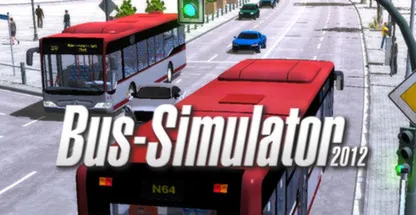
In Bus-Simulator 2012 you step behind the wheel of a freely accessible, realistically modeled bus and drive through a detailed virtual German city. The bus itself is built from technical details reproduced to match the original vehicle, so the driving model is grounded in the real machine rather than an abstract arcade shell. The world around you is an open 3D environment dotted with landmarks worth spotting between shifts. Because the bus and vehicle handling were recreated with close attention to their real counterparts, the simulation asks for careful control rather than casual steering.
On the job, the rules are clear: keep to your schedule and obey the traffic rules while driving the route. Passenger interaction is part of that loop. You decide which ticket to sell and how to greet each customer, and passengers react according to those choices, so the greeting and the fare decision work together rather than as separate steps. When you are not on shift, the same open 3D city stays available to explore, letting you visit its landmarks before returning to the timetable and traffic obligations of the next run.
Planning Routes Across a German City
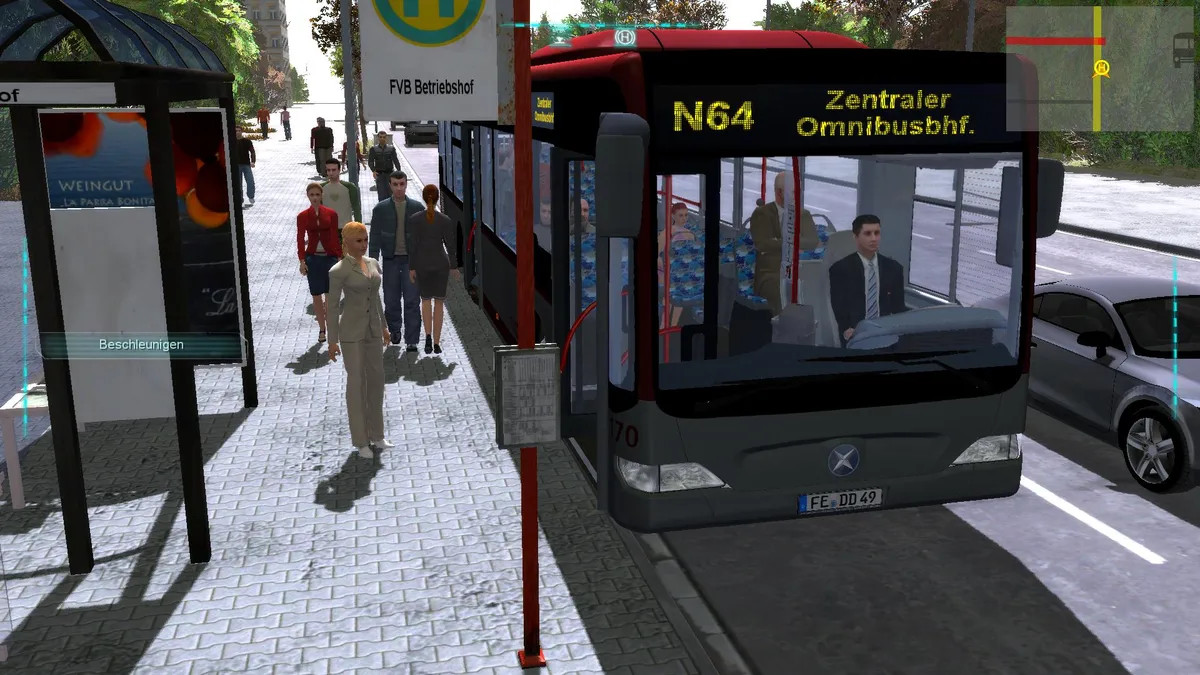
Route planning in Bus-Simulator 2012 means laying out a course that serves more than 450 bus stops across the detailed German city. You organize the route yourself rather than following a single fixed line, deciding how the stops fit together into a working day of missions. The city's pedestrians and traffic run on realistic AI, and their behavior influences how you drive along the planned course, so a route that looks efficient on paper still has to be driven carefully through moving pedestrians and other vehicles.
The route also carries obligations beyond simply reaching each stop. Missions are tied to scheduled rides, so keeping to the timetable and obeying traffic rules shape how the planned course is executed, and rest is still required between missions to stay fit. Serving the stops is the core of the run: each stop on the organized route is a point where the ride's passenger work takes place. Ticket selling and greeting decisions happen at those stops, connecting the route you plan to the fare and greeting choices that passengers respond to.
Tickets, Greetings and Passenger Reactions
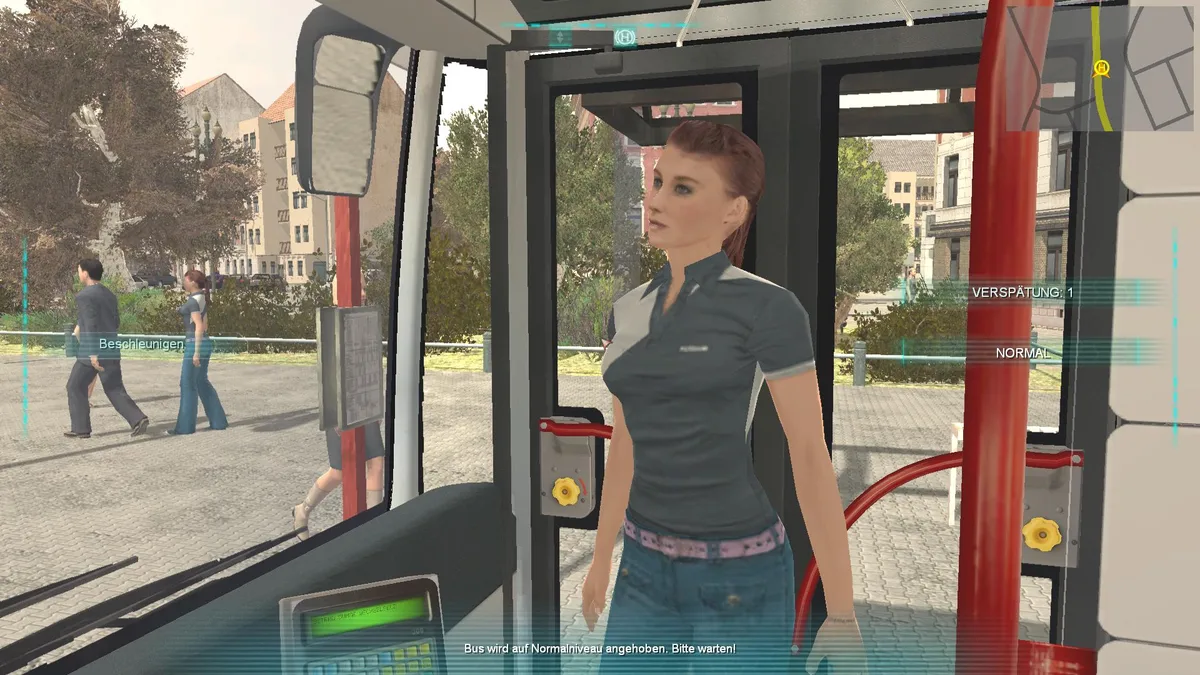
At each stop on your self-organized course, passenger work is a two-part decision: you choose which ticket to sell, and you choose how to greet the customer. Those are player decisions rather than fixed prompts, and passengers respond to what you pick, so the fare you offer and the greeting you use are judged together. Because routes are freely organizable and can serve more than 450 stops, these exchanges recur throughout a shift, making every stop a small interaction before the bus moves on again.
The ride does not happen in isolation. Pedestrians and vehicles follow realistic AI, and their movement affects how you drive the planned route, so a stop that looks easy on paper still has to be approached through live traffic and foot traffic. Staying on schedule and obeying traffic rules remain the obligations while on the job, and the feature list also includes additional side missions and a reward system alongside the main passenger work. Between missions, rest is still required to stay fit.
Dashboard Readouts, Rest Stops and Rewards
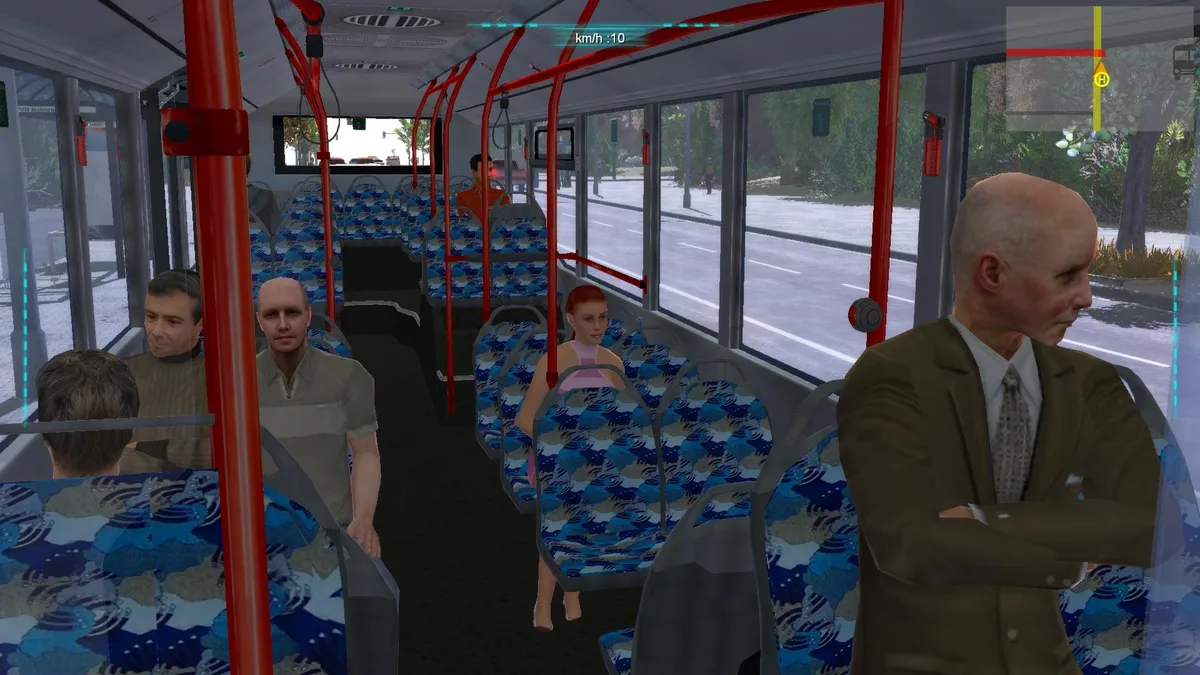
The bus cabin includes digital readouts that let you watch the engine's temperature, the charging level of the cooling liquid, and the oil and gasoline levels while driving. These gauges sit in the dashboard and turn a normal run into a monitoring task, since the same shift also asks you to keep to your schedule and obey traffic rules. Between missions you must still rest in order to stay fit, so engine checks and driver rest are both part of managing a working day rather than optional extras.
The feature list sets additional side missions and a reward system alongside the main passenger work, giving the driving loop more than the scheduled stops themselves. You can also individualize your vehicles and share them with the simulation game community, so the bus you monitor through the readouts can be adjusted and passed on. These options sit next to freely organizable routes and service at more than 450 bus stops, tying customization and side work to the same city and timetable obligations.
Sources & further reading.
- Bus-Simulator 2012 — official game profileRetrieved Oct 29, 2026
First published .