 THE GAME ARCHIVE
In CivCity: Rome, producing more goods is not the same as building a healthier city. Citizens need time away from work to collect household supplies, and better homes generate more tax revenue. Maximizing working hours can fill warehouses while making people unhappy. That tension gives city planning a domestic dimension: the player manages not just workplaces and construction costs, but the conditions that let workers maintain and improve their homes.
Founding a City Around Its Objective
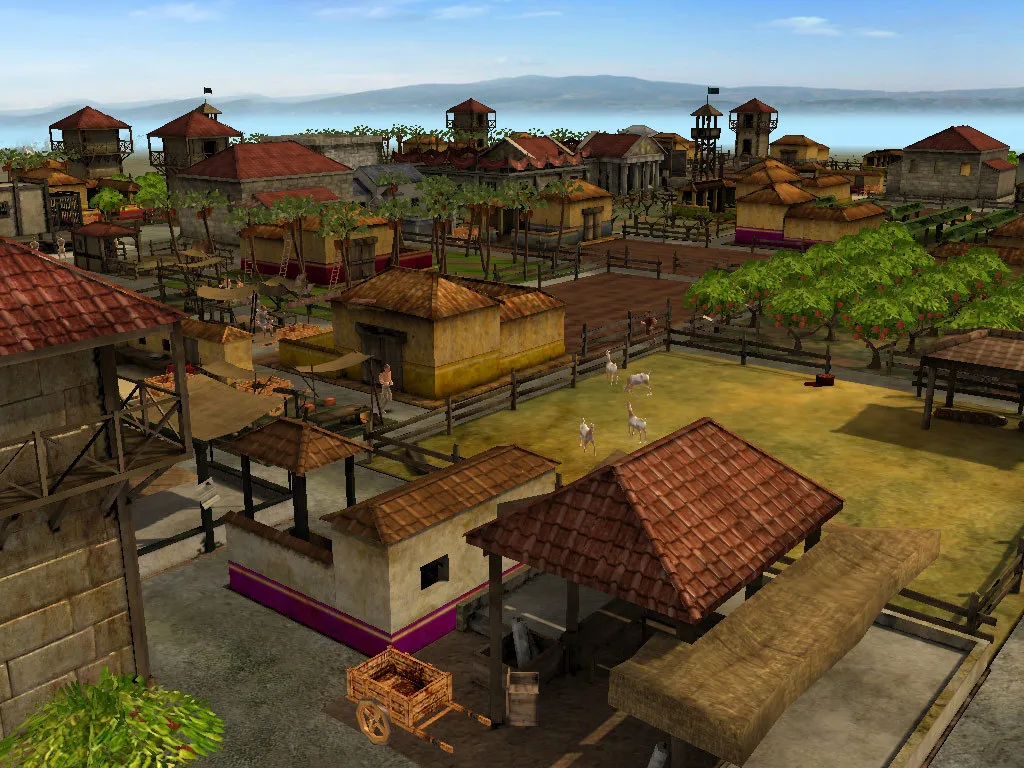
The first decision is where to place the town center, where newcomers arrive seeking jobs. The mission objective guides the workplaces that follow. A goat farm and butcher’s shop provide a starting point for feeding people; acquiring stone instead calls for a quarry and a warehouse close to the resource. Basic housing then accommodates the workers. This opening sequence makes the objective a practical building brief rather than a separate target to consider after laying out a settlement.
Placement requires both a suitable site and sufficient resources. A red building highlight signals a problem, such as uneven ground or the absence of a required resource. Left-clicking places a building once its position is suitable, but insufficient funds or materials prevent construction. Denarii also pay wages and trade expenses, so the available treasury has obligations beyond the next building. The senate’s initial grant starts the city; housing taxes and trade receipts must eventually sustain it.
Roads and Automatic Supply Transfers
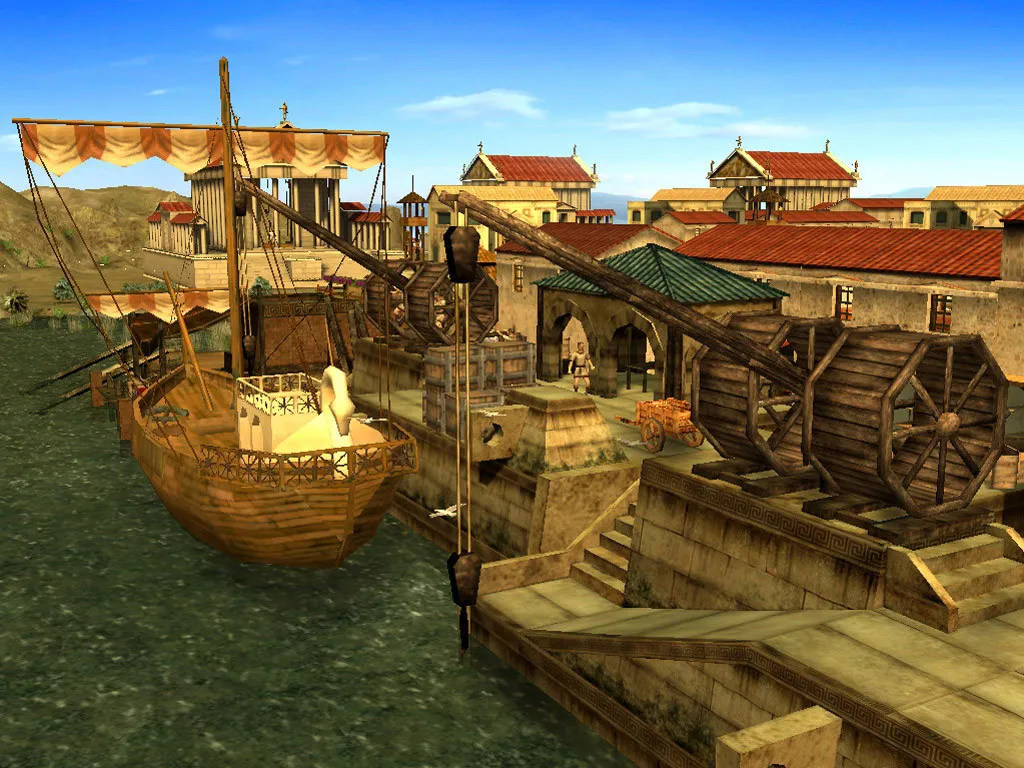
Roads are optional, but citizens try to use them whenever possible. Travel is faster than across bare ground, improving industrial efficiency, and later technologies can accelerate road travel further. Storage transfers address a different logistical task: warehouses and granaries have a donkey and cart for delivering excess goods to another similar building. In the sending controls, select a commodity, set the amount above which surplus should be dispatched, and choose the destination. The resulting shipments run automatically and continuously, turning a repeated delivery task into a standing instruction.
Work Schedules Shape Housing Progression
Clicking a citizen reveals a circular schedule: red represents work and blue represents time off to collect commodities for the home. The overall work-time ratio is set in the city happiness report. Maximum working hours bring more goods into warehouses but tend to make residents unhappy. Free time has a specific mechanical purpose, not merely a comfort value: workers use it to meet housing needs and can upgrade their dwellings when the requirements are satisfied locally. Production and household advancement therefore depend on the same citizens using their time differently.
An upgrade is also a continuing supply commitment. At the small hut stage, a home needs well water to retain its status. The water indicator slowly drains, prompting its resident to collect more; losing the supply sends the dwelling back to shack level until water becomes available again. Meat becomes the next need, and meeting it advances the house further. Higher housing grades yield more monthly tax. Maintaining existing supplies thus matters alongside meeting new requirements: a temporarily improved house is not a permanently secured source of higher income.
Happiness, Rising Expectations and Urban Risk
The happiness report exposes contributing factors and lets the player adjust wages, rations and work time. Negative happiness drives people away, with unemployed vagrants leaving first. Civic standards introduce another pressure: Rome’s expected rating rises with population. Falling below that benchmark penalizes happiness, while exceeding it provides a boost. Individual ratings can be clicked to inspect their smaller components. Expansion therefore changes the standard against which the city is judged, rather than simply adding more residents to an unchanged management problem.
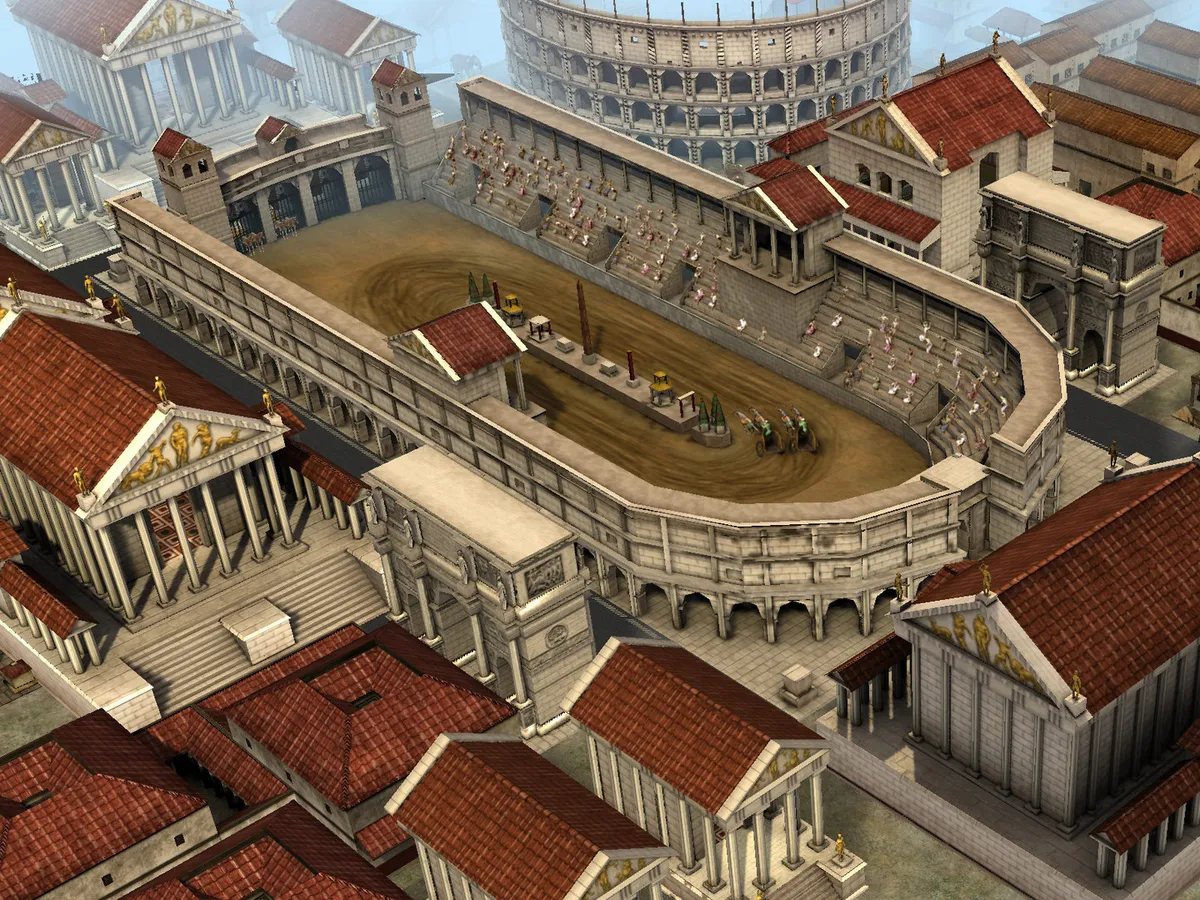
Fire watches reduce nearby fire risk. Clicking one displays its coverage and risk bars for susceptible buildings; a full bar means ignition could occur at any time. Buildings differ: bakeries gain risk relatively quickly, while wells have none. Occasional bush fires can still appear in protected areas. Riot risk uses housing indicators too: a full bar means the occupant could riot. Better housing reduces this danger, very high grades remove it, and population growth raises it. Housing quality consequently affects both revenue and public order.
Research, Wonders and Commitments to Rome
Research technologies provide distinct benefits, including faster ships, improved butcher output, increased taxes and faster research itself. Each completed technology opens more advanced branches of its tree. Completion takes considerable time, and the manual recommends choosing research appropriate to the mission rather than expecting to finish everything. Wonders demand another kind of investment: they are the only buildings with construction time and typically require substantial stone. Their permanent rewards can include happiness and Civilization rating boosts, making them long-term projects rather than immediate fixes.
Opening cities for trade brings senate requests for shipments. Goods held in a warehouse or granary can be dispatched through the senate request report; fulfilling or failing requests gains or loses empire points. Military action offers a separate route to recognition. With a working fort, a legion can enter the empire map to intercept armies or attack an enemy city. Battles there resolve automatically, larger cities require more troops, and successful conquest adds a Roman city and earns empire points.
Sources & further reading.
- CivCity: Rome — official game profileRetrieved Nov 22, 2026
- CivCity: Rome — official game profile — publisher-supplied gameplay manualRetrieved Nov 22, 2026
First published .