 THE GAME ARCHIVE
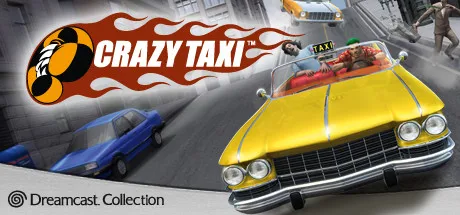
Crazy Taxi is an action racing game from SEGA, and the Windows edition dated to 2011 in its official store record carries the arcade cab chase onto PC. Its premise is blunt and its pressure is constant: you barrel through traffic-packed streets, hurdle off parking garages, and Crazy Combo your way to Crazy Money in a wild frantic race to scare up the most fares. In this game, time is money, and only the Craziest Cabbies come out victorious.
What makes the pitch distinctive is how tightly it binds scoring, speed, and daring together. The fare race is the goal, Crazy Combo is the named route to Crazy Money, and the city is stocked with surfaces meant to reward drivers who take the fast, showy line. The Windows package layers two game modes and sixteen practice mini games on top of that single loop.
Time Is Money: The Core Fare Race
The published description builds the whole game on one equation: time is money. The stated objective is to scare up the most fares, so a run is judged by how many passengers the cabbie can collect before the chase ends. The "time is money" framing is not decoration; it tells the player what every second is worth, and it explains why the driving is described as frantic rather than leisurely.
The player's stated job is the fare hunt itself. Seek out fares, keep moving, and let the clock set the urgency. The description leaves the exact timer rules unstated, so the practical reading is the one the marketing line makes explicit: every pursuit is a race, and the cabbie who finishes with the most fares collected wins the day. Only the Craziest Cabbies come out victorious, which casts the fare count as the measure of a cabbie.
Crazy Combo: Turning Stunts into Crazy Money
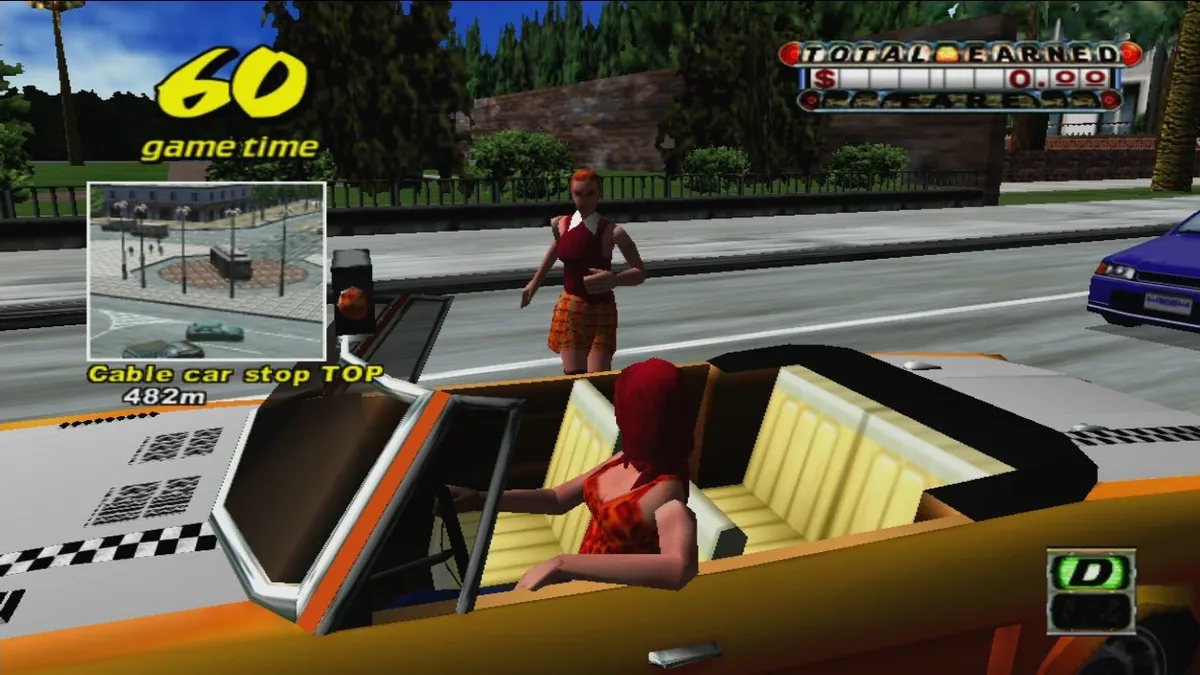
Crazy Combo is the named mechanic that links driving style to scoring. The description says plainly that you Crazy Combo your way to Crazy Money, pairing the action with its payout: perform the combo, and the reward is Crazy Money. The same sentence places that skill alongside barreling through traffic-packed streets and hurdling off parking garages, so the combo is part of the same stunt-and-speed repertoire rather than a separate mode.
Read together with the fare objective, the combo mechanic makes the central decision clear: a cabbie can drive timidly and lose time, or drive with flair and convert the city's obstacles into Crazy Money. The description never spells out which button or trick triggers a combo, so the takeaway for a newcomer is the intent, not an input list. Practice the flashy driving; the payoff language points there.
Arcade Mode and Original Mode: Two Ways into the Cab
The Windows version advertises two game modes, Arcade Mode and Original Mode, and the feature list says together they deliver "a variety of gameplay." That is the documented distinction: two modes offered side by side for variety. The store text does not lay out the specific rules, settings, or structural differences between them, so players should treat the official material as promising two ways to play rather than a spelled-out mode comparison.
What bridges the two modes is the shared vocabulary of the whole package. Whichever mode you pick, the fare race, the Crazy Combo, and the stunt surfaces belong to Crazy Taxi's identity in the same published sentence that announces the modes. The 2011 Windows release packages them together, so choosing a mode is the player's first decision and everything after it runs through the same fare-chasing idea.
Sixteen Mini Games for Taxi Practice
Beside the two main modes, the feature list promises 16 mini games whose stated purpose is to hone your taxi driving skills. That framing makes the mini games a practice space rather than a third campaign: they exist to sharpen the driving skills the city asks for. The material names the count and the purpose but not the individual line-up or rules, so the number sixteen and the training role are what the official description firmly supports.
The connection to core play is easy to follow. The same description defines driving skill as barreling through traffic-packed streets, hurdling off parking garages, and chaining Crazy Combos toward Crazy Money, so a cabbie who drills those actions in the mini games is preparing for the exact moves the fare race demands. That makes the sixteen mini games a useful first stop for players who want the showy driving that produces Crazy Money to feel familiar before the clock adds pressure.
The City as a Stunt Course
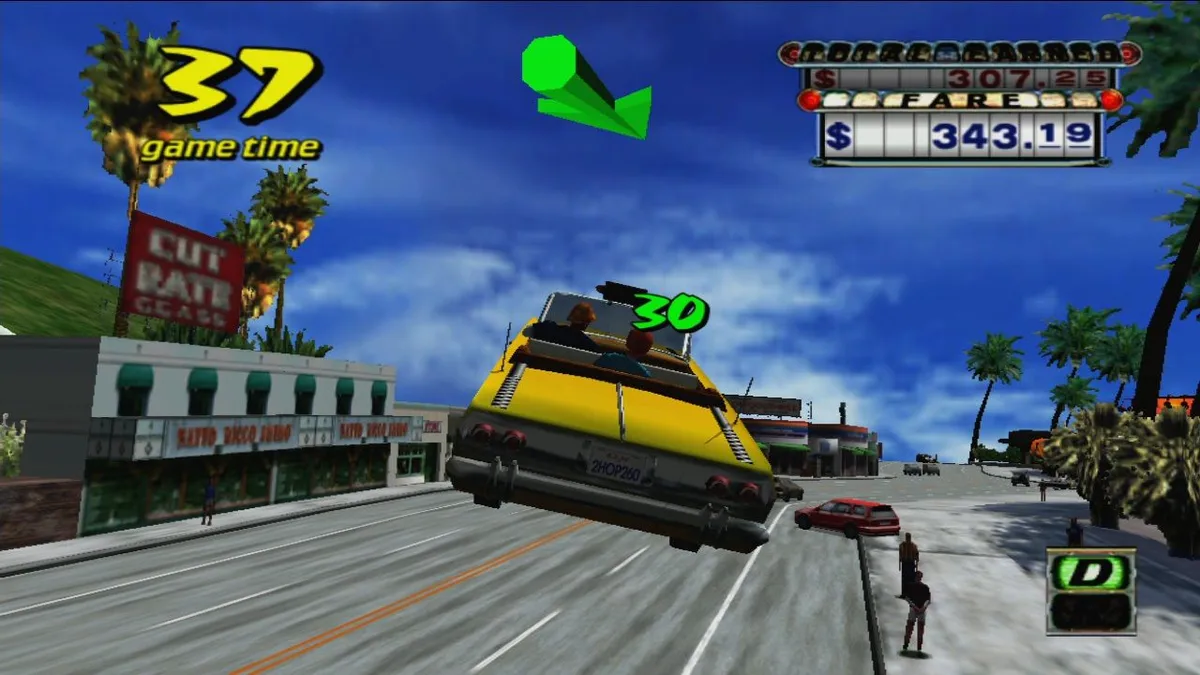
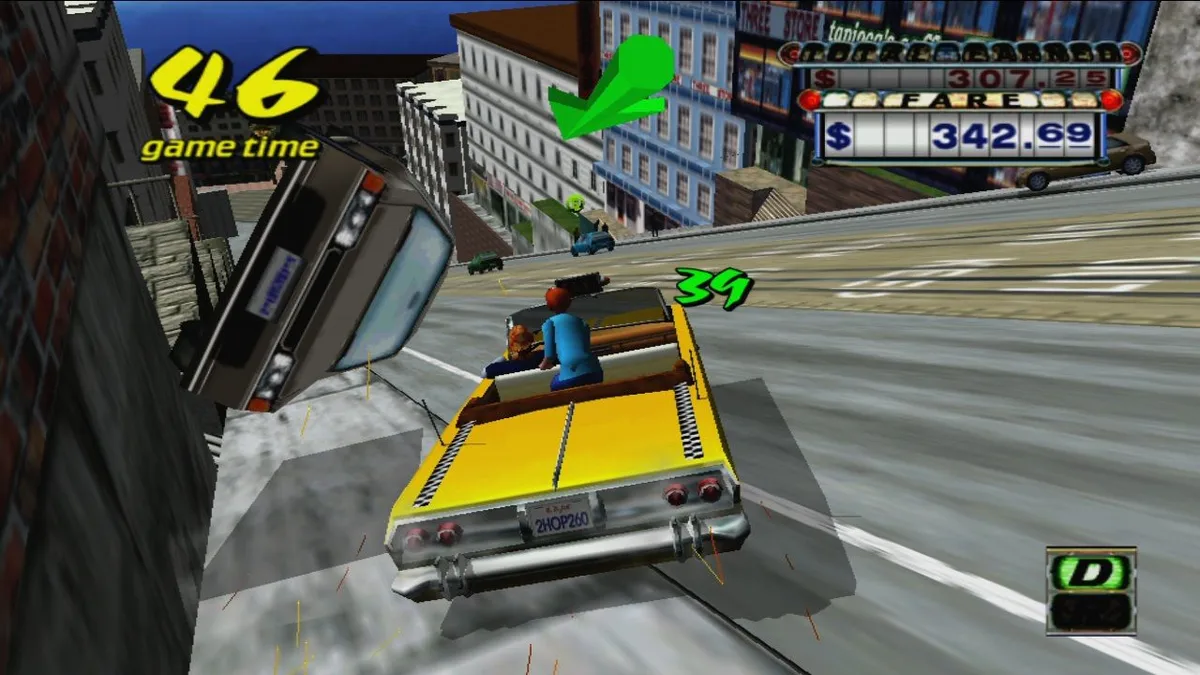
The feature list describes the map as a set of stunt fixtures with clear purposes. There are extra large hills for extra long hang time, parked transporters with conveniently angled ramps, and tall cliffs and parking garages with steep drops. That is a city engineered for the cabbie who wants air and altitude, which is exactly why hurdling off parking garages appears as a signature move in the game's opening sentence.
Traffic is the counterweight. Painfully slow buses and cable cars are listed among the city's features with the stated effect of frustrating and annoying, so the streets that feed the combo also serve up rolling obstacles. The description also notes occasional deep sea exploration opportunities, an unexpected addition to a street-and-garage city. How all of these pieces connect to a fare is not documented, so they stand here as the described features of the environment a cabbie drives, not as a route guide.
Starting Guidance and the Kind of Player It Rewards
The published description supports sensible expectations for a first session. Understand the bargain before touching the wheel: in Crazy Taxi time is money, and the race is to scare up the most fares. That tells a player to keep moving and treat the clock as the cost of every manoeuvre. The 16 mini games, meanwhile, exist to hone taxi driving skills, so using them to warm up the driving and stunt side of the game fits exactly what the feature list says they are for.
The game rewards flair, not caution. Crazy Combo your way to Crazy Money, says the description, and the winner is the Craziest Cabbie, so a player whose instinct is to drive aggressively and find the ramps is the one the scoring language encourages. The advice stops where the evidence stops: the exact timer rules, control layout, and combo triggers are not published, so newcomers should not treat this as a move list. The bold driving the description names is the shape of the play; the details come from the game itself.
The 2011 Windows Edition in Context
The official store record labels this release Crazy Taxi, a SEGA-developed and SEGA-published action racing game for Windows, dated to 2011. That is the scope of this feature: the Windows edition and the features its description lists, namely Arcade Mode, Original Mode, the sixteen mini games, the combo mechanic, and the stunt surfaces. The record does not describe how this Windows version differs from earlier or other releases, so no gap between versions is claimed here.
Taken as a package, the Windows release presents a compact proposition: one fare-chasing loop, two modes for variety, and sixteen practice mini games, all built around a city of hang-time hills, angled ramps, steep drops, and deliberately annoying traffic. The exact rules behind each mode and mini game remain unstated in the published material, so the useful takeaway is structural rather than exhaustive: pick a mode, chase fares, and use the combo language to decide how boldly to drive.
Scroll sideways to see the full table →
| Detail | Value |
|---|---|
| Title | Crazy Taxi |
| Developer / Publisher | SEGA / SEGA |
| Genres | Action, Racing |
| Platform | Windows |
| Release year (store record) | 2011 |
| Game modes | Arcade Mode, Original Mode |
| Mini games | 16 |
| Stated objective | Scare up the most fares |
| Scoring mechanic | Crazy Combo → Crazy Money |
Sources & further reading.
- Crazy Taxi — official game profileRetrieved Oct 16, 2026
First published .