 THE GAME ARCHIVE
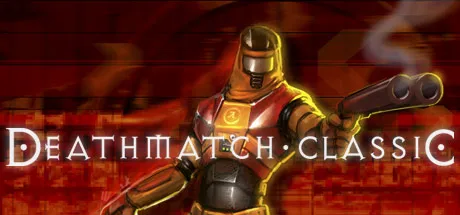
An arena is a supply network as well as a fighting space
Deathmatch Classic is Valve's fast multiplayer tribute to id Software's style of action. Its familiar rocket-launcher imagery is only part of the explanation. You enter fights with particular equipment, look for better tools and supplies, and decide how to move between them while other players are doing the same. A useful way to learn a map is therefore to connect its rooms with what they contain. Knowing where a weapon or protection item can be found gives movement a purpose beyond simply searching for another opponent.
Your starting equipment is not your whole arsenal
The ordinary starting weapons include a crowbar and shotgun. The crowbar does not consume ammunition, but its limited reach makes it a very different tool from a firearm. Other weapons are collected around the map. That creates an immediate decision after entering play: engage with what you have or first move toward equipment better suited to the fight you expect. For a newcomer, learning one nearby weapon pickup is a manageable first goal. You do not have to memorize the entire arena before understanding how a short supply route improves your options.
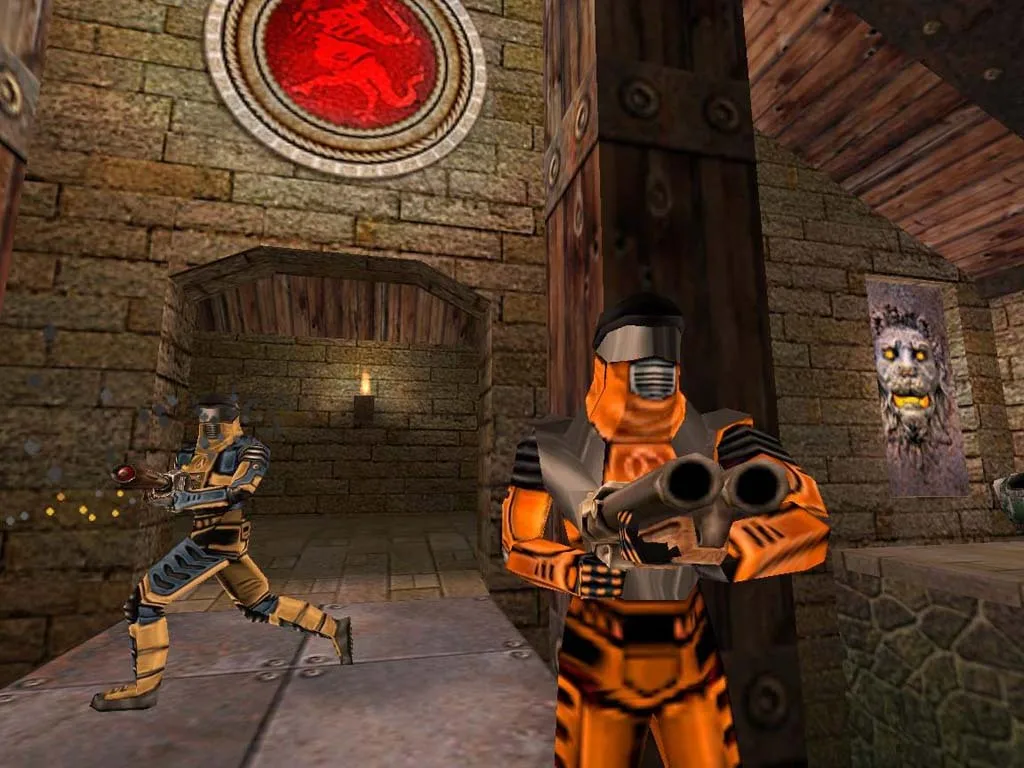
Shotguns trade shells for close-range pressure
The standard shotgun consumes one shell per shot. The super shotgun fires a larger spread and spends two shells, with a longer gap between attacks. Its effectiveness is closely tied to fighting distance. Those differences make ammunition and position part of the weapon choice. If you switch to the stronger close-range option without thinking about range or your remaining shells, you may not get the benefit you expected. Learn how a weapon's firing rhythm feels in relation to the distance you are trying to maintain, rather than treating its name as a universal upgrade.
Nail weapons ask you to follow movement
Nailguns fire projectiles rather than behaving like an instant connection between crosshair and target. The super nailgun also consumes nails more quickly, using two per shot, and its centered firing pattern differs from the basic weapon. These characteristics make a moving opponent a prediction problem. An introductory habit is to watch the direction of travel and the distance between you, rather than repeatedly aiming at the position the target has already left. That is a different aiming task from keeping a close opponent inside a shotgun spread, even though both weapons are used in the same arena.
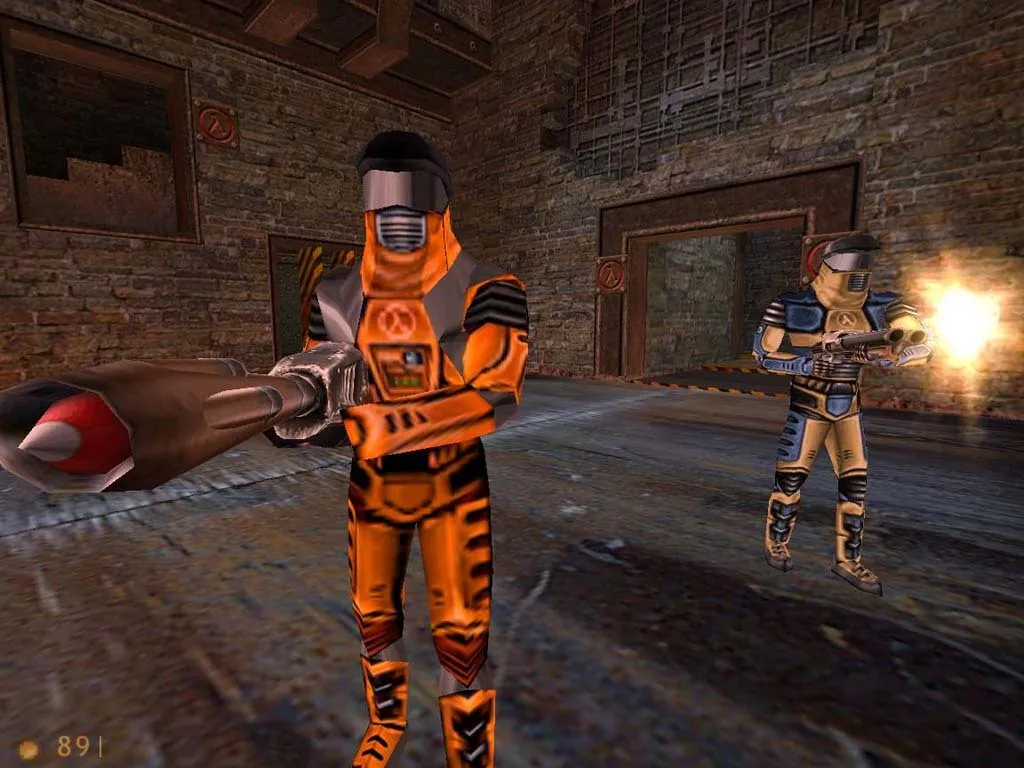
Explosives can threaten space
The grenade launcher fires bouncing explosives that detonate on an enemy hit or after a delay. The rocket launcher sends an explosive projectile directly along its path, with damage from both impact and the surrounding blast. Both consume rocket ammunition. The difference matters around a corner or passage: a bouncing grenade can remain a threat in a space, while a rocket connects its threat more directly to a chosen trajectory. The introductory lesson is to think about where the opponent is going and where an explosion will occur, not merely which launcher you picked up most recently.
Health and armor give supply routes value
Health pickups restore your ability to survive, while green, yellow and red armor offer different levels of protection. Megahealth can increase health beyond the ordinary baseline, but its extra health diminishes over time. That makes the state of your protection relevant to the next encounter. Do not judge readiness solely by the weapon in your hand. A route that passes useful recovery or armor may change the risk you can reasonably take. Learning where those resources appear is part of learning the map, just as much as remembering the corridor that connects two rooms.
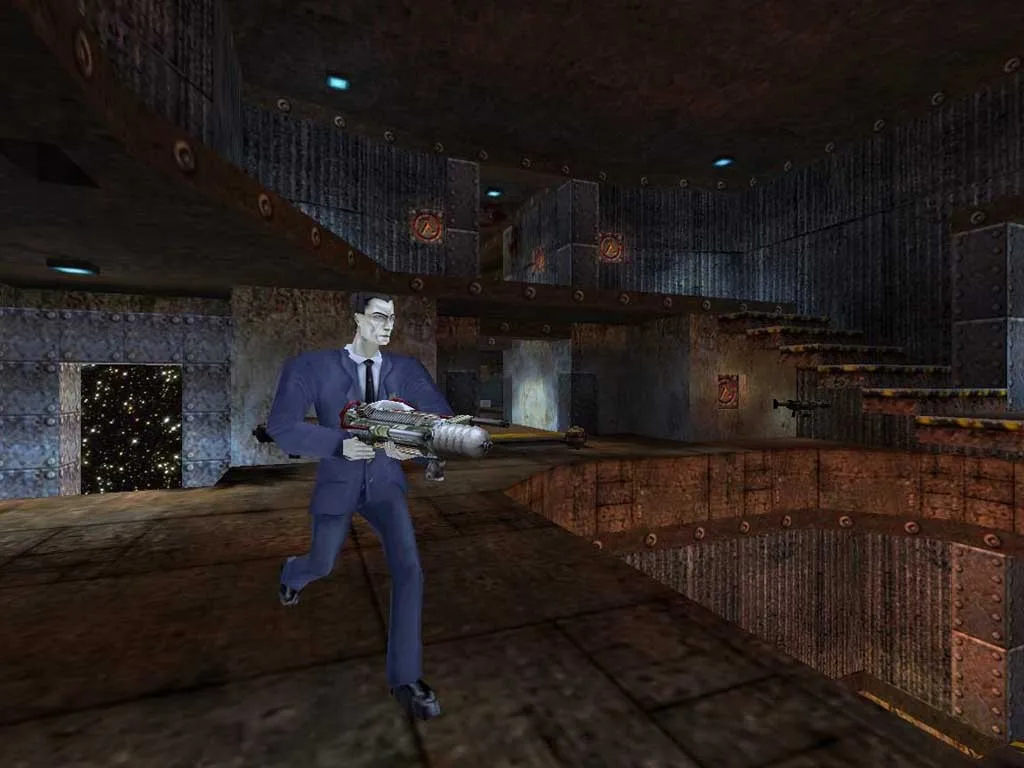
Powerups create temporary opportunities
Quad Damage raises weapon damage for a limited time, and Protection temporarily shields the player from enemy attacks. The Ring of Shadows affects visibility. These pickups offer temporary changes rather than a permanent character build, so recognizing them helps explain sudden changes in an encounter. If an opponent is under a powerful effect, repeating an ordinary head-on challenge may be a poor learning experiment. Conversely, collecting a powerup gives you a reason to think about what to do next while it is active. This article avoids presenting an exact pickup-timing route as if every server and map were identical.
Begin with one route and one weapon contrast
For an initial session, identify a starting-area exit, a useful weapon and a recovery or armor pickup. Practice moving between those landmarks while keeping track of which ammunition your selected weapon needs. Then compare two clearly different weapons, such as a shotgun and rocket launcher, at distances where their behavior makes sense. Watch what supplies an opponent seeks after a fight. These observations give you concrete questions to work on instead of measuring every attempt only by the scoreboard. The appeal of this form of arena play lies in learning how movement, equipment and timing affect one another.
Sources & further reading.
- Deathmatch Classic — official game profileRetrieved Oct 8, 2026
- Combine OverWiki: Deathmatch Classic weapons and items referenceRetrieved Oct 8, 2026
- Steam Community: Deathmatch Classic Complete Guide (player-authored)Retrieved Oct 8, 2026
First published .