 THE GAME ARCHIVE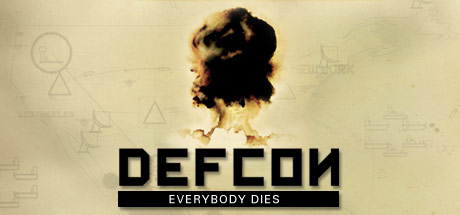
DEFCON is a Cold War-era strategy game from Introversion Software, released in 2006 and available on Windows, macOS, and Linux. Rather than framing nuclear war as a winnable contest, the game builds its tension around a bleak premise: in a thermonuclear exchange, everyone loses, and the only remaining objective is to lose the least. That single design idea shapes nearly everything about how the game plays.
The Premise: A Bunker and a Bleak Calculus
The official store description frames DEFCON as a simulation of global thermonuclear war, inspired by the 1983 cult classic film Wargames. Players operate from an underground bunker with a dual objective: annihilate enemy populations while protecting their own. The setting is not a battlefield in the conventional sense but a global board of cities, populations, and nuclear assets. The game's psychological angle is central rather than decorative: tension, paranoia, and suspicion are treated as core gameplay ingredients.
This framing matters because it changes what a successful move looks like. If the goal were simply to destroy the enemy, more aggression would always be the answer. Because every attack exposes you to retaliation, however, the game turns restraint, timing, and target selection into genuine decisions. Players are asked to weigh the immediate benefit of a strike against the certainty that it reveals their own vulnerabilities.
The Core Gameplay Loop: Position, Strike, Absorb
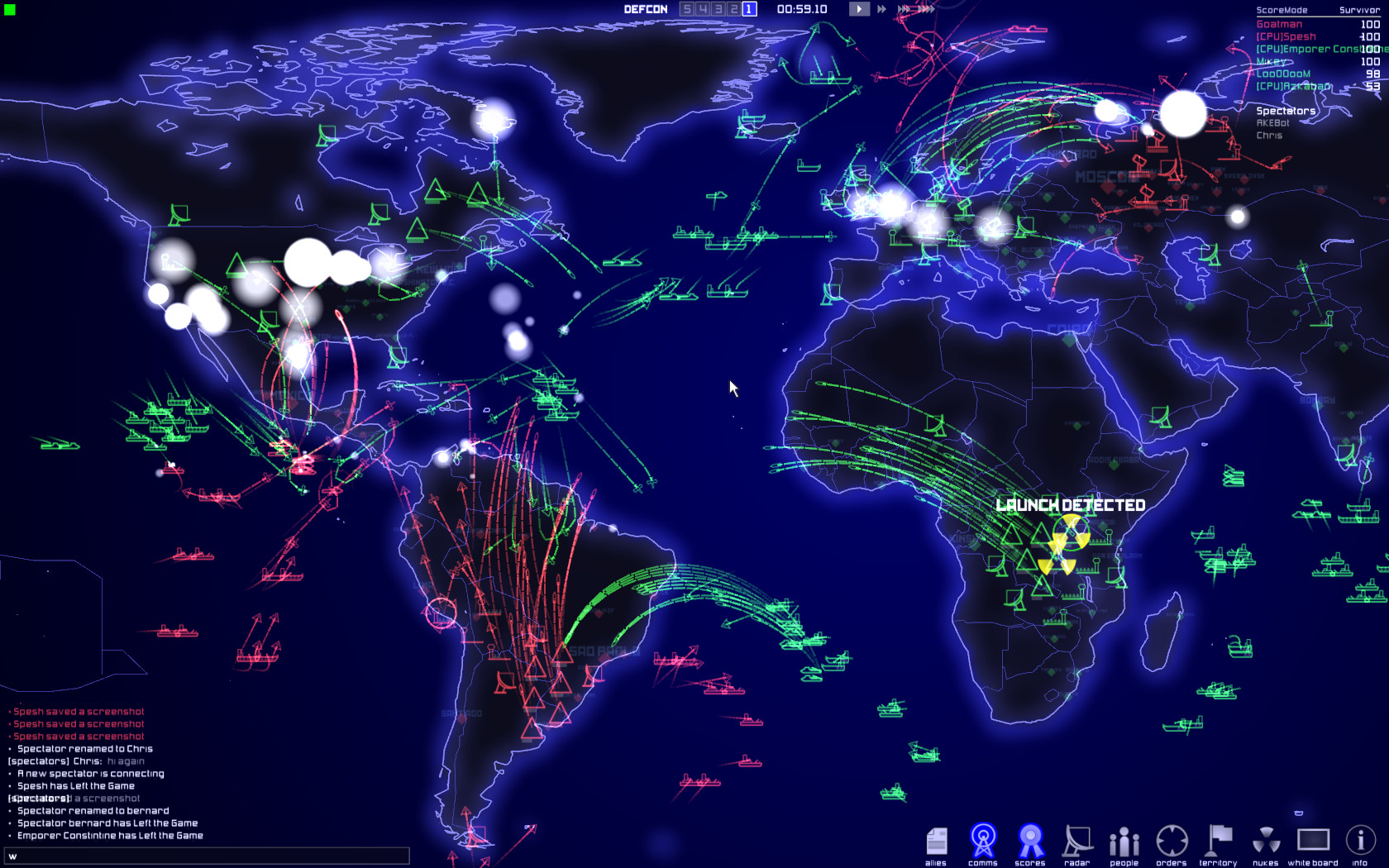
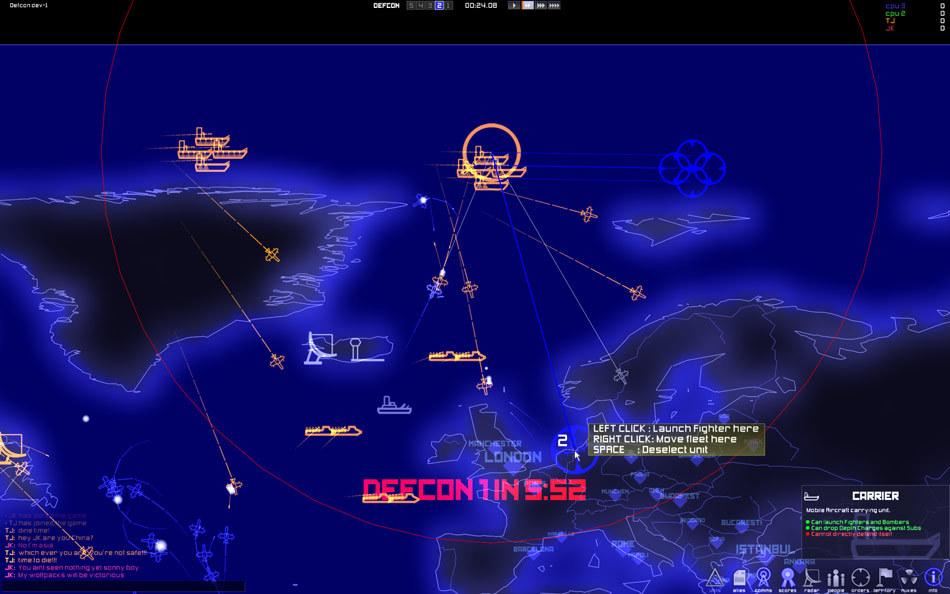
The documented loop begins with positioning submarines, silos, and air defenses before engaging in strategic nuclear exchanges. These three asset types form the player's practical toolkit: submarines for placement away from home territory, silos as fixed launch positions, and air defenses as the counter to incoming strikes. The exact controls and unit behaviors are not detailed in the source material, so a prospective player should treat the positioning phase as a known system without documented command mappings.
Once exchanges begin, the loop is defined by consequence. Every attack reveals your own vulnerabilities, and each decision is characterized as a high-stakes gamble. The game does not hide the human cost: it tracks death tolls in real time as cities are obliterated, and the globe is described as plunging into darkness. That real-time tracking is not just a scoreboard; it emphasizes the devastating cost of the war being simulated.
The result is a loop where brinkmanship, self-preservation, and aggression balance against one another. Players are described as engaging in brinkmanship while balancing aggression with self-preservation to avoid triggering total nuclear war, even as paranoia and betrayal dominate every moment. In practice, that means the game rewards restraint under pressure, but not passive play: the objective to annihilate enemy populations still stands alongside the need to survive.
Systems and Modes: Alliances, Interface, and Sound
DEFCON supports multiplayer, and the source material singles it out as where the game shines. Alliances are forged and broken in a heartbeat, making the political layer as volatile as the military one. The mechanic of fragile alliances ties directly to the game's paranoia theme: an ally is useful until the moment they are not, and the design treats betrayal as a normal event rather than an exploit.
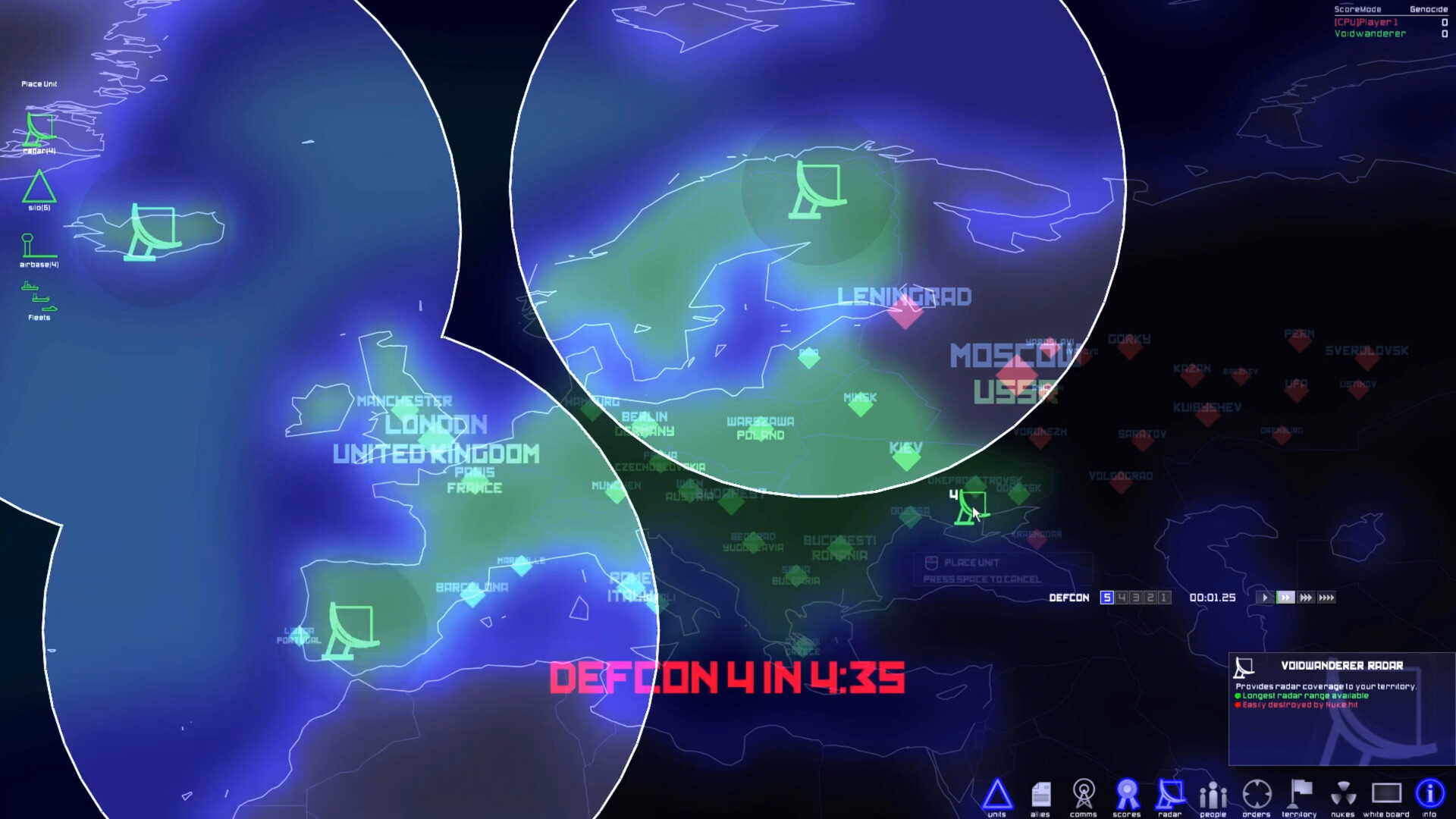
Presentation supports the same mood. DEFCON uses a minimalist, military-style interface, and a chilling soundscape is credited with heightening the tension. The interface is not just aesthetic restraint; combined with real-time death toll tracking, it keeps the player focused on numbers and consequences rather than spectacle. That design choice is one of the clearest differences between DEFCON and a conventional real-time strategy game.
Source-Backed Starting Guidance
Based on the documented systems, a new player can approach a session with three working assumptions. First, set up submarines, silos, and air defenses before committing to exchanges, since positioning is a named part of play. Second, treat every launch as a two-sided move: it damages the enemy and exposes your own position to retaliation. Third, watch the death tolls as a live measure of how the war is going, because the game's own framing defines success as losing the least rather than winning outright.
For multiplayer, the source material suggests expecting a social layer on top of the mechanical one: alliances can form and collapse quickly, and brinkmanship is part of the intended experience. That is a gameplay expectation rather than a guide to specific tactics, and the available evidence does not document controls, unit matchups, or map strategies. Those specifics should be treated as unknown until hands-on testing is performed.
What Sets DEFCON Apart
Most strategy games are built around winning. DEFCON is built around minimizing loss. That inversion is the design feature that everything else serves: retaliation risk makes attacks costly, real-time death tolls make the cost visible, alliances make trust unstable, and the minimalist interface strips away distraction so the numbers carry the emotional weight. The game is described as not merely simulating war but emphasizing its devastating cost.
The developer context is also worth noting. DEFCON was the third major game from Introversion Software, the studio behind Uplink, Darwinia, Multiwinia, Prison Architect, Scanner Sombre, and The Last Starship. Introversion has been developing games since 2001 and has sold more than four million copies of its games worldwide. That history places DEFCON within a body of work known for unconventional premises rather than as an isolated experiment.
Release Scope and Access
The release year, platforms, and store description referenced here are specific to this official store entry for DEFCON, which lists the game as a 2006 Windows, macOS, and Linux title developed and published by Introversion Software. This article does not document the original release history beyond that entry, nor does it describe ports, remakes, or current package additions. Platform support listed by the storefront should not be read as a compatibility guarantee for any particular system today.
Key Facts
- Game: DEFCON
- Developer and publisher: Introversion Software
- Release year listed on the store entry: 2006
- Platforms listed: Windows, macOS, Linux
- Genres: Indie, Strategy
- Objective: lose the least in a global thermonuclear exchange
- Multiplayer: supported, with alliances that form and break quickly
Scroll sideways to see the full table →
| Attribute | Value |
|---|---|
| Title | DEFCON |
| Developer | Introversion Software |
| Publisher | Introversion Software |
| Release year (store entry) | 2006 |
| Platforms (store entry) | Windows, macOS, Linux |
| Genres | Indie, Strategy |
| Core objective | Lose the least in a global thermonuclear exchange |
| Multiplayer | Supported, with alliances that form and break quickly |
Sources & further reading.
- DEFCON — official game profile Retrieved Oct 11, 2026
First published .