 THE GAME ARCHIVE
Demolition Inc. is a 2011 Windows and macOS game from developer and publisher Zeroscale that casts you as the daring demolition worker Mike, tasked with starting a devastating chain reaction on Earth. Its genre tags span action, casual, indie, simulation and strategy, and that spread is a fair description of what it asks of you: not just aiming a tool, but combining several of them into chain reactions.
What distinguishes the game is the stated ambition behind its destruction: it is built around physics-based destruction in which everything is destructible and nothing is pre-animated, so no game round is like the other. Instead of watching a canned collapse play out, you combine tools and weapons and let the simulated pieces decide the result. The rest of this feature explains how the documented tools, modes, scoring and sharing fit together.
The Core Loop: Tools Combined Into Chain Reactions
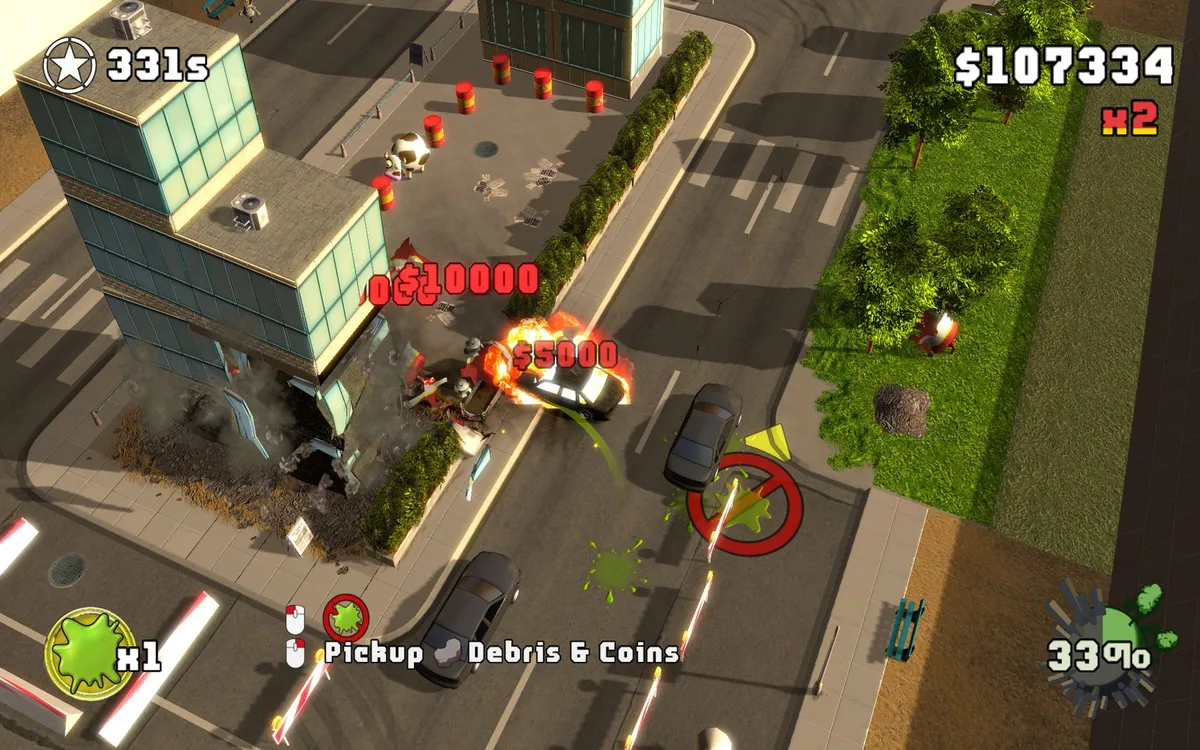
The documented toolkit names three weapons: a tractor beam used to take control of cars, anti-gravity ramps placed to maximize damage, and a huge wrecking ball used to make way. Read together, these describe a loop rather than three separate toys. The tractor beam redirects traffic already moving through a district; the ramps convert redirected motion into damage; the wrecking ball opens a route or knocks out a structure so the rest of the sequence can proceed.
The game frames the point of this directly: you use the endless possibilities of combining your tools and weapons to make devastating chain reactions, and only this way can you manage to tear down whole cities before the army arrives. That makes the player's real decision an ordering problem. A car seized with the tractor beam has to be aimed at something worth hitting, a ramp has to sit where the resulting motion will do damage, and the wrecking ball has to be spent at the moment it unblocks the most.
What the Physics Means at the Table
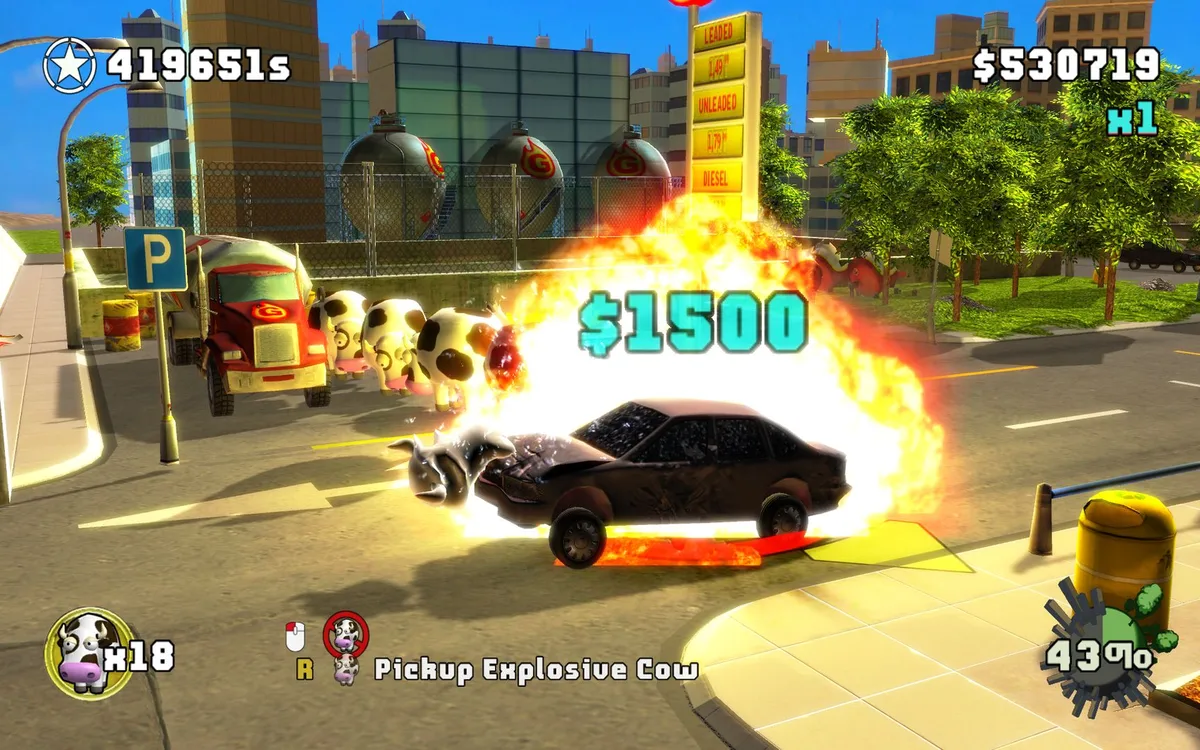
The game's central claim is that car and building physics are fully simulated, that everything is destructible and nothing is pre-animated, and that every time you play will be a unique experience. The practical consequence is that your setup, not a script, determines the outcome: where a ramp is placed and what the tractor beam sends into it change the result from attempt to attempt. A collapse that works once is not a guaranteed recipe the second time.
A free update later improved the physics simulation for better performance and accuracy, and separately improved vehicle AI while adding new vehicle types with different behaviours. The two feed each other in play: more capable traffic makes the streets a more varied source of moving objects to seize and redirect, and a more accurate simulation changes how those objects behave on impact.
Progression: Unlocking Tools Across Three Cities
The three named tools are not the whole arsenal. The game states that you improve your skills on the way and unlock breathtaking and crazy new tools and weapons. That turns the named trio into the opening vocabulary: the skills you build combining the tractor beam, ramps and wrecking ball are what carry you into later options.
Unlocking happens against a defined map. Three cities and 15 districts await demolition, and the campaign asks you to destroy one city after the other, using cunning deployment of your tools and weapons to turn district after district to rubble. The districts are the individual assignments inside each city, so progression is a city-by-city march subdivided into smaller demolition problems.
New tutorial levels were also added in a free update, described as an improved learning curve for new players, and the Black Cow Market is documented as the place to get help when you are stuck and to buy enhancements for your UFO.
Campaign, Rampage and How They Differ
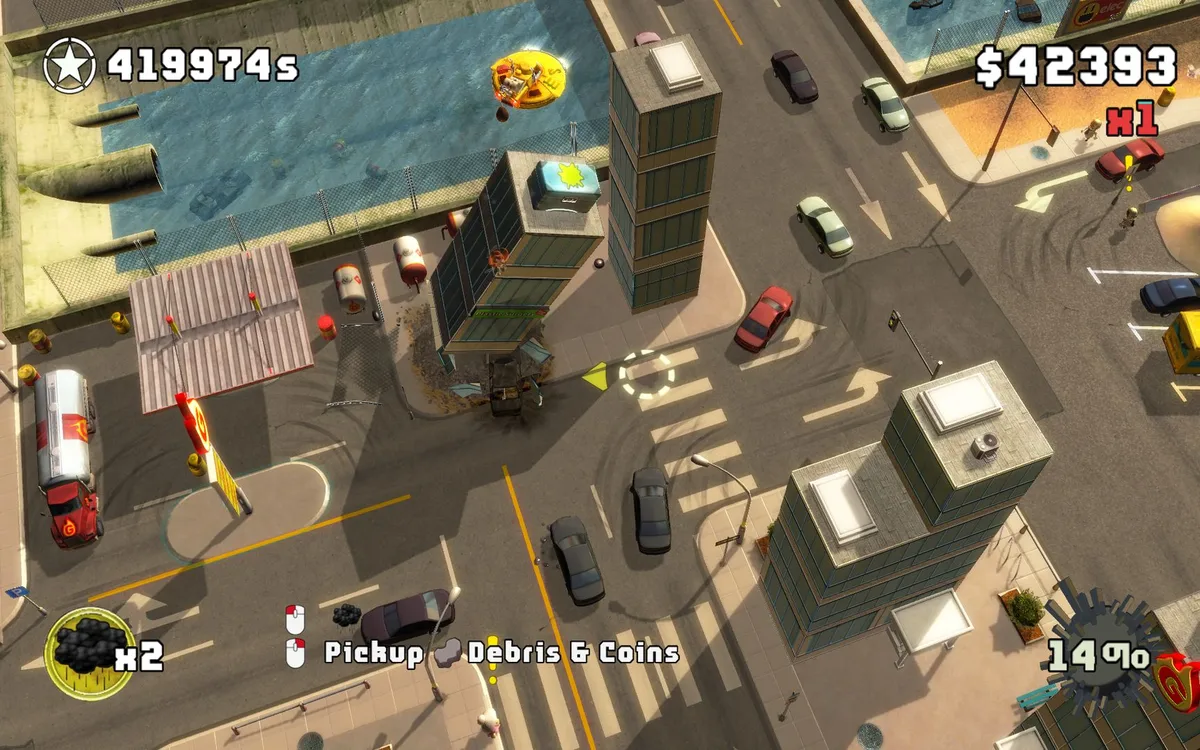
Campaign mode is the structured track: fulfill your mission, destroy one city after the other, and reduce district after district to rubble through cunning use of your tools and weapons. Rampage mode is the opposite proposition: limitless destruction in which you go mayhem with all the tools and weapons you have unlocked, treating the level as your playground and experiencing new scenes of destruction over and over again.
The documented difference is scope: Campaign play carries a mission direction through the 15 districts, while Rampage mode removes the mission structure and opens the full unlocked set for limitless destruction. Because the physics is simulated rather than pre-animated, the source states that repeated visits to the same level produce new scenes of destruction each time.
Scoring: Clock, Points and Online High Scores
The stated scoring objective is two-sided. You play against the clock, or you try to make as many points as possible by demolishing districts in a creative way. That gives each district two different targets: a fast demolition and an inventive one. The choice shapes your approach before you start placing tools, because a plan built to squeeze out points may not be the plan that gets the district down quickly.
Online high scores give those runs an audience: you compare your skills with those of your friends and the world-wide Steam community. That turns a district attempt into a comparable result, whether the target was a clock time or a point total.
The Level Editor and Steam Workshop
The free update also added an easy-to-use, all-in-one level editor with Steam Workshop integration. The editor is where you build your own levels; the Workshop integration is what lets you share them and then challenge your friends to beat your highs. It is a closed loop: authoring, publishing and competition on the same creations.
That loop extends the game's content beyond the three cities and 15 districts shipped with it, and it fits the physics design: a player-built level is a fresh arrangement of destructible pieces rather than a re-skin of a scripted scene. For anyone planning to use it, the documented sequence is simply to build in the editor, share through Steam Workshop, and invite others to compete.
Getting Started: A Source-Backed Approach
Start with the tutorial levels, which were added specifically as a better learning curve for new players. If a district stalls you, the Black Cow Market is documented as the place to get help when you are stuck and to buy enhancements for your UFO. If you prefer a controller, a free update brought full controller support on Windows only, with gamepad play on a TV through Big Picture Mode; the source documents controller support for Windows but does not describe Mac control options.
In play, decide up front whether an attempt is for the clock or for points, since the two scoring targets pull in different directions. Then lean on the documented combination principle: the tractor beam controls cars, ramps are placed to maximize damage, and the wrecking ball makes way, and the game states that combining tools and weapons into chain reactions is how whole cities come down. Rampage mode, which hands you the tools and weapons you have unlocked for limitless destruction, is the mode where the full unlocked set is in play.
Sources & further reading.
- Demolition Inc. — official game profile Retrieved Oct 17, 2026
First published .