 THE GAME ARCHIVE
A Wheelman Across Two New Yorks
Driver: Parallel Lines is a Windows driving-and-crime game built around a simple fantasy: be the most lethal wheelman for hire in New York. The catalog description sets the campaign across two periods, the 1970s of the past and the modern times of today, with a revenge story opening the premise ("You got a new job, it's called getting revenge"). What makes the game distinctive is not just the era contrast but how many of its systems feed back into the car: crimes attach felony to TK or his vehicle, side jobs pay for upgrades and repairs, and the garage doubles as a place to spend cash and reposition across the city.
The official store listing for this Windows edition carries a product date of 2009, with Ubisoft Reflections credited as developer and Ubisoft as publisher, and the store genre is listed as Racing. That 2009 figure is the store product date; it should not be read as a claim about the game's original release. The gameplay detail below comes from the publisher-supplied manual and the official store description.
Premise: Revenge in the 70s and the Modern Day
The store description frames the story as a betrayal: the protagonist was set up, sent down, and now gets out with revenge on his mind. The dual-time-period feature is presented as a core selling point, letting you experience New York's underworld both in the 70s and in modern times. The catalog references a main narrative alongside side jobs and character interactions, so the two eras are the frame for a campaign rather than a mode select.
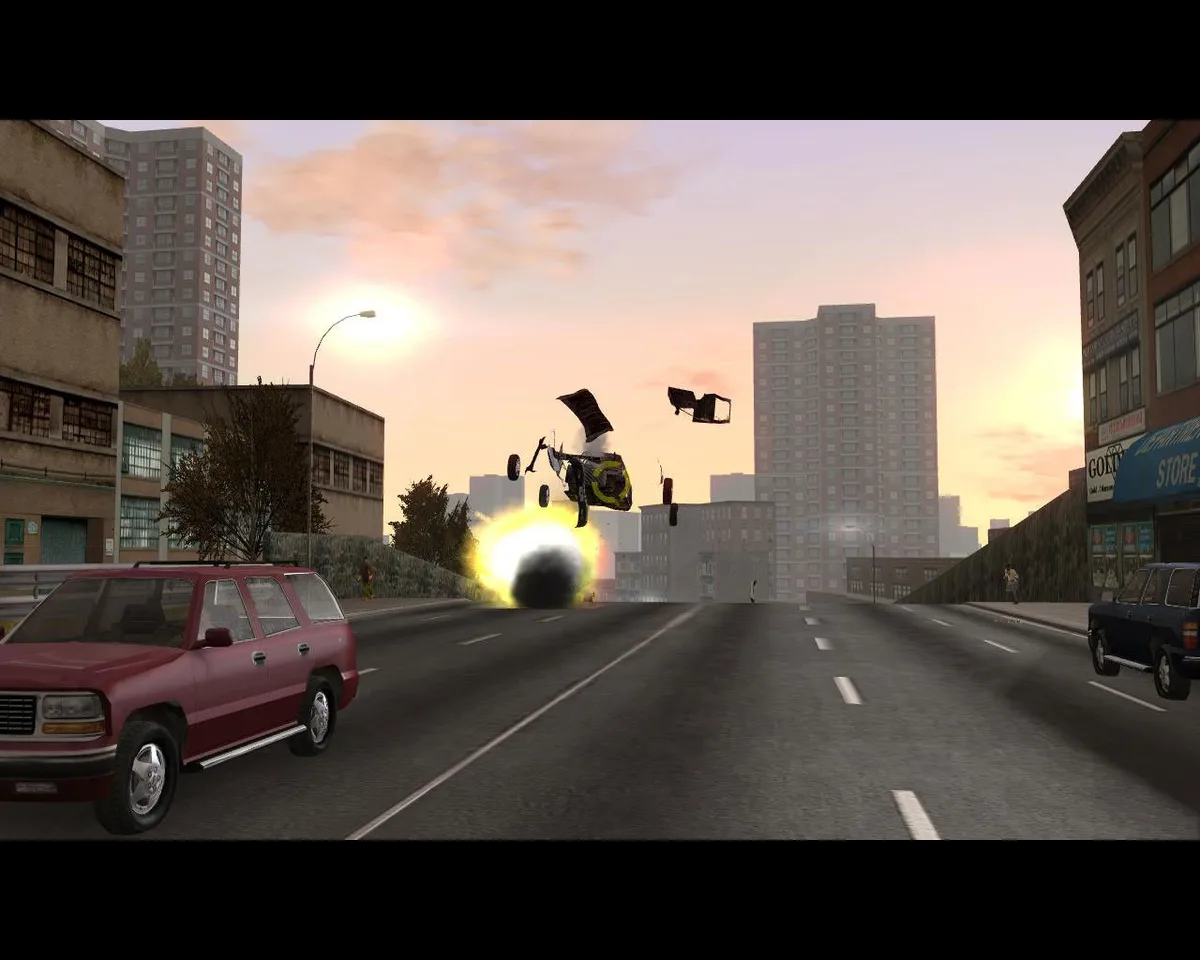
The period split also shapes what you drive. The game offers 80 cars and motorcycles, described as old-school classics and modern-day marvels, which sits naturally with a story that spans both decades. Vehicle selection is therefore tied to era choices in a way that affects what appears on the street, not just cosmetics.
Driving Controls and the Nitro Double-Tap
By default the game starts on keyboard and mouse, and the control device can be selected and customized in the control menu under Options. The driving layout is compact: W accelerates, S brakes and reverses, A and D steer, and E exits the vehicle. The handbrake, listed as the E-Brake, is on the space bar, the horn on left Ctrl, look back or free look on the middle mouse button, and C changes the camera.
Nitro is not a separate key: pressing the accelerate control twice triggers the boost, so a double tap of W fires it. Burnout is bound to the 2 key and nitro to the 3 key in the manual's driving list, so players who prefer buttons can use those instead of the double tap. Audio and view tools sit alongside driving: X and Z move to the next and previous music track, T toggles Thrill Cam, and in Thrill Cam mode the middle mouse button controls slow motion.
These bindings matter in play because they are the inputs the felony and mission systems are built around. Steering, braking and the handbrake are all you have for evading police, while nitro gives the straight-line burst for breaking distance. The camera and look-back controls let you track pursuit, and Thrill Cam's slow-motion option is a view-layer choice rather than a handling change.
The Felony Bar: Man and Machine
Committing crimes raises a felony bar and attracts the cops. The manual distinguishes two carriers of felony: the vehicle and TK himself. If officers see you exit the car, the felony transfers to TK; if they do not see the exit, it stays on the vehicle only. This makes the moment of stepping out a tactical decision rather than a routine action.
The flip side is cover on foot. If TK has a felony while walking and slips into a clean vehicle while the cops are not watching, officers have trouble recognizing him and his personal felony appears greyed out. That cover is not a reset: crimes committed in the clean car still build felony on the vehicle itself, and staying close to police for too long, especially on a bike, lets suspicion grow so the bars fill yellow and the cover blows.
Clearing the heat has its own procedures. To remove the current vehicle's felony you call in to one of the garages, and a visit to the safe house or garage also clears the personal felony. Health sits alongside this risk system: it is restored with health packs, and if TK's health reaches zero he dies, though during a job you are offered a restart from an earlier checkpoint.
Side Jobs, Money and the Mini-Map
Money comes from work, and the manual is explicit that side jobs exist so you can earn money to improve or repair your ride. The listed types include street or circuit races, repossession contracts, debt collections and even assassinations. That ties the city's optional work directly to the garage economy: a stronger, better-protected car is the product of completing side contracts rather than a separate reward track.
The mini-map is the navigation layer for this work. It shows roads in your immediate area and marks locations and points of interest; markers beyond the current range can appear on the outer edge, so distant objectives still show a direction. The legend colors jobs and objectives yellow, side jobs red and waypoints green, with additional icons for garages, safe houses and specific side-job types such as steal to order, loan shark, street race, circuit race and hitman. The map also tracks tail markers showing the location of tailing cops and goons, with intensity indicating closeness.
In practice the legend turns the map into a decision tool. A red side-job marker is a money opportunity; a yellow job or objective marker is story or mission-critical; a green waypoint is a player-set destination; and tail markers tell you when pursuit is close enough to matter. If a marker sits on the edge, the map is telling you which way to drive before the destination is in range.
Shooting: On Foot and Leaning Out the Window
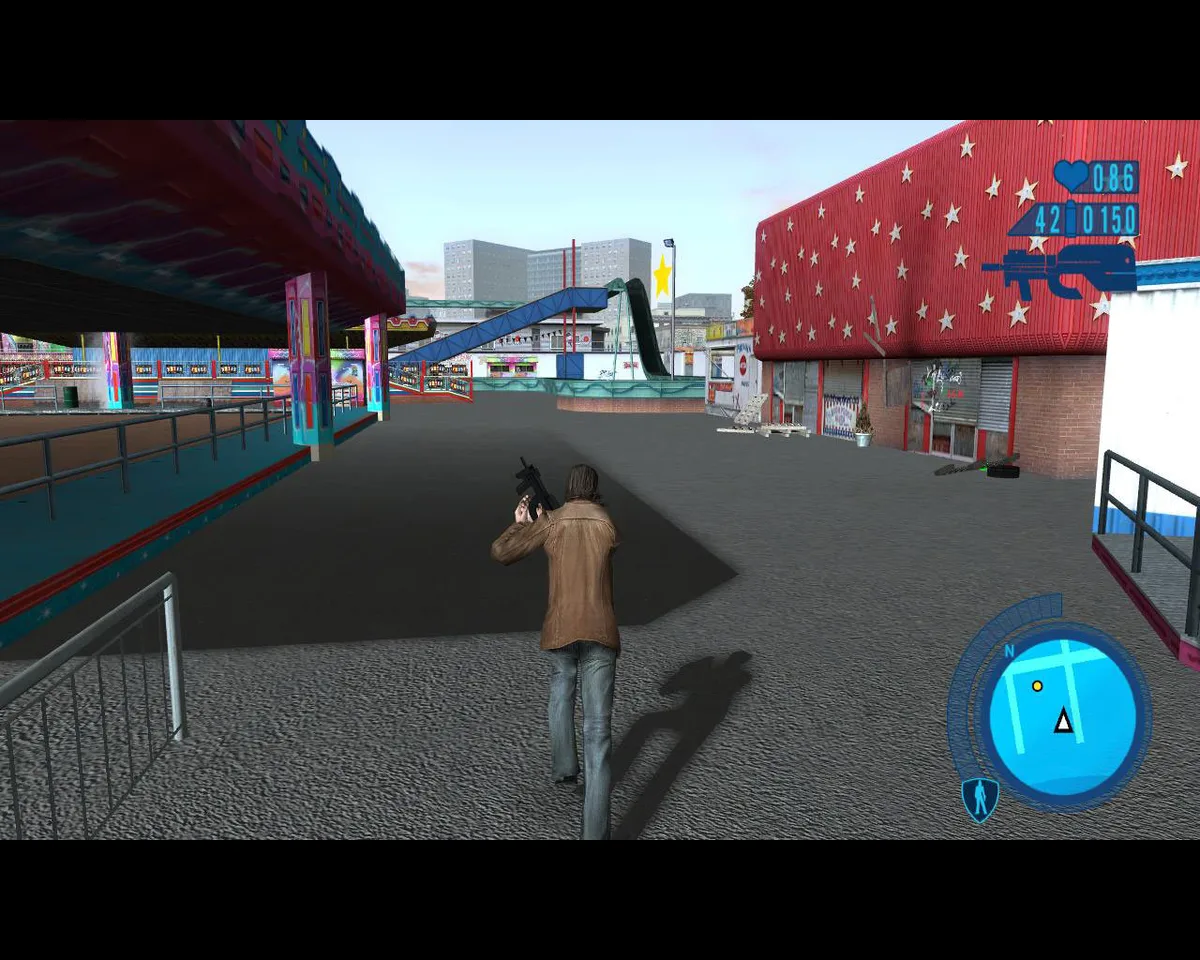
TK begins unarmed and gains more and better weaponry as the storyline progresses. Left mouse fires straight ahead, while right mouse brings up a targeting reticle that moves to the nearest and most central enemy; if no enemies are available it may lock on to pedestrians or destructible objects, and a second right click changes the lock to another target. To strafe, hold the right mouse button and move with W, A and S while keeping fire directed at the locked target. The mouse wheel changes weapons.
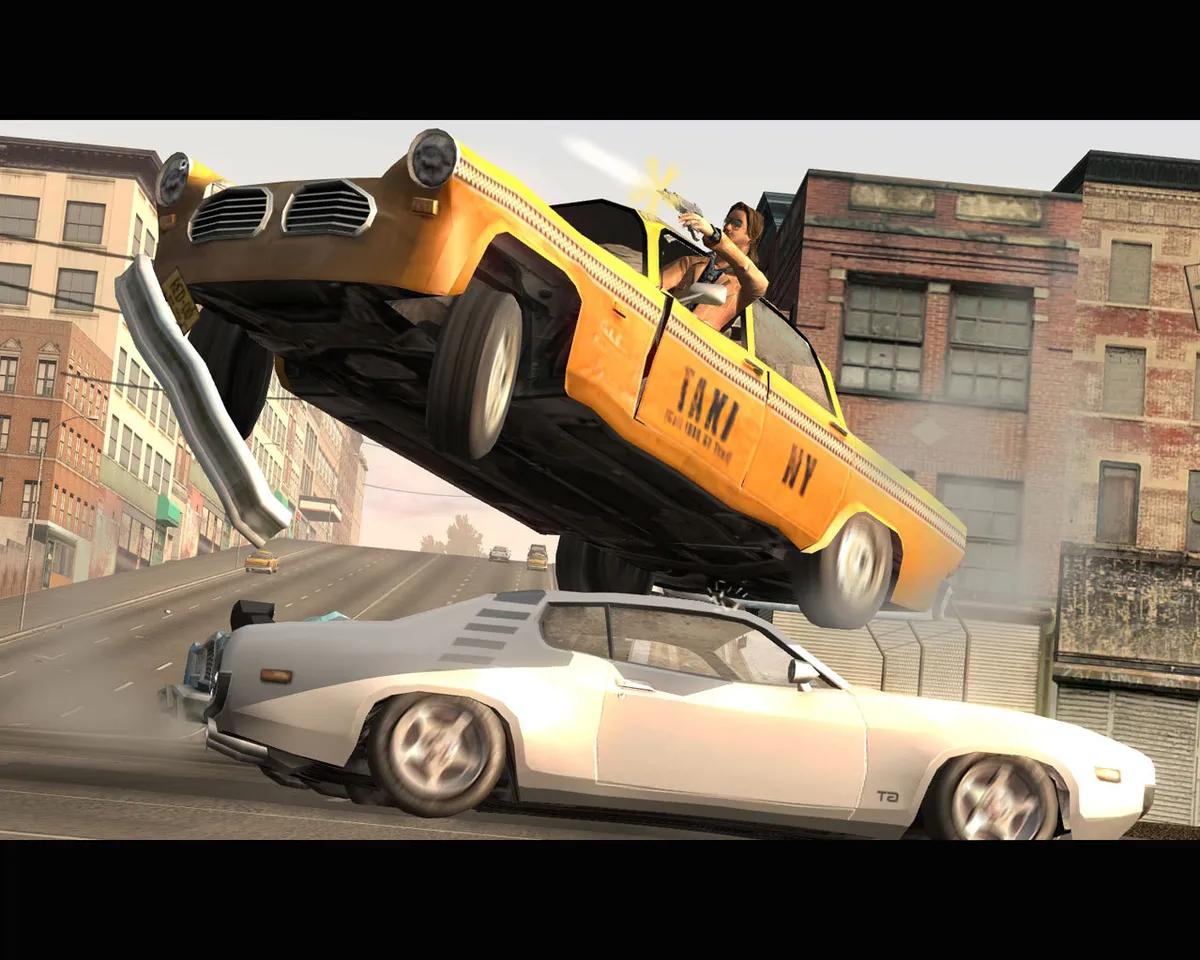
Combat and driving connect through the window. While driving, a left click makes TK lean out of the window ready to shoot, and F returns him to the normal driving position. Because that stance puts him partly outside the vehicle, switching between driving and shooting is a genuine posture change, not just a different weapon. The control menu remains the place to select or customize the input device if you prefer something other than the default keyboard and mouse.
Building the Ride: Upgrades, Repairs and Relocation
The store description lists the customization options: custom body work, engine upgrades, tunable suspensions, custom paints and accessories like bullet-proof glass and tinted windows. Combined with the 80-vehicle roster of old-school classics and modern-day marvels, that means handling and protection are things you build onto a car rather than fixed traits. Since the game spans the 70s and the modern day, the era on screen governs which machines and styling sit in front of you.
Money earned through jobs and side contracts is what funds improving or repairing the ride, which closes the loop between optional work and the garage. The Relocate option inside Ray's Autos shifts your base of operations, so the garage serves two purposes: a place to spend cash on the car and a way to move your center of operations around a large map.
Progression and How the Systems Interlock
The manual's first job shows how progression works: there is a punk hitting a liquor store who needs your skills to get him out of trouble. Get the passenger safely to his hideout and you are rewarded with a share of his loot. From there assignments bring rewards and progression, and the side jobs described above add optional income on top. The result is a loop where the story teaches the driving and shooting basics, side work pays for vehicle upkeep, and the felony rule keeps police pressure relevant between jobs.
A typical session therefore moves between three spaces: the street, where felony and pursuit decide whether you can keep driving; the side-job circuit, which funds the garage; and the garage and safe house, where the personal felony clears and the vehicle's felony can be called off. The mini-map ties them together by marking jobs, side jobs, garages, safe houses and waypoints, and the Relocate option lets you move your base when a distant part of the map starts to matter.
Scroll sideways to see the full table →
| Field | Value |
|---|---|
| Game | Driver® Parallel Lines |
| Platform (store listing) | Windows |
| Store product date | 2009 |
| Developer (store listing) | Ubisoft Reflections |
| Publisher (store listing) | Ubisoft |
| Store genre | Racing |
| Setting | 1970s New York and the modern day |
| Vehicle roster | 80 cars and motorcycles, classics and modern machines |
| Default input | Keyboard and mouse (customizable in Options) |
Sources & further reading.
- Driver® Parallel Lines — official game profile Retrieved Oct 18, 2026
- Driver® Parallel Lines — official game profile — publisher-supplied gameplay manual Retrieved Oct 18, 2026
First published .