 THE GAME ARCHIVE
Ducati World Championship is a 2007 Windows motorcycle racing game from developer Artematica Entertainment and publisher Strategy First, built around more than 70 original Ducati models presented as simulated replicas of the real machines. Its structure asks the player to earn the right to race faster hardware: win tournaments in junior classes, save the bikes those wins unlock, then carry those machines into longer championships. The manual documents a layered preparation loop behind the riding itself, from gear and tyre selection to a simulation-level dial that runs from 0 to 100.
Climbing the Ladder: Four Classes and Tournament Access
Career progression runs through four racing classes: Class C for rookies, Class B for semi-pro riders, Class A for professionals, and a separate set of events for special categories. Proving your skills across the more than 60 races spread through those four classes is the documented route toward a world championship campaign raced in your own sponsors' colors. The order in which you tackle events is largely your own, constrained mainly by which bikes you can select; for example, you can win a Class C race and then leave that class to enter a special events tournament.
Tournament access is gated by your current machine. Only tournaments marked with an exclamation point are open to you, signaling that the bike you are using is eligible. Attempting to enter an unmarked competition brings up a window listing the kinds of bikes accepted. The upper part of the screen displays details about the selected tournament, including accepted motorbikes, the number and names of rivals, the circuit name, and the tournament type. Winning a tournament saves it to your player profile automatically at the end, while abandoning one means it must be raced again; earned bikes then appear in your garage.
From Classic Road Bikes to Racing Machines: The Garage
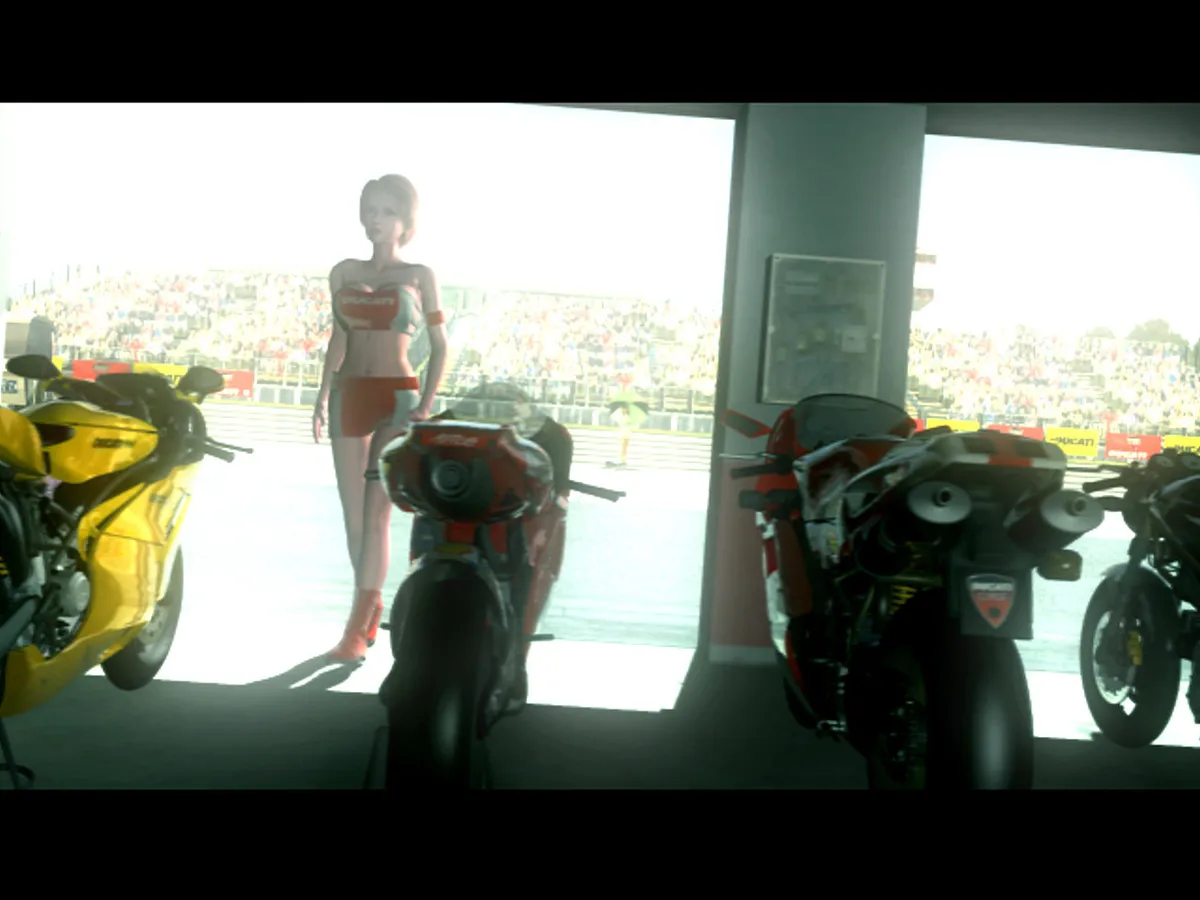
The garage organizes machines into four categories: Classic, Sport, Superbike, and Racing. These are not cosmetic labels; each category carries its own performance attributes for speed, acceleration, and steering, so the category a bike belongs to shapes how it behaves on track. Classic machines are classical, elegant road motorbikes, but they are not especially fast and do not deliver great performance. Because the categories differ in these attributes, selecting a bike for an event is also a decision about which handling and pace profile suits the circuit and the class you are entering.
Bikes reach the garage by winning tournaments: each victory is saved to your player profile automatically at the end of the tournament, and the earned machines then appear in the garage, reachable from the career or class menu. Abandoning a tournament means it must be raced again. Higher-tier machines become available as you progress through the classes, and the order you race tournaments in depends on which bikes you can choose, so a Class C win can be followed by leaving that class for a special events tournament. Rider profiles are separate, built with name, team, face, helmet, and suit.
Setup Work: Gears, Tyres and Riding Posture
Before a race, the setup screen lets you tune the machine across several named settings: gears, tyres, brakes, clutch, suspension, chassis and steering angle. Gears come in three lengths, short, medium and long; short gears give the best acceleration but are poor at high speed, long gears reverse that trade-off, and medium sits between them. Tyres likewise come in soft, medium and hard compounds, with soft rubber holding the road better but not running as fast, hard taking the opposite balance and medium splitting the difference. Because the choice interacts with the circuit's curves, matching gears and tyres to the track is part of preparation.
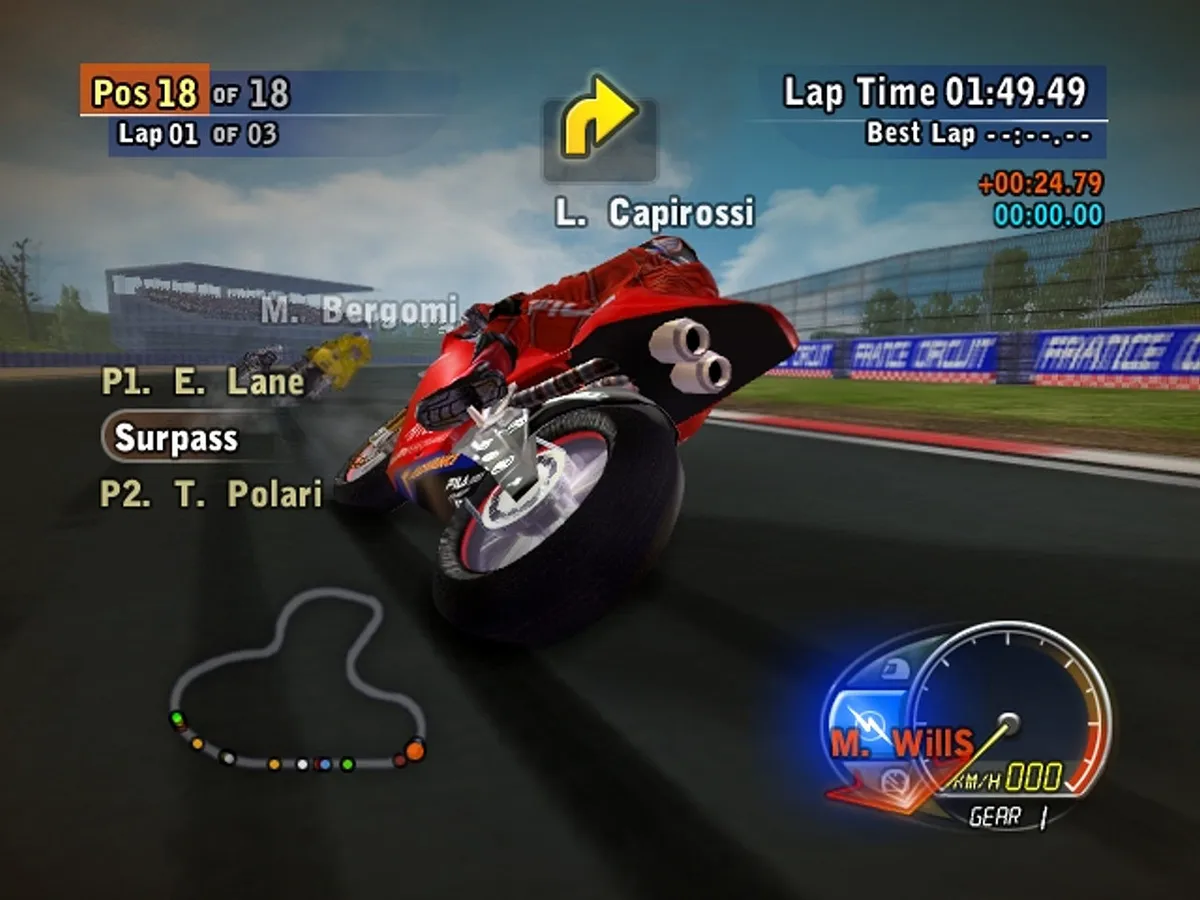
Riding posture is adjusted during the race itself, swapping between three stances. Aerodynamic posture adds speed and acceleration but makes steering harder to handle; Normal is the neutral default; Relaxed is the best choice when approaching a difficult curve or when you simply want better control. The documented advice is to hold the aerodynamic posture on long straights and switch to Normal or Relaxed before demanding turns. Setup work also carries over: in career mode, changing the bike's setup influences all the other bikes and is saved to the rider profile.
Choosing Your Simulation: Arcade, Normal or Simulation
When you select a bike in certain game modalities, the game asks which simulation level you prefer. Arcade is the easier option and applies less accident damage. Simulation uses more realistic riding and accident physics. Neutral sits between the two as a balanced mode. For Simulation specifically, the simulation level option menu lets you set the level anywhere from 0 to 100, so the realism can be tuned rather than fixed at a single value. Falls under this system damage the rider's resistance, reducing performance.
Recovery happens between races. At the end of a race, Dr. Costa examines the rider in his mobile clinic and advises whether treatment is needed. Health also returns gradually by continuing the career while avoiding further falls. During the stages of the game you can visit the pit box to repair the bike and have the rider medicated, but this costs you time. In Career Mode the bike setup can be adjusted, and falls remain the main source of the wear that these options address.
Championship and Capirex Challenge
Championship mode requires a bike from the Racing category and runs across 14 circuits. Before each race, during qualifying, you set the bike's performance and ride the circuit to try for the best lap. Points at the end of a race go only to the first 15 finishers. The manual notes that championships within Career Mode and other events can enable new motorbikes for use, so the racing machinery you bring into the series can grow as you go.
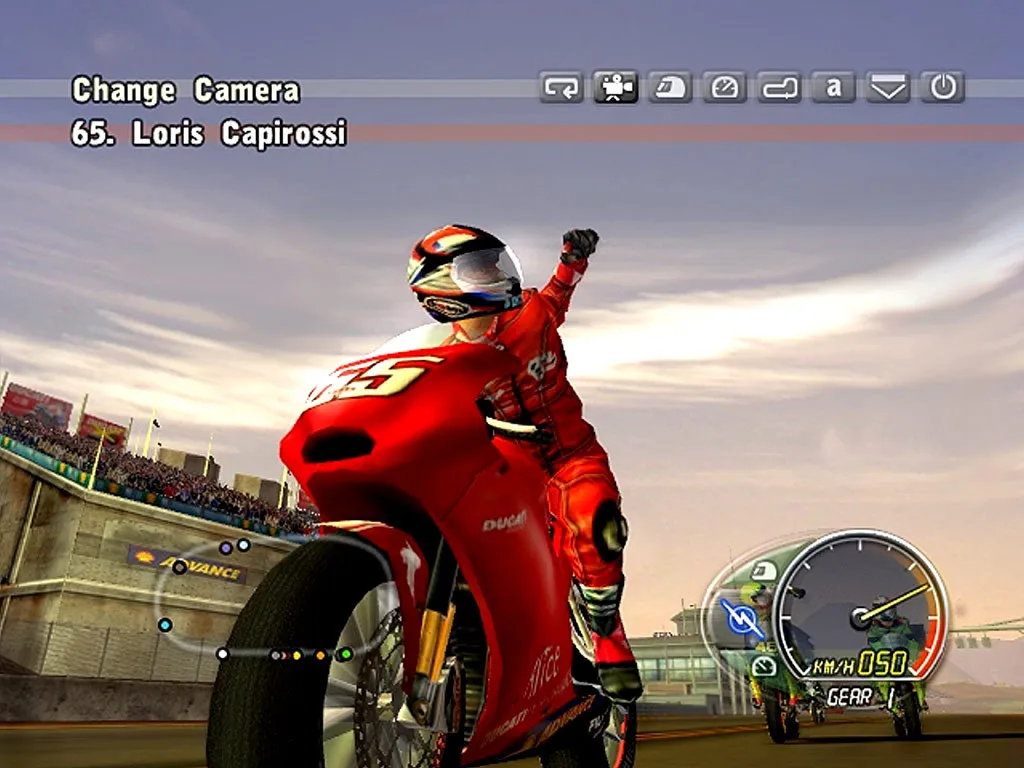
The Capirex Challenge sets you against varied tasks on motorcycles the computer selects automatically. Twelve challenges exist, but only six are open at the start; finishing those first six unlocks the rest. The special tasks ask for a set number of wheelies, stoppies and other spectacular moves within a fixed time. The mode also includes races against professional riders, endurance tests in long and exhausting races, and pursuit events, with Loris Capirossi himself as the final target once every challenge is complete.
Practical Guidance from the Documented Rules
Several documented rules translate directly into decisions at the wheel. Because only exclamation-marked tournaments are open to the bike you currently hold, entering a new class is really a question of whether you have won the right machine yet; entering an unmarked event only shows what bike types are accepted. Because short gears favor acceleration and soft tyres favor grip while their long and hard counterparts favor top speed, a twisty circuit rewards one combination and a fast one another. Because aerodynamic posture is quick but awkward to steer, the documented rhythm is to open it up on straights and drop into Normal or Relaxed ahead of difficult curves. Because simulation level runs from 0 to 100 within Simulation mode, players who want realistic physics without the harshest accident consequences have a middle setting to choose.
Scroll sideways to see the full table →
| Class | Audience |
|---|---|
| Class C | Rookie |
| Class B | Semi-pro |
| Class A | Professional |
| Events | Special events |
Sources & further reading.
- Ducati World Championship — official game profile Retrieved Oct 20, 2026
- Ducati World Championship — official game profile — publisher-supplied gameplay manual Retrieved Oct 20, 2026
First published .