 THE GAME ARCHIVE
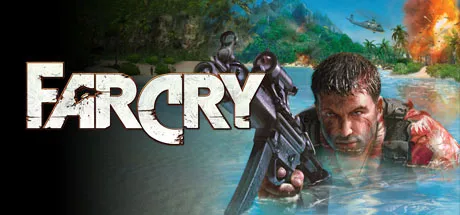
Far Cry is a first-person action shooter set on a tropical island that hides a militia, an army of mercenaries and a conspiracy beneath its postcard surface. The official Steam profile frames it as a "cunningly detailed action shooter" that pushes combat design toward long sightlines, coordinated enemy units and a heavily simulated environment.
The Premise: A Boat, a Missing Reporter and a Militia Island
The story begins through the eyes of Jack Carver, a freelance mariner who accepts a large sum of money from a reporter named Valerie to take her to an unspoiled tropical island. Shortly after they dock, a mysterious militia group opens fire on Jack's boat. His vessel is destroyed, his money is gone, and Valerie disappears, leaving Jack alone among the wilds of the island facing an army of mercenaries with only a gun and his wits.
Pushing deeper into the jungle changes the stakes. Jack meets an insider within the militia who reveals the mercenaries' true intentions and presents him with a choice: fight the deadliest mercenaries, or allow humanity to be condemned by a maniac's agenda. This premise structures the campaign as a progression from personal survival to a larger confrontation.
The Core Loop: Recon, Choose an Angle, Then Fight
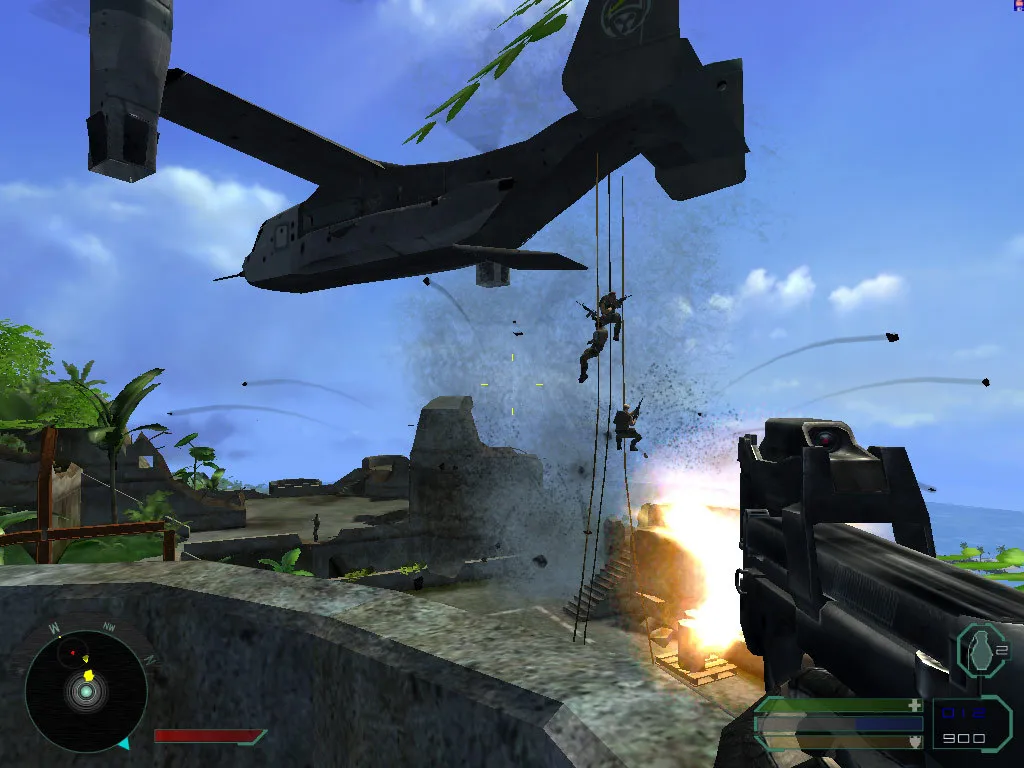
Far Cry's loop revolves around sighting enemies before they see you, then deciding how to engage. The store description calls out an 800-meter scalable view system for long-range gunplay, with motion-sensing binoculars used to lock onto enemies from a distance. From that vantage, the player can choose between long-range sniping and close-quarters firefights, with everything in between available as a tactical option.
That choice matters because the island's opponents are programmed with adaptive group tactics. Mercenary units include snipers, stalkers, scouts and grenadiers who are described as engaging from all angles, distances and terrains in coordinated strikes, and commanders can call for reinforcements by land, sea or air. The practical effect is that a player who lines up a single long shot may still have to deal with a widening engagement as reinforcements arrive.
Mechanics: A Slate of Combat Skills
The official description frames Far Cry's combat as a dynamic set of skills rather than a single shooting mode. The documented skills include close-quarters combat, long-range shooting, search-and-destroy tactics, stealth operations and combat driving, exercised across indoor and outdoor environments. Together these skills describe a game that expects the player to switch approaches depending on terrain and enemy composition rather than relying on one tactic for the whole campaign.
Stealth and long-range shooting are complementary in this design. A player with the described motion-sensing binoculars can mark enemies from a distance, then decide whether the encounter is better resolved from cover at range or by closing into close-quarters combat. Combat driving adds a third layer, since vehicles move the player between engagement zones and can themselves become part of a fight.
The Engine Behind the Violence
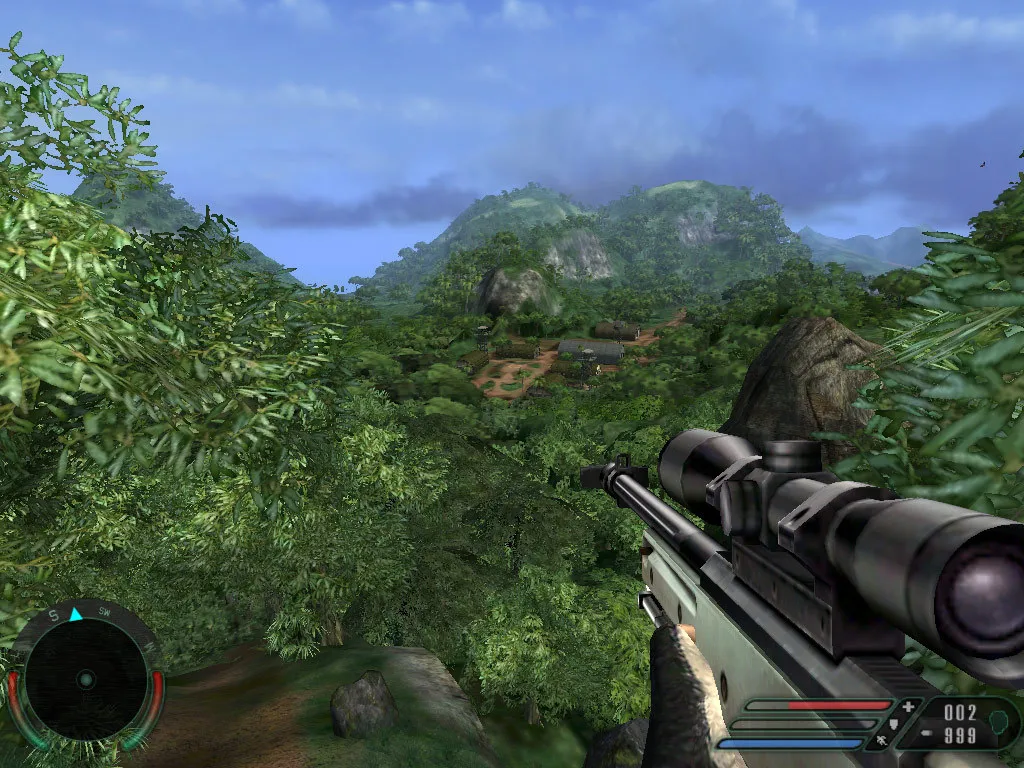
The official profile credits the game's "next-generation Far Cry engine" with a set of rendering and simulation features: Polybump mapping, advanced environment and character physics, destructible terrain, dynamic lighting, motion-captured animation and total surround sound. In play, these are the systems that make the island feel reactive, from terrain that can be damaged to lighting and audio that respond to the environment.
Atmosphere is treated as a gameplay-facing feature rather than pure presentation. The profile describes a misleadingly perfect setting with incredible lighting and shadows, adaptive audio and weather effects, all of which reinforce the tension between the island's beauty and the danger hidden inside it.
Progression and Structure
What is documented about progression is narrative rather than mechanical. Jack moves from surviving an ambush to probing deeper into the jungle, where he encounters the militia insider and receives the campaign's defining choice. The player's growing familiarity with the island is implied by that movement between environments and by the way the combat skills are described as a slate to be mastered across indoor and outdoor spaces.
Starting Guidance Backed by the Source
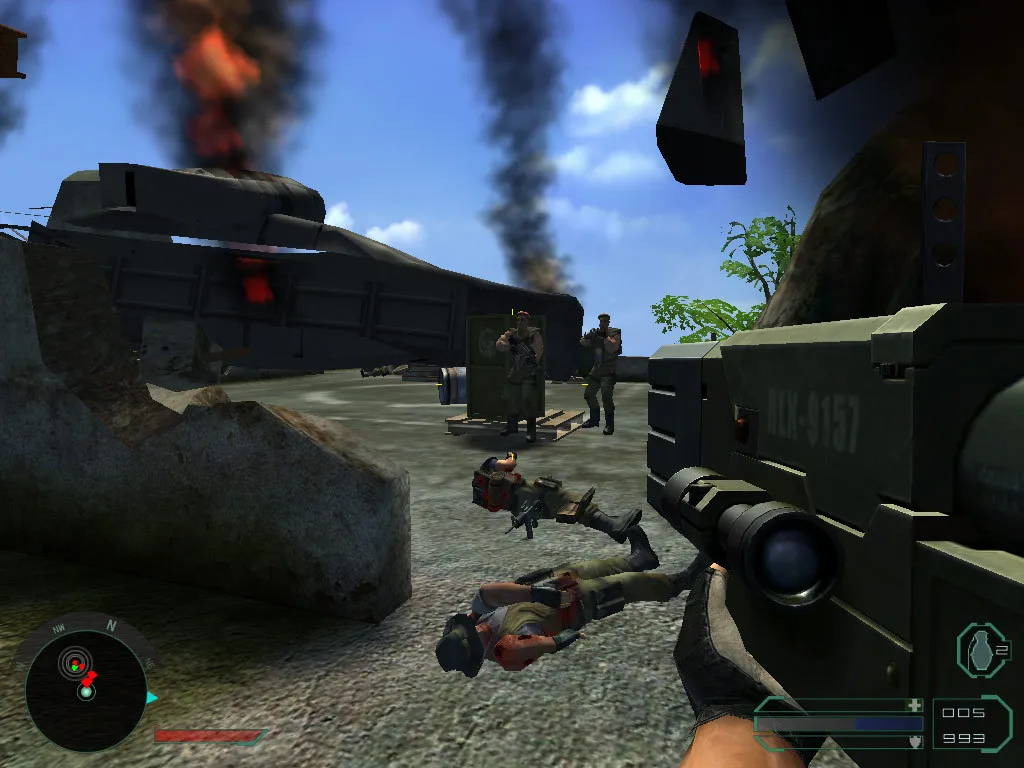
The official description supports a few practical habits without inventing a walkthrough. Use the scalable view system and motion-sensing binoculars to spot enemies at distance before committing to a fight. Then pick the engagement style that matches the situation, because the same game that supports long-range sniping also supports close-quarters combat and stealth.
Expect coordinated responses rather than isolated opponents. Because commanders can call reinforcements by land, sea or air, and because unit types cover snipers, stalkers, scouts and grenadiers, it helps to plan an exit or a fallback position before the first shot. The documented design rewards reading terrain and enemy roles rather than holding a single firing line.
Reference Facts
The table below summarizes the metadata attached to this Steam entry. It is a supplement to the discussion above, not a substitute for it.
Scroll sideways to see the full table →
| Field | Value |
|---|---|
| Title | Far Cry® |
| Release year (this entry) | 2008 |
| Platform listed | Windows |
| Developer | Crytek Studios |
| Publisher | Ubisoft |
| Genre | Action |
| Store source | Steam |
Sources & further reading.
- Far Cry® — official game profileRetrieved Oct 11, 2026
First published .