 THE GAME ARCHIVE
Freedom Force vs. the Third Reich puts you in charge of a superhero squad whose decisions extend beyond choosing an enemy to hit. You select a mission team, direct individual heroes or groups, and decide when an attack deserves extra energy. A strong character can turn a car into a weapon, but destructive power has consequences: civilian injuries and destroyed buildings cost prestige. The interesting tension is between using the tools available and controlling the damage they leave behind.
Selecting a Team and Dividing Its Orders
Mission Briefing presents information about the current mission and lets you select up to four heroes. That ceiling does not guarantee four unrestricted choices: some missions require particular characters, force others to stay back, or use fewer than four heroes. Read the briefing before treating squad composition as an open invitation to bring the same team everywhere. The available roster for a mission can itself be part of the problem you must solve.
Once deployed, keys 1–4 select individual characters and 5 selects the entire squad. Holding E with a numbered selection adds or subtracts characters. Mouse controls offer the same flexibility through portraits, character clicks and drag selection, with E modifying the group. These controls let you separate one hero’s task from the rest of the team rather than issuing every command to everyone. In single player, P or a right-click pauses the game, giving you a way to interrupt the action while considering your next move.
Energy Changes How Attacks Behave
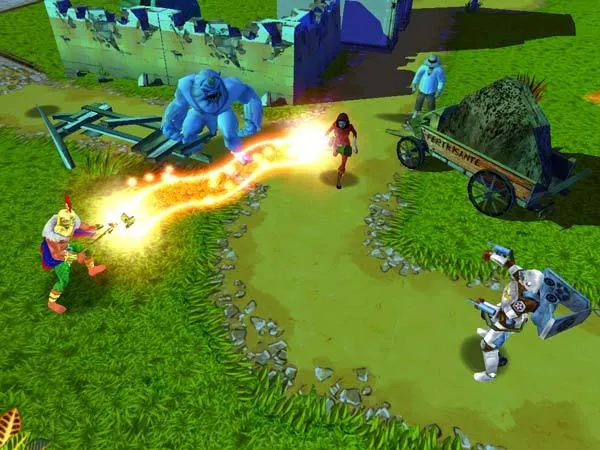
A hero’s energy display uses three purple bars, and the command menu shows each action’s energy requirement on its right side. More importantly, energy cost affects command repetition. Once initiated, a power that consumes no energy repeats automatically until its enemy is knocked out or destroyed. An energy-consuming power executes only once each time you request it. A sustained basic attack and a single expenditure of energy therefore demand different amounts of follow-up attention.
Overpowering makes that spending decision explicit. The manual’s power-command explanation says holding Ctrl increases an attack’s damage at the cost of one additional energy bar. A power already consuming all three bars cannot be overpowered. Rather than assuming every attack can receive the same boost, compare its normal requirement with the extra bar needed. Command mouse-over information also exposes damage, stun chance, knockback, hit chance and other details, giving you more to judge than raw damage alone.
Match the Attack to the Target
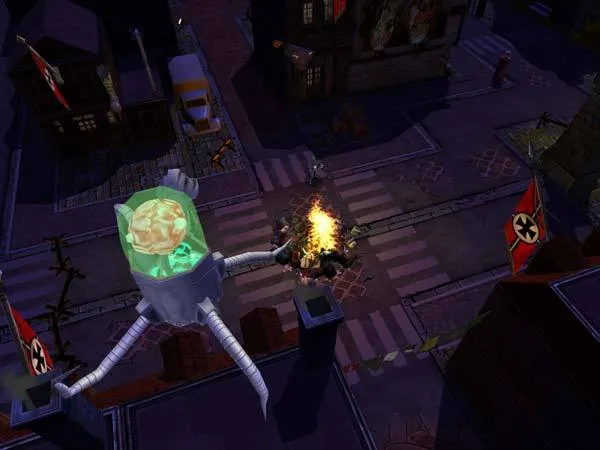
Attack form and damage type are separate considerations. Beam attacks connect attacker and enemy and cannot be dodged; area attacks damage the space around the attacker and likewise cannot be dodged. Direct attacks affect a single enemy, do not travel through intervening space, and cannot miss or be dodged. These distinctions make target count and attack geometry meaningful alongside damage: an attack centered on the hero serves a different purpose from one directed at a single opponent.
Characters can also resist some damage types while remaining vulnerable to others. To compare a power with its intended victim, select the power from the command menu and read its damage type in the status bar, then mouse over the target to inspect its resistances. This is a useful starting habit: inspect the matchup before committing energy. An attack’s delivery method tells you how it reaches an enemy, but the resistance information helps you judge whether that damage type suits the target.
Cars, Canisters and Recovery
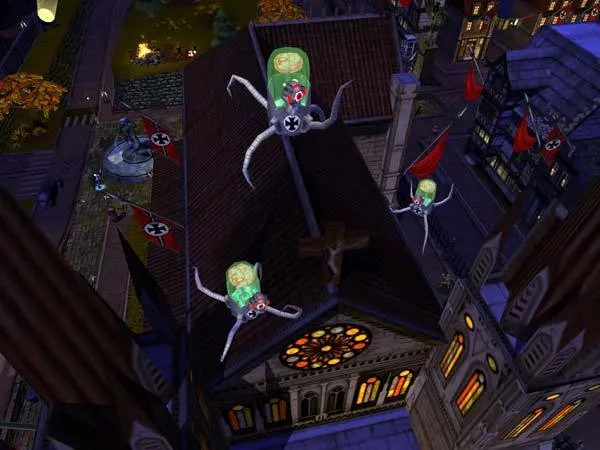
Sufficiently strong heroes can pick up objects and use them as weapons without spending energy. A yellow hand identifies an object you can select, and left-clicking a target while carrying an object throws or wields it. Large items such as lampposts and cars provide enormous reach and can hurt several enemies at once. The restriction is equally important: using an object prevents the hero from using other attacks. An improvised weapon is an alternative attack option, not a free addition to the entire power set.
Canisters offer several distinct benefits: energy canisters fill energy and temporarily increase its regain rate, health canisters restore full health, experience canisters add experience, and prestige canisters benefit the team. Most heroes also have one heroic deed per mission. Heroic Revival normally restores full health and energy and removes negative states. It can return a knocked-out hero to consciousness, but then restores only a fraction of full health. Its timing therefore matters: recovery before collapse produces a different health result from recovery afterward.
Objectives, Prestige and Power Tiers
Red on-screen arrows identify primary objectives required to win; yellow arrows mark optional secondary objectives that grant more prestige. Objectives, knocked-out enemies and prestige canisters contribute to the prestige reported at debriefing, while civilian injuries and building destruction subtract points. This creates a reason to distinguish mission completion from a cleaner performance. Wide-reaching weapons may be useful, but the environment is destructible, so winning a fight and preserving your prestige are not automatically the same achievement.
Individual development runs through experience and character points. Participating heroes earn experience from missions; recruited heroes who sit out earn less. Enough experience produces a level and character points, which increase powers or purchase attributes granting new abilities. Advanced powers also require investment in existing ones: early powers must reach level 3 before more advanced options become accessible, and unavailable powers appear greyed out. Progression is consequently not just a choice between familiar and new abilities; strengthening established powers is part of opening the next tier.
Sources & further reading.
- Freedom Force vs. the Third Reich — official game profileRetrieved Nov 22, 2026
- Freedom Force vs. the Third Reich — official game profile — publisher-supplied gameplay manualRetrieved Nov 22, 2026
First published .