 THE GAME ARCHIVE
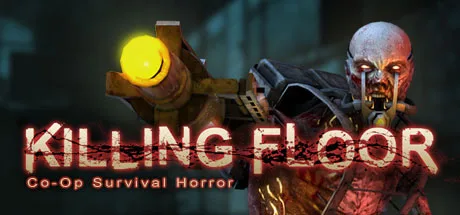
Killing Floor arrived in 2009 as a co-op survival horror first-person shooter built by Tripwire Interactive, a studio that also published the game. Its official store profile lists Windows, macOS and Linux as supported platforms and files the title under the broad Action genre. The pitch reads like a grindhouse B-movie crossed with a squad shooter: you and up to five friends are military operatives dropped into devastated English cities and countryside after a military cloning program goes catastrophically wrong, and your job is simple to state and hard to survive. Cleanse the area of failed experiments. Stay alive doing it.
A premise built for repeatable panic
The narrative frame is spare by design, and the official description leans into atmosphere rather than plot: the cloning experiments failed, the specimens escaped, and the areas you drop into are already ruined. That framing matters mechanically because it removes anything that would slow the loop down. There is no dialogue tree or hub to navigate between missions; the locations are the mission. The stated objective is to survive long enough to cleanse an area of the failed experiments, which effectively makes every match a self-contained siege with a clear finishing condition.
The core loop: waves, specimens and the space between fights
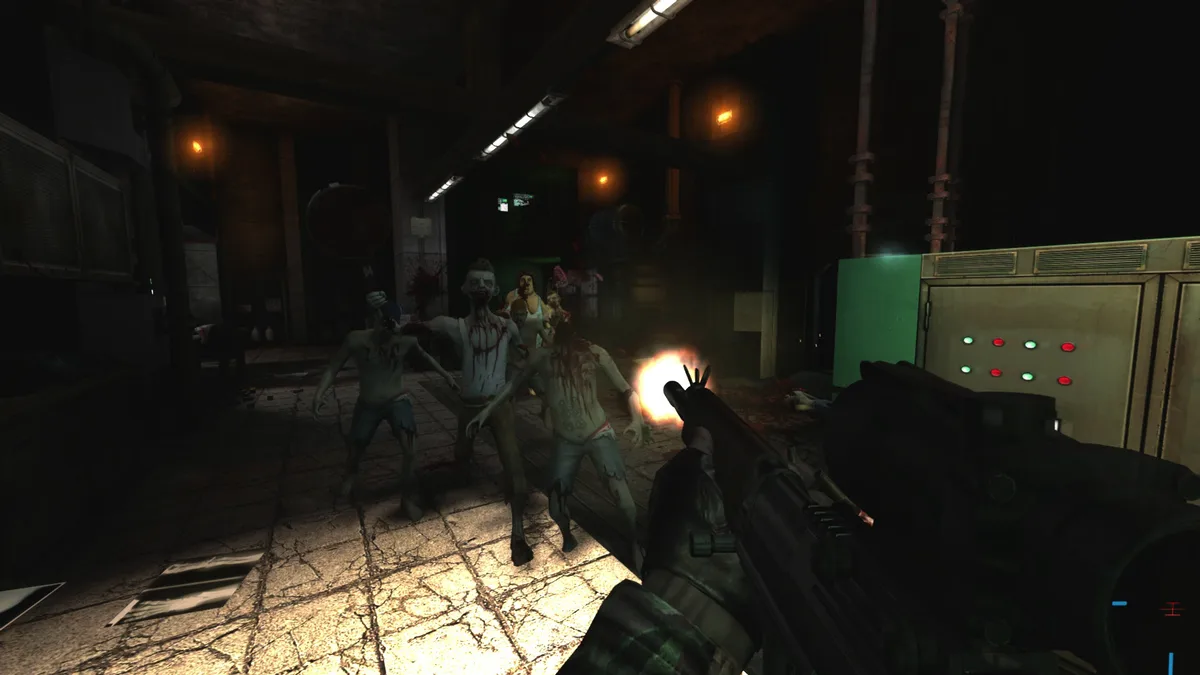
Cooperative gameplay supports up to six players fighting multiple waves of specimens, so the loop is structurally a wave defense. What distinguishes it from a straight horde shooter is where the decisions live: in the map, not just in the trigger. The play areas are described as open and non-linear, giving teams the choice of when and where to make a stand, or when to run instead. Doors can be welded shut to steer the monster horde down alternate corridors. That single mechanic converts a static arena into a negotiation between the squad and the incoming specimens: you are not just deciding how to kill things, you are deciding which routes exist at all.
ZEDtime: slow motion as a shared event
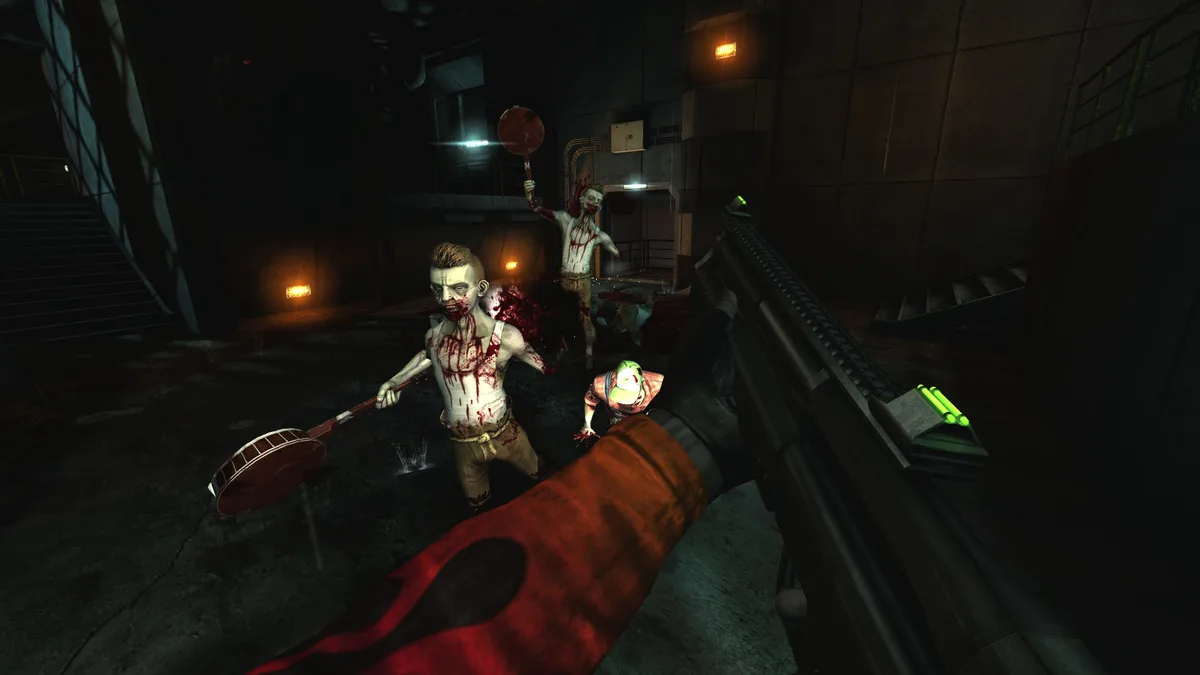
Killing Floor's most distinctive combat system is ZEDtime, a slow-motion effect that highlights crucial and violent creature deaths. Crucially, the official description specifies that this works even in multiplayer, meaning the slowdown is not a solo-only camera trick or a local cosmetic toggle. In a six-player match, a shared time dilation event is a coordination problem as much as a visual flourish: the whole squad sees the same quiet, stretched moment, then the tempo snaps back. It is one of the clearest examples of the game styling its own violence rather than simply delivering it.
What you bring to the fight
The roster of player weapons is broad: the store text advertises 33+ weapons, ranging from knives and fire-axes up to pump shotguns, rifles and a flamethrower. The enemy side is likewise varied rather than uniform, with ten different monster types that may attack with teeth and claws, chainsaws, chain-guns or rocket-launchers. Teams are expected to equip for support as well as damage: welders, medical tools and body armor are listed as ways to improve the odds of survival. Together, that suggests a loadout layer where a squad that only optimizes for damage output is leaving tools on the table.
Persistent Perks: progression that outlives the match
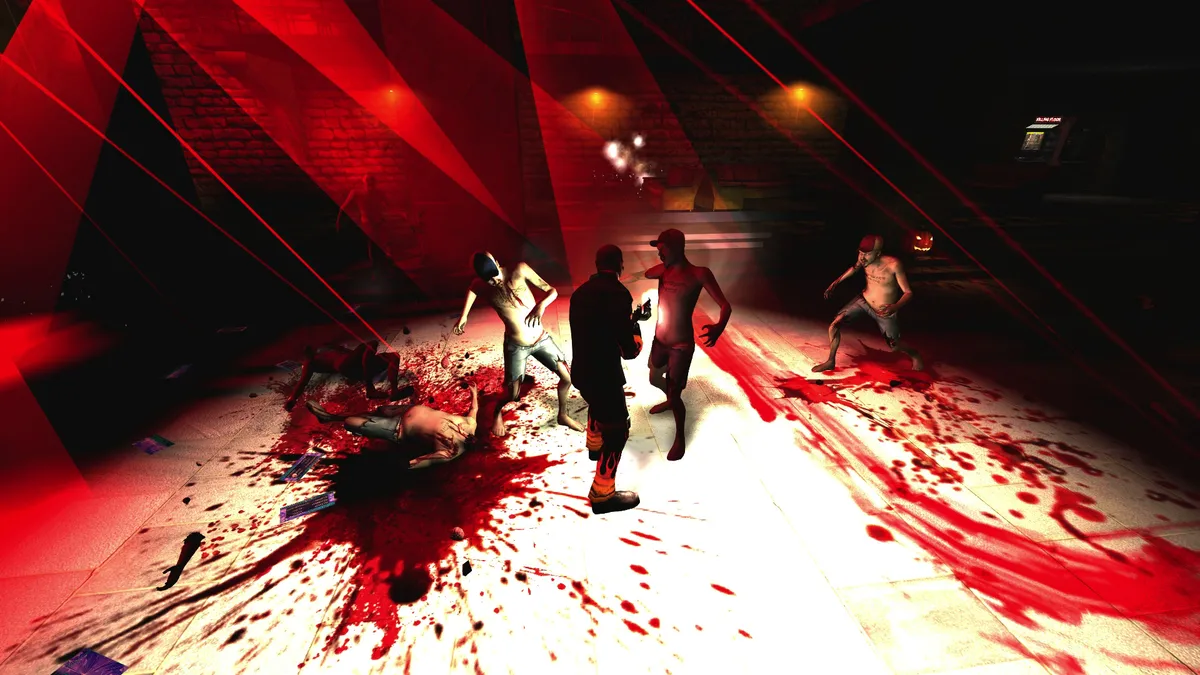
The progression hook is the Persistent Perks system. Rather than resetting every round, it lets players convert in-game achievements into permanent improvements to their character's skills and abilities. Perks are also a team-composition tool, not just a personal upgrade track: the description explicitly frames choosing which Perks to play with as a way to best balance out a co-op squad against the horrors. So the system rewards long-term investment while still asking, at the moment of loadout, what role the team is currently short on. That dual purpose is a big part of why the game keeps pulling squads back in.
Modes and match configuration
Killing Floor supports both online co-op for up to six players and a solo game mode for offline play, so the structure holds up without a lobby. Beyond that, the game is described as fully configurable: players can change the difficulty level, the number of creature waves, or even set up their own favorite waves of monsters. That flexibility effectively turns the wave structure into a dial, letting a session be a short scrim or a long siege, and letting a group tune the pressure to their own skill level rather than accepting one fixed challenge curve.
Starting out with the documented facts
If you are approaching the game for the first time, the official material supports a few practical starting reads. It is built for groups, with up to six-player co-op as the headline mode, but solo offline play is a supported fallback. Perks persist and improve your character over time, so early sessions are investments, not throwaways. The game asks you to treat equipment as more than firepower, since welders, medical tools and body armor are explicitly part of the survival toolkit. And the difficulty and wave count are adjustable, so a new squad can lower the ceiling while learning the maps.
Why the design still reads as distinctive
The combination is unusual on paper: a wave shooter that hands you non-linear spaces and door welding, so the level itself becomes a resource you spend. Slow-motion that everyone shares asks the team to read the same moment at the same time. A persistent perk system makes individual investment matter across sessions, while perk selection keeps that investment pointed at the squad's needs. And the configurable wave and difficulty settings let the game be easier or harsher without changing its core. None of these pieces is remarkable alone; the fact that they are all documented as part of one 2009 package is what makes the title hold up as a subject.
Killing Floor's official profile marks it as a 2009 Tripwire Interactive title spanning Windows, macOS and Linux, with six-player co-op and a solo mode, a persistent perk progression layer, 33+ weapons and ten specimen types, ZEDtime slow motion, and open, configurable wave-based survival. That is a lot of documented game for a store page to carry; the details not covered there, from control layout to the specifics of individual maps, are better answered by the game itself and by hands-on play than by this summary.
Scroll sideways to see the full table →
| Field | Documented value |
|---|---|
| Game title | Killing Floor |
| Release year (this Steam entry) | 2009 |
| Developer | Tripwire Interactive |
| Publisher | Tripwire Interactive |
| Genre | Action |
| Platforms listed | Windows, macOS, Linux |
| Co-op | Up to six players |
| Solo | Offline solo game mode |
| Progression | Persistent Perks system |
| Weapons | 33+ advertised |
| Enemy types | 10 different monster types |
| Distinctive system | ZEDtime slow motion, including in multiplayer |
Sources & further reading.
- Killing Floor — official game profileRetrieved Oct 11, 2026
First published .