 THE GAME ARCHIVE
Leading the Shadowbeast and Undead Hordes
In Kohan: Ahriman's Gift, you command the evil side of the conflict in the fantasy world of Khaldun. Your forces consist of Shadowbeasts and Undead, and your objective is to ravage the countryside and drive all enemies before you. The game is a stand-alone prequel to Kohan: Immortal Sovereigns, built on that game's gameplay. It introduces two new political factions and two new independent races, which shape the armies you can field and the alliances or enmities you encounter.
The stand-alone prequel expands the roster with dozens of new heroes and units that you can add to your Shadowbeast and Undead armies. New campaigns provide scenarios for leading these forces, while improved artificial intelligence governs how opponents respond. The two new political factions and two new independent races interact with the existing framework from Kohan: Immortal Sovereigns, giving you different groups to command or confront as you spread evil across Khaldun. The Steam product date for this edition is not the original release year, and no host-console backup, restore, or suspend features are part of the gameplay described.
Armies, Heroes, and the Units You Command
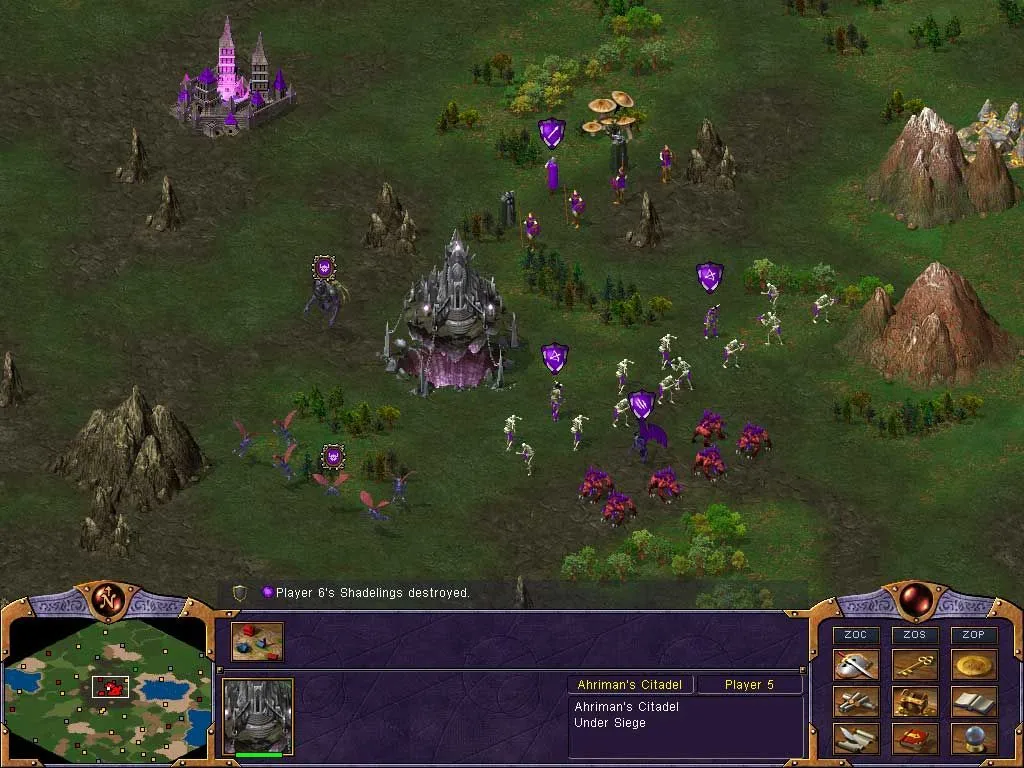
The roster stretches to more than ninety detailed units, each contributing a distinct body to the Shadowbeast and Undead formations you assemble. Alongside those rank-and-file troops sit more than seventy different heroes, giving you a deep bench of named figures to slot into your forces. Composition is the central act of unit management here: because the available pieces run so wide, building an army becomes a matter of deciding which units and which heroes fill the ranks rather than fielding a single uniform block. The two political factions and two independent races broaden the pool further, so the same management decisions recur across different groups.
Heroes and ordinary units serve as the two layers of that management, with over seventy heroes available to lead or reinforce the more than ninety unit types. Each choice of which heroes accompany which troops shapes the army you bring into a scenario, and the catalogue's diversity is what makes mixed composition possible in the first place. The five campaigns supply the scenarios in which these forces are fielded, while the forty custom-designed maps, including official tournament maps, offer further ground for the same units. Multiplayer support for up to eight players extends the same roster into larger contests.
Spells and Technologies That Shape Strategy
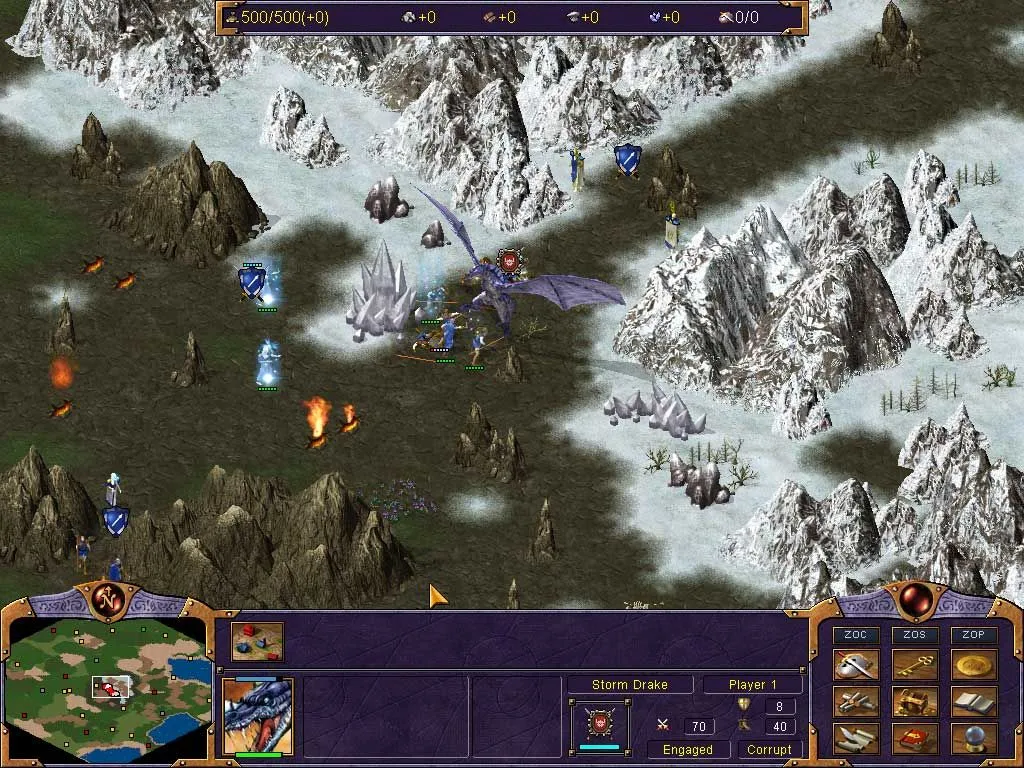
Kohan: Ahriman's Gift arms the Shadowbeast and Undead commander with a broad magical arsenal of more than one hundred spells. Those spells sit alongside a separate progression layer covering more than seventy-five technologies, so a player's strategic reach grows through two distinct channels rather than a single upgrade path. The technology layer feeds a technology tree that governs unit upgrades and abilities, meaning research choices feed directly back into what the troops and heroes on the field can do. The scale of both systems gives each faction and each independent race its own room to develop along different lines.
Because upgrades and abilities are unlocked through the technology tree, the wide roster of more than ninety units and more than seventy heroes is not fixed at the outset of a scenario. Players who invest in technologies can reshape what their formations are capable of, while spells add a second set of options that operate alongside those researched improvements. The two political factions and two independent races each draw on this same framework, so the interplay between spell selection and technological investment recurs across the groups a player commands or fights. Together the spell catalog and the technology tree define how an army develops from its opening composition into a tuned force.
Campaigns, Maps, and Multiplayer Battles
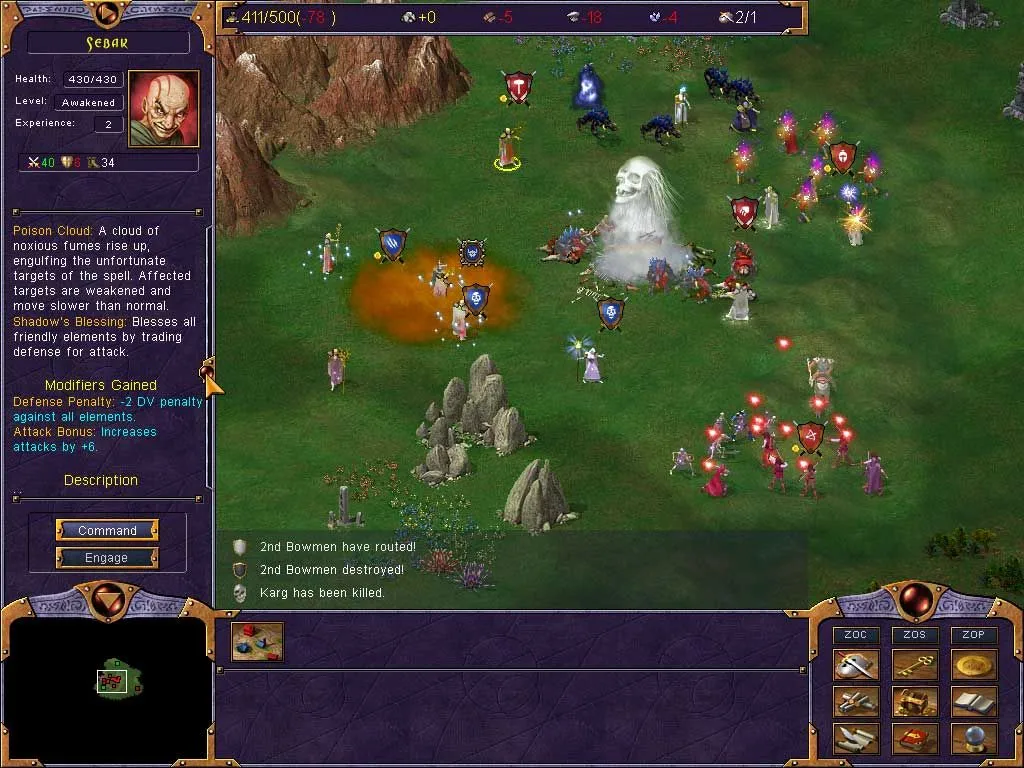
Single-player play in this stand-alone prequel is organized around five campaigns, each a sequence of missions to explore and conquer rather than a one-off skirmish. Beyond those campaigns, the package lists an additional forty custom-designed maps, several of which are official tournament maps. That map pool gives the roster from Kohan: Immortal Sovereigns and its expansion a set of authored battlegrounds to be fought over, while the campaigns themselves supply the scenarios in which your Shadowbeast and Undead forces push toward their conquest goals.
For contests against other players, multiplayer support spans up to eight players, letting the same faction choices and army compositions collide in a single large match. The documented game-type list runs to seven different modes, among them Bloodbath and King of the Hill, so a battle's rules change with the type selected rather than following one universal format. A random map generator and map editors round out the setup, allowing Deathmatch, Scenario, and Campaign maps to be made before play begins.
AI Opponents and Building Your Own Maps
Once a scenario begins, opponents come from a pool of 30 different computer-controlled players, each documented as bringing a different style of play to the match. Rather than facing one fixed adversary, you meet a roster of AI personalities whose varied approaches shape how a battle unfolds. This sits alongside the random map generator and map editors, so the setup for a fight can be authored or generated before these opponents take the field. The documented gameplay does not specify the exact behaviors or tactics assigned to each of the 30 AI players.
For building your own battlefields, the game includes a random map generator and map editors that let you custom make your own Deathmatch, Scenario, and Campaign maps. These tools give you three named map categories to produce before play begins, and the generated or edited results join the existing pool of authored ground, including the 40 custom-designed maps and the official tournament maps. The AI roster of 30 different players then contests those maps when a match starts. The documentation does not describe the editor's interface, terrain options, or the specific settings you adjust while creating a map.
Sources & further reading.
- Kohan: Ahriman's Gift — official game profile Retrieved Oct 21, 2026
First published .