 THE GAME ARCHIVE
LEGO Star Wars III: The Clone Wars arrived in 2011 as a Windows release from developer Traveller's Tales, published under the LucasArts, Lucasfilm and Disney banners. Its premise is a hybrid: it retells stories from the Star Wars: The Clone Wars animated series inside the block-building, character-swapping template the LEGO franchise had established, while adding systems built specifically for the scale of a galactic war. The official description frames it as an action and adventure game that leans on humor and accessibility alongside new mechanics, and the specific mechanics it names are what separate this entry from earlier LEGO Star Wars titles.
Premise and Setting
Rather than retelling the original trilogy or the prequel films, the game draws its narrative material from the Clone Wars era as presented in the animated series. Players take on the roles of Separatists, Republic heroes and bounty hunters across the campaign, tracking characters and fighting through locations tied to that conflict. The framing is deliberately broad: the campaign spans the entire Clone Wars era, which gives the level structure room to move between large battlefield set pieces and smaller character-driven encounters. That era choice also explains the emphasis on armies and vehicles rather than the small party dynamics of earlier LEGO Star Wars games.
The Core Loop: Team Switching and Battlefield Control
The most distinctive structural addition is SceneSwap. Instead of controlling a single group of characters in one place, players manage multiple teams in separate locations and switch between them with a button press. Each team works toward its own objectives, and progress depends on coordinating what those separated groups accomplish. This matters beyond novelty: it lets a single mission contain two simultaneous problems, so the player shifts between them rather than finishing one area and walking to the next. SceneSwap works in both single-player and multiplayer co-op, meaning the same design supports a solo player juggling teams and two players dividing attention between them.
SceneSwap sits alongside Massive Ground Battles, a system in which players take control of battalions of clone troopers against the droid army. Within that mode the documented actions are building bases, deploying vehicles and calling in reinforcements to defeat opponents. That is a different kind of play from standard LEGO level traversal — it is closer to managing a push across a battlefield, with base construction and reinforcement calls as the tools for sustaining it. The two systems complement each other: SceneSwap splits attention across locations, while ground battles give each location something substantial to do.
Combat, Force Abilities and Traversal Tools
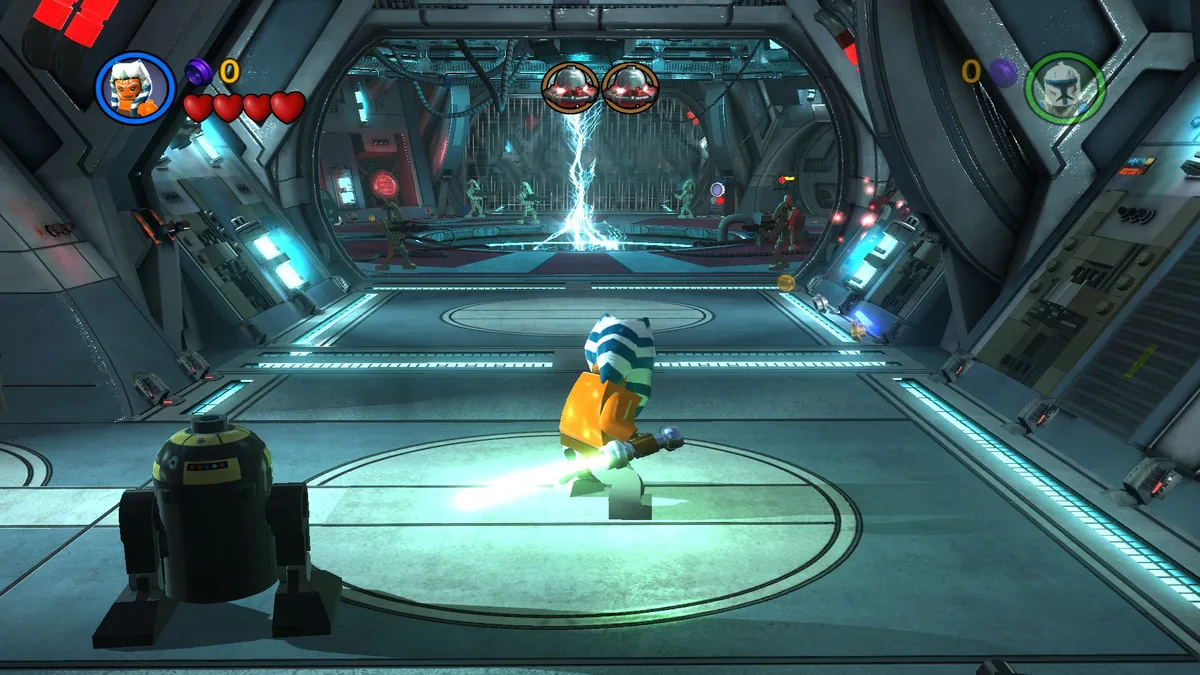
Combat in this entry expands the character move set, giving players more dynamic attacks and greater freedom when fighting opponents. Lightsaber users gain specific abilities beyond the standard swing: lightsaber cutting, lightsaber throwing and lightsaber climbing. Each of those names describes a distinct action rather than a passive upgrade, so a Jedi character can attack at range by throwing the blade, cut through obstacles, and use climbing as a vertical movement option. A separate grappling ability serves a similar traversal role, letting characters climb through puzzles and reach enemies. Together these turn vertical space and distance into problems the player solves with character-specific tools rather than generic jumping.
Force abilities are expanded in ways that feed directly into both combat and puzzle solving. Players use the Force to control LEGO objects, solve puzzles, access new areas, and pick up and throw enemies — including turning those enemies into weapons. That last detail is the clearest example of how the game couples its two halves: a combat action doubles as a puzzle tool, and the objects scattered through a level are both obstacles and ammunition. Because the Force interacts with LEGO objects specifically, the ability set stays grounded in the franchise's construction-based logic instead of becoming a generic power.
Space combat appears as multi-layered battles: players take off in ships and fly through combat across the galaxy. This runs parallel to the ground-focused systems, and it is one of the reasons the game's scope reads as larger than a standard LEGO campaign — the same title asks the player to manage teams on foot, direct battalions, and pilot ships, rather than committing to a single mode of play.
Boss Fights and Teamwork Puzzles
Boss battles are positioned as a first for the LEGO Star Wars franchise. The game pits players against massive bosses drawn from The Clone Wars animated series, with Gor and the Zillo Beast named among them. These encounters serve a structural purpose in the campaign: they give the larger battlefield systems a focal point, where scale and character abilities converge rather than spreading across a wide map. The source material's creature-and-commander conflicts translate naturally into this format, which is likely why the boss roster draws from the series rather than the films.
Puzzle solving is built around teamwork and building situations unique to the LEGO setting. Rather than treating puzzles as isolated locks, the design ties them to cooperation between characters and to construction — the same verbs that define combat and traversal. That consistency is what makes the expanded ability set legible: if the Force manipulates LEGO objects, then a puzzle involving those objects is a natural extension of a combat action rather than a separate minigame.
Progression: Story Missions, Bonus Levels and Gear
The campaign is built from more than 20 story-based missions spanning the Clone Wars era, supplemented by 40 bonus levels. That structure follows the established LEGO pattern of a main path plus substantial optional content, and the bonus level count is notable relative to the story mission count — roughly two optional levels for every story mission, according to the official figures. Players who finish the campaign have a large amount of side content left, which is where character and vehicle variety carries more weight.
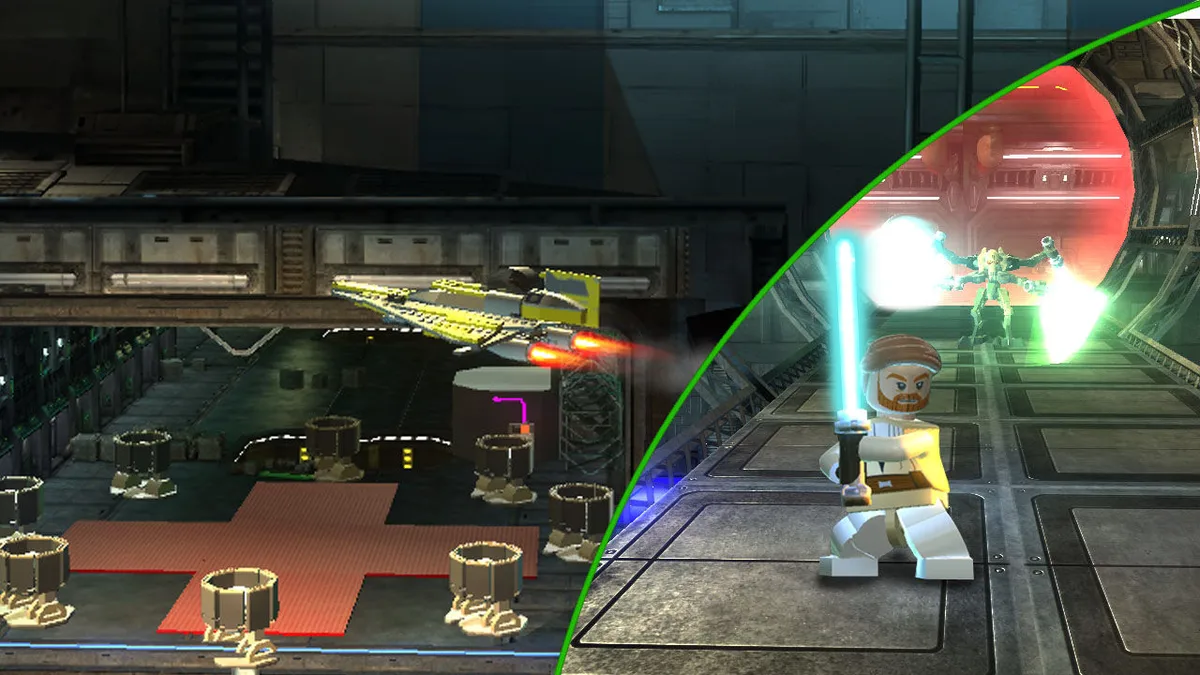
Equipment and vehicles broaden as the campaign proceeds. New clone weapons include rapid fire guns and rocket launchers. Large capital ships appear as explorable spaces, including Anakin Skywalker's flagship the Resolute and General Grievous' warship the Malevolence. Smaller craft include the Republic gunship, the Clone Turbo Tank, Anakin's Jedi Interceptor and the Twilight. Classic characters such as Darth Vader, Chewbacca and Luke Skywalker also appear alongside the Clone Wars cast, which gives the roster a mix of era-specific and legacy figures. The distinction worth keeping clear is between ships presented as explorable locations — the Resolute and the Malevolence — and other craft named in the same material.
Co-op and Split-Screen Design
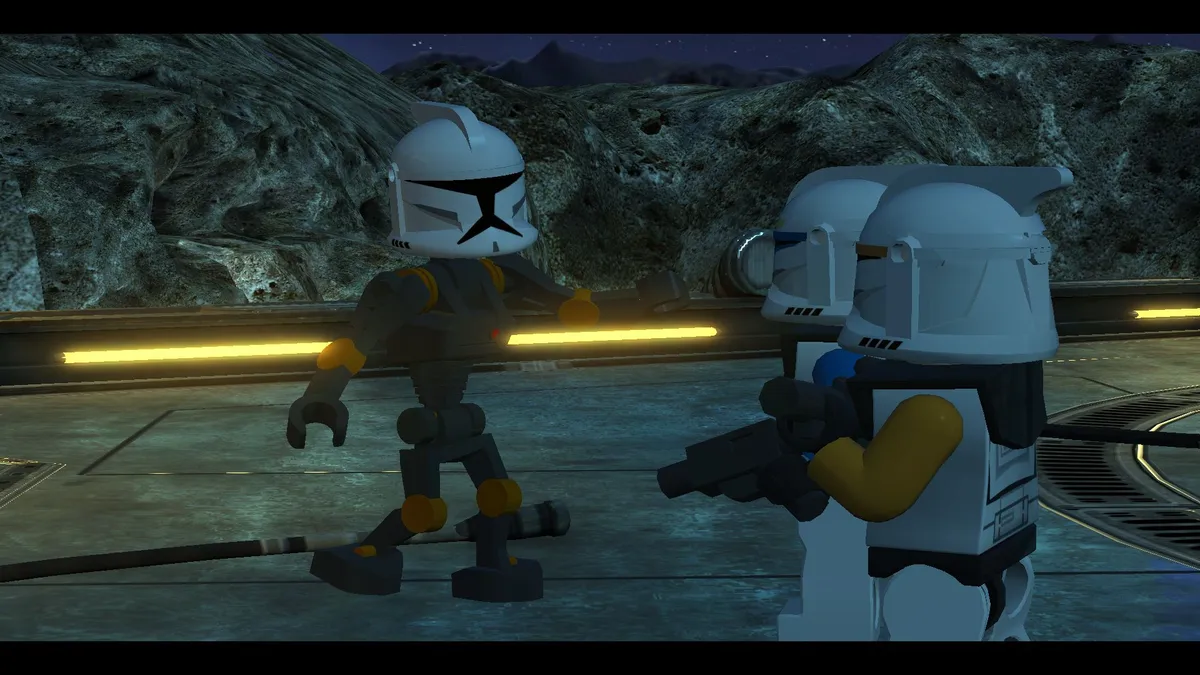
Multiplayer co-op is supported, and SceneSwap's team-switching design is explicitly available in co-op as well as single-player. Split-screen is described as an improved dynamic system with jump-in and jump-out capabilities, which means a second player can join or leave without disrupting the session structure. Dynamic split-screen also means the display adapts as players move apart or together, which suits a game where two teams may be operating in separate locations. The combination is coherent: a mode built around managing separated groups benefits from a camera system that can show both without forcing players to stay adjacent.
Presentation and Engine Changes
The game uses a new engine, and the official description ties that engine to improved lighting and animations as well as a greater degree of character control in a vibrant environment. For a LEGO game, engine work matters more than it might appear: the appeal depends on how convincing the plastic figures look in motion, and on whether the lit environments read as constructed rather than flat. The stated goal here is visual fidelity and character liveliness, which is the kind of change players would notice most directly in cutscenes, boss encounters and the large ground battles where many figures appear at once.
What to Expect When Starting
Based on the documented systems, the practical adjustment for a new player is to treat the game as two overlapping activities rather than one. The first is standard LEGO play: switch characters, use abilities suited to the obstacle in front of you, and build what the puzzle requires. The second is command-level play: watch for missions where multiple teams are active, expect to toggle between them, and expect ground battles where base building, vehicle deployment and reinforcement calls matter as much as direct fighting. The ability list rewards attention — lightsaber cutting, throwing and climbing are separate tools, and the Force does everything from accessing new areas to throwing enemies as weapons, so scanning a room for what can be manipulated is more useful than defaulting to combat. Cooperative puzzles explicitly reward teamwork, so playing with a second person is a supported approach rather than an afterthought.
Scope of the Release Year and Edition
The 2011 release year in this profile applies to the Steam entry described in the source catalog, which lists Windows as the supported platform. That is the boundary of what is documented here. Earlier or later releases on other platforms, and any re-release or bundling history, are not covered by the available source material, so this article makes no claims about them. Likewise, the publisher listing reflects the catalog as recorded, not a timeline of rights changes.
Why It Stands Apart in the Series
Most LEGO games are defined by their roster and their humor. This one is defined by scale and by the systems built to manage that scale. SceneSwap splits a mission across locations; ground battles turn a level into a base-building and reinforcement exercise; space battles add a third mode of movement; and boss encounters supply focal points for a campaign drawn from a war series rather than a film trilogy. The expanded lightsaber and Force abilities exist to give the player the right tool for each of those situations, and the bonus level count suggests the design assumes players will keep exploring after the story ends. Read together, those choices describe a game that tried to make the LEGO formula accommodate an army instead of a party — and the result is a campaign structure noticeably different from the entries that came before it.
Scroll sideways to see the full table →
| Field | Value |
|---|---|
| Game title | LEGO Star Wars III: The Clone Wars |
| Release year (this Steam entry) | 2011 |
| Platform | Windows |
| Developer | Traveller's Tales |
| Publishers | LucasArts, Lucasfilm, Disney |
| Genres | Action, Adventure |
Scroll sideways to see the full table →
| System | Documented behavior |
|---|---|
| SceneSwap | Control multiple teams in separate locations; switch with a button press; available in single-player and co-op |
| Massive Ground Battles | Control clone trooper battalions against the droid army; build bases, deploy vehicles, call reinforcements |
| Boss battles | First in the LEGO Star Wars franchise; fight bosses from The Clone Wars series including Gor and the Zillo Beast |
| Space battles | Take off in ships and fly through multi-layered combat |
| Split-screen co-op | Improved dynamic split-screen with jump-in/jump-out |
Scroll sideways to see the full table →
| Content | Documented figure or item |
|---|---|
| Story missions | More than 20, spanning the Clone Wars era |
| Bonus levels | 40 |
| Star systems | 16, explored using various ships |
| Clone weapons | Rapid fire guns, rocket launchers |
| Capital ships as explorable spaces | The Resolute, the Malevolence |
| Other named vehicles | Republic gunship, Clone Turbo Tank, Anakin's Jedi Interceptor, the Twilight |
Sources & further reading.
- LEGO® Star Wars™ III - The Clone Wars™ — official game profileRetrieved Oct 10, 2026
First published .