 THE GAME ARCHIVE
Mabinogi presents itself as a social MMORPG built for self-expression, and its store description leans heavily on that promise: a welcoming community of thousands of devoted players, a world called Erinn, and the freedom to live a fantasy life on your own terms. What makes the pitch unusual is not the anime styling or the free-to-play structure, but the idea that a single character is not locked into one identity. The Rebirth System is the hinge on which the whole design turns.
The Premise: Erinn and the Century-Old Battle
The store description frames the setting as the mystical land of Erinn, where a century-old battle threatens the balance of the known world. Players are invited to explore exotic locales, defeat mighty foes, and follow a path toward destiny. That framing matters because it establishes two different registers the game claims to move between: world-scale conflict on one side, and everyday life on the other. The next section of the description immediately undercuts any expectation that combat is the only thing to do, listing a kraken, a succubus, and a farmer's potato harvest as comparable choices for your next adventure.
The Core Loop: Do Anything, Then Do It Again
The structural loop is best understood through the Rebirth System. Your character can be reborn and live their life over and over again, according to the store description, which explicitly says this allows you to try out all the talents, quests and skills you want without losing progress. That single sentence changes how the rest of the feature list should be read. In a conventional MMORPG, committing to a build is the cost of progression. Here, the description presents experimentation as the point rather than the penalty: you cycle through lives, sample different talents and quest lines, and keep what you have accumulated.
The practical consequence is that the loop is not a single track from low level to high level. It is a rotating cast of activities. Quests, combat, commerce, music, fashion and social life are all described as live options rather than endgame unlocks, and the description says plainly that every day in Mabinogi can be different. Frequent updates to content and an expanding wardrobe of fashion are named as the mechanisms that keep that variety going.
Combat: Weapon Spirits, Pets and Twelve Styles
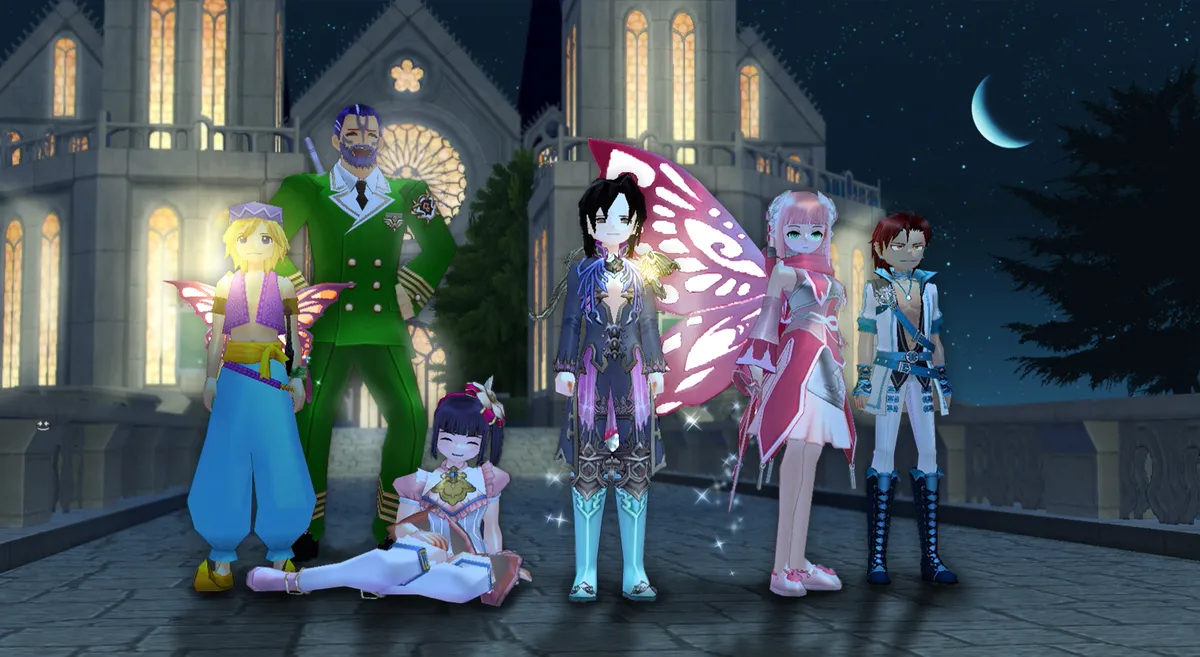
Under the heading of unique combat, the description lists three distinct ideas. The first is imbuing weapons with the spirits of fierce warriors, an enhancement concept rather than a separate combat mode. The second is fighting side by side with your pets, which turns companion creatures into active participants rather than cosmetic followers. The third is mastering all 12 styles of combat, which tells you the game frames combat variety as a collection to complete rather than a single class choice. The description also names the upper end of the threat scale: taking down demigods.
Read together with the Rebirth System, the twelve combat styles look less like class options and more like a checklist that a long-lived character is expected to work through across multiple lifetimes. Because progress is preserved when you are reborn, a player who starts down one combat path and then switches is not throwing away the earlier investment in the way the description describes it.
The Fantasy Life: Commerce, Music and Wardrobe
The lifestyle systems are described with the same weight as combat. The store text invites you to become a commerce mogul or compose your very own music, and it groups fashion with fantasy as components of self-expression. There is also an expanding wardrobe, which the description treats as an ongoing feature area rather than a one-time character creator. These are not side activities bolted onto an action game in the way the description presents them; they are offered as alternative answers to the question of what you do when you log in.
Community as a System, Not a Bonus
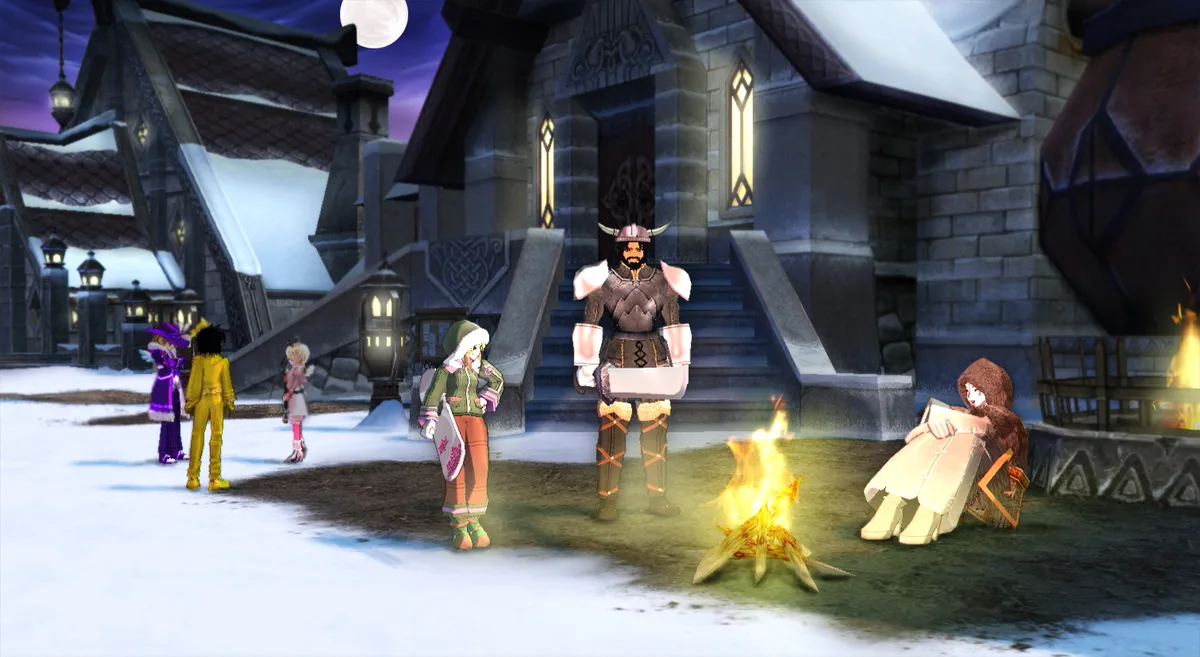
The description devotes a full section to community under the heading of making friends, joining a guild, or tagging along on a cross-continental journey. It then makes a specific claim about flexibility: no matter the activity, the game is described as suitable for a journey solo or with an entire crew. Home decoration is folded into the same paragraph, framed as a way to create a hangout. That placement suggests housing is presented as social infrastructure rather than a private vanity project.
The store description also opens by claiming a welcoming community with thousands of devoted players and presents the game as a social space where you can build lasting friendships or even find romance. Those are promotional characterizations from the publisher, and they should be read as the game's stated positioning rather than as an independent measurement of the player base.
Source-Backed Starting Guidance
The official material supplies only indirect direction for a new player. Because the Rebirth System is described as preserving progress while letting you try talents, quests and skills freely, the lowest-risk way to act on the documented rules is to treat your first character life as an experiment rather than a commitment. If you want combat breadth, the description states there are twelve styles to master and weapon imbuing through warrior spirits to pursue. If you would rather test the lifestyle side first, commerce and music composition are both named as starting points, and the wardrobe is described as expanding.
What Actually Distinguishes the Design
Strip away the genre tags and two things stand out from the supported material. The first is that the game does not treat identity as a locked choice: rebirth is a repeatable life cycle, and the description explicitly ties it to the freedom to try everything without losing progress. The second is that the activity list is unusually flat. Comedy-adjacent farm work and a kraken encounter sit in the same sentence as equally valid adventures, and a commerce career sits beside high-fantasy combat in the same feature list. Many online RPGs offer both, but they usually present them in a hierarchy of importance. Mabinogi's own description does not.
The description describes the game as an anime MMORPG filled with fashion, fantasy and lifestyle systems built for self-expression, and it leans on a tone where the fantastical and the mundane are equally worthy of attention. That tone, more than any individual mechanic, is what the official text keeps returning to.
Platform, Price and Version Scope
The catalog entry lists Windows as the platform, 2012 as the release year, NEXON Korea Corporation as the developer and Nexon America Inc. as the publisher. It is also tagged as free to play, alongside action, adventure, casual, massively multiplayer, RPG and simulation genres. The year 2012 refers to this Steam listing, and it should not be read as a statement about the game's original launch or its full release history, which this source does not describe. Likewise, nothing in the supplied material touches port quality, modern compatibility, server status or current shop contents.
Why the Rebirth Idea Still Reads as Unusual
The most interesting thing in the official description is one sentence: your character can be reborn and live their life over and over again, allowing you to try out all the talents, quests and skills you want without losing progress. If that promise holds in practice, it inverts the usual emotional arithmetic of character progression. Instead of guarding a single build, a player is invited to spend lives freely, treating each rebirth as a chance to sample another style of combat, another job, another social role. Whether that freedom feels as generous in play as it reads on the store page is exactly the kind of question only hands-on time can answer, and this source set does not provide it.
Scroll sideways to see the full table →
| Field | Value |
|---|---|
| Title | Mabinogi |
| Release year listed in catalog | 2012 |
| Platform | Windows |
| Developer | NEXON Korea Corporation |
| Publisher | Nexon America Inc. |
| Business model | Free to play |
| Genre tags | Action, Adventure, Casual, Massively Multiplayer, RPG, Simulation, Free To Play |
| Setting | Erinn |
| Named progression system | Rebirth System |
| Named combat scope | 12 styles of combat |
Sources & further reading.
- Mabinogi — official game profile Retrieved Oct 10, 2026
First published .