 THE GAME ARCHIVE
Nancy Drew: The Haunted Carousel drops the teenage detective into a seaside amusement park that has become the scene of an impossible theft and a stranger haunting. An antique carousel horse has been stolen, and by night the merry-go-round sets off on bizarre, riderless journeys to nowhere. The case is presented as a first-person, point-and-click adventure, with the player acting as Nancy Drew and working the mystery from the inside.
Premise: A Stolen Horse and a Carousel That Rides Itself
The hook is deliberately theatrical. The missing object is not a jewel or a document but an antique carousel horse, and the strange behavior hangs around the ride itself: late at night the merry-go-round takes off on bizarre riderless journeys to nowhere. Nancy enters what the official description frames as a tightening circle of fear and crime, set inside an amusement park swirling with secrets.
The description raises the possibility of a supernatural cause without committing to one, asking whether the painted ponies are searching for their missing lead horse or whether some other explanation accounts for the midnight rides. That ambiguity is the engine of the case: the player is invited to gather evidence rather than accept the ghost story on its face.
Because the framing is first-person, the park is not viewed from outside as a diorama; the player inhabits Nancy's perspective while working the location. The supply of documented facts stops at that perspective description, so the exact camera control scheme, movement model and interface layout are outside what the source establishes.
The Core Loop: Explore, Interrogate, Puzzle
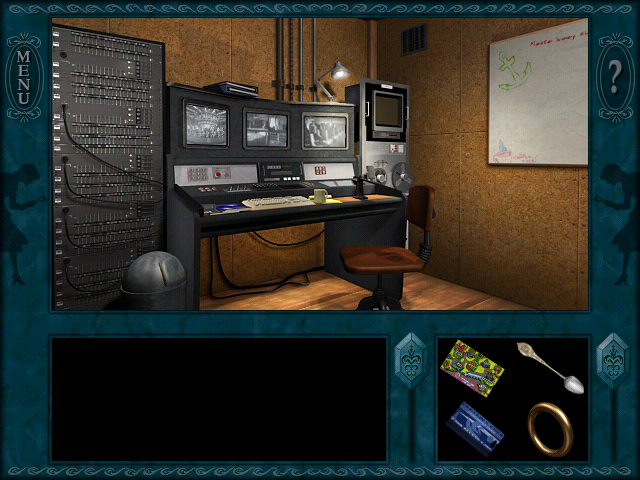
The described loop has three interlocking activities. The player explores rich environments for clues, interrogates suspects, and solves puzzles and mini-games. These are not separate modes so much as a repeating rotation: a sweep of the environment turns up something worth asking about, a conversation turns up something worth investigating, and a puzzle stands between the player and the next piece of the case.
Progression is tied to puzzle-solving rather than to combat stats or a level ladder. The source describes advancement through solving puzzles and mini-games, which makes the puzzle layer the spine of the experience: clearing one obstacle is what opens the next stretch of the case. Because the documentation does not enumerate specific puzzles or their order, no walkthrough sequence can be reconstructed from these facts alone.
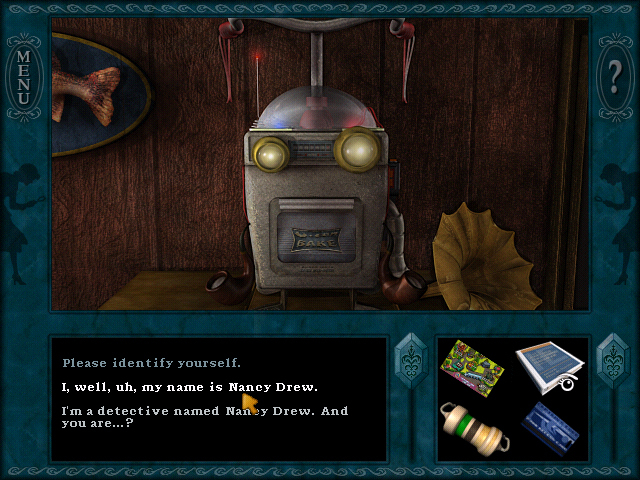
The interrogation leg matters because it turns the park's cast into a resource. Asking the right person the right question is itself a discovery mechanic, and the source treats suspects as a category the player interrogates rather than background flavor. What it does not document is the dialogue structure, whether conversations branch, or how a failed line of questioning is handled.
Systems and Modes: Laptop, Phone, Second Chance
Three documented tools shape how a session feels. A laptop lets the player keep track of clues and suspects, functioning as the case's organizing surface rather than just a prop. A cell phone allows calls to be taken and made from anywhere. A "Second Chance" option lets the player erase mistakes. Each one addresses a different pressure of adventure-game play: remembering, reaching out, and recovering.
The laptop is the most consequential of the three for a mystery game, because clue tracking is what prevents a large location from becoming noise. A suspect list stored alongside collected clues gives the player a way to see the shape of what is known. The cell phone extends that reach outward, letting the player gather information without being physically at the source. Since the phone is described as working anywhere, it also implies that calls can be both received and initiated from wherever the player currently stands.
The "Second Chance" option is a forgiveness mechanic rather than a difficulty setting. Its practical effect is that a wrong move does not necessarily end the run; the player can undo the mistake and continue. The source does not specify what counts as a mistake, whether the option is limited in number, or how it is triggered, so those details remain open.
Alongside the investigative tools, the source names an arcade where mini-games can be played, and a reconstruction task: rebuilding a historic carousel. Both give the amusement park setting a mechanical identity of its own, distinct from the clue-and-suspect work happening elsewhere in the park.
Getting Started on the Case
The evidence supports a small amount of practical guidance and no more. A player beginning the case should treat the laptop as the home base for organizing what has been found, should take advantage of the cell phone to make and receive calls from wherever the search leads, and should remember that the "Second Chance" option exists as a way to erase mistakes rather than restart from scratch.
The broader shape of a session follows the loop: explore for clues, interrogate suspects, and solve puzzles and mini-games, proceeding through puzzle-solving. This is the documented spine of the game, and it is the most reliable thing a new player can hold onto. The source does not describe a specific opening objective, an order in which locations should be visited, or a difficulty selection, so those are not established here.
Design Character: An Amusement Park Built for Investigation
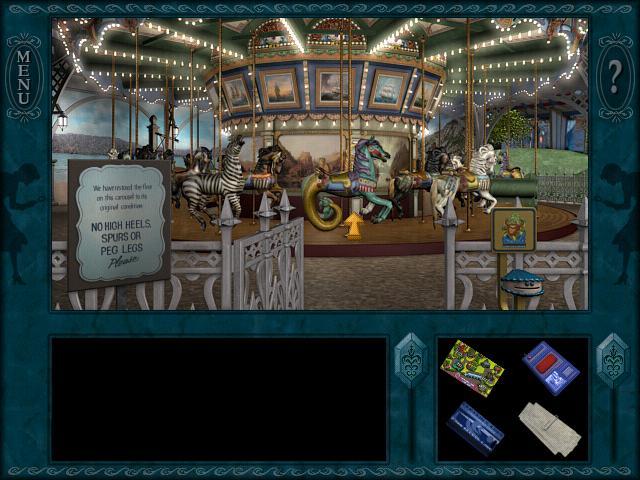
The most distinctive design choice is the collision of a seaside amusement park with a missing-antique mystery. A park is already a place of illusion and machinery, which makes it natural territory for the question the description raises: are the painted ponies searching for their missing lead horse, or is there another explanation for the midnight rides?
The mechanical identity of the carousel itself is asserted in two places: the ghostly merry-go-round takes riderless journeys late at night, and the player can reconstruct a historic carousel. Reconstruction gives the setting a hands-on counterpart, turning a landmark into something the player works on rather than just studies. The source does not detail how that reconstruction is performed.
The play cycle also keeps the arcade relevant. Mini-games occupy a defined space inside the park, and the source records the arcade specifically as where they are played. That places puzzle content inside an environment that the player is already exploring for clues, instead of in a detached menu.
Edition and Access Notes
The official store entry used here lists a release year of 2009, Windows as the platform, and HeR Interactive as both developer and publisher, with Adventure as the genre. The 2009 date should be read as scoped to this Steam listing rather than as a claim about the game's original release history, which the source does not describe.
The source also places the title within a broader Nancy Drew adventure series, describing that series as the original number-one selling PC adventure series. It is not established from these facts whether the version discussed here corresponds to the original release or a later package, and no port, remake, or added-content list accompanies the entry.
What the Record Still Leaves Open
The documented facts describe the shape of the game well enough to explain how it plays, but they leave several specifics unstated. The source does not name individual suspects or locations, describe how the "Second Chance" option is triggered or limited, explain how dialogue branches during interrogation, or enumerate the puzzles and mini-games. Complete or partial puzzle solutions are likewise not present.
Anyone researching further should target those gaps rather than re-confirming the premise. The useful additions would be a documented puzzle inventory, a description of the reconstruction task, and a clear statement of how the Steam entry relates to the game's original release.
Scroll sideways to see the full table →
| Field | Value |
|---|---|
| Title | Nancy Drew: The Haunted Carousel |
| Release year (this store entry) | 2009 |
| Platform | Windows |
| Developer | HeR Interactive |
| Publisher | HeR Interactive |
| Genre | Adventure |
| Perspective | First-person |
| Gameplay type | Point-and-click adventure |
| Setting | Seaside amusement park |
Sources & further reading.
- Nancy Drew®: The Haunted Carousel — official game profile Retrieved Oct 12, 2026
First published .