 THE GAME ARCHIVE
Real-Time Tactical Combat at the Helm of a Custom Fleet
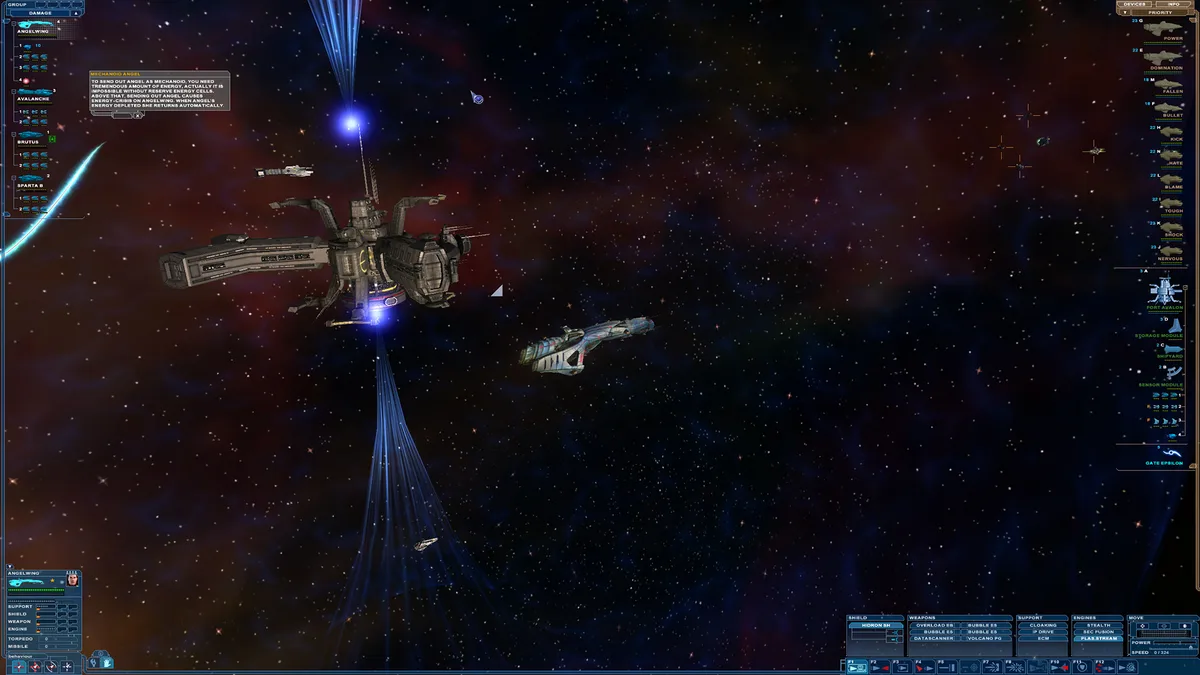
At the start of a mission, you take the helm as a commander controlling up to ten highly detailed spaceships, and every operation unfolds in real time rather than through turn-based pauses. The size of your fleet can reach a dozen battleships, and each vessel is customizable, ranging from a basic setup to a simulation-level configuration. Because combat is continuous, your decisions about positioning, target priority, and when to commit your ships are made while enemy fire is already resolving, so the battle never waits for you to finish deliberating. The game emphasizes tactical thinking over reflexive action, meaning the core loop asks you to read a live situation and issue orders that match the mission's immediate demands.
The campaign strings together more than 26 missions across six episodes, and the tactical combat sits inside a mission-based structure with varied objectives. You might be sent on espionage, a straight fight, stealth, sabotage, rescue, or science work, so the fleet you customize for one assignment may not suit the next. Encounters also bring you into contact with aliens, unknown solar systems, and astrophysical phenomena while you work to save Earth. Each mission type changes what counts as success, and since battles play out in real time, adjusting your fleet's composition and your in-mission approach becomes part of the tactical decision-making from one operation to the next.
A Campaign in Six Episodes: Diverse Mission Objectives
The single-player campaign unfolds across six distinct episodes containing more than 26 missions, giving each operation a specific goal that ranges from espionage and stealth to sabotage, rescue, science, and direct combat. Because each mission type asks for a different kind of success condition, the same tactics that win a straight fight may fail during a covert assignment. The broader frame for these tasks is a mission-based, real-time structure in which your actions occur while battles are already developing, so the objective you are working toward continuously shapes the orders you issue to your fleet.
As you move through the episodes, your ships encounter aliens, unknown solar systems, and astrophysical phenomena, all while the guiding purpose is to save Earth. The conflict itself arises when megacorporations that monopolize space colonization and the exploration of the solar system make a discovery at its very edge, which shifts technological advantage and upsets the existing balance, producing a new conflict named after that pivotal event. These conditions supply the context in which the mission objectives are set, so each rescue, scientific survey, or sabotage run is part of the larger effort tied to that discovery and the struggle to protect Earth.
Alien Menace: Diverse Foes and Race-Specific Tactics
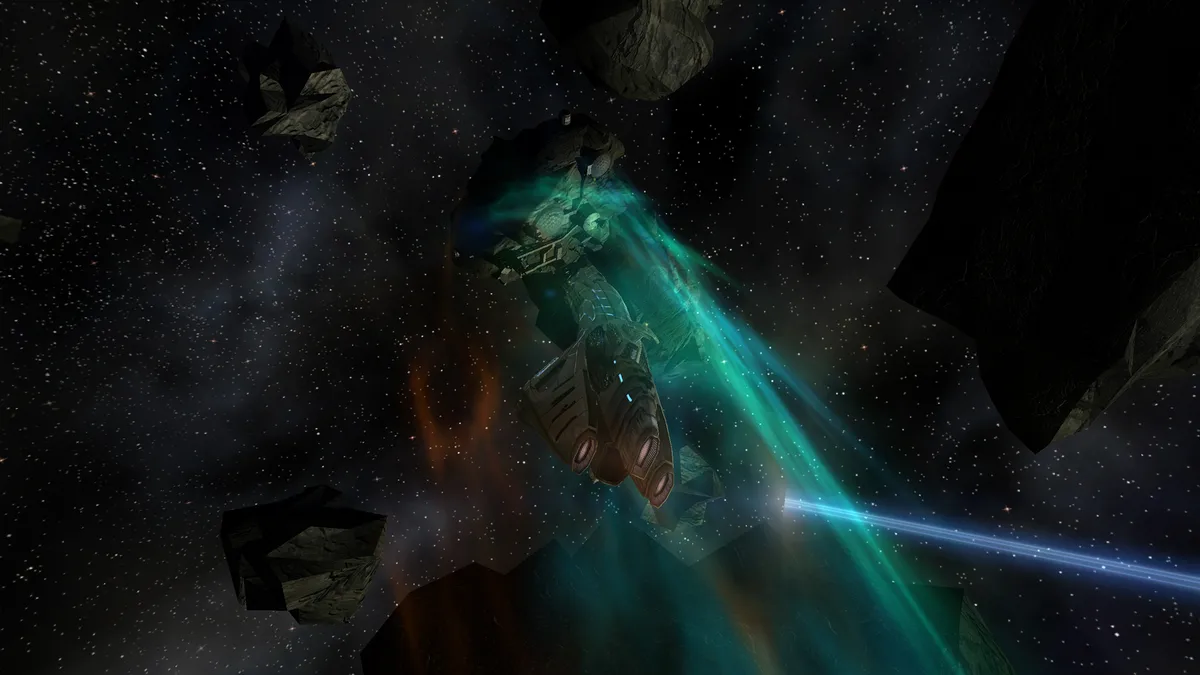
Across the campaign, your fleet faces six different alien species, each employing race-specific tactics rather than a single shared approach. These opponents command thirty alien spaceships total, meaning the hostile vessels you meet are not interchangeable reskins but a varied roster split among the six species. Because each species fights according to its own preferred methods, the target priorities and positioning you set during one engagement may need rethinking when a different race arrives. The alien presence is therefore a tactical variable rather than a uniform threat, and the makeup of enemy forces shapes how you commit your own detailed, customizable ships in real time.
Supporting the conflict is a cast of more than fifty unique characters, who populate the episodes in which the alien encounters unfold. Your ships can be outfitted from a pool of ninety different weapons and devices, and that equipment interacts directly with the race-specific tactics you confront: choosing a loadout means weighing it against a particular species' methods and the thirty alien spaceships those species field. Characters, weapons, devices, and distinct alien fighting styles thus sit within the same real-time mission structure, where objective type, fleet customization, and the identity of the opposing race all feed into the orders issued while battle proceeds.
A Fully 3D Starmap with Physics and Planetary Exploration
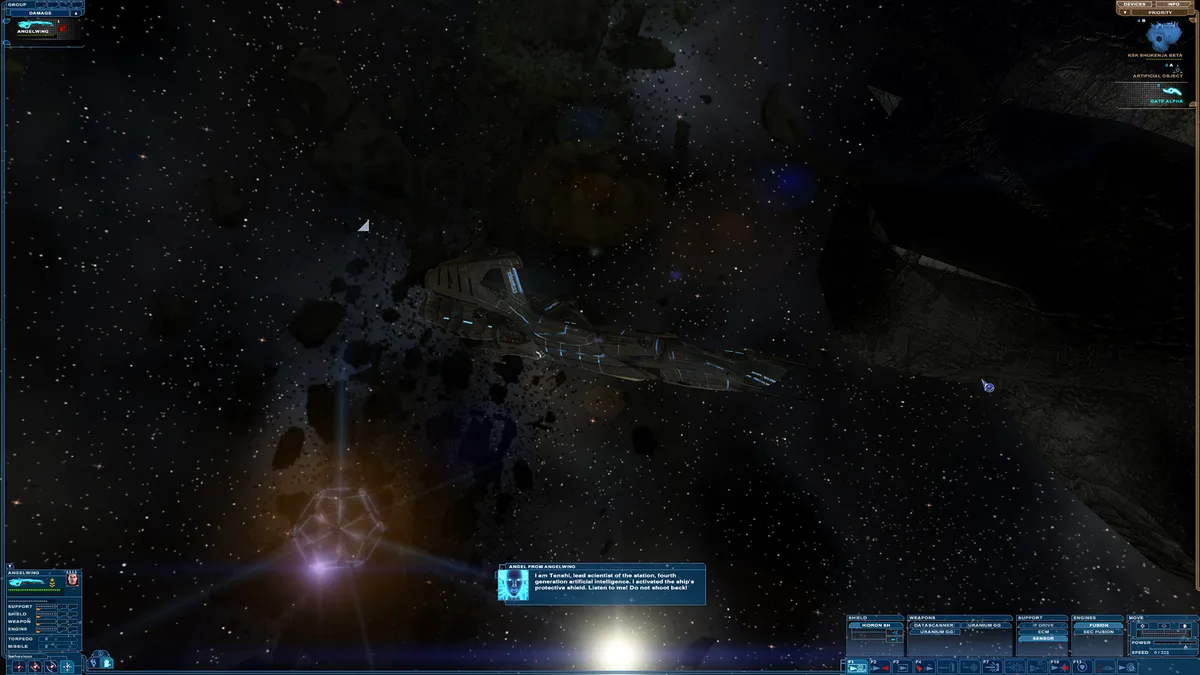
The starmap presents more than 350 planets, moons, and comets in a fully 3D environment that you can zoom in on during operations. Movement across the map is governed by real physics for planet motion, while the map itself includes animated objects such as light flares. This design means the celestial bodies you navigate are not static backdrops; their positions shift according to physical rules, and the visual layer adds animated details that distinguish the starmap from a simple menu. In practice, when you zoom toward a specific planet, moon, or comet, the map responds with a seamless transition into that 3D space, keeping the same physical motion running behind the view.
Because planet movement follows real physics, the map is not a fixed chart. The orbits and relative positions of planets, moons, and comets change over time, and the animated objects and light flares mark these bodies as active parts of the setting. When you zoom in on any of the more than 350 celestial targets, the fully 3D environment lets you inspect it directly, and the same physical motion continues in that close view. These documented rules interact: the starmap’s animation and zoom function work alongside the physics-driven movement, so navigation and observation stay consistent whether you are surveying a single comet or tracking a planet’s path.
Sources & further reading.
- Nexus - The Jupiter Incident — official game profile Retrieved Oct 16, 2026
First published .