 THE GAME ARCHIVE
What Kind of Overlord Will You Be?
Overlord II returns players to a world where a new Dark Master commands the chaotic Minions against the Glorious Empire, a sinister regime that rose after the fall of the previous Overlord. The official store description frames the game as bigger and more destructively beautiful than its cult-hit predecessor, with a Glorious Empire to smash, a Netherworld to revive, mounts to mobilize, mistresses to woo, and war machines to turn against the opposition. This feature examines what that actually means moment to moment: how the two advertised Overlord styles define conquest, what each Minion breed does on the field, and how the smaller systems — looting, pillaging, infiltrating camps, and piloting war machines — feed a single loop of expanding control.
The Premise: A New Dark Master Against the Glorious Empire
The central conflict is not complicated: you are the Overlord, the Glorious Empire is in your way, and your Minions are the instrument of its removal. The store description positions the Empire as a regime that gained power after the previous Overlord fell, which gives the campaign a natural antagonist and a reason for the Netherworld to be revived. The official text also lists the broader ambitions in one sweep: a massive Netherworld to revive, Minion mounts to mobilize, a trio of mistresses to woo, and War Machines to crush opposition. Each of those is a promise about activities rather than a detailed system spec, but together they sketch a game where base-building, army management, and open aggression are meant to overlap.
The source does not detail the Netherworld revival as a mechanic, so this article cannot describe upgrade trees, construction costs, or how the tower evolves. What is clear is that the Netherworld is framed as something the Overlord restores over the course of the game, and that it sits alongside the more directly described field activities. The Glorious Empire, meanwhile, supplies the war's main victims: the store text describes hacking through entire battalions of its "brave and highly flammable ranks," with Yetis, Elves, villagers, and "annoyingly cute indigenous species" thrown in to vary the roster of enemies.
Two Ways to Rule: Domination and Destruction
The most distinctive structural idea in the source material is that Overlord II presents two named playstyles, each with its own objective. Under the Domination style, humanity becomes your plaything: you enslave the human race village by village and reap the benefits of an unwilling workforce as you drive the Glorious Empire from your lands. The stated goal is control and extraction — turning the population into labor and pushing the Empire's presence out of your territory.
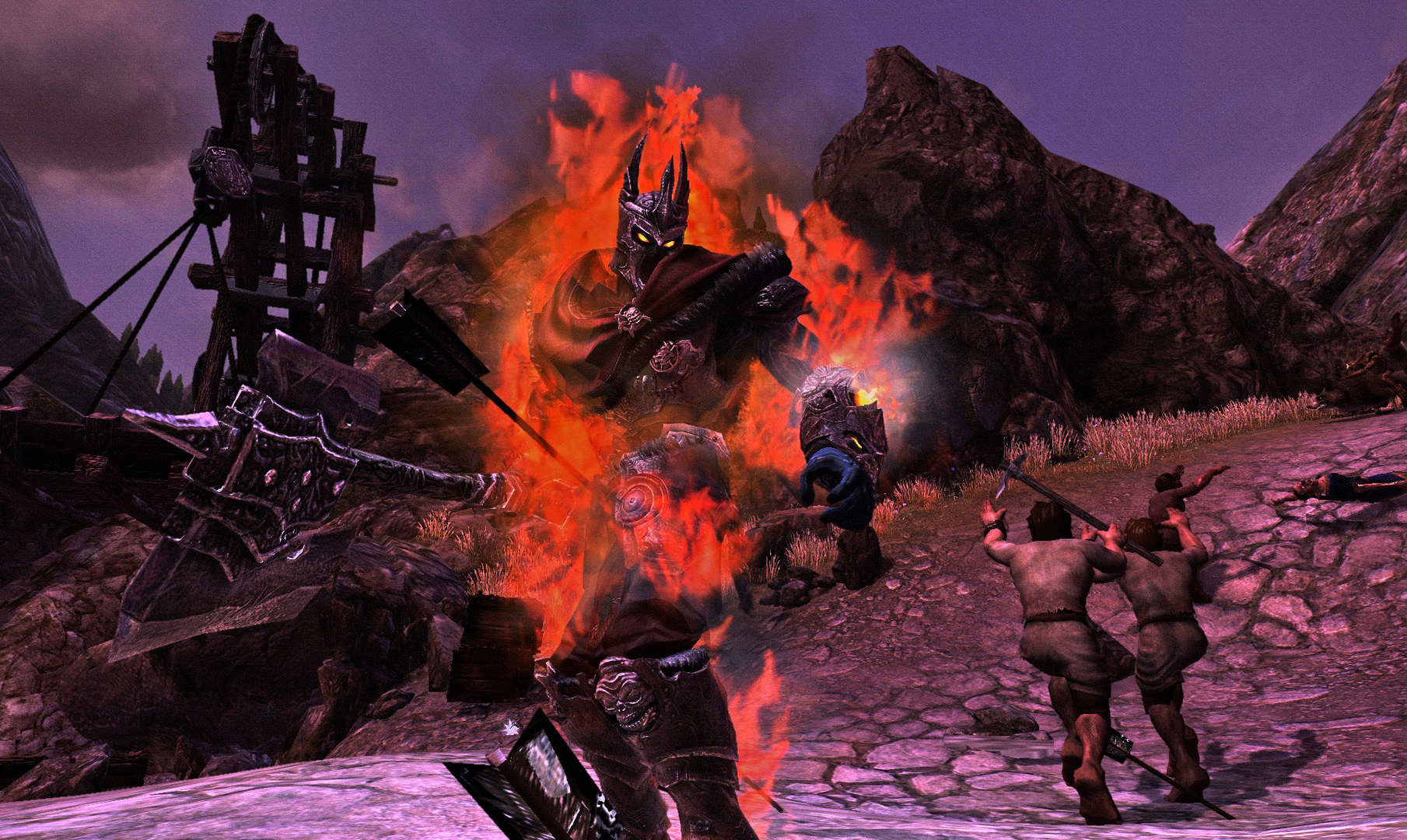
The Destruction style inverts the emphasis. Instead of an unwilling workforce, you ravage the land "like a moody Tsunami," razing cities, forests, and Imperial camps to the ground. The stated objective is pure ruin, not occupation, and the source presents it as a valid alternative for players who prefer to watch the world burn rather than administer it. Both styles are described as legitimate paths through the same campaign world, which makes the choice of Overlord identity a meaningful early framing decision rather than a cosmetic label.
Progression is explicitly village by village. In the Domination description, each village you bring under control contributes to the broader goal of expelling the Glorious Empire, and the same granular structure is implied by the Destruction objective of razing settlements. This suggests a campaign rhythm built around discrete conquest targets rather than one continuous front line: you take or ruin a place, then move to the next, and the map of the Empire shrinks as your authority grows.
The Four Minion Breeds and What Each One Does
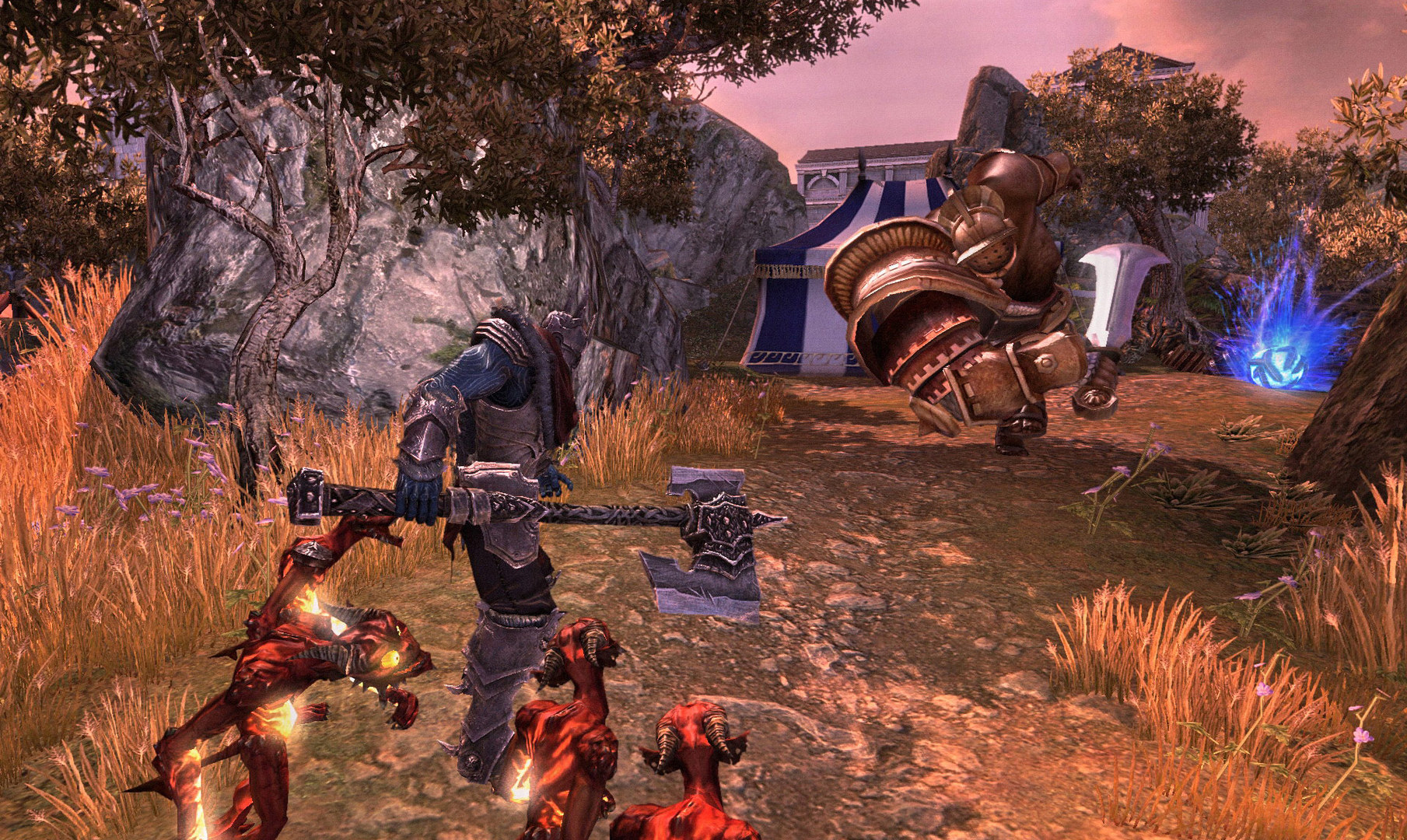
The source describes the new Minions as smarter, faster, deadlier, and wittier than the previous batch, and it divides them into four flavors with clearly separated battlefield roles. Browns are brutal brawlers who solve their problems with teeth and fists — the straightforward melee line. Reds are the surly artillery, specializing in fireballs; the description jokes that they love to play catch as long as the ball is on fire. Greens are stealthy assassins, silent and deadly. Blues are explicitly no use in a fight, but they can resurrect fellow Minions who have fallen. Read together, this is a small squad-composition puzzle: you want Browns to hold the line, Reds to apply ranged pressure, Greens for quieter or more precise work, and Blues to keep the others in the field.
The resurrection role is the clearest example of how the breeds depend on each other. Because Blues cannot fight, keeping them alive is itself a tactical problem: they are the unit that turns a costly push into a recoverable one, but they must be protected while they work. The source specifically says Blues bring back Minions who have tried to stop a sword with their face, which frames resurrection as the answer to the predictable failure mode of throwing Browns and Reds into fortified opposition.
The Minion roles as described in the official store text can be summarized at a glance.
Beyond Fighting: Mounts, Loot, Pillage, and Infiltration
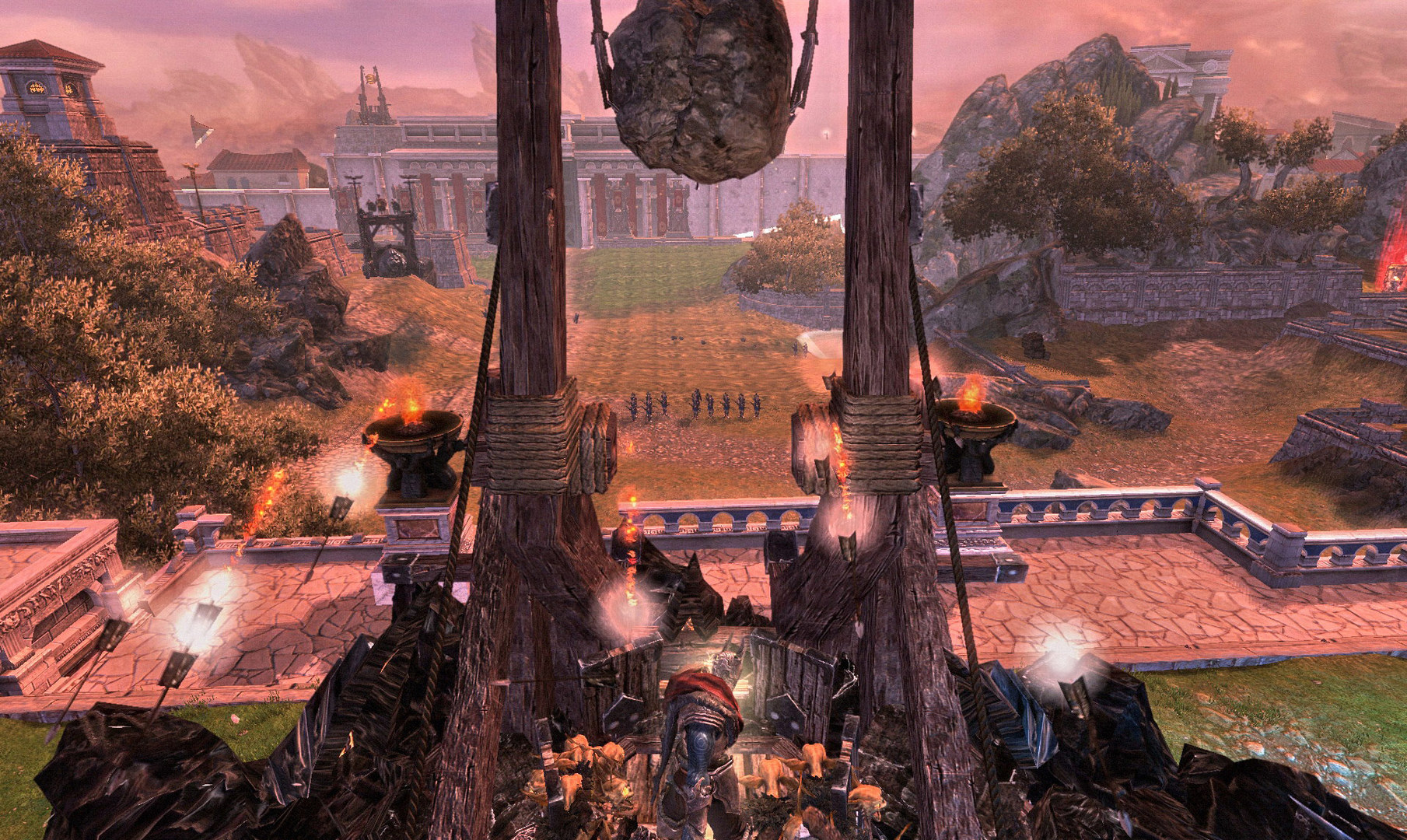
Minions are described as "angry little Swiss army knives of pain," and the source lists a surprising range of non-combat utility. They can ride into battle on wolves and other magical creatures, which addresses mobility and lets mounted Minions reach fights or positions that foot troops might not. They can loot the best weapons from stomped enemies, which implies an equipment loop that rewards aggressive engagement rather than grinding. They can pillage houses for treasure, tying the Domination idea of an unwilling workforce to actual resource collection. And they can operate fearsome war machines to crush opposition, which connects them to the larger "War Machines" mentioned among the Overlord's ambitions.
Infiltration is the other utility pillar. Minions can infiltrate enemy camps, which suggests objectives that reward sending small, specialized groups — likely Greens given their stealth role — rather than committing the whole horde to a frontal assault. The combination of infiltration, pillaging, looting, and war-machine operation is what makes the Minions feel less like disposable units and more like a toolbox the Overlord deploys against different problems. The source even includes a small domestic touch: Minions can polish your armor so thoroughly that you blind passing wildlife. That line is comic, but it reinforces the same point — the horde handles tasks beyond killing.
How to Approach an Overlord II Campaign
The source-backed starting guidance is less about button inputs and more about identity and priorities. The first meaningful decision is which Overlord you intend to be, because the game explicitly offers Domination and Destruction as different objectives rather than cosmetic flourishes. A Domination run is about taking and holding villages as workforce, so pillaging for treasure and enslaving populations serve the same end. A Destruction run is about razing cities, forests, and Imperial camps, so the value of a location is measured by how thoroughly it can be removed rather than what it produces. Deciding this early prevents you from fighting a Domination campaign with a Destruction mindset, or the reverse.
The second practical habit is squad composition. Because Blues are useless in a fight but bring Minions back, and because Browns and Reds are the blunt instruments that will predictably fall, a stable horde should assume losses are normal and plan for recovery. Protecting Blues while sending Browns and Reds forward is the pattern the source most directly supports. Third, treat the environment as a resource: houses hold treasure, dead enemies hold weapons, enemy camps can be infiltrated, and war machines can be turned against the opposition. A player who ignores these systems and only fights will miss the parts of the game the description emphasizes most.
What Makes the Design Feel Distinct
The humor is part of the design, not a garnish on top of it. Minions are described with jokes that nonetheless carry information — Greens are "like a fart on legs," Blues are useless until someone needs resurrecting, Reds love playing catch with fireballs. That tone supports a game where the player is explicitly the villain and the violence is stylized rather than somber. The Glorious Empire is "brave and highly flammable," and the enemy roster includes Yetis, Elves, villagers, and "annoyingly cute indigenous species," which keeps the battlefield varied and a little absurd.
Structurally, the most distinctive choice is the pairing of two named moral-aesthetic paths with a shared horde-management layer. Many action games let you choose between a stealthy and a loud approach; fewer describe one path as enslavement and the other as annihilation, and then let the same Minion breeds serve both. That combination — a personal Overlord identity layered over a squad of specialists — is the design idea that the source evidence most strongly supports.
Release Context and Current Access
This Steam entry lists Overlord II as a 2009 release on Windows, developed by Triumph Studios and published by Codemasters and Electronic Arts, with RPG as its listed genre. Those details scope the version discussed here; they are not a claim about every platform or every edition of the game that may have existed. The store description also describes the game as the sequel to a critically acclaimed cult hit, which is context for its tone rather than a review score.
Because this article relies on the official store description rather than a hands-on test, it cannot speak to controls, performance, or compatibility with current systems. Readers who want those details should treat the missing research areas below as the specific gaps this evidence does not close, rather than as claims that the game lacks those features.
Scroll sideways to see the full table →
| Minion Breed | Primary Role | Source-backed Detail |
|---|---|---|
| Browns | Melee brawler | Solve problems with teeth and fists |
| Reds | Ranged artillery | Launch fireballs; love playing catch with fire |
| Greens | Stealth assassin | Silent and deadly; used for infiltration |
| Blues | Support | No use in a fight; resurrect fallen Minions |
Scroll sideways to see the full table →
| Playstyle | Stated Goal | Method |
|---|---|---|
| Domination | Enslave humanity and drive out the Glorious Empire | Village-by-village conquest; unwilling workforce |
| Destruction | Raze the land for chaos | Burn cities, forests, and Imperial camps |
Sources & further reading.
- Overlord II — official game profile Retrieved Oct 12, 2026
First published .