 THE GAME ARCHIVE
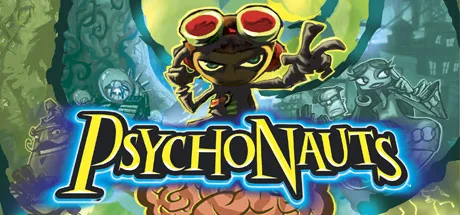
Psychonauts is an action-adventure platformer developed and published by Double Fine Productions. The game follows Razputin, a young psychic who forces his way into Whispering Rock Psychic Summer Camp, the training ground of an elite international psychic secret agent group. When a mysterious villain abducts Raz's fellow campers and steals their brains, the camp becomes the staging ground for a rescue and recovery mission that plays out inside minds as much as in physical space.
The setup gives the game its distinctive shape: the player is not simply traversing a summer camp but entering the psychological landscapes of other characters. The official description frames the adventure as a psychic odyssey through the minds of misfits, monsters, and madmen, and it presents Raz's quest to join the Psychonauts as the narrative spine. That premise makes the mind itself the most important terrain in the game.
Core Gameplay Loop: Powers, Projection, and Rescue Work
The central loop of Psychonauts is built around using psychic abilities to overcome obstacles and complete objectives. Three powers are documented in the source material: Telekinesis, Levitation, and mind projection. Mind projection is emphasized as the most important of the three, which fits the broader premise. By projecting into the minds of others, Raz can access inner realms that are physically unreachable from the camp grounds.
The documented objectives map onto a repeating structure: fight mental demons, uncover hidden memories, sort emotional baggage, and rescue kidnapped campers. These are not incidental commands but signals of how the game organizes play. Combat, collection and discovery, object sorting puzzles, and rescue-driven progression all coexist inside the same mind-projection framework.
One phrase in the official description stands out for its playful specificity: Raz uses his powers to find the loose noodles and keep them from falling into the wrong hands. Read alongside the stated premise, that line suggests the game treats absurd imagery as part of its psychological interior rather than as random decoration. The tone is not grim realism but a mix of adventure, humor, and oddity.
Mechanics and Systems: How the Supported Powers Shape Play
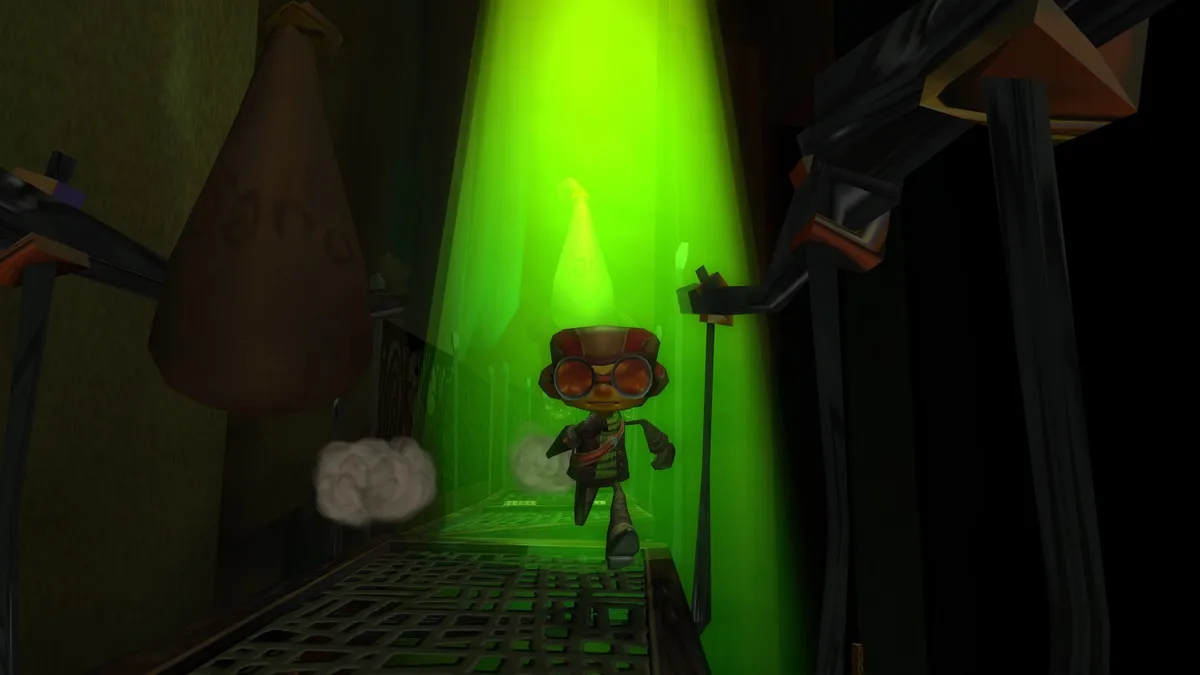
Telekinesis and Levitation suggest two different kinds of interaction. Telekinesis implies moving or manipulating objects at a distance, while Levitation implies altered movement and height. Both feed into the action-adventure platformer label: one broadens what the player can affect, the other broadens where the player can go. Because the source does not document specific controls or button mappings, these remain inferred roles rather than confirmed input schemes.
Mind projection is the most structurally important mechanic because it is the bridge between the camp and the inner worlds. If Levitation is about crossing space and Telekinesis is about interacting with objects, mind projection is about crossing a boundary between characters. That distinction helps explain why the game can move between summer camp exploration, psychological set pieces, and the stated goal of uncovering hidden memories.
The objectives also imply variety in moment-to-moment play. Fighting mental demons is direct combat. Uncovering hidden memories is exploration and discovery. Sorting emotional baggage is a more puzzle-like or organizational activity. The rescue of kidnapped campers ties all of these into a larger goal. The source stops short of detailing weapons, enemies, progression systems, or modes, so anyone looking for exact loadouts, level routes, or difficulty settings will not find them here.
Progression and Modes: What the Source Confirms and What It Leaves Open
The clearest progression signal in the supplied material is the rescue objective. Raz's fellow campers have been kidnapped and their brains stolen, and he must use his powers to find them and keep the stolen brains from falling into the wrong hands. That gives the adventure an external stake that can drive the player forward beyond simple exploration.
The source does not document specific progression systems, unlock trees, experience points, collectible counters, or game modes. It also does not establish how powers are acquired, whether they are upgraded, or how the game paces its chapters. Those are genuine gaps in the available evidence, not details that can be safely filled in from general assumptions about platformers.
Distinguishing Design: Minds as Levels and Misfits as Characters
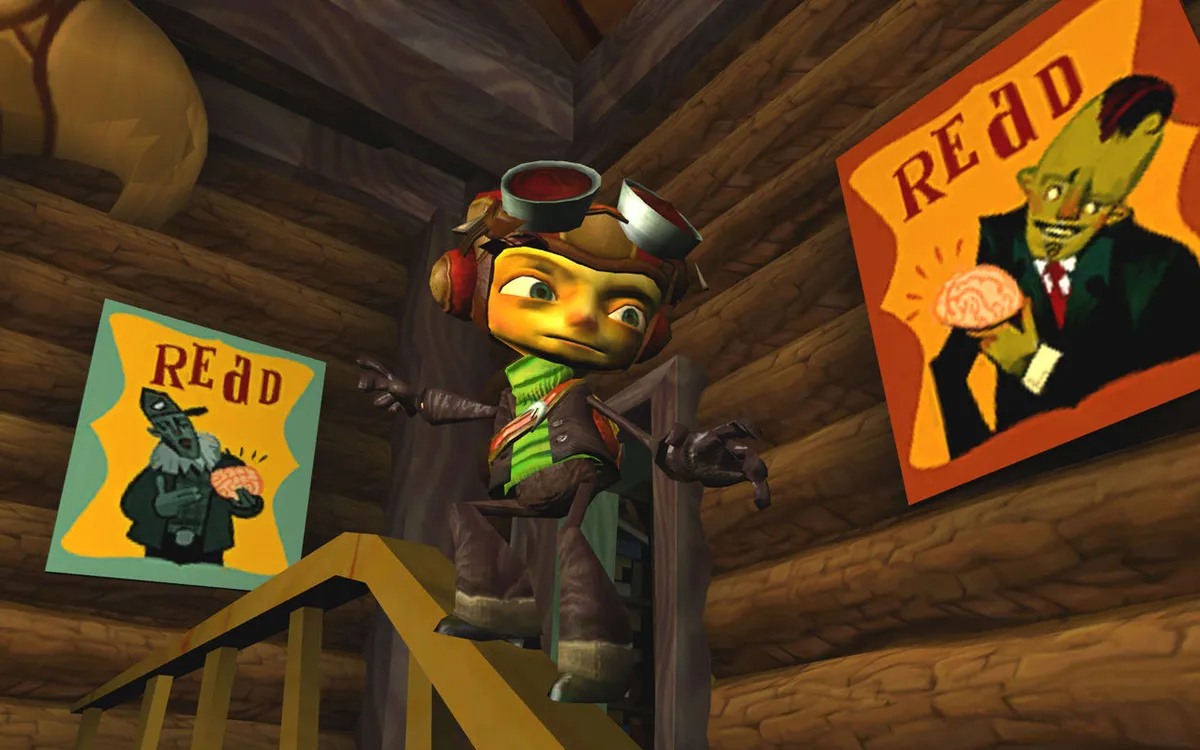
Psychonauts distinguishes itself through its setting and subject matter. Rather than treating the summer camp as the only location, it treats the minds of others as explorable realms. The official description calls the game a psychic odyssey through the minds of misfits, monsters, and madmen, which points to a cast and level design philosophy built around psychological variation rather than a single consistent environment.
That variation is reinforced by the objective list. Fighting mental demons, uncovering hidden memories, and sorting emotional baggage are not generic platformer tasks. They suggest that each mind can have its own logic, hazards, and collectible-like goals. The result is a game whose identity is tied to the idea that inner life can be mapped, traversed, and cleaned up.
The tone also matters. The premise of a psychic summer camp, a villain stealing brains, and a young hero trying to join an elite secret agent group is inherently playful. The official wording leans into that spirit with phrases like fight mental demons and sort emotional baggage. This is a game that appears comfortable mixing action, comedy, and psychological metaphor rather than choosing one register.
Current Official Access and Edition Scope
The official Steam entry lists Psychonauts for Windows, macOS, and Linux. The listed release year for this Steam catalog entry is 2006. That year should be understood as the year attached to this particular store listing, not as an independently verified complete release history. The game is developed and published by Double Fine Productions and categorized as an Action title on the store listing.
The supplied source does not describe remasters, re-releases, bundles, or differences between the original release and the version currently offered on Steam. It also does not confirm whether the current Steam package includes any additions or changes beyond the base game. Those distinctions cannot be made from the available evidence and should not be assumed.
Fact Table
Title: Psychonauts | Developer: Double Fine Productions | Publisher: Double Fine Productions | Genre: Action | Platforms on the official Steam entry: Windows, macOS, Linux | Listed release year: 2006 | Documented mechanics: Telekinesis, Levitation, mind projection | Documented objectives: fight mental demons, uncover hidden memories, sort emotional baggage, rescue kidnapped campers.
What the Game Leaves You With
Psychonauts is defined by a clear conceptual hook: a psychic summer camp recruit uses Telekinesis, Levitation, and mind projection to fight mental demons, uncover hidden memories, sort emotional baggage, and rescue his kidnapped fellow campers. The official description supports that framework with unusual specificity, and the combination of action-adventure platforming with psychological exploration gives the game a recognizable identity.
For readers trying to understand what the game is before playing it, the most important takeaway is that its mechanics and its fiction are closely aligned. The powers are not decorative; they are the means by which the player enters and resolves the minds that make up the adventure. The exact controls, pacing, and difficulty remain undocumented in the supplied source and would need additional research or hands-on play to describe accurately.
Scroll sideways to see the full table →
| Field | Value |
|---|---|
| Game title | Psychonauts |
| Developer | Double Fine Productions |
| Publisher | Double Fine Productions |
| Genre | Action |
| Platforms on official Steam entry | Windows, macOS, Linux |
| Release year listed for this Steam entry | 2006 |
| Supported psychic mechanics | Telekinesis, Levitation, mind projection |
| Supported objectives | Fight mental demons; uncover hidden memories; sort emotional baggage; rescue kidnapped campers |
Sources & further reading.
- Psychonauts — official game profileRetrieved Oct 10, 2026
First published .