 THE GAME ARCHIVE

Carry, Rearrange, Push: G.I. Ant and 11 Patterned Domino Types
G.I. Ant rearranges dominoes by carrying them individually, rather than moving the whole layout at once. Only certain dominoes can be carried, so the preparation consists of repositioning those movable pieces within the arrangement. The goal is to produce a setup in which one push topples every domino. Carrying and pushing therefore serve different purposes: carrying changes the arrangement before the attempt, while the single push must set the assembled sequence in motion without further pushes to finish the job.
The pieces are not all interchangeable: Pushover has 11 domino types, distinguished by patterns in red and yellow, with different actions assigned to the different types. Those markings identify behavioral differences, not merely decorative variations. Rearrangement consequently involves both where a movable domino goes and which kind of domino it is. The one-push objective brings those two elements together: the completed arrangement must accommodate the different domino actions while still allowing every piece to topple from that single starting push.
Keep the Exit Reachable Across Interconnected Platforms
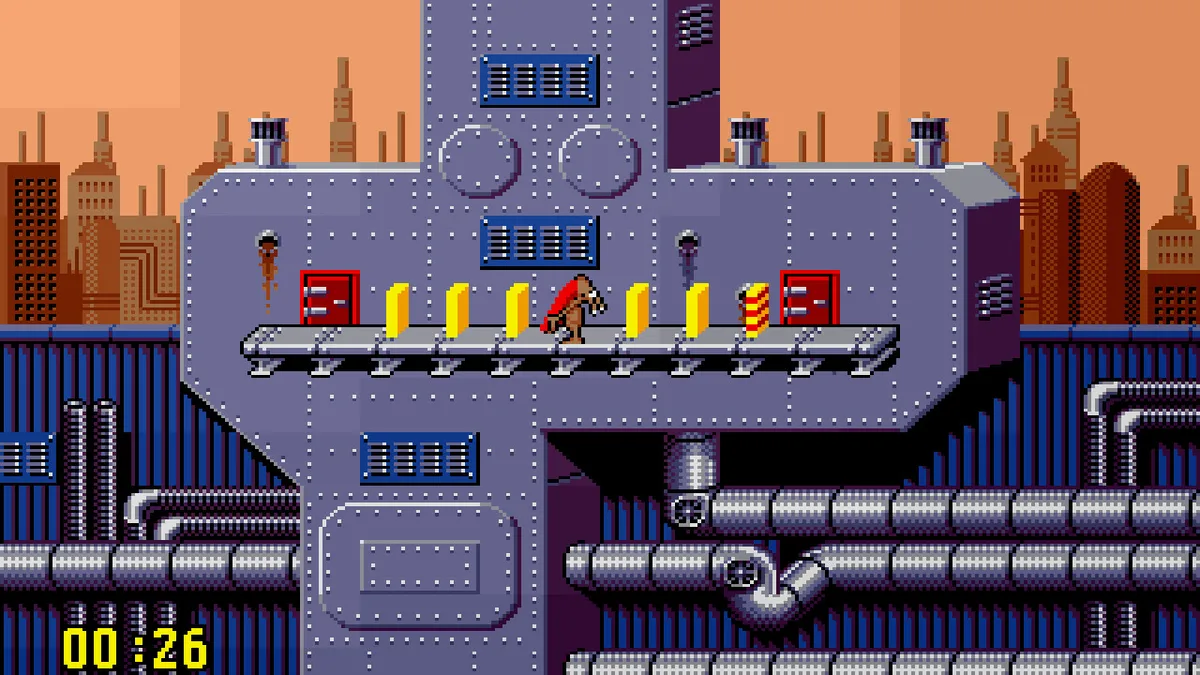
Each level spreads its domino arrangement across several interconnected platforms, and the exit is part of that layout rather than a reward detached from it. Toppling every domino opens the door to the next level, but opening it is not enough: G.I. Ant must still be able to reach it after the pieces have fallen. The arrangement therefore has to satisfy two conditions together, completing the domino sequence and leaving a usable path to the doorway. A solution that clears the standing pieces can still fail if its final state cuts off that path.
Three specific obstructions explain why the route needs attention alongside the dominoes. A ledge on the way to the door can be destroyed, removing part of the approach. A gap can remain unbridged, leaving the platforms short of a complete connection. Even with those connections intact, a fallen line of dominoes can lie across the exit itself and prevent access. When arranging the puzzle, account for both the platforms leading toward the door and the space at the doorway: the required end state is an open exit that G.I. Ant can actually reach.
Falls, Crushing Dominoes, and Collisions That End an Attempt
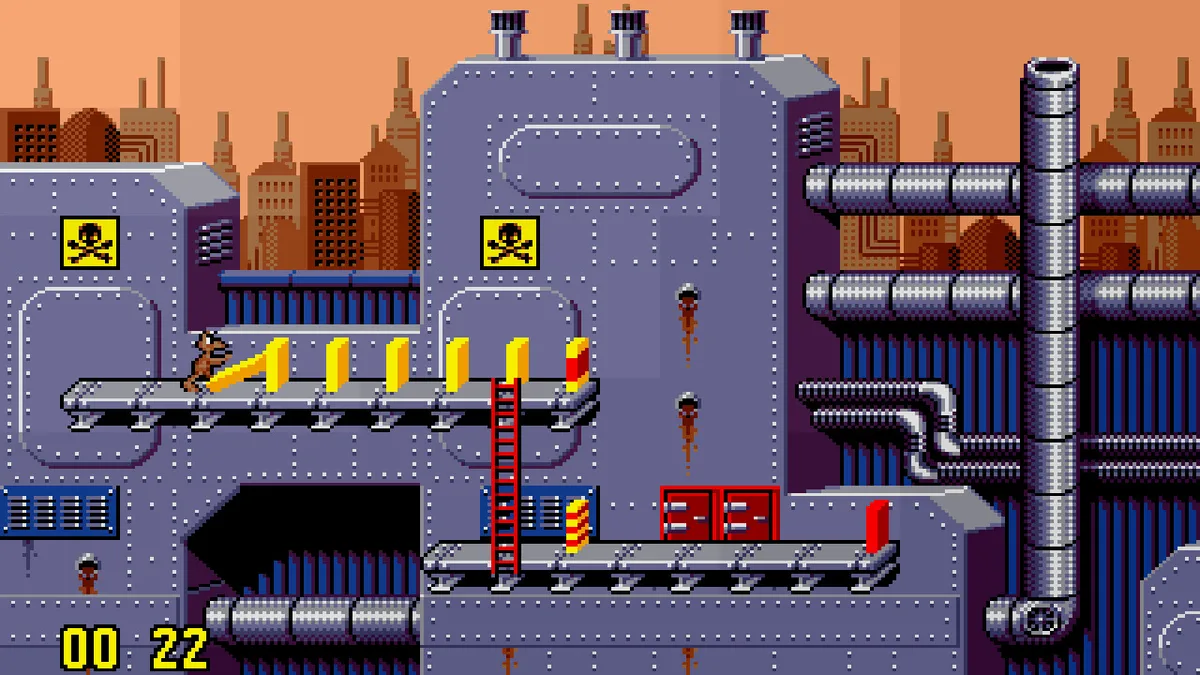
G.I. Ant can die in three ways: falling from a great height, dropping off the bottom of the screen, or being crushed beneath a falling domino. Each death ends the attempt and requires restarting the level. Falls therefore have two distinct failure conditions: a long drop can kill the ant, while leaving the screen at the bottom is also fatal. Falling pieces present a separate hazard to the character, so a domino in motion can end the attempt by crushing him.
The dominoes themselves are also vulnerable. Landing one domino on top of another can destroy a piece, and any domino destroyed this way causes the level to fail. This is separate from the crushing rule: a falling domino can kill G.I. Ant, while a domino landing on another domino can invalidate the attempt through destruction instead. Keeping the ant alive is therefore not enough to avoid failure. The falling pieces must also survive their collisions; destruction of even one domino ends the level attempt.
100 Levels Across Nine Worlds, with Time Limits and Post-Timer Hints
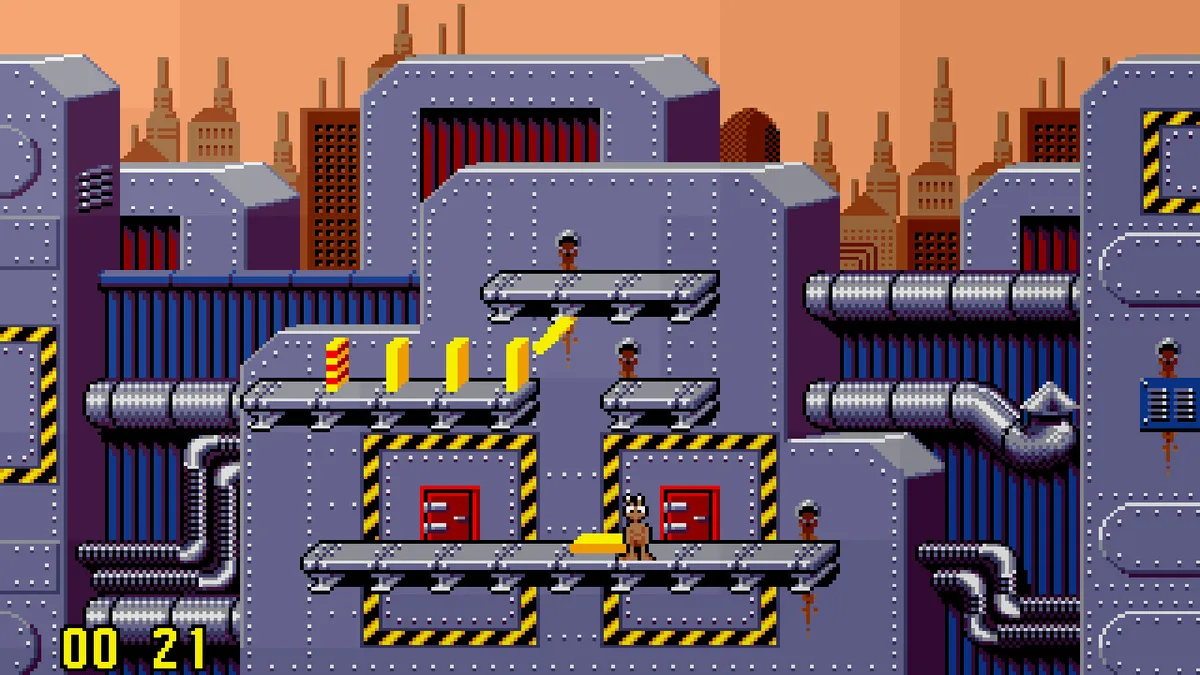
Pushover spreads its 100 levels across nine themed worlds, with puzzles increasing in complexity along the way. G.I. Ant's journey leads into Captain Rat's Treasure Caves, but progression also comes with a time allowance for every level. The important distinction is that this clock does not impose an absolute cutoff on solving the puzzle. Each level has a limit within which it is meant to be completed, yet reaching zero still leaves the player free to continue working on it. Running out of time therefore need not mean abandoning the current puzzle or starting it over.
Once the timer has expired, pausing the game displays a short hint offering advice on completing that level. The sequence matters: the documented way to obtain this help is to let the allotted time run out, then pause, rather than treating expiry as the end of the attempt. Level 98 supplies a particularly unusual example. Its hint advises using a drop and acknowledges that the designer cannot find the push-based solution, despite saying one exists. That advice names an alternative action without providing a full arrangement, leaving the player to work out how to apply it.
Sources & further reading.
- Pushover — official game profileRetrieved Nov 7, 2026
First published .