 THE GAME ARCHIVE
What Quake 4 Asks of the Player
Quake 4 casts the player as Marine Corporal Matthew Kane of the elite Rhino Squad, tasked with spearheading Earth's military invasion of the Strogg homeworld of Stroggos. The official store description frames that campaign as a desperate war for humanity's survival against an unrelenting enemy, and closes with a pointed hook: the only way to defeat the Strogg may be to become one of them. That premise sits in a narrative-driven, sci-fi, military-style first-person shooter that the listing calls a direct sequel to Quake II, and it ships alongside arena-style multiplayer modes.
Premise: Rhino Squad, Stroggos, and a Commander's Opening
The campaign opens after a turning point in the war. According to the listing, the Strogg's leader has been assassinated, and Earth's military has reignited its attack on the hostile aliens' homeworld of Stroggos. Kane is not a lone operative dropped behind lines; he belongs to Rhino Squad, described as elite, and his stated mission is to lead the invasion. The narrative therefore starts from a position of momentum rather than desperation-at-the-outset, which shapes how the campaign can escalate.
The hook the store copy emphasizes is transformation. The war is against an unrelenting enemy, and the tagline suggests the solution is not simply more firepower but becoming one of them. Because the store text stops at that implication, the precise mechanics of how that idea plays out are beyond what this source supports. What is documented is the framing: a military invasion story against the Strogg, told as a narrative-driven campaign rather than as a purely abstract arena exercise.
The Core Loop: Fighting Through the Strogg Ranks
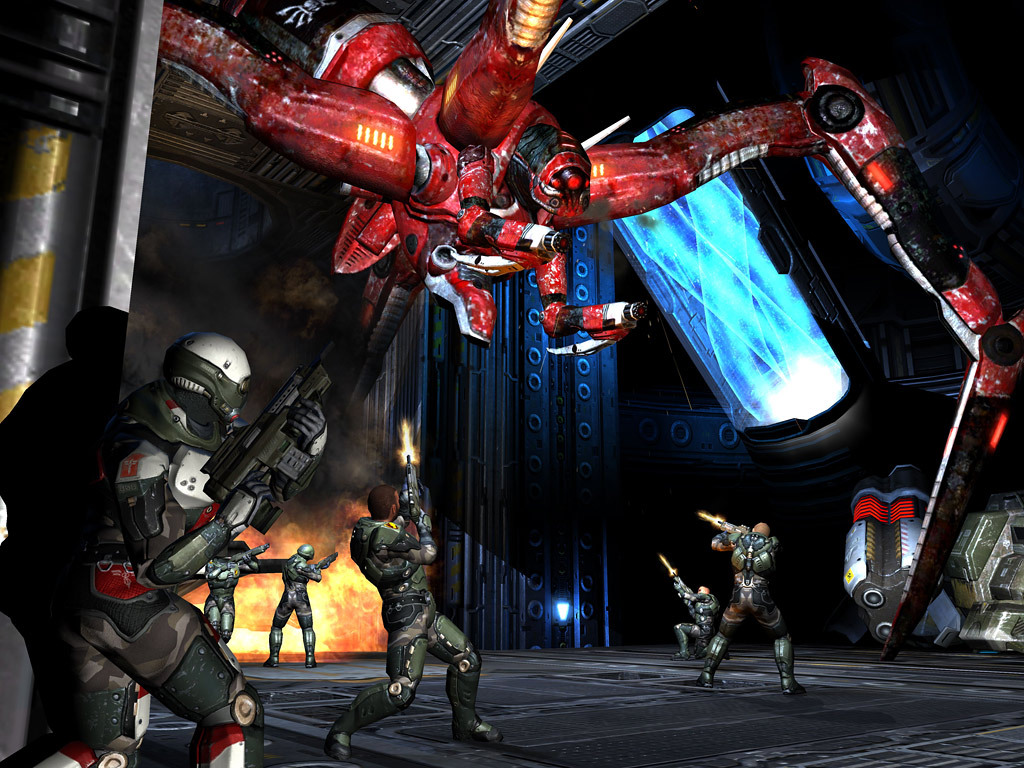
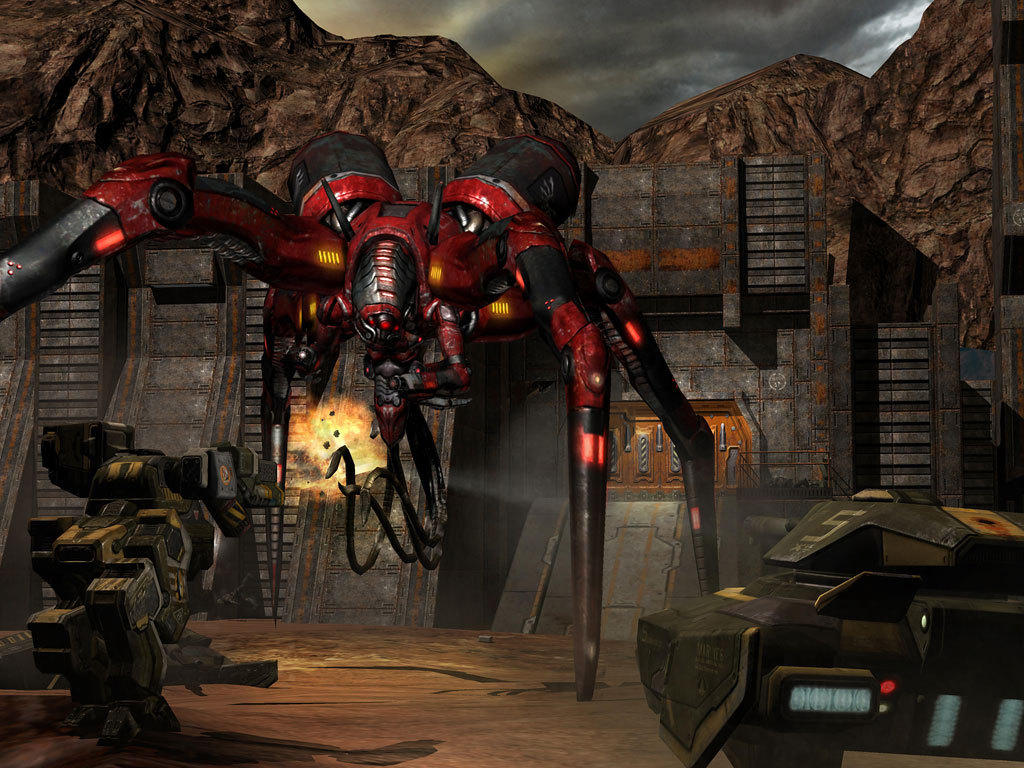
The mechanical center of the campaign is straightforward: a first-person shooter in which the player battles the Strogg army through a narrative-driven campaign, using an arsenal of advanced weaponry. That much is explicit. The listing also names two vehicle types that break up the on-foot rhythm, mechanized walkers and hover tanks, which the player uses to tear through Strogg ranks.
Read together, those facts imply a loop built on two gears. On foot, progress is driven by shooting through Strogg opposition with a growing weapon set. At intervals, the game hands the player heavier hardware, a walker or a hover tank, and asks them to push through enemy positions from inside a vehicle rather than on foot. That alternation is the clearest documented structural rhythm of the campaign.
Beyond that rhythm, the source does not describe specific encounters, level layouts, enemy behaviors, or movement rules. Those details are not present in the supplied material, and this feature does not invent them. Where this article says less, it is because the underlying source says less.
Systems and Progression: Weapons, Upgrades, and Faction Identities
The progression hook the listing actually commits to is weapon upgrading. The feature text says the player upgrades and wields an arsenal of advanced weaponry while fighting the Strogg army. That places advancement in the player's gunplay: rather than unlocking an abstract stat tier, the documented system is about improving the tools the player already carries.
Two factions define the player's choices depending on mode. In the campaign, Kane is a Marine fighting the Strogg. In multiplayer, the listed text has players competing as a Strogg or a Marine. That two-sided framing is unusual in how directly it mirrors the campaign's transformation theme, since the enemy the Marine fights is also a playable side in the competitive modes.
The wider sets of systems that a reader might expect, such as specific item systems, resource management, progression trees, objective systems, and puzzle design, are not documented in the supplied material. The material names the weapon upgrade system and the campaign and multiplayer modes, and stops there.
Modes: Narrative Campaign and Arena-Style Multiplayer
Quake 4 offers two distinct modes according to the listing. The first is the narrative-driven campaign, described as the direct sequel experience to Quake II. The second is online multiplayer, described as arena-style, with three named modes: Deathmatch, Team Deathmatch, and Capture the Flag.
The three multiplayer modes divide cleanly by objective. Deathmatch is the free-for-all baseline. Team Deathmatch keeps the same elimination goal but organizes players into two sides. Capture the Flag layers a positional objective on top of combat, which changes movement priorities because players now have to defend a home flag while pushing for the opponent's. The listing does not state player counts, map counts, server details, or whether bots are supported, so those specifics should not be assumed.
Distinctive Design: Sci-Fi Military Framing and Vehicle Scale
The visual and thematic identity the listing commits to is a sci-fi, military-style first-person shooter. That framing is consistent across the material: an organized squad with ranks, a named enemy faction with a homeworld, and a stated invasion objective. The campaign's identity is not abstract arena combat bolted onto a story; the story is the organizing structure, and the multiplayer sits alongside it as a separate arena-style offering.
The mechanized elements are what give the shooter a sense of scale beyond infantry combat. Walkers and hover tanks are the two named vehicle types, and the listing frames them as a way to tear through the Strogg ranks. That implies a shift in both pace and perspective when the player mounts them, though the specifics of how those vehicles control are not described in the source.
Starting Guidance From the Source Material
The material supports only a small amount of practical starting orientation. Players who want the story should begin with the narrative-driven campaign, since that is where the Rhino Squad invasion and the Strogg-conversion premise live. Players who want arena competition should look to the multiplayer side, where Deathmatch, Team Deathmatch, and Capture the Flag are the documented options, and where the player chooses to fight as either a Strogg or a Marine.
For the campaign itself, the one mechanic worth watching from the start is weapon upgrading. Because the listing says the player upgrades and wields the arsenal rather than simply finding it, the practical advice supported by the source is to treat weapon progression as the main track to follow. Beyond that, the source does not describe controls, difficulty settings, checkpoints, or save systems, so no further starting guidance can be offered honestly.
Edition and Access Notes
This profile is based on the official Steam listing for Quake 4. That listing attaches a release year of 2011, a Windows platform tag, Action as its genre, RavenSoft and id Software as developers, and Bethesda Softworks as publisher. The 2011 date belongs to the Steam entry as recorded in this source; it should not be read as a claim about the game's original release history, which the supplied material does not cover.
The developer credit is split in two across the sources. The Steam listing's developer field reads RavenSoft and id Software, while its prose says the game was developed in 2005 by Raven Software in collaboration with id Software. The two names refer to the same studio in different forms, and the 2005 figure appears only inside the store description rather than as a structured date field.
Scroll sideways to see the full table →
| Field | Value |
|---|---|
| Game title | Quake 4 |
| Release year (Steam entry) | 2011 |
| Platform (per listing) | Windows |
| Genre | Action |
| Developers (listing field) | RavenSoft, id Software |
| Publisher | Bethesda Softworks |
| Campaign focus | Narrative-driven, direct sequel to Quake II |
| Documented multiplayer modes | Deathmatch, Team Deathmatch, Capture the Flag |
| Documented vehicles | Mechanized walkers, hover tanks |
| Documented progression hook | Upgrade and wield an arsenal of advanced weaponry |
Sources & further reading.
- Quake 4 — official game profile Retrieved Oct 12, 2026
First published .