 THE GAME ARCHIVE
An Island of Hexagons, Conquered Turn by Turn
Slay sets its conquest on an island divided into hexagons. Those individual spaces are the territory you seek to take: the objective is to conquer the island by capturing hexagons held by enemies. Expansion therefore has a concrete form on the board, with captured spaces extending your territory across the hexagonal grid. The island is both the setting for the contest and the land being contested.
Play proceeds in turns, with players purchasing and deploying men to carry out that territorial campaign. These units connect the purchasing system to the island-wide objective: you buy men, then use them to capture enemy-held hexagons. The basic framework brings together a turn-based sequence, a board made of territorial cells, and units that take those cells, keeping the stated goal focused on possession of the island.
Buy Men, Combine Two, Defeat Weaker Units
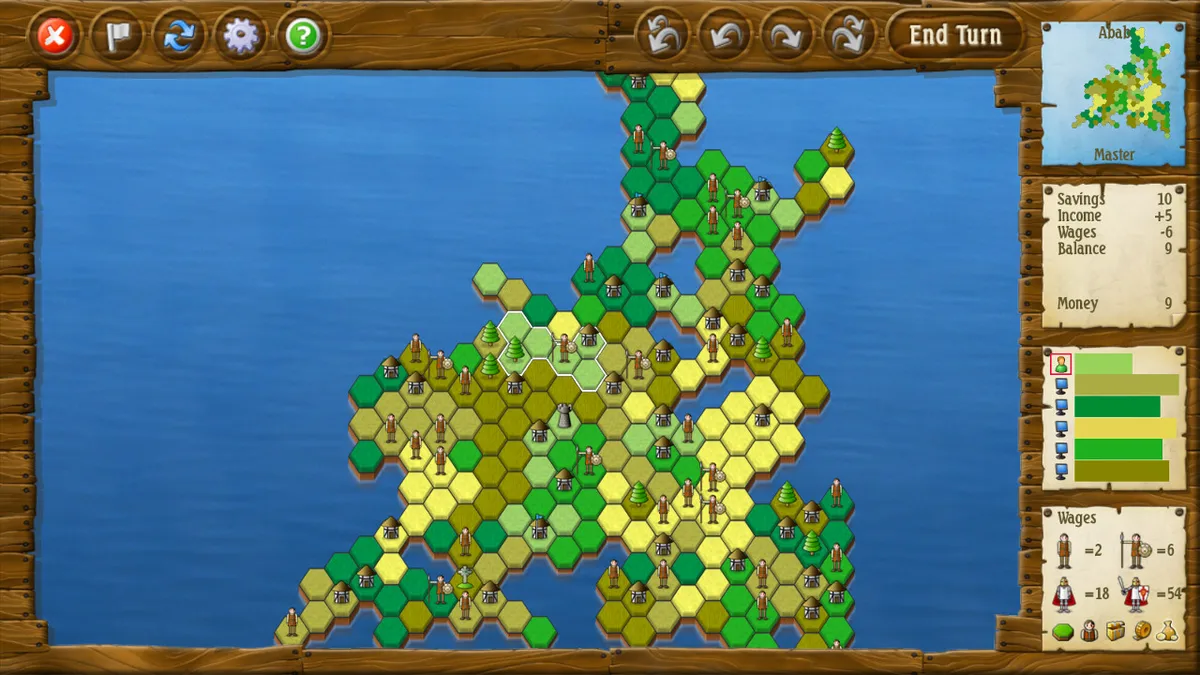
Buying men supplies the units used in combat, but combining them changes their strength. Take two men and combine them to produce one more powerful man: the result is a single unit rather than a pair. This makes combination a distinct step from purchasing. A purchase supplies a man; a combination turns two men into one stronger combatant. The key exchange is therefore numerical as well as tactical: two separate men become a single man whose greater power allows him to kill weaker opponents.
Relative strength is the central combat rule: a stronger man can kill a weaker one. Combining men matters because it changes that comparison, producing a combatant with more power than the men used to create him. The rule links preparation to fighting through a concrete sequence—buy men, combine two, then use the stronger result against weaker enemies. Greater power is not described as an unconditional ability to defeat any opponent; the documented advantage applies specifically when the opposing man is weaker. Combination and combat thus operate through the same measure: the power of one man relative to another.
The Cost of Power: Upkeep and Purchases You Cannot Undo
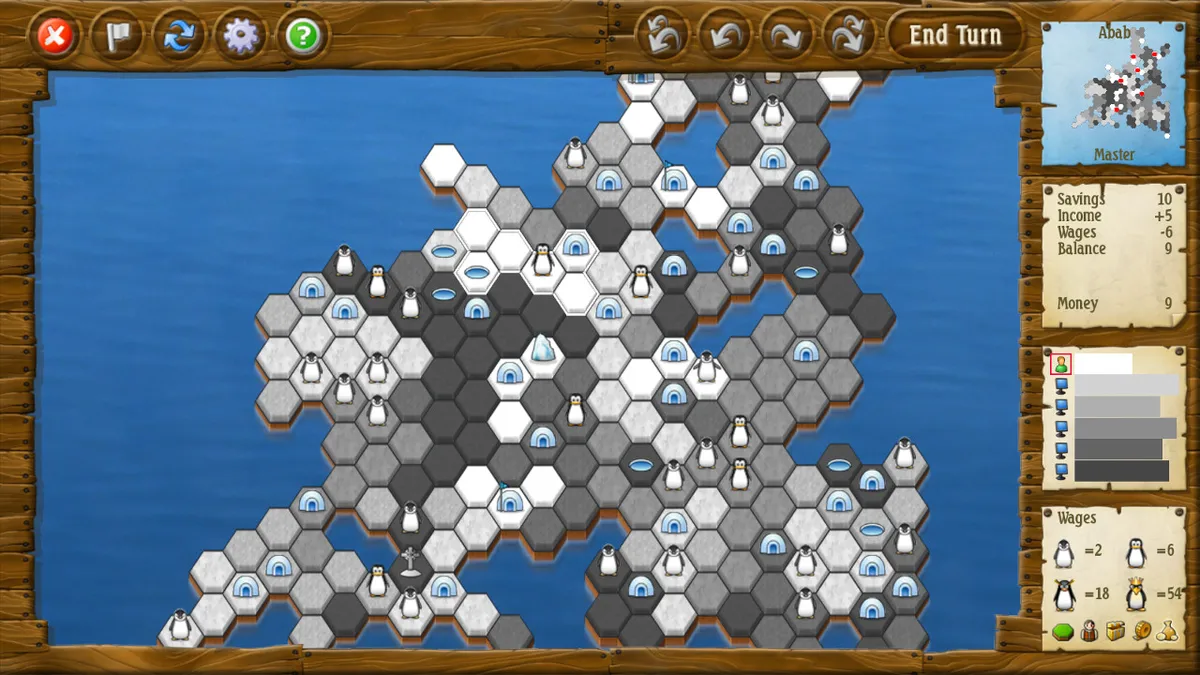
Power carries a maintenance bill in Slay: the stronger a man becomes, the more expensive he is to maintain. Creating a stronger unit therefore changes more than its combat strength; it also raises the cost attached to keeping that man. The economy asks you to weigh the force you are building against its upkeep, rather than treating greater power as a benefit without a corresponding expense. Purchasing men and maintaining them are connected obligations, so the cost of an army is not confined to the purchases that first put its units into play.
Purchases add a second constraint: men cannot be unbought. Buying a man is consequently a commitment, not a provisional addition you can reverse if your buildup proves too ambitious. Together, irreversible purchases and rising maintenance costs put limits on the pursuit of power. You must balance adding forces with the expense of maintaining stronger men, considering both the purchase and the upkeep rather than either in isolation. The economic question is not simply whether another man would strengthen your forces, but whether that buildup remains consistent with the maintenance burden you are taking on.
Capture Territory and Cut an Enemy Domain in Half
Capturing land can do more than extend your own domain: it can break an enemy's territory into separate parts. Use your men to take enemy-held hexagons that divide the opposing domain in two. The tactical target is the split itself, rather than simply another captured space. A capture that separates enemy territory serves both purposes at once, adding land to your holdings while breaking up the area your opponent controls.
The economic purpose of that division is to bankrupt one of the resulting sides. This connects territorial attack to the burden of maintaining men: instead of relying only on killing opposing units, you can attack the territory supporting the enemy's position. Greater unit power brings higher maintenance costs, so strength alone does not resolve this threat. Cutting a domain in half attacks its financial position through the map, making the location of captured hexagons important alongside the amount of land taken.
Sources & further reading.
- Slay — official game profileRetrieved Nov 4, 2026
First published .