 THE GAME ARCHIVE

A Mansion You Operate With One Button
The 7th Guest is an adventure built around one instrument and one obligation. The instrument is a single-button point-and-click device: movement through the house happens by sliding an animated cursor across the screen, and the left mouse button is what acts on what the cursor finds. The obligation is the house's stock of clever puzzles, which must all be solved before the game is completed and the secrets of the madman Henry Stauf are revealed. Everything the player does sits between those two facts.
That design makes the cursor itself the game's most important readout. The house contains a number of psycho-kinetic hot spots, and when the pointer is positioned over one the cursor changes according to the nature of that spot; clicking then unleashes the psycho-kinetic energy. The player is not hunting for invisibly armed scenery but for visible changes in the pointer, and the payoff for noticing one is a reaction in the room.
Hot Spots and the Icon Vocabulary
The manual lays out a list of icon types and their effects, and two of them define the basic rhythm of exploration. The wagging finger means there is no action that can be performed at that spot; a click there yields nothing. The forward beckoning hand instead beckons the player ahead, and selecting it when it appears moves the viewpoint forward and deeper into the house. Read together, the two icons sort whatever sits under the pointer into one of two categories: dead surface or onward passage.
This turns navigation into a form of careful looking. Because the cursor changes before any click is made, the player can judge a location's status in advance and only commit the button when the icon promises something. The cost of a wrong click is only wasted motion, but the habit the system teaches is the important part: sweep the pointer across the room, watch for the change, and treat every altered icon as information about what Stauf's house will allow at that point.
Why Every Puzzle Has to Fall
The house is filled with devilishly clever puzzles that test the player's wits and, in the manual's phrasing, scare the player out of them as well. Completion is gated on the whole set: to complete the game you must solve every puzzle in the house, and only then are Stauf's secrets revealed. There is no partial-credit route through the mansion, so a puzzle that refuses to yield is a direct obstacle between the player and the ending rather than an optional flourish.
What makes that gating unusual is where the rules live. Among the secrets Stauf has kept from the player are the rules to the puzzles themselves. In most cases, experimenting with how the puzzle pieces behave should supply enough clues to understand the nature of a challenge, so the first move on any unfamiliar board is to poke at it and watch what the pieces do. The puzzle is not explained first and then played; it is investigated until its behavior becomes legible.
The manual pairs that experimentation with an explicit fallback: should the player become completely stumped, the guidance is not to despair but to consult the clue. That creates a two-layer approach to every board. Probing the pieces teaches the rules when they can be learned by observation, and the clue covers the case where observation has stopped paying. The design assumes the player will get stuck somewhere, and it treats the clue as part of the intended method rather than an admission of defeat.
Twenty-Two Rooms as the Puzzle Board
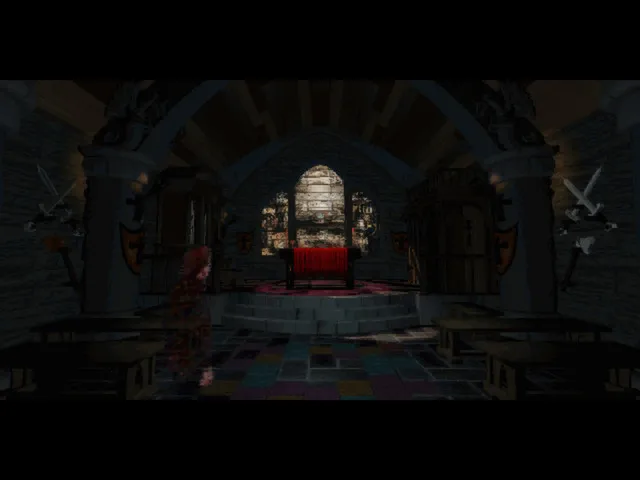
The house is made of 22 stunningly rendered, devilishly surprising 3-D rooms in a fully explorable haunted mansion. Old Man Stauf's bizarre puzzles to solve and games to play sit inside that same structure, which means the rooms are not scenery passed through on the way to a separate puzzle screen. The search for the next challenge runs on the same hot-spot clicking used to move around, so exploring the mansion and finding the work to be done are the same activity.
The setting those rooms carry is Stauf's mad mansion living again. As the store description frames it, there were six guests the world knew about, and there was one other; only the player can end the nightmare and learn the secret of The 7th Guest. The product also cites two CDs of extensive gameplay with an original soundtrack as part of the package, which fits a house this size and a presentation built on video sequences.
Live Actors Inside the Virtual House
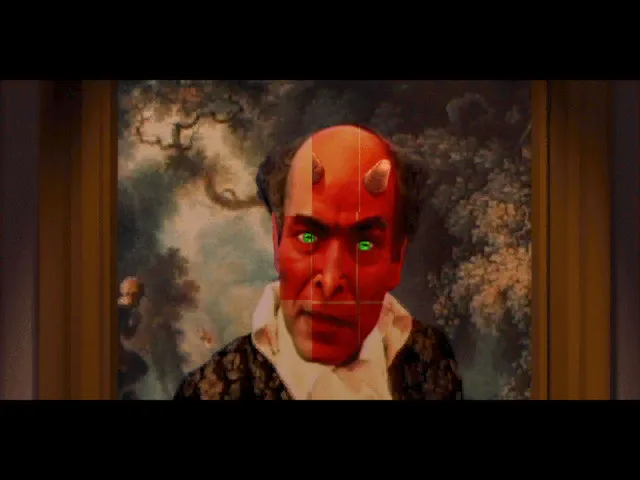
Among the game's feature claims is a groundbreaking use of full-motion video and dialogue recorded by live actors in a terrifyingly real virtual environment. The phrasing matters for how the game plays: the recorded performances are placed inside the virtual environment rather than presented alongside it. Between the puzzle work, the player is meant to encounter performed dialogue as part of the house itself, with the video carrying story while the rooms carry the tasks.
For a player working through a stubborn puzzle, that presentation shapes the experience around the board. The mansion is framed as possessed by the story of its maker and its guests, and the goal supplied by the product description is to end the nightmare and learn the secret of The 7th Guest. The puzzles are the gate to that secret, while the video material is what surrounds the gate with character and place. The two halves are locked together by the requirement that every puzzle be finished before the secret is revealed.
Starting, Saving and Moving Through the House
Choosing START NEW GAME begins from the very start, including the complete eight-minute introduction, so a fresh run opens with a substantial uninterrupted sequence before play settles into the room-to-room routine. Progress is handled through numbered save slots: loading a game means selecting the number of that game and then selecting OK. The house is built for one player working the single-button point-and-click device, so the animated cursor does all the moving, all the positioning over psycho-kinetic hot spots, and all the clicking that unleashes their energy.
Put into practice, the loop is narrow but not shallow. Sweep the cursor to find a hot spot, read its icon, and click; use the beckoning hand to go deeper into the house; when a puzzle appears, experiment with the pieces until their behavior makes sense, and consult the clue if the board goes opaque. Because completion requires every puzzle in the house, the run only ends when all of them have fallen, at which point Stauf's secrets are revealed.
What the Listing Describes and Where the Manual Fits
The game's controls and puzzle rules in this feature come from the publisher-supplied gameplay manual for the version distributed through the official store listing, and the feature descriptions come from the official game profile. Together they describe a first-person-styled single-button adventure in a virtual environment, with the cursor as the only control and the mansion's puzzles as the only barrier to the ending. Players approaching this version should expect the manual's own conventions: numbered save slots, a one-click interface, and puzzle rules discovered by experiment rather than explained in advance.
Documented Gameplay at a Glance
Scroll sideways to see the full table →
| Element | Documented detail |
|---|---|
| Control scheme | Single-button point-and-click device; animated cursor moved with the mouse |
| Hot spots | Psycho-kinetic spots that change the cursor; left click unleashes the energy |
| Icon example 1 | Wagging finger: no action can be performed here |
| Icon example 2 | Forward beckoning hand: moves you forward and deeper into the house |
| Puzzle rule | To complete the game you must solve every puzzle in the house |
| Hidden rules | The rules to the puzzles are among Stauf's secrets; experiment or consult the clue |
| Scenes | 22 stunningly rendered, devilishly surprising 3-D rooms in a fully explorable haunted mansion |
| Presentation | Full-motion video and dialogue recorded by live actors in the virtual environment |
| Starting a game | START NEW GAME begins from the very start, including the complete eight-minute introduction |
| Saving and loading | Numbered save slots; load by selecting the number and then OK |
| Package | 2 CDs of extensive gameplay with an original soundtrack |
Sources & further reading.
- The 7th Guest — official game profileRetrieved Oct 29, 2026
- The 7th Guest — official game profile — publisher-supplied gameplay manualRetrieved Oct 29, 2026
First published .