 THE GAME ARCHIVE
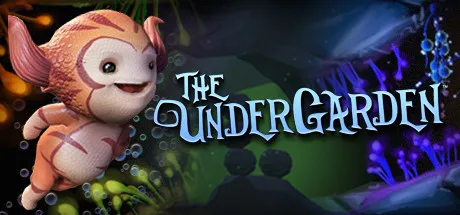
The Band Quest: Underground Caverns Full of Secrets
The UnderGarden frames its play as a modern exploration quest. Players traverse large underground worlds in search of members of their musical band, and the goal is to bring those members together and lead them to the surface. Those caverns are filled with strange life forms, sound, music and hidden secrets, so the search doubles as a slow survey of an unfamiliar place. Along the way, the player meets puzzles that must be solved and life forms that must be befriended or avoided. The game is positioned as a casual Zen experience aimed at players with an affinity for puzzle games, and it runs across 20 different levels, each with a unique look. Rather than rushing the player, progress is driven by the player's own pace, their desire to see their effect on the world, and their exploration of new environments. That design assumes curiosity is the engine: the reward for wandering deeper is watching the cavern respond, not clearing a fixed quota under pressure.
Physics Fruit Puzzles: Levers, Platforms and Plant Growth
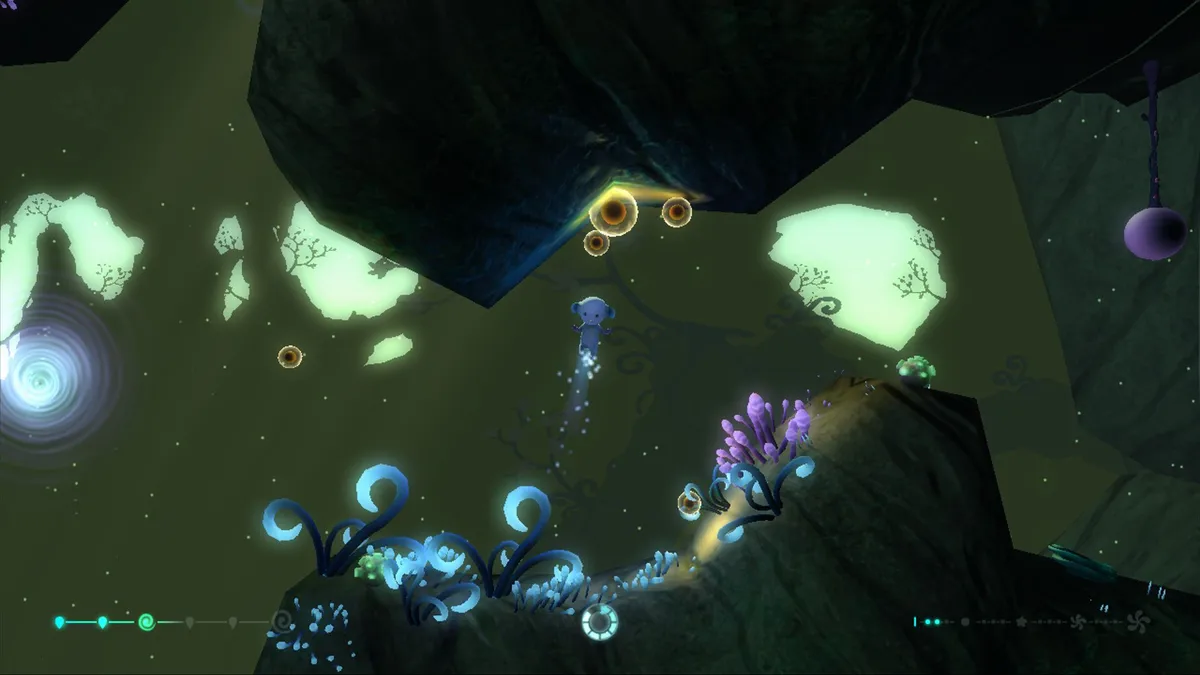
The core puzzle rules are physical. Puzzles are physics based, solved by placing grown "fruit" that weighs down levers, or that lifts up platforms to allow access to new areas. A lever puzzle therefore asks the player to produce weight and position it correctly; a platform puzzle asks them to produce something that will raise a route. The game's brain-teasing content is described as combining state-of-the-art 3D rendering with these physics-based puzzles, which places the arrangements inside modeled underground environments rather than on a separate abstract puzzle board. A second rule sits alongside the first: environmental puzzles are solved by growing exotic plants around the player. So in a single stretch of cavern, the player may need cultivated fruit for the machinery and exotic plants for the surroundings. Neither is framed as combat; the puzzle set is presented as the flexible, unhurried work of growing the right thing in the right place and seeing how the space reacts.
Making the World Respond: Seeds, Color and Sound
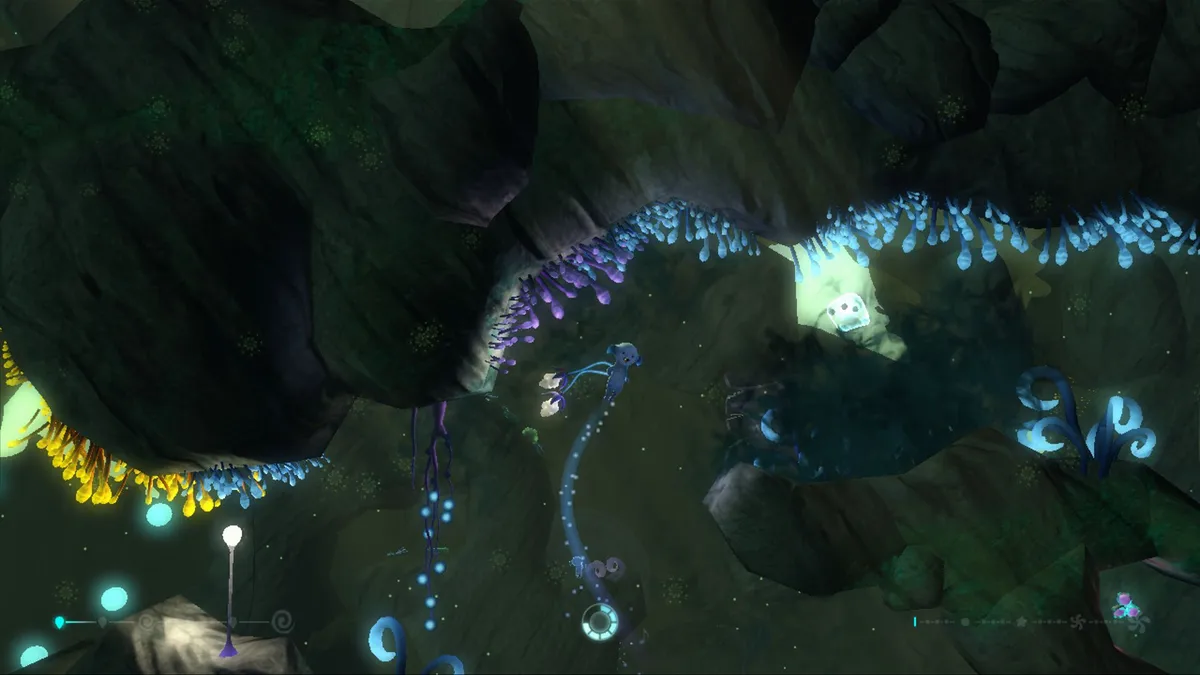
The world springs to life with vibrant color and music as the player drifts past dormant seeds. That single rule explains why exploration and puzzle-solving feel connected: the scenery itself changes as the player moves through it, so wandering is never purely neutral. Serene music and audio are threaded within the game to enhance the experience, matching the calm tone of the caverns and the colorful awakening of the seeds. This also explains the unusual incentive structure. Because progress is driven partly by the desire to see one's effect on the world, the visible and audible response is part of the reward rather than decoration on top of it. A player who takes a detour to wake more of the underground is following the game's own stated design. The strange life forms the player befriends or avoids belong to the same living-cavern idea, giving the environments a population as well as a palette.
Two-Player Co-op Across Twenty Levels
The game is described as the first of its type to offer 2-player co-op play, so the shared journey is a headline feature rather than an afterthought. The 20 levels, each with a unique look, give a two-player session a changing sequence of caverns rather than one repeated backdrop, while the player-paced structure means the pair are not described as being pushed by a fixed clock. In co-op, the same documented rules apply to both players: grown fruit weighs levers or lifts platforms to open new areas, exotic plants resolve environmental puzzles around the player, and dormant seeds wake with color and music as players drift past. That makes the cooperative mode an extension of the solo exploration rather than a separate ruleset. The pair search for band members together, solve the puzzles in their path, and lead the group to the surface. The casual Zen framing carries over: the point is the pair's own pace and their shared effect on the world, and the store materials do not describe a competitive or scored split.
Starting Out: How to Read the Caverns
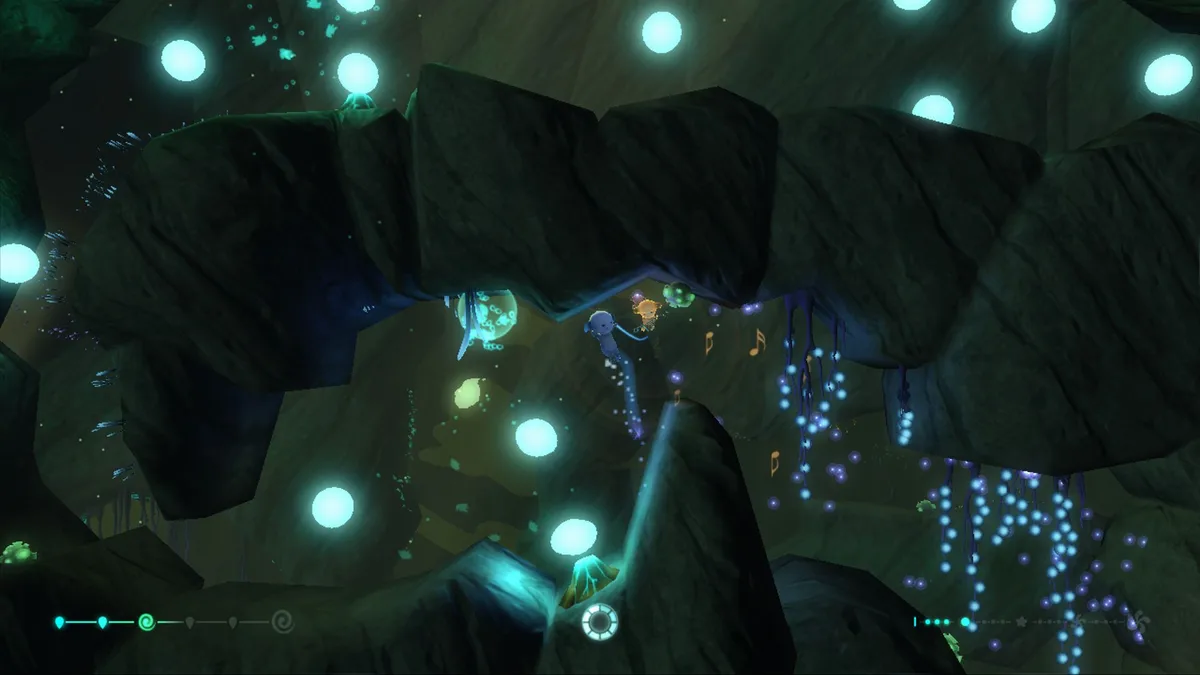
For a first session, the documented rules suggest a simple habit: treat each obstruction as a question about what to grow. If a lever needs bearing down, the answer is grown fruit placed to weigh it; if a route needs to rise, the answer is fruit placed to lift a platform toward the new area. When the surroundings themselves are the puzzle, the answer is growing exotic plants around the player. And because drifting past dormant seeds wakes them with color and music, moving through a cavern is itself a way of learning how the environment responds. Patience pays off under this design. Progress is driven by the player's own pace, curiosity and exploration, so there is no stated penalty for wandering before solving the next obstacle, and the 20 uniquely styled levels reward attention to how each new cavern looks and sounds. Two players can simply divide the work: one experimenting with growth while the other explores, then both moving on once the route opens. What the materials do not specify are the exact growth controls, the length of individual levels, or how band members are located, so treat those as open questions rather than assumed mechanics.
The Record: Developer, Publisher and Platform
The UnderGarden is an Artech Studios game published by Atari, listed for Windows and dated 2010. Its genre label is Casual, consistent with the Zen framing and the pick-up-and-play, accessible-controls description of its puzzle play. Those catalog facts fix what this version is: a Windows release in the Casual category, with the 2-player co-op mode and the 20 uniquely styled levels described above.
Scroll sideways to see the full table →
| Detail | Value |
|---|---|
| Title | The UnderGarden |
| Developer | Artech Studios |
| Publisher | Atari |
| Platform | Windows |
| Year | 2010 |
| Genre | Casual |
| Levels | 20, each with a unique look |
| Co-op | 2-player co-op |
| Lead objective | Gather band members and lead them to the surface |
Sources & further reading.
- The UnderGarden — official game profile Retrieved Oct 21, 2026
First published .