 THE GAME ARCHIVE
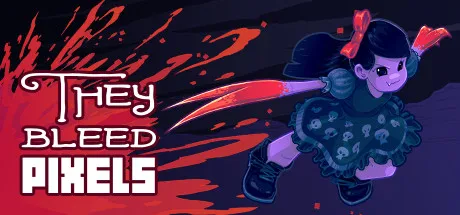
One-Button Combat With Surprising Depth
They Bleed Pixels builds its fighting system around a single attack button, a scheme the game describes as simple yet full of depth and versatility. Rather than rewarding rapid pressing or long combo strings, the design favors skilled, deliberate combat. The practical approach is to use that one button to shove shadowy monsters toward environmental dangers: saws, pits and spikes become the real weapons. Since button-mashing is discouraged, each strike is less about chaining inputs and more about lining up a monster with a hazard so the kick sends it where you want it to go.
Those hazard kills feed directly into the checkpoint rules. Kicking enemies into saws, pits and spikes is rewarded through a system that lets you earn and place your own checkpoints using stylish kills. So the one-button fighting and the checkpoint placement are linked: a clean kick that sends a monster into a trap earns you a way to mark progress, while mindless attacks do less for you. The arena work becomes about reading where each monster stands relative to the nearby hazards, then choosing a strike that converts that positioning into a checkpoint opportunity.
Precise Platforming: Dashes, Double Jumps and Stops
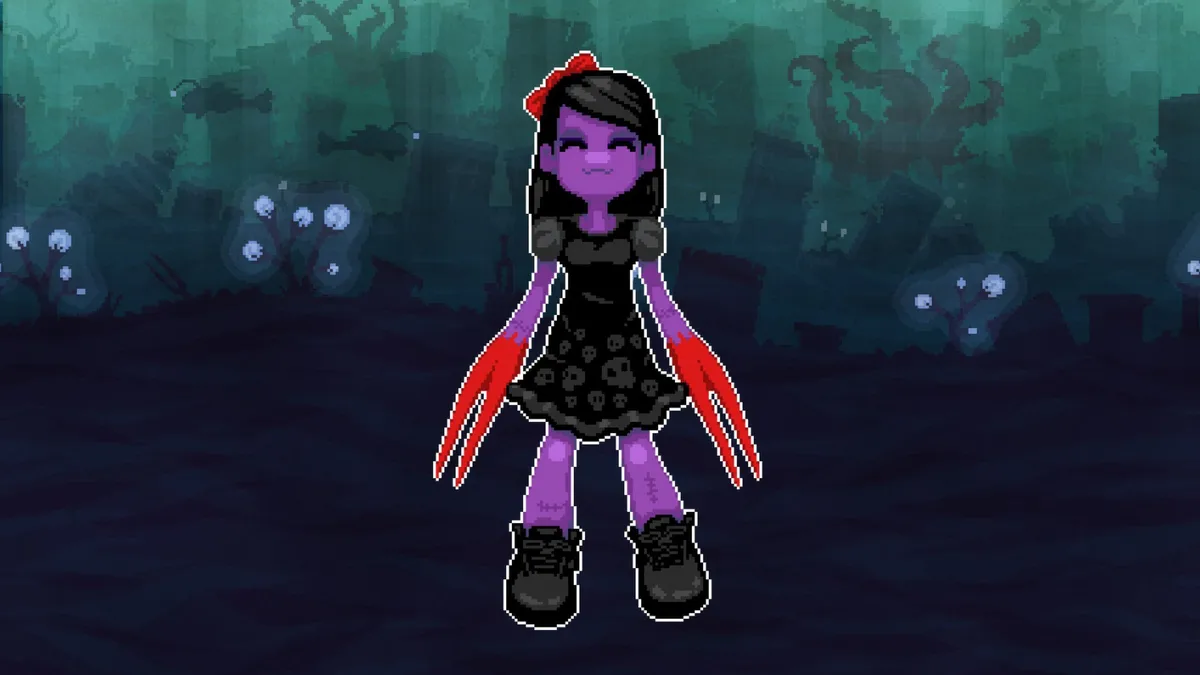
Movement in They Bleed Pixels is built for sudden changes of direction. The platforming controls are described as super precise, letting the protagonist stop and start on a dime, so a sprint across a ledge can be killed instantly at the edge before the next gap is read. From that standing halt, gravity-defying dashes and double jumps extend the route upward and across hazards. These are traversal tools, not combat moves, which keeps the platforming vocabulary separate from the one-button attack scheme covered elsewhere.
The stopping and starting matter because the levels themselves are large. Eleven massive levels carry unique visuals and music, and each is built for exploration rather than a straight line through hazards. Precise halts let a player pause at the lip of a saw or pit to pick a line, while dashes and double jumps cover ground and reach higher platforms in those same spaces. Kicking shadowy monsters into saws, pits and spikes sits alongside this movement: the same hazards the platforming avoids become the targets the combat aims the monsters toward.
Earning and Placing Your Own Checkpoints
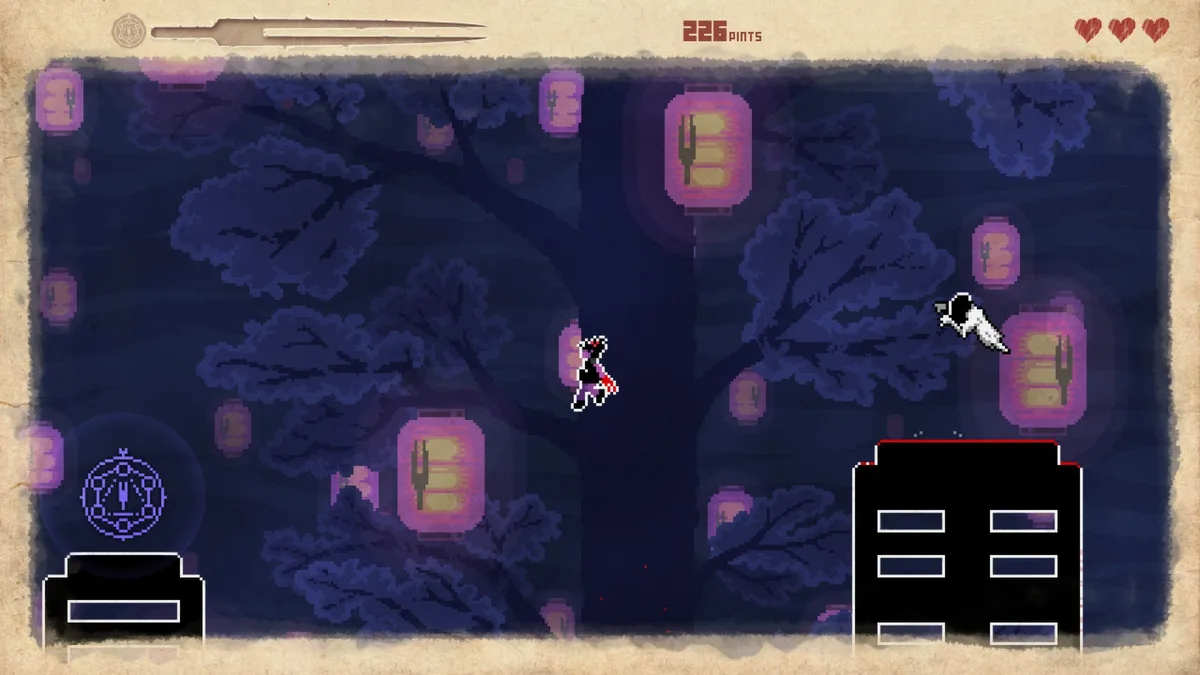
Checkpoints in They Bleed Pixels are not fixed save points but a resource you earn by fighting well. A checkpoint meter fills as you defeat enemies, and the fancier your kills, the faster it fills. Kicking shadowy monsters into saws, pits, and spikes is explicitly rewarded, tying the one-button combat to progress. Once the meter is full, you can place a save spot that you carry with you, effectively letting you decide where to mark your run. This means every stylish hazard kill is a step toward securing your position in the level.
Placement comes with a trade-off. You can hold on to a filled checkpoint for extra points or drop it right away to preserve your progress. Dropping it immediately banks safety but forgoes the bonus; holding it risks losing the points if you fall before placing it. This rule turns each earned checkpoint into a small decision about greed versus security, and it interacts with the meter: since fancier kills fill the meter faster, skilled play yields more frequent chances to make that choice. The system thus rewards both aggressive, stylish combat and careful risk management.
Story, Difficulty and Unlockable Levels
The framing story places a young girl at the Lafcadio Academy for Troubled Young Ladies, where violent nightmares transport her to other worlds and begin intruding on her waking life. Her body slowly shifts toward a demonic, clawed form, and the stated goal is to destroy the mysterious blood-soaked book that appears to be the root of her troubles. If she fails, the transmutation from girl to clawed horror may become complete, so the objective combines destroying the book with preventing that final transformation.
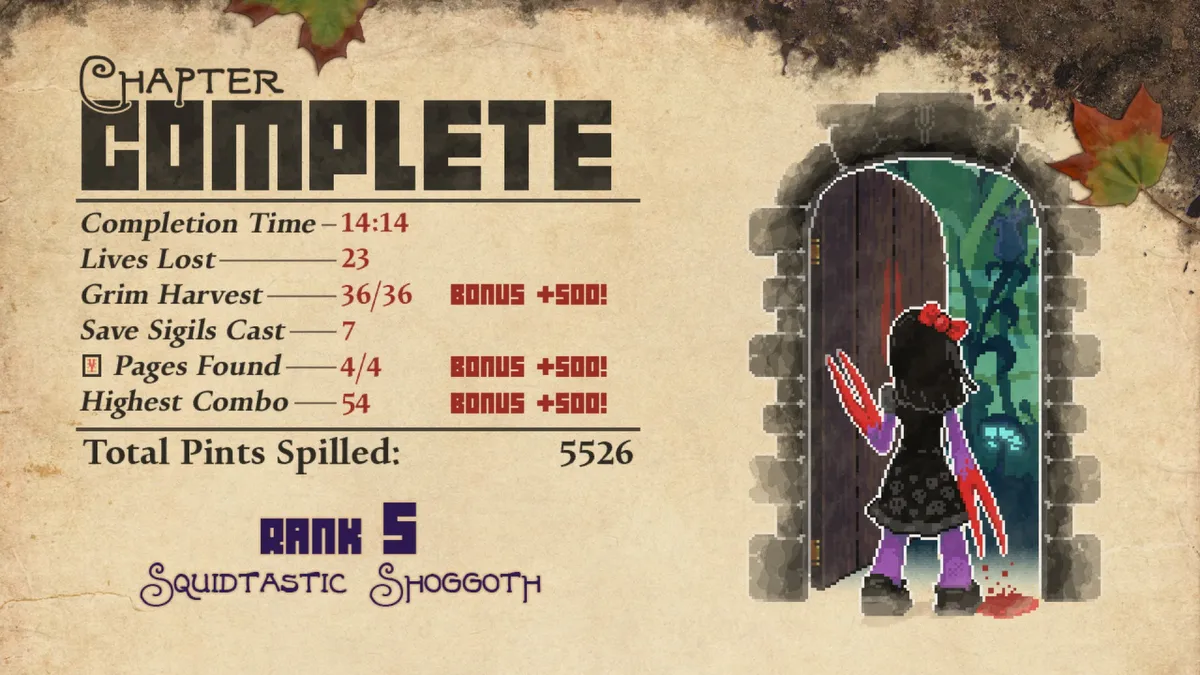
Two difficulty settings, Standard and Novice, let players match the game to their skill level. Beyond the eleven massive levels, progression opens additional bonus levels and guest levels contributed by indie game developers and based on their own creations, including the named examples They Bleed Ponycorns and They Bleed Stardust. The game also tracks individual level rankings and 150 skill-based achievements, giving players concrete targets to pursue after completing the main game. The Steam product record lists a 2012 date for this title, though that is a store listing date rather than a confirmed original release date.
Sources & further reading.
- They Bleed Pixels — official game profileRetrieved Oct 27, 2026
First published .