 THE GAME ARCHIVE
Open-World Voxel Sandbox with Two Action/Adventure Modes
Total Miner presents itself as an open-world voxel sandbox, and its design centers on creative RPG game builders. Working in that sandbox, a builder assembles a world out of voxel blocks and shapes it into a playable role-playing scenario rather than only a static scene. The building side is the main focus, so the voxel space doubles as the stage for the quests, characters, and encounters an author chooses to place within it.
For players who would rather not build, the game includes two action/adventure style modes that can be entered directly. Those modes let someone jump in and play without constructing a world first, while the sandbox mode remains the space intended for authoring creative RPG content. The two paths therefore sit side by side: one is the builder's voxel workspace, and the other is a pair of ready-to-play adventure modes.
Building Worlds with Fill, Replace, and Flood Tools
The creative toolkit groups several large-scale operations that spare a builder from placing voxels by hand. Fill and Clear let a large area be altered in a single operation, while Replace swaps blocks or textures across wide regions quickly. Structures are not limited to manual stacking: the game builds lines, paths, walls, spheres, and even forests on command. Flooding works differently, using a painter's algorithm to pour any of the available block types into large, irregular spaces.
These tools sit alongside copy and paste, which duplicates parts of a world or saves sections as components for later use in the same or another world. The block count gives the toolkit its palette: 234 unique blocks, so a flood or replace operation can draw on a wide range of materials. Combined with the built-in scripting language and editor, the creative tools also handle automation of manual tasks, such as mass edits that would otherwise be tedious.
Scripting Quests, Boss Fights, and NPC Dialog
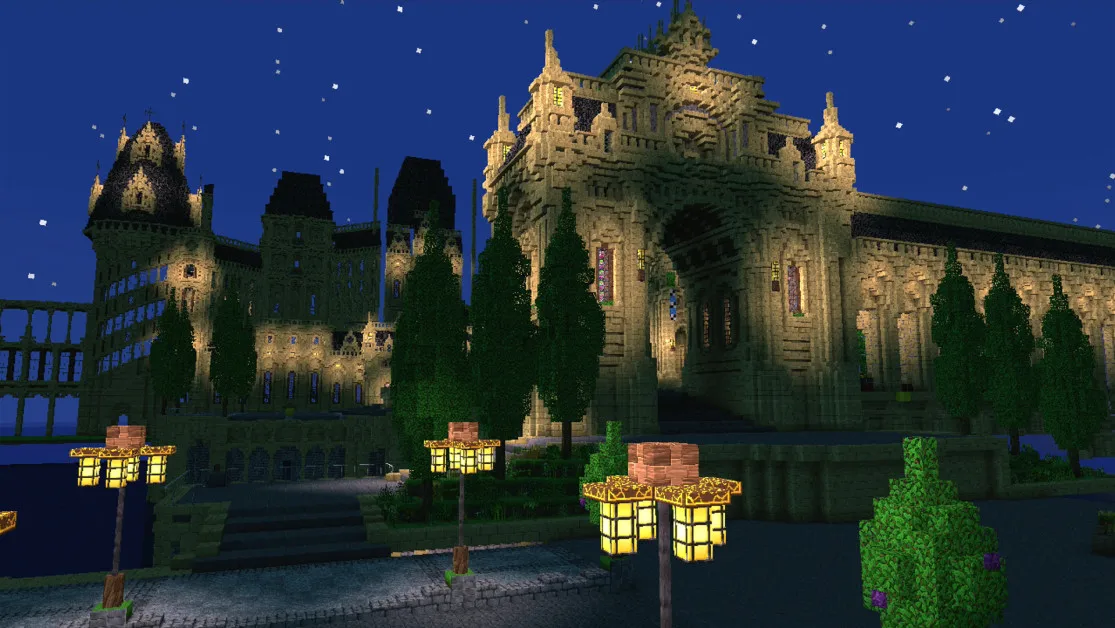
The scripting side of Total Miner begins with a built-in script language and editor, shipped with full help documentation and examples. Using that editor, a builder automates manual tasks and authors quests, mini games, and boss fights inside the voxel world. The same scripting tool also drives non-player character behaviour and dialog, so the script layer and the character layer are connected rather than separate. Lua scripting is offered as an alternative to the in-house language, giving builders a second way to write the same kinds of logic.
For characters, a dedicated NPC behaviour and dialog creator produces fully customizable behaviour and dialog trees, letting an author branch interactions and set how a character responds. The game supplies 74 built-in avatar and NPC models to draw on when populating a world. A built-in HUD designer adds another authoring surface: a builder lays out a map-specific HUD that players will see, and that HUD can be tied into scripts. Together these pieces let one world combine scripted quests and boss encounters, branching NPC conversation, and a custom on-screen interface.
Skills, Farming, and a Living Day/Night Cycle
Player Skills form an optional progression layer of 16 separate skills. A player raises a skill by earning XP through activities, and each skill level gates access to better items. The word optional is part of the documented rule: the skill system can be left out rather than being forced on every world. Farming works as its own loop. A player sows crops, reaps the harvest, and then cooks that harvest into better food, so the field and the cooking step are linked rather than separate pastimes.
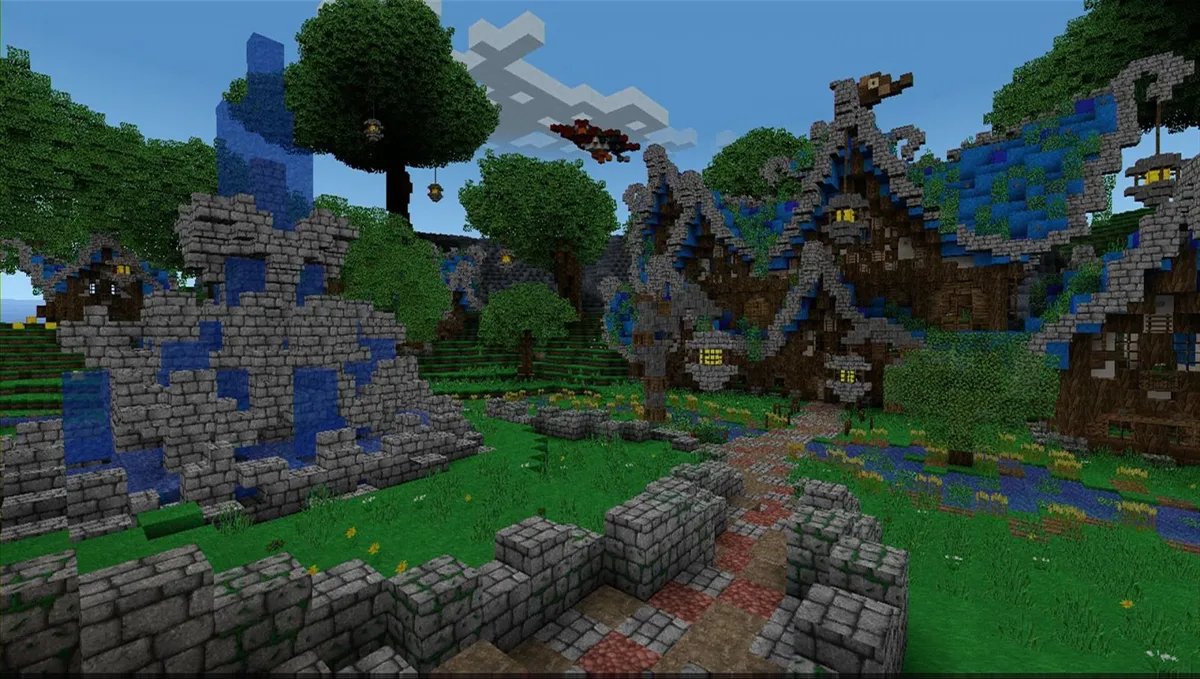
The environment runs on a Day, Night, and Season cycle. Wind animates the flora, and water and lava use animated liquid physics, so both the planted world and the molten and fluid blocks move within the same setting. A Camera item adds a recording action to the sandbox: a player photographs creations, and the pictures are stored in an album. These world rules sit alongside the skill and farming systems, giving a built world its seasonal rhythm, moving plants and liquids, and a way to keep a visual record of what was constructed.
Zones, Permissions, and Powered Logic Circuits
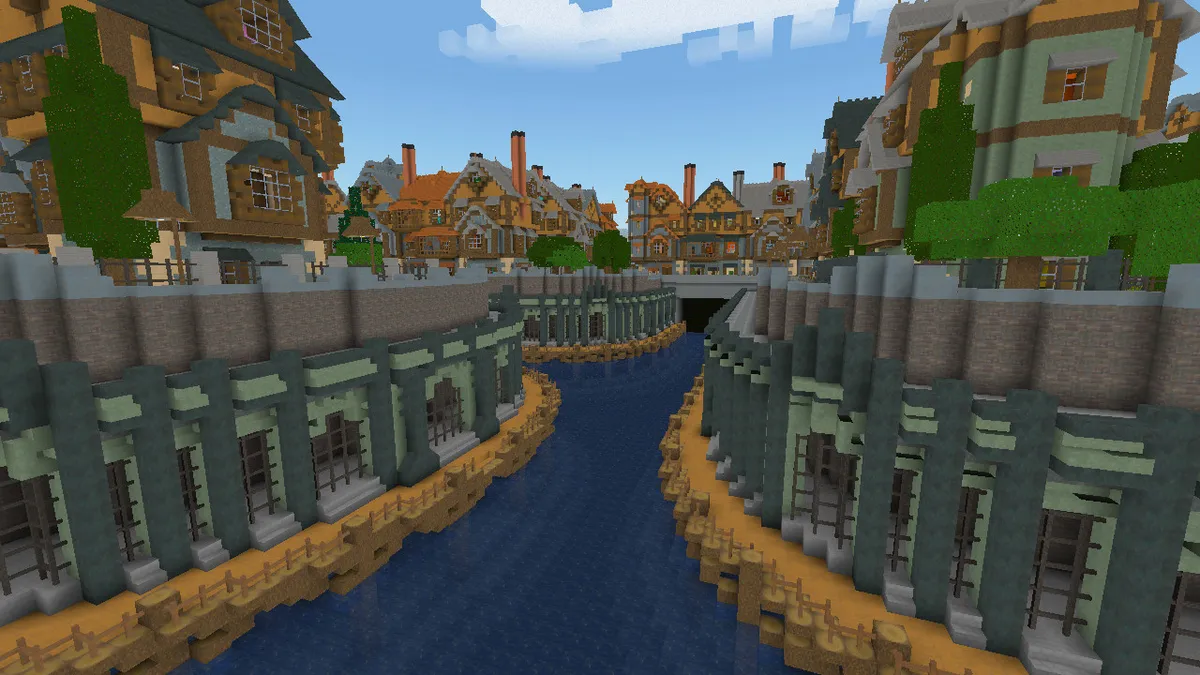
Zones give a builder a way to mark off parts of a voxel world by wrapping a zone around an area. Once wrapped, the zone can serve to protect that area or to carry custom properties the builder assigns to it. Permissions form a related control layer: a set of player permissions governs who can do what and where, so access and allowed actions can be restricted across the map. Read together, a zone sets the boundary and its properties, while the permission set decides which players may act inside it and what they are permitted to do there.
Powered logic circuits come from the WIFI Power system, which lets a builder wire circuits that carry power and react to one another. Particle emitters operate on the same authoring layer but for visuals: they generate animated effects built from 3D particles, so a world can show moving, three-dimensional effects rather than only static blocks. The circuits and the emitters are both concrete tools a builder places in the voxel space, one handling power-driven logic and the other producing animated particle effects that play out in the scene.
Sources & further reading.
- Total Miner — official game profileRetrieved Nov 2, 2026
First published .