 THE GAME ARCHIVE
A Speed-First Olympic Lineup
Vancouver 2010, the official video game of the Olympic Winter Games, is a Windows sports title developed by Eurocom and published by SEGA. Its pitch is narrow and deliberate: rather than reproducing a full Olympic program, it features only the fastest, highest and most spectacular events, and it puts the player into them in first person. The store description frames the whole experience around adrenaline, danger and glory, and the aim it states is to reach the pinnacle of your sport and claim a gold medal for your country. That framing explains almost every design choice described below: the game is organized around downhill momentum, tight timing, and the risk of a run going wrong.
The campaign structure is a catalog of fourteen premium events, each an opportunity to claim gold. Four are named in the publisher material: giant slalom, snowboard cross, downhill and bobsleigh. The remaining ten are not itemized in the evidence, so the article treats the fourteen as a count and a set of confirmed examples rather than a complete roster. What is documented is the common thread: every event is focused on speed or danger, and most of them on both. That single sentence is the best guide to how the game expects you to approach it.
Mountains, Ice Runs, Jumps and Rinks
The venues define the surfaces you play on. The publisher describes athletes hurtling down mountains, through ice runs, over jumps and around ice rinks, each at an Olympic venue. So a player's movement vocabulary splits into four environments: a snow slope under gravity, a walled ice channel, an airborne arc off a ramp, and the flatter confines of a rink. The named events map onto those environments in obvious ways. Downhill and giant slalom belong on the mountain. Bobsleigh belongs on the ice run. Snowboard cross sits on a slope as well. The game's own summary of its contents is that these are the fastest, highest and most spectacular events of the Winter Games, so the venue variety is not incidental scenery; it is the source of the differing physical problems each event poses.
The evidence describes event-specific physics and environmental interactions without detailing them. That abstract phrase is worth taking seriously as a player expectation: the game does not treat every event as the same slalom with a different skin. A machine on a polished ice track and a rider on packed snow are modeled as different problems, and the first-person framing sharpens the difference, because the camera sits inside the run rather than observing it from outside. The practical consequence is that skill transfers imperfectly between events. Learning to carry speed down a mountain does not automatically teach you to hold a line through a walled ice chute, and neither necessarily prepares you for the moment of a jump.
Reading the Fourteen Events
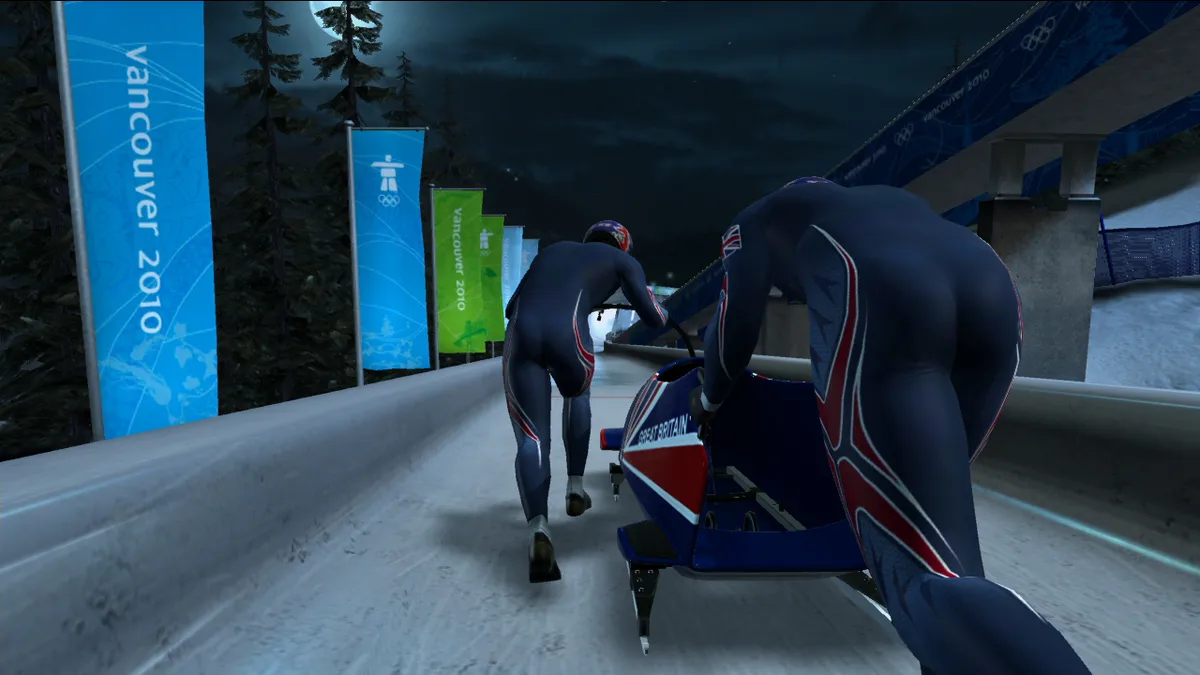
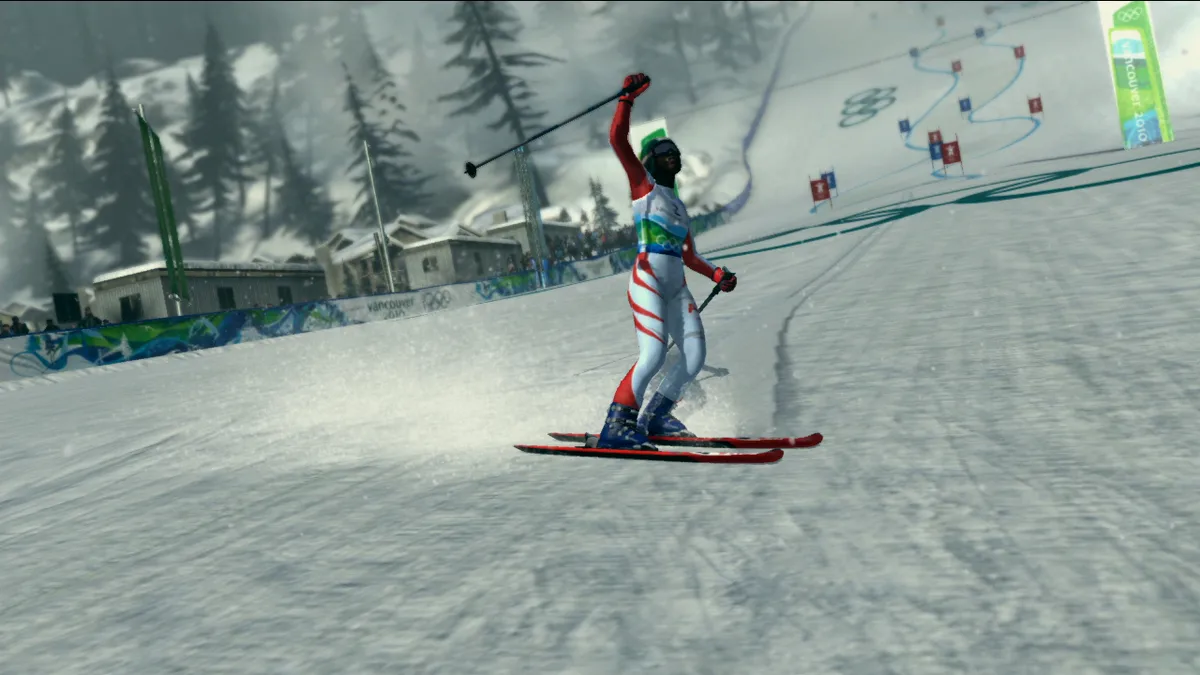
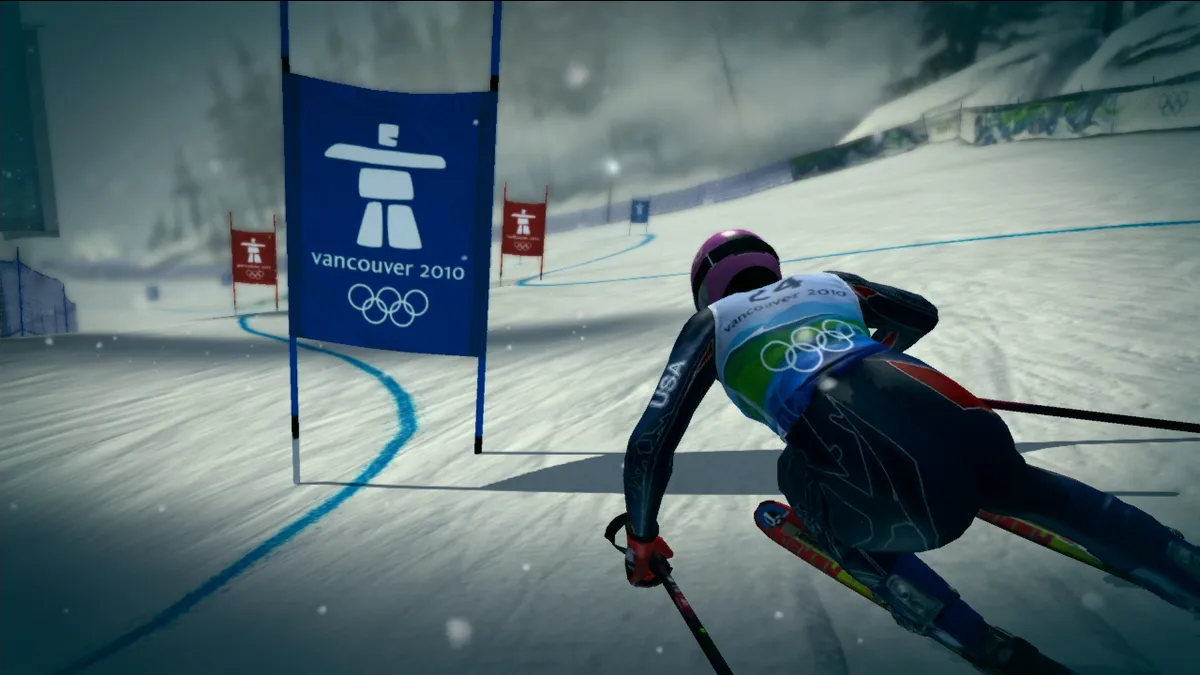
Downhill is the purest expression of the speed-first design. It is a mountain descent, and the event's name states its priority: velocity down the course. Giant slalom shares the slope but adds structure, since a slalom by definition is a run through a defined sequence of gates. Taken together, the two events give the game a raw-speed discipline and a controlled-speed discipline on the same surface. Snowboard cross is documented as a named event but the evidence does not describe its format beyond that, so readers should not assume a specific number of competitors or a specific course layout. Bobsleigh is the ice-run counterweight, exchanging skis for a sled on a walled track. Around those four, the remaining ten premium events fill out the fourteen, and the publisher's characterization tells you their common denominator even where their names are undocumented.
Because the game claims each event is about speed or danger or both, the player's decision-making narrows to a recognizable question on every course: how much risk to spend in pursuit of time. The medal objective is stated plainly, with gold as the goal you are chasing for your country, and performance in an event is what earns that status. The evidence does not enumerate the medal tiers below gold, time thresholds, or scoring formulas, so the safest reading is the documented one: each premium event is a gold-claiming opportunity, and how well you perform in it determines the outcome.
Challenge Modes: Smashing the Snowmen and Speed Bands
Between the premium events sits a range of challenge modes, described by the publisher as a place to fine-tune your skills, and named examples are Smashing the Snowmen and Speed Bands. The publisher calls this a first for this kind of mode in an official Olympic title, which is the sort of claim worth flagging as publisher framing rather than independent confirmation. What matters for a player is the role the modes play: they exist to sharpen ability outside the medal structure of the fourteen events, and they are part of the single-player offering alongside event challenges.
The two named modes read as different exercises. Smashing the Snowmen implies a target to hit, a task of aiming and connecting rather than merely descending. Speed Bands implies a pace to hold, a task of managing tempo. Both fit the game's documented priorities of speed and precision, and both can be treated as warm-ups for the premium events: if a timed downhill rewards commitment to velocity and a giant slalom rewards clean passage through gates, then a target-smashing challenge and a tempo challenge each isolate one of those demands. The evidence does not specify the rules, scoring or unlock structure of either mode, so players should consult the game rather than assume a format.
World Records, Leaderboards and Head-to-Head Play
The competitive layer has two documented forms. The first is the online leaderboard: the publisher invites you to take your snow boots online, set a new world record, and see if anybody can knock you off the top of the leaderboard. That establishes a persistent ranking target on top of the medal objective, so a strong run in a named discipline like downhill, giant slalom, bobsleigh or snowboard cross can be measured against other players rather than only against the event's gold standard. The second is head-to-head play: you can defeat your friends online or in the front room, competing for what the publisher calls the ultimate bragging rights in online head-to-head competition.
These two forms pull the game in different directions. Leaderboard chasing is a solo pursuit of an abstract best time, and it rewards optimizing a single course repeatedly. Head-to-head play is a direct contest, and the game lists local front-room competition as well as online matches, though the evidence does not describe how many players can share a screen or which events support versus play. Because the fourteen events are each built around speed or danger, both the timed leaderboard and the direct duel inherit that same emphasis on commitment and control. The evidence does not provide current online population, server status or matchmaking details, and readers should treat those as unknown rather than assume ongoing support.
How a Session Fits Together
The documented loop is compact: compete in timed winter sports events to earn medals and improve rankings. Everything else in the game supports that loop or runs beside it. The challenge modes sit before or between competitive runs, tuning the skills the events demand. The leaderboards extend the value of a good time beyond the next medal. Head-to-head play offers a change of opponent rather than a change of discipline. Progression is expressed through event mastery toward medal rankings, so the natural arc for a player is to learn each venue's demands, chase gold in the premium events, and then use the leaderboard and versus modes to keep working at the courses already mastered.
It is worth being precise about what the evidence does not say, because a reader planning a session will want expectations that hold. The publisher material does not enumerate the ten unnamed events, does not explain control schemes or button prompts, does not describe course routes, and does not state difficulty settings or a career structure. What it does say is that the game is a first-person experience at each Olympic venue, that it favors the fastest, highest and most spectacular events, and that fourteen of them are premium events in which to claim gold. Within that frame, the article's analysis is an inference from documented rules rather than a description of presets or menus.
Starting Points for New Players
- Use the challenge modes first. Smashing the Snowmen and Speed Bands are explicitly presented as skill-tuning exercises, so they let you build target and tempo control before a gold medal is on the line. Treat each premium event as its own problem. The mountain events, the ice run and the jump environment impose different demands, and the game documents event-specific physics and environmental interactions. Expect gold to come from performance in the event itself. The medal objective is tied to how well you perform, so learning a course matters more than carrying habits from another discipline. Look to the leaderboard as a second target. Once a gold is earned, a world-record attempt on the same course gives the run continued purpose. Use head-to-head play for variety. Online and front-room competition let you test your control against another player rather than the clock alone.
The Windows Release and What the Record Says
The supplied record describes the Windows version only, lists Eurocom as developer and SEGA as publisher, and gives 2010 as the year. The genre is Sports. Beyond that, the evidence says nothing about other platforms, later re-releases, remasters or additional content, so this article makes no claims about them. A fact table could note the field values, but this profile is best read as a description of what the Windows release offers: fourteen speed-focused premium events, a set of challenge modes for tuning skills, single-player event challenges, online leaderboards with world-record chasing, and head-to-head competition online or in the same room. That is the game the publisher describes, and the run-to-run decisions it creates are all about how hard you push for time.
Scroll sideways to see the full table →
| Field | Value |
|---|---|
| Title | Vancouver 2010™ - The Official Video Game of the Olympic Winter Games |
| Developer | Eurocom |
| Publisher | SEGA |
| Platform (recorded) | Windows |
| Release year (recorded) | 2010 |
| Genre | Sports |
| Premium events | 14 (giant slalom, snowboard cross, downhill, bobsleigh named) |
| Named challenge modes | Smashing the Snowmen; Speed Bands |
| Online features | Global leaderboards; online head-to-head |
| Local multiplayer | Front-room head-to-head |
Sources & further reading.
- Vancouver 2010™ - The Official Video Game of the Olympic Winter Games — official game profile Retrieved Oct 19, 2026
First published .