 THE GAME ARCHIVE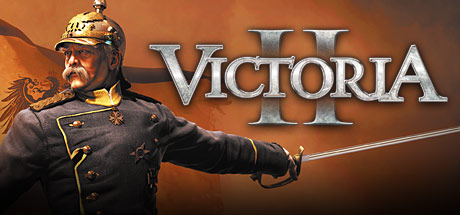
Victoria II is a grand strategy game from Paradox Development Studio and published by Paradox Interactive, listed on this Steam entry as a 2010 release for Windows. Its ambitions are unusually wide for the genre: rather than commanding a single army or a single war, the player runs an entire nation from the age of absolute monarchies through the industrial and colonial 19th century, aiming to reach great-power standing by the dawn of the 20th century.
That framing matters because it separates the game from titles built around a single decisive campaign. The design premise is cumulative: industry, reform, conquest, and colonization all feed into one long arc of national development, and the player is asked to hold several systems in view at once rather than optimize one.
What the Player Actually Does
The core loop is national stewardship. Over the course of a campaign a player guides a country through industrialization, political reform, military conquest, and colonization, with the stated long-term goal of turning it into a great power by the start of the 20th century. These are not separate mini-games bolted together; the store description presents them as the continuing work of one nation across many decades.
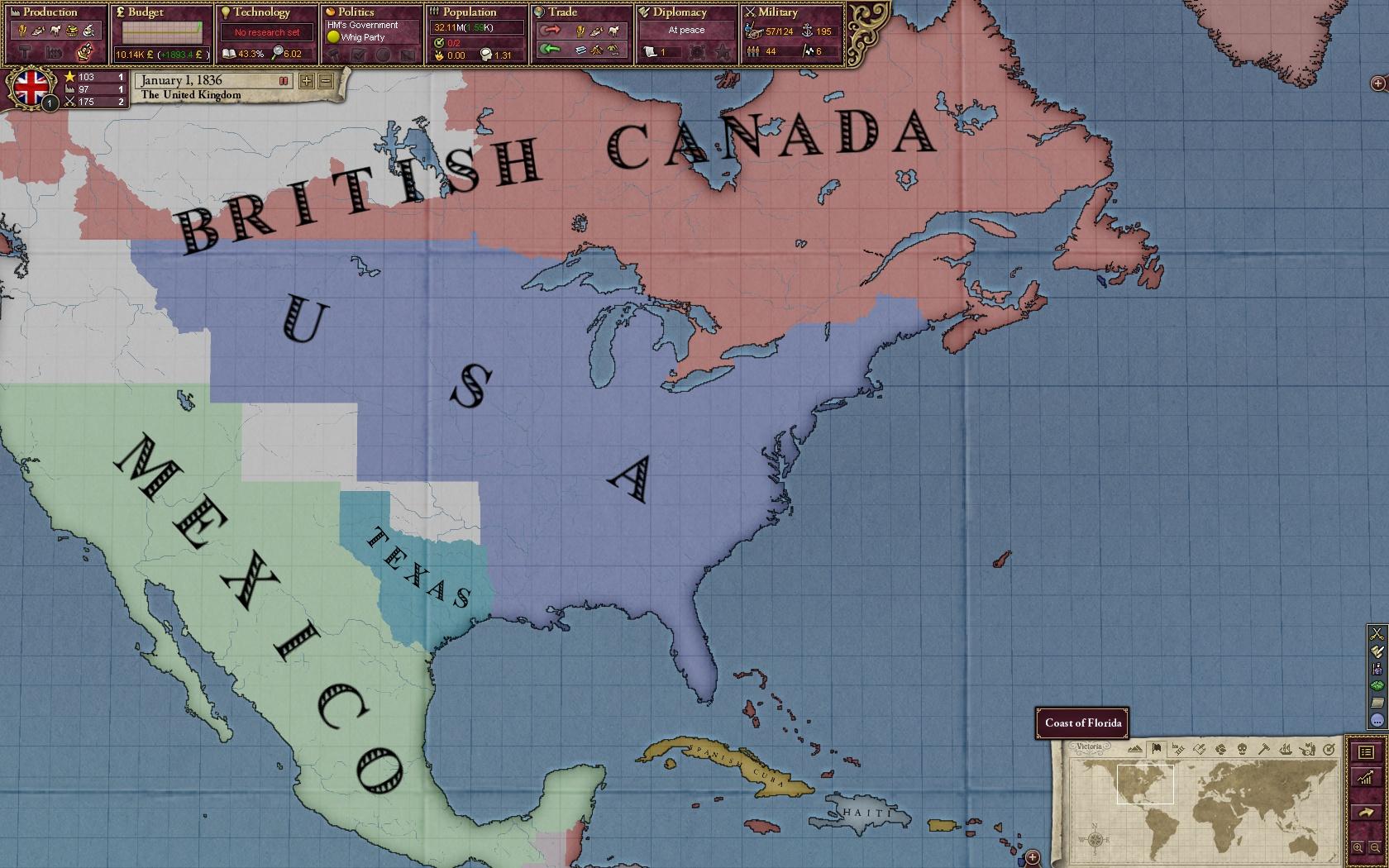
Choice of country is therefore the first meaningful decision, and the source material puts the playable roster at over 200 countries across an era stretching from 1835 to the onset of World War II. That breadth implies very different campaigns — a small state and a recognized power begin from different positions — though the supplied material does not detail starting conditions, difficulty, or balance for any specific nation.
Politics as a Simulation, Not a Menu
The most distinctive system described is the political simulation. It is characterized as in-depth, with dozens of different governments available, and — crucially — a population that responds to decisions according to its political awareness, its social class, and its willingness either to accept or to revolt against the government.
Read as a design statement, this means political decisions are not cost-free menu picks. The described model gives the population its own disposition toward the state, so a reform or a repressive measure is processed through the attitudes of different social groups rather than resolved instantly. The source does not enumerate the government types or the exact triggers for unrest, so the practical consequences of any specific choice remain outside the documented evidence.
An Economy Built From Goods, Factories, and Cottages
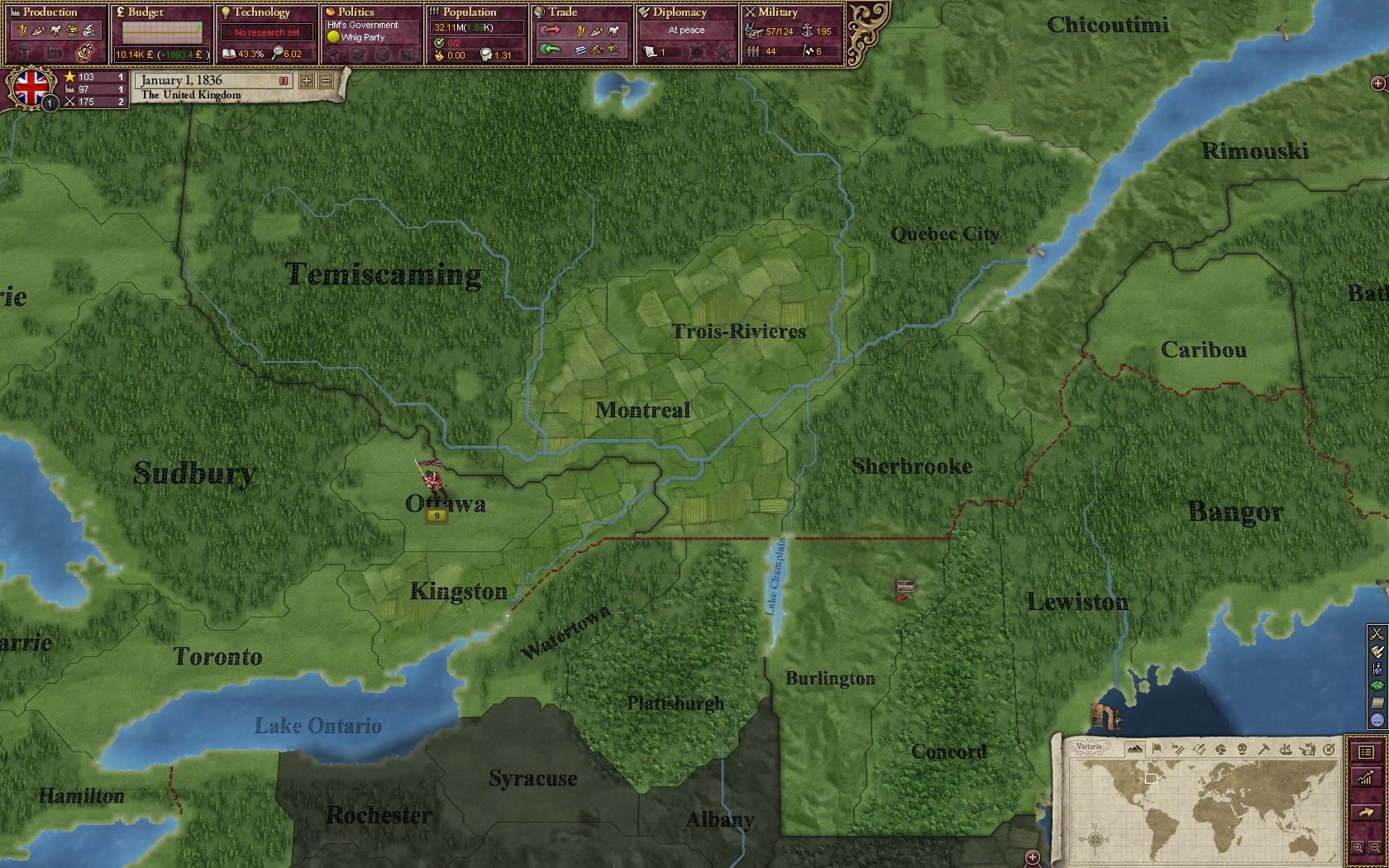
The economy is presented as detailed, with more than fifty different types of goods and a range of production factories. Alongside industrial production, the game models cottage production to represent pre-industrial economies — a detail that matters because it acknowledges that much of the world in this period was not yet factory-based, and that industrialization is a transition rather than a starting condition.
Trade and population promotion are described as tasks that can be automated, and the interface is characterized as streamlined and accessible. For a game of this scope, that combination suggests the design intent is to let the player delegate routine management while concentrating on larger strategic choices. The source does not document which tasks must be handled manually or how automation is configured.
Great Powers, Spheres of Influence, and Gunboat Diplomacy
Victoria II frames international politics as competition among great powers. An advanced spheres-of-influence system is described in which the great powers battle for control of the world, giving the player a diplomatic and economic arena that runs alongside military competition.
The game also names a Gunboat Diplomacy mechanic, in which a fleet stationed outside a port can serve as a more persuasive argument than negotiation. As a design idea this is a useful illustration of how the game treats coercive pressure as part of ordinary statecraft rather than a separate combat mode: the threat of force is a diplomatic instrument.
Technology, Inventions, and Guided History
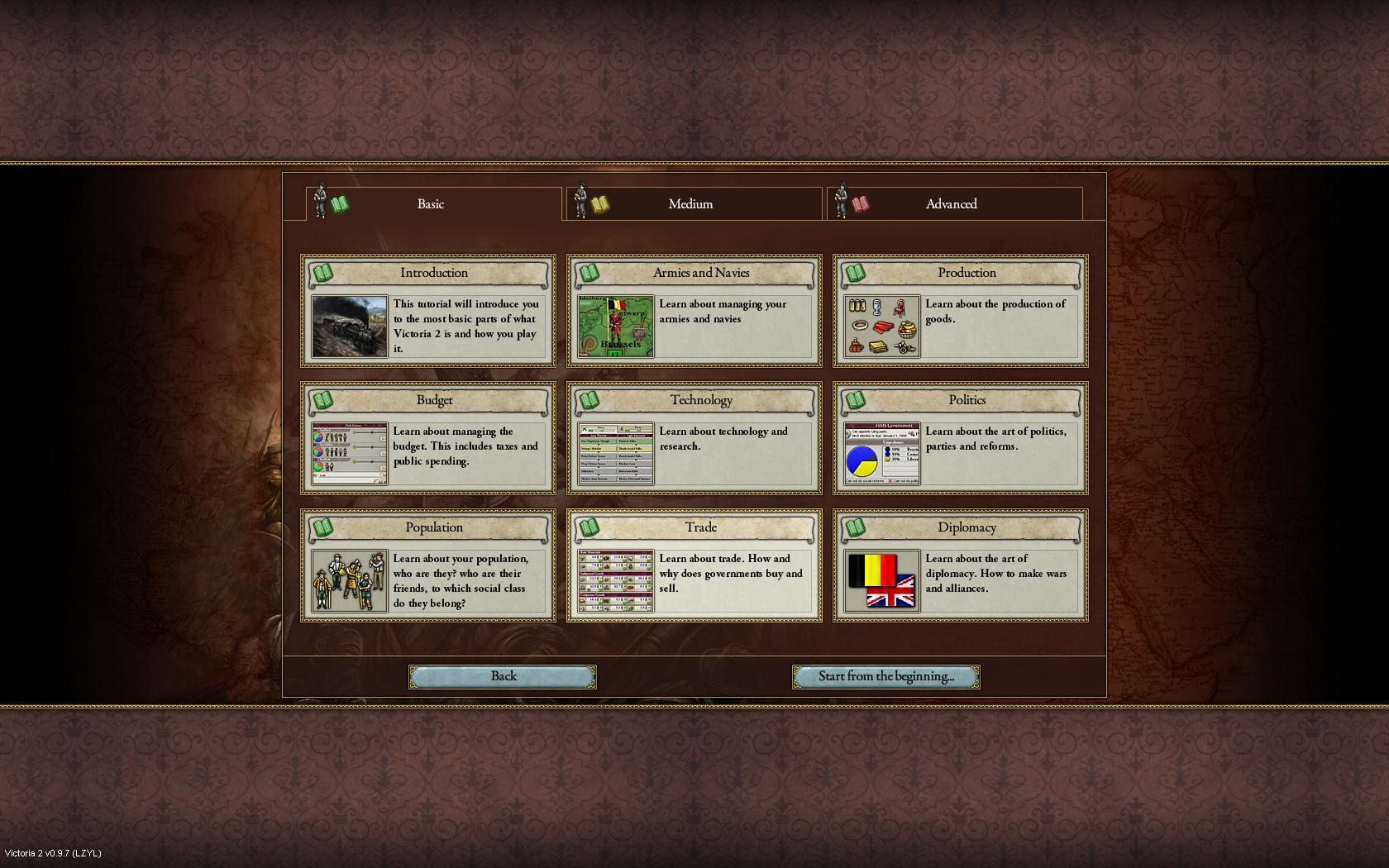
The technology system is described as advanced, with thousands of inventions to discover. Historical and dynamic missions are also provided to guide a country through the history of the period. Taken together with the political and economic systems, this suggests research choices are meant to interact with a nation's circumstances rather than follow a single fixed path, though the source does not describe the research tree, its branches, or how inventions are unlocked.
Modes and Presentation
Multiplayer support is listed, described as supporting competitive or cooperative play. The source also mentions improved graphics and interface alongside that multiplayer support. It does not document a separate sandbox mode, cooperative-specific scenarios, visual style details, or which editions or content packages are included.
How to Approach a First Campaign From the Documented Systems
The supplied material does not include tutorials, control layouts, or recommended difficulty settings, so any starting advice here is inference from the documented systems rather than tested guidance. What can be said with confidence is structural: because more than 200 countries are playable across a span from 1835 to the onset of World War II, the choice of nation sets the campaign's opening position, and no single approach is described as the correct one.
Given the emphasis on automation for trade and population promotion, a reasonable inference is that the game intends for players to grow into manual control of the economy rather than start there — but this is a reading of the design intent, not a documented workflow. Likewise, the population model's sensitivity to political awareness and social class means decisions touching reform and revolt deserve attention, though the exact mechanics are not spelled out in the source.
What Makes Victoria II Distinctive
The distinguishing quality, based on the described features, is the decision to model a society rather than a war. Politics, economy, technology, and diplomacy are all described as systems the player manipulates over decades, and the population's willingness to accept or revolt against its government is itself a modeled variable. Cottage production as a representation of pre-industrial economies reinforces that same idea: the game is interested in how an economy changes, not only in what it produces.
Recorded Details at a Glance
The following table collects the details supplied for this Steam entry. It is a supplement to the discussion above, not a substitute for it.
Scroll sideways to see the full table →
| Field | Recorded value |
|---|---|
| Title | Victoria II |
| Developer | Paradox Development Studio |
| Publisher | Paradox Interactive |
| Genre | Strategy |
| Platform | Windows |
| Release year on this entry | 2010 |
| Playable countries | Over 200 |
| Documented time span | 1835 to the onset of World War II |
Sources & further reading.
- Victoria II — official game profile Retrieved Oct 11, 2026
First published .