 THE GAME ARCHIVE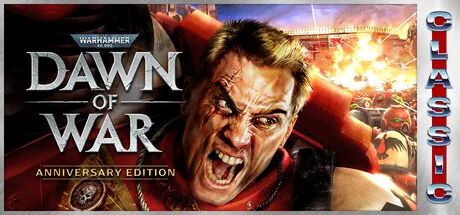
The Grim Darkness of the 41st Millennium, Turned Into a Battlefield
Warhammer 40,000: Dawn of War - Anniversary Edition (Classic) takes the tabletop game's setting — a galaxy of warring alien races — and translates it into a real-time strategy experience on Windows. Released under this edition label in 2007, the package is documented as featuring the original Dawn of War game alongside every expansion, positioning it as a complete state of the original title.
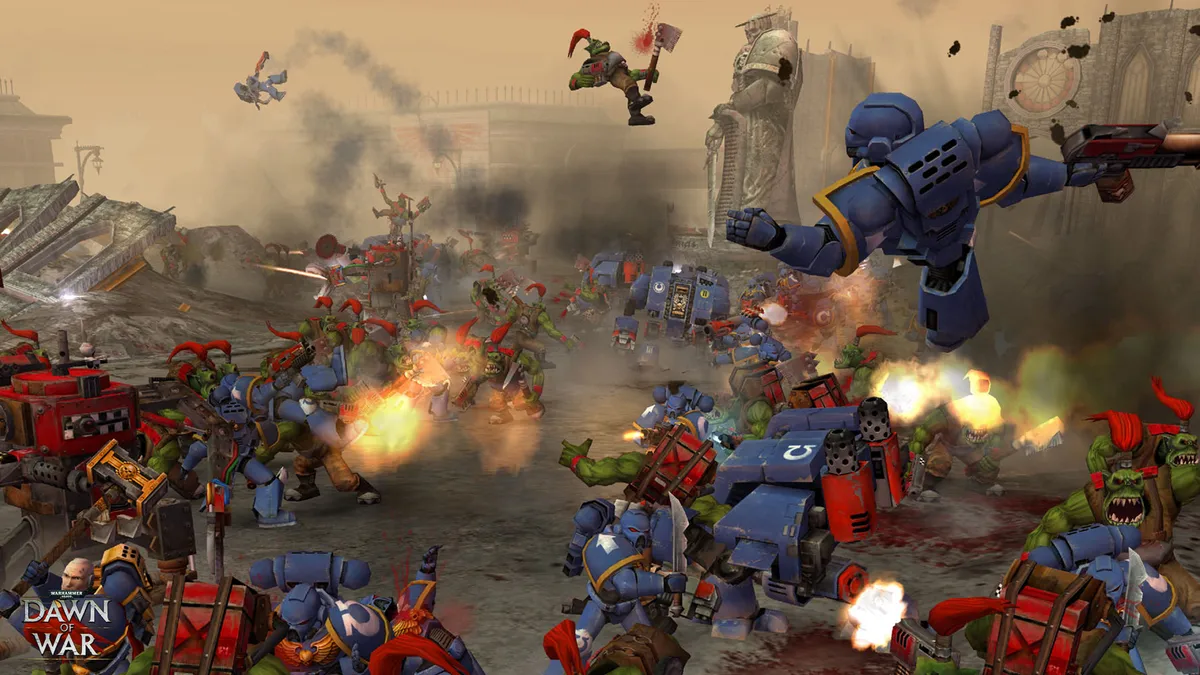
The premise is simple to state and vast in practice: players command armies drawn from four core races in the original campaign — Space Marines, Orks, Chaos, and Eldar — while the wider package expands the roster to nine playable factions. The base game's story follows the Blood Ravens chapter of Space Marines through an epic tale of treason and conspiracy as they serve the Emperor of Mankind.
The Core Loop: Squads, Cover, and Morale
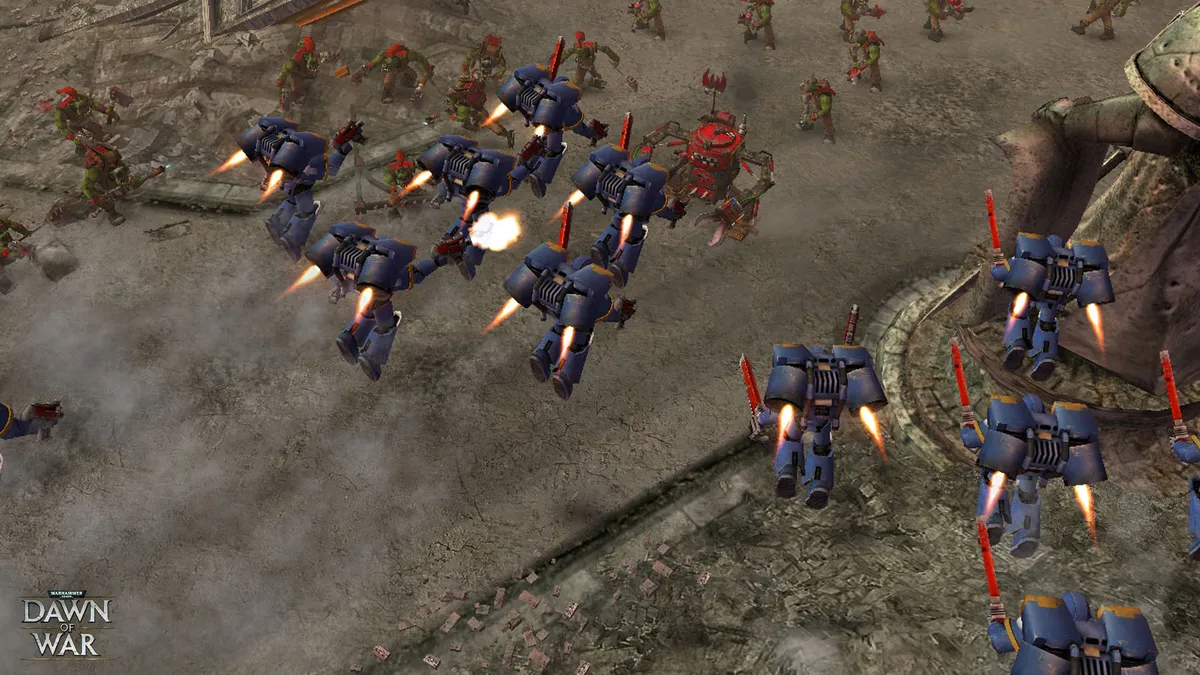
At its heart, Dawn of War is a real-time strategy game that innovates on the genre with cover mechanics, squad-based combat, and a morale system. Rather than commanding one unit at a time, players direct squads. Terrain matters because cover matters. Morale adds a layer beyond raw health and damage: units can be shaken by intense fire and the flow of a firefight can hinge on keeping morale up as much as on keeping guns loaded.
Those documented mechanics do more than dress up a familiar RTS skeleton. They change the fight: positional choices become consequential because cover changes survivability, and the morale layer encourages timing and focus rather than pure attrition. Players learn to read engagement, pick when to push, and when to pull back shaken units before they break.
Four Races in the Core, Nine Factions in the Package
The original Dawn of War experience centers on four unique races: Space Marines, Orks, Chaos, and Eldar. Each brings distinct abilities, weapons, and tech trees to the battlefield. Players who master one race's tools are effectively learning a different game when they switch to another, because the strengths and options shift.
The Anniversary Edition package expands on that foundation with two additional playable armies — the Tau and the Necron — introduced in the Dark Crusade expansion, and two more — the Sisters of Battle and the Dark Eldar — added in Soulstorm. That totals nine full-fledged factions across the complete package, along with new units and strategies layered in by the expansions.
Campaigns: Linear Stories and a Non-Linear Crusade
Campaign structure varies across the package. The original game includes an engaging story-driven single-player campaign. Winter Assault offers two paths — the Order Campaign, controlling the Eldar and Imperial Guard in defense of the Imperium, and the Disorder Campaign, playing as Orks and Chaos Space Marines in their efforts to crush resistance.
Dark Crusade changes the shape of the campaign entirely. Its single-player mode is non-linear: players conquer the planet Kronus leading any one of seven races, with unique storylines from each race's perspective. That structural shift matters because it turns the campaign into a map of choices rather than a single authored path, and it lets players experience a given conflict from multiple sides.
Progression within that non-linear campaign comes through hero development as well as territorial conquest. Players customize their hero's weapons, items, and abilities as the hero grows in power and influence over the course of the crusade.
Making the Army Yours: Insignias, Banners, and Colors
The base game ships with a unit customization tool that lets players choose army insignias, banners, squad colors, and names. In practice, this is more than cosmetic tinkering: it lets a player give their force a consistent identity across every squad they field, which is a meaningful bit of authorship in a strategy game where you spend long stretches looking at your own troops.
Dark Crusade extends the same idea to the hero character. Players personalize the hero through choices of insignia, unit colors, banners, and names, while also shaping what the hero can do via weapon and ability customization. The result is that two players running the same faction can still field visually distinct and mechanically distinct forces.
Multiplayer: Skirmish Practice, Observer Mode, and Up to Eight Players
Multiplayer is a core part of the package. The original game supports two-to-eight player battles. Winter Assault adds 20 new maps and advanced online features including observer mode, arranged team play, and improved auto match, alongside a skirmish option for practicing against computer-controlled opponents on a multiplayer map.
Dark Crusade expands online play further with 12 additional multiplayer maps supporting up to eight players. The progression from the base game through the expansions is one of expanding maps, expanding player counts, and expanding tools — observer mode in particular changes how matches can be watched and studied, and arranged team play changes how groups can organize.
What It Looks Like: Scaled Terrain, Vehicle Physics, and Brutal Combat
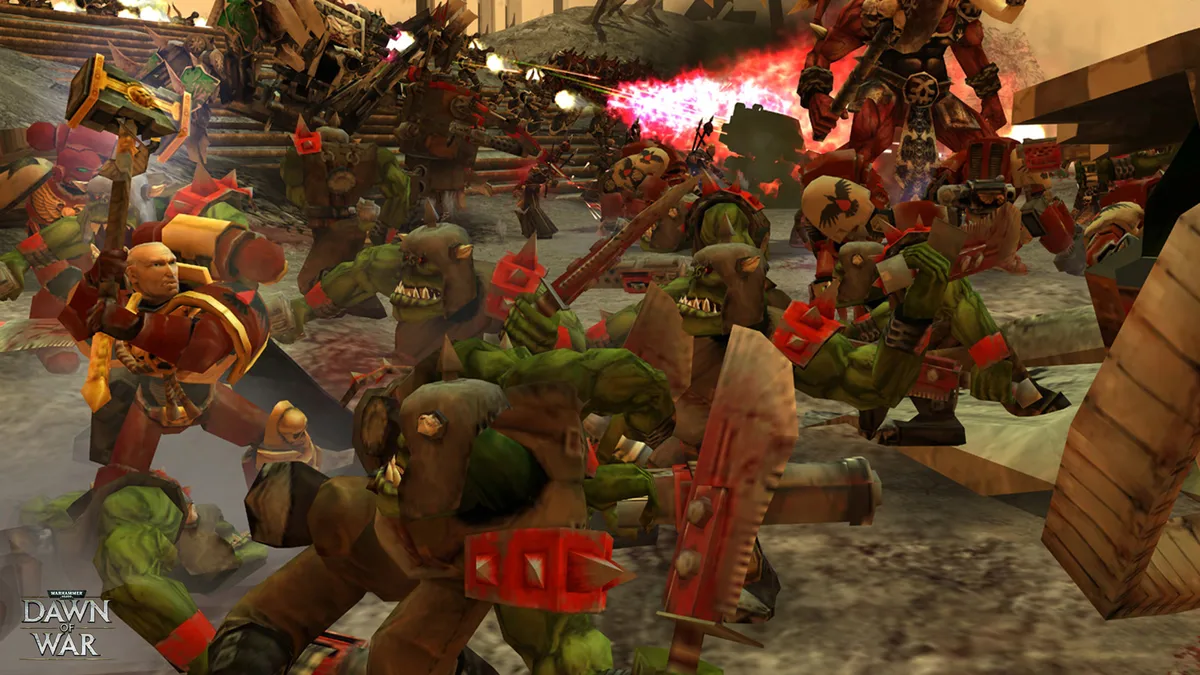
The store profile describes the visual design in terms of realism: appropriately scaled terrain, vehicle physics, and dynamic lighting contribute to the presentation. Combat is described as visceral and cinematic, with realistic unit animations for both melee and ranged fighting. In a game where squad positioning and cover matter mechanically, terrain that reads clearly and consistently is not just decoration — it is part of how the player understands the battlefield.
Winter Assault's terrain shifts toward urban battlefields and harsh winter battlegrounds, with enhanced urban terrain and additional interactive objects and structures. That environment change is relevant to gameplay because urban cover and interactive objects give players new positional tools to use.
What the Anniversary Edition Actually Contains
This entry is documented as the definitive Dawn of War experience: the original game plus all of its expansions — Dark Crusade, Soulstorm, and Winter Assault — bundled together. Across that set, the package is described as including four complete campaigns and nine full-fledged factions.
Design Distinctions Worth Knowing
Several documented choices distinguish this package from a generic real-time strategy game. Squad-based combat with cover and morale turns the battle into a game of positioning and timing as much as unit selection. Non-linear campaign structure in Dark Crusade gives players a map-level plan to make, not only a mission-level plan. And army customization runs throughout, letting players author the look and identity of their force in both campaign and multiplayer contexts.
For a player coming to this package now, the sensible reading of the documented structure is that the base game teaches the squad-and-cover fundamentals first, the expansions add factions and maps, and Dark Crusade offers the broadest campaign sandbox with its seven-race non-linear conquest. The multiplayer features — observer mode, arranged teams, auto match, extensive map lists — support both casual and organized play.
Sources & further reading.
- Warhammer 40,000: Dawn of War - Anniversary Edition (Classic) — official game profile Retrieved Oct 11, 2026
First published .