 THE GAME ARCHIVE
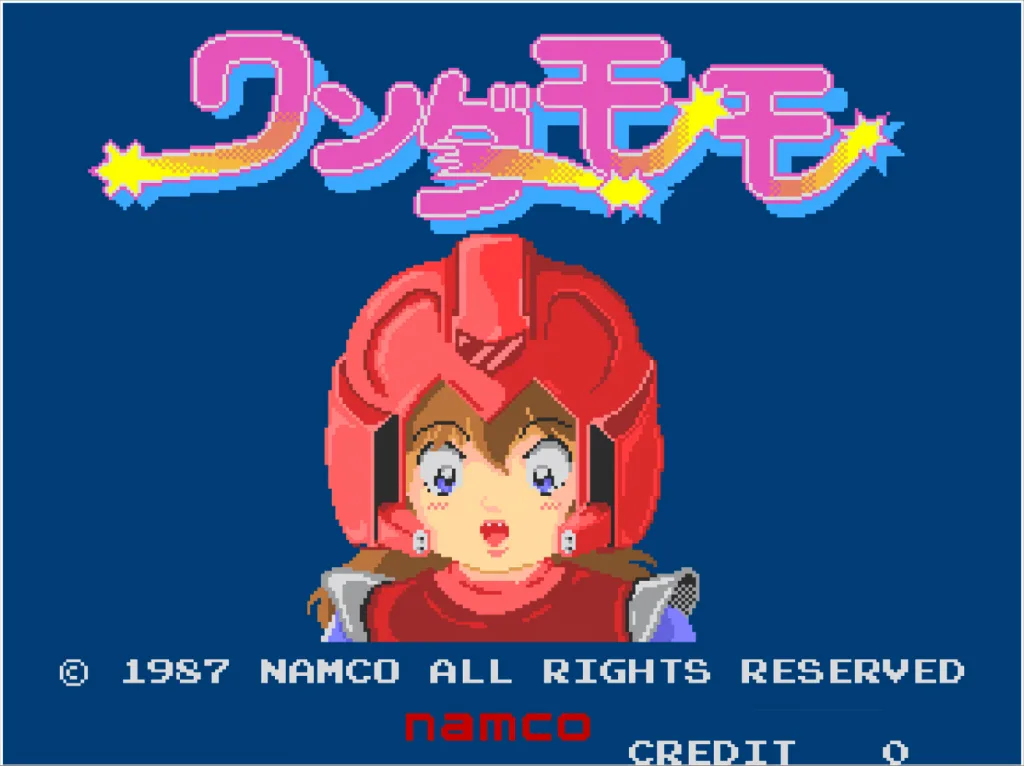
What Wonder Momo Asks of the Player
Wonder Momo is Namco's 1987 arcade action game, and its premise is compact enough to state in a single arc: the player controls the hero Momo, and the documented objective is to take down the Warudemon Villain in order to keep the world at peace. Between the player and that goal sits a transformation. According to the publisher description, Momo rides a whirlwind to become the costumed hero Wonder Momo, and it is in that costumed identity that the fight is carried out, using Wonder Rings and special moves.
That short loop still defines a real decision structure. The player is not simply moving a character toward a target; the player is managing an identity switch, and the tools that matter belong to the switched identity. The source material describes the transformation, the ring item, the special moves and the mission in plain terms, and this feature explains how those pieces fit together as a play loop, while being clear about what the documentation does and does not establish.
The Arcade Release at a Glance
The licensed publisher record identifies the game as WONDER MOMO, published by Namco, released in 1987, on the Arcade platform, and classified in the Action genre. Those particulars matter for framing: this is the coin-op original in Namco's catalog, and the gameplay described in the source is the arcade version's, not an adaptation or re-release. The catalog data and the publisher description are the sole basis for everything below.
Premise: Momo, the Warudemon Villain, and the Costumed Hero
The premise as the publisher frames it has two named characters and one stated stake. The player controls the hero, Momo. The named antagonist is the Warudemon Villain, and taking that villain down is what keeps the world at peace. The success condition is phrased as fighting for success as a costumed hero, which tells the player that the objective and the identity are tied together: the mission is accomplished in the costumed role, not outside it.
This gives the action a clear framing device. Momo is the protagonist being controlled, but Wonder Momo is the role that wins. The distinction is small on paper and large in play: the player spends part of the session as the hero figure and then, after the whirlwind, as the costumed champion whose named tools are the Wonder Rings and special moves. The stated peace-keeping objective is what makes the confrontation with the Warudemon Villain the endpoint the player is working toward.
Core Mechanic: Riding the Whirlwind into Wonder Momo
The transformation is the center of the game's rule set. The documented action is straightforward: ride the whirlwind to transform into WONDER MOMO. Nothing in the source describes an intermediate step, a meter, a conserved resource, or a cost. What the documentation does establish is the direction of the switch and its purpose. Coming out of the transformation, the player is the costumed hero, and the publisher's phrasing of success — fight for your success as a costumed hero — confirms that the costumed role is the intended state for engaging the game.
For the player, the practical implication is prioritization. The whirlwind is not flavor text to be admired; it is the transition that brings the useful arsenal online. A sensible reading of the documented rules is that reaching the whirlwind and becoming Wonder Momo is the first thing worth doing in a run, because the tools tied to the costumed identity — the rings and the special moves — are what the fight describes. The game, in other words, asks the player to earn the hero's role before asking the player to use it.
Wonder Rings and Special Moves: Using the Costumed Arsenal
Once the player is Wonder Momo, the documented offense comes in two named forms. Wonder Rings are described as items used for combat. Special moves are described as actions executed as Wonder Momo. The publisher lists both in the same sentence as the costumed hero's means of fighting, so they read as complementary rather than interchangeable: the rings are a combat item, while the special moves are techniques performed in the costumed role.
That split produces a simple tactical question for the player: which tool answers the moment in front of you? A ring used for combat and a special technique imply different moments of commitment, and the description gives both a place in the same fight. What the source does not provide is the input, the range, the effect or the cost of either. No button layout, cooldown, quantity, damage value or timing is documented. Players relying on this source should treat the rings and special moves as the confirmed named options in Wonder Momo's arsenal and leave the specifics of triggering them to the game itself.
How the Rules Combine into an Approach
The documented pieces chain into a readable three-step loop. First, control Momo. Second, ride the whirlwind so that Momo becomes Wonder Momo. Third, use the costumed hero's Wonder Rings and special moves against the Warudemon Villain, whose defeat keeps the world at peace. Each step belongs to the next: the controlled character provides the transformation, the transformation provides the identity, and the identity provides both the arsenal and the successful role.
Original analysis follows from the order the publisher chose. The description names the transformation before it names the rings and special moves, and it names the tools before it names the villain. Read as a sequence, that ordering tells a player that the transformation is the enabling act, the ring and special-move work is the main combat business, and the villain confrontation is the payoff. The one element that is stated as a condition rather than a step is success, which the source frames as fighting for it as a costumed hero — a reminder that the player wins the stated way, in role, rather than by finding a way around the role.
Progression, Modes, and What the Source Leaves Open
Documented progression is goal-shaped rather than map-shaped. The player advances toward one stated outcome, the defeat of the Warudemon Villain, and the source measures success by fighting as the costumed hero rather than by listing stages, rounds, checkpoints or a run structure. Because no level route, stage count, difficulty curve, scoring rule, extra-life system or time limit is documented, any claim about how a run is paced between the whirlwind and the villain would be invention. The honest picture is a single named mission reached through a named transformation and fought with a named arsenal.
The same limit applies to modes and hardware. Nothing in the supplied material describes cooperative play, boss-battle structure beyond the named villain, control-panel specifics, or visual presentation such as colors and character design. Those gaps do not weaken the documented core, but they do bound what this profile can responsibly say. Readers who want the moment-to-moment texture of the cabinet should look to the game or to documentation beyond this publisher record.
Source-Backed Starting Guidance
For a first session, the documented rules support a short, disciplined plan. Move Momo with intent to reach the whirlwind, because transformation is the documented gateway to the costumed identity. Once Wonder Momo, treat the Wonder Rings and special moves as the two combat tools in hand and rotate between them rather than ignoring one, since the source lists both as the costumed hero's means of fighting. Keep the named goal in view: the Warudemon Villain is the opponent whose defeat fulfills the mission.
Beyond that, the source does not license practical tips. It gives no advice on positioning, dodging, resource management or timing, so this guide will not manufacture any. The single most useful thing a player can extract from the documentation is the priority order — transform, then fight with the rings and special moves, and finish the villain — and the rest is best learned at the controls.
Scroll sideways to see the full table →
| Field | Value |
|---|---|
| Game | WONDER MOMO |
| Publisher | Namco |
| Release year | 1987 |
| Platform | Arcade |
| Genre | Action |
| Core transformation | Ride the whirlwind to become Wonder Momo |
| Combat tools | Wonder Rings and special moves |
| Objective | Defeat the Warudemon Villain to keep the world at peace |
Sources & further reading.
- WONDER MOMO — licensed publisher game documentation Retrieved Oct 19, 2026
First published .