 THE GAME ARCHIVE
Worms Reloaded arrived in 2010 as a turn-based strategy game developed and published by Team17 Digital Ltd, available on Windows, macOS, and Linux. The game positions itself as a direct continuation of the Worms lineage, framing its release as "ten years on from Worms Armageddon" — a reference that places it in conversation with one of the series' most celebrated entries. Rather than a simple re-release, Reloaded assembled a broad feature set: a redesigned graphics engine, revised physics, a fully featured landscape creation tool, and a weapon roster of 47 items. What follows is a breakdown of what the game actually asks players to do, the systems that support that play, and the design decisions that distinguish this edition.
The Core Loop: Turn-Based Artillery With Worms
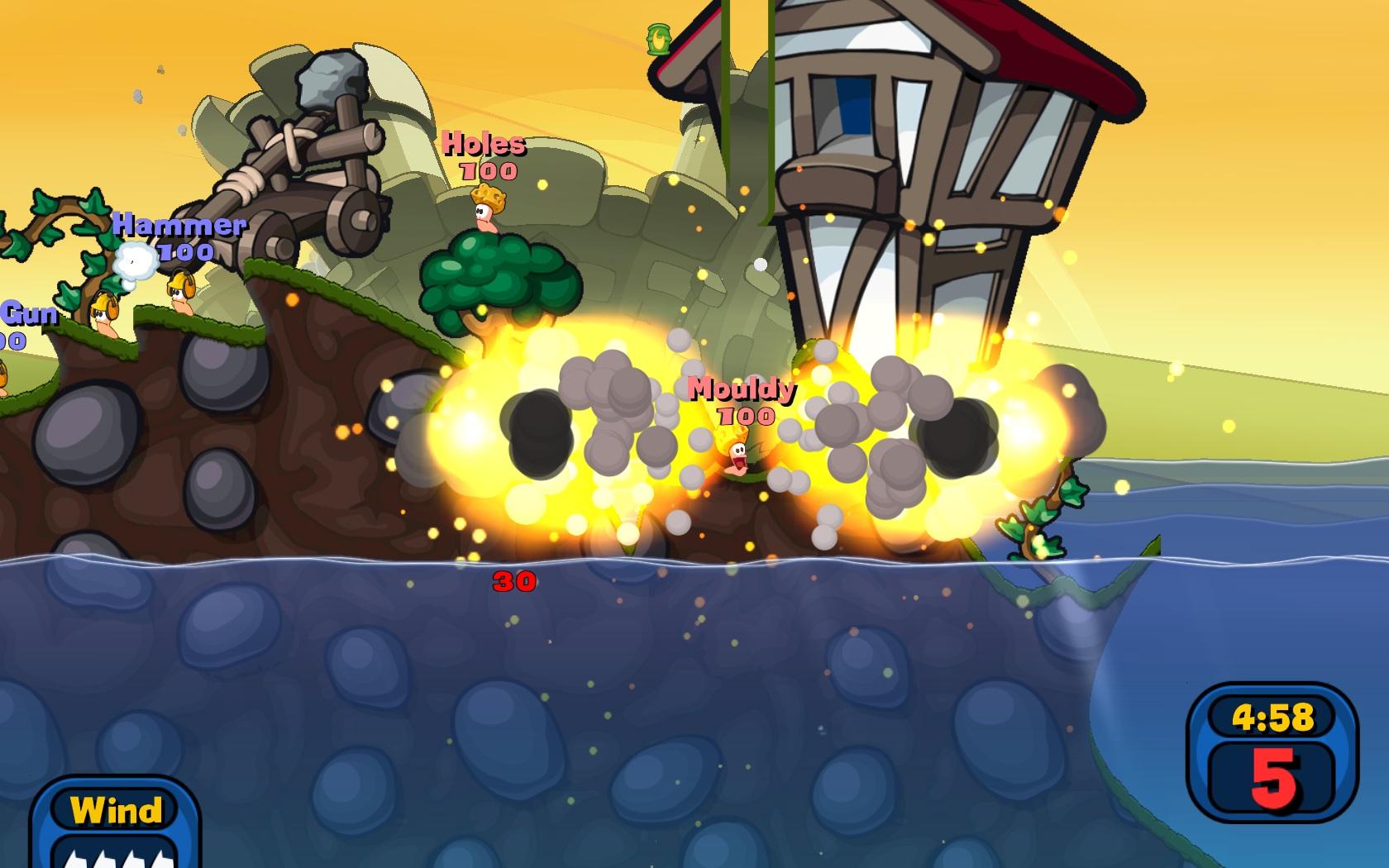
The foundation of Worms Reloaded is a turn-based loop in which players command a team of worms across a destructible landscape. Matches alternate turns between sides, and each turn a player selects a weapon or utility from their arsenal, positions and aims their shot, and commits to the attack. The game ships with 47 weapons and utilities, a roster drawn from across the series' history — including tools from the original Worms, Worms 2, Armageddon, World Party, and the Open Warfare series — alongside 14 brand-new additions. Newcomers to the roster include the Super Bunker Buster, Ferrets, Poison Strike, Worship, Sentry Gun, Electromagnet, and Buffalo of Lies, plus new persistent fire and surprise Easter Eggs. Returning classics include Armageddon, Concrete Donkey, Napalm Strike, and the Holy Hand Grenade.
That weapon count matters because it defines the game's strategic surface. Each tool implies a different relationship between player, terrain, and opponent: a straightforward explosive like the Concrete Donkey consumes a turn for area denial, while utilities and persistent hazards like the new fire mechanic or the electromagnet change how the battlefield evolves over multiple turns. The phrase "turn-based comic mayhem" used in the official description captures the tone, but the mechanical consequence is a game where reading the landscape and managing limited actions per turn are the central skills.
The revised physics system is part of the same equation. Because shots are resolved through a physics simulation rather than a fixed hit-or-miss calculation, the exact angle and power of a launch — and the shape of the terrain at the moment of firing — determine the outcome. Destructible ground means earlier turns reshape the conditions of later ones, and a weapon that carves a tunnel can be as valuable for repositioning a worm as for damaging it. This interaction between terrain mutation and shot resolution is what separates the artillery loop from a simple damage exchange.
Modes: From Campaign Runs to Rope Racing
Worms Reloaded supports both online and local multiplayer for up to four players, built on Steamworks support for updates, friends lists, leaderboards, achievements, and chat. The official description notes that the Mac and Linux versions carry a reduced number of achievements compared to the Windows release — a concrete edition difference worth knowing before choosing a platform for achievement completion.
The game mode roster spans several distinct formats. Crate and Shopper modes focus on collecting or managing resources during play. BnG (Bazooka and Grenade) restricts the available arsenal to those two weapons, turning the match into a pure test of trajectory and prediction. Forts mode uses the game's 16 specially designed forts to create defensive scenarios where terrain shape matters as much as firepower. Rope Racing introduces a movement-based objective that shifts the emphasis away from combat entirely. Each of these modes applies the same underlying turn-based rule set to a different win condition — the variation comes from which tools are available and what counts as success.
Beyond the named modes, the game supports custom modes built through its customization tools. The scheme editor lets players change all aspects of the game to fit their own style, including the placement of new random objects such as sentry guns and electro magnets, and the introduction of a new fire hazard. This means a player can construct a variant match with different rules, hazards, and terrain properties — the design tools are not limited to cosmetic adjustments.
Progression: Campaign, Warzone, Bodycount, and Training
The single-player offering is substantial. The main Campaign consists of 35 missions. A separate Warzone Campaign adds 30 more missions tuned for advanced players, bringing the structured single-player total to 65 missions. Bodycount mode takes a different approach: the player controls a single worm against never-ending waves of enemy worms that grow increasingly tougher as the run continues. Scores feed into a leaderboard, so Bodycount doubles as a competitive scoring format even in single-player. A Training Mode provides three tutorials and three different firing ranges for practicing trajectory and weapon timing before entering live matches.
Progression also feeds the in-game economy. Completing single-player campaigns awards currency that players spend on hats, landscapes, weapons, missions, forts, and gravestones. This ties cosmetic and functional unlocks to time spent in the campaign and Warzone missions rather than to multiplayer performance alone. Leaderboards track multiple game types and stats, and can be sorted globally or by friends, which encourages direct comparison within a player's network rather than only against anonymous records.
The AI opposition supports seven personality types, with difficulty ranging from easy to very hard and behavioral styles described as vengeful, cocky, and Darksider. These are not just difficulty labels — the personality types imply different decision-making tendencies in how the AI uses its worms and weapons. Players who want a predictable practice opponent and players who want a punishing one can tune that choice separately from the match rules.
Customization: Landscape Editor, Hats, and Speech Banks
The landscape editor is one of the game's most significant systems. It is described as fully featured, and it includes the return of bridges as a terrain element. Players can import their own custom levels into the game, share them with friends, and play them online. Within the editor, players set start positions, place mines, and define schemes — effectively creating new play modes and rule sets from scratch. The editor also supports all-new vertical landscapes, which extend terrain design beyond flat horizontal maps and introduce height as a tactical variable.
Cosmetic customization is extensive. Players can change worm skin appearance, choose victory dances, gravestones, voices, HUD elements, and titles. The game ships with over 70 hats. Speech banks number over 70 as well — 50 remastered from earlier series entries and more than 20 new ones, including a Cheese sound set. The official description also mentions thousands of possibilities for worm teams and tons of game options, alongside custom levels. The practical effect is that a player's squad can be visually and audibly distinct, and much of that distinction is earned through campaign completion and purchased with in-game currency rather than tied to skill thresholds.
Visuals and Design Character
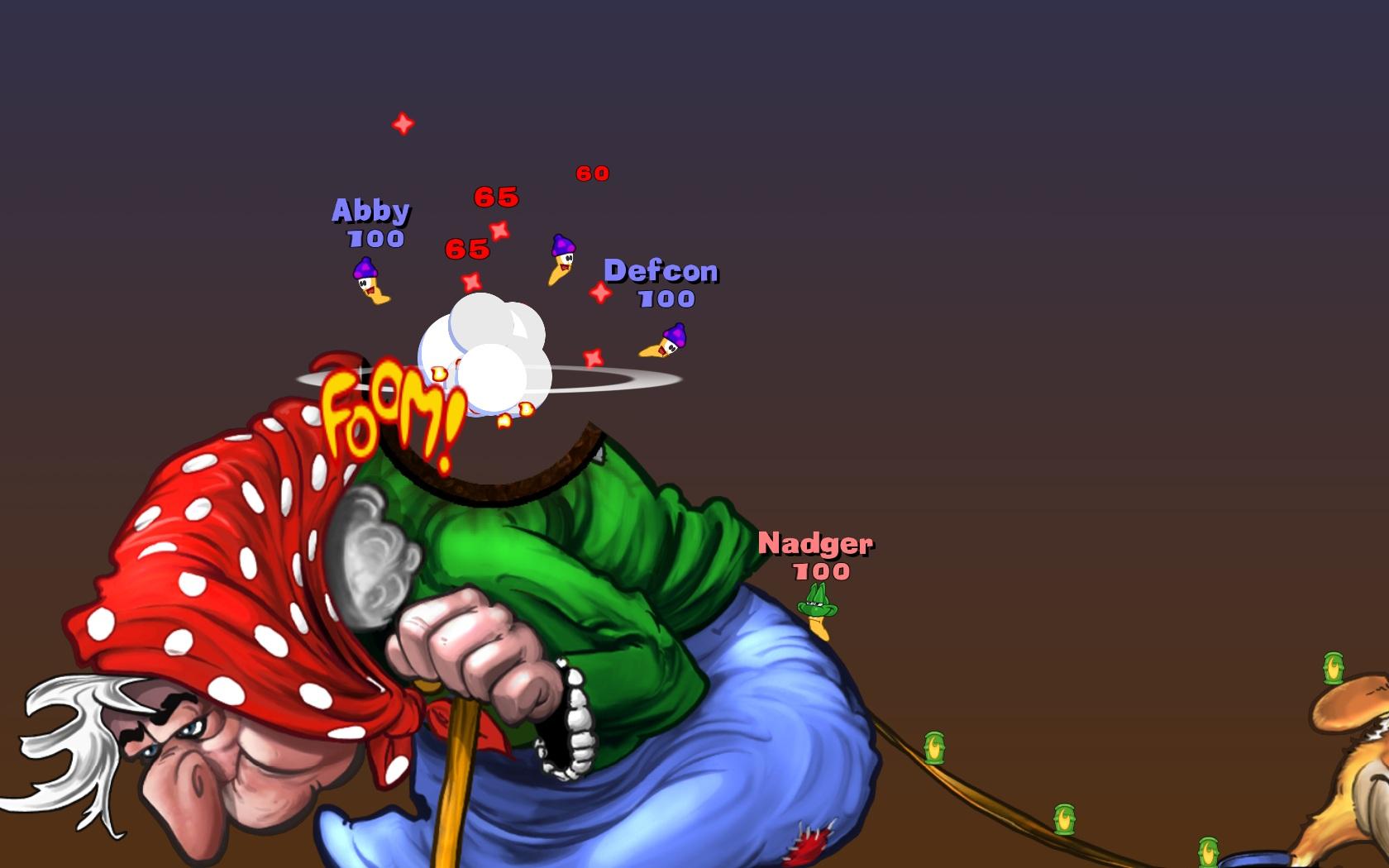
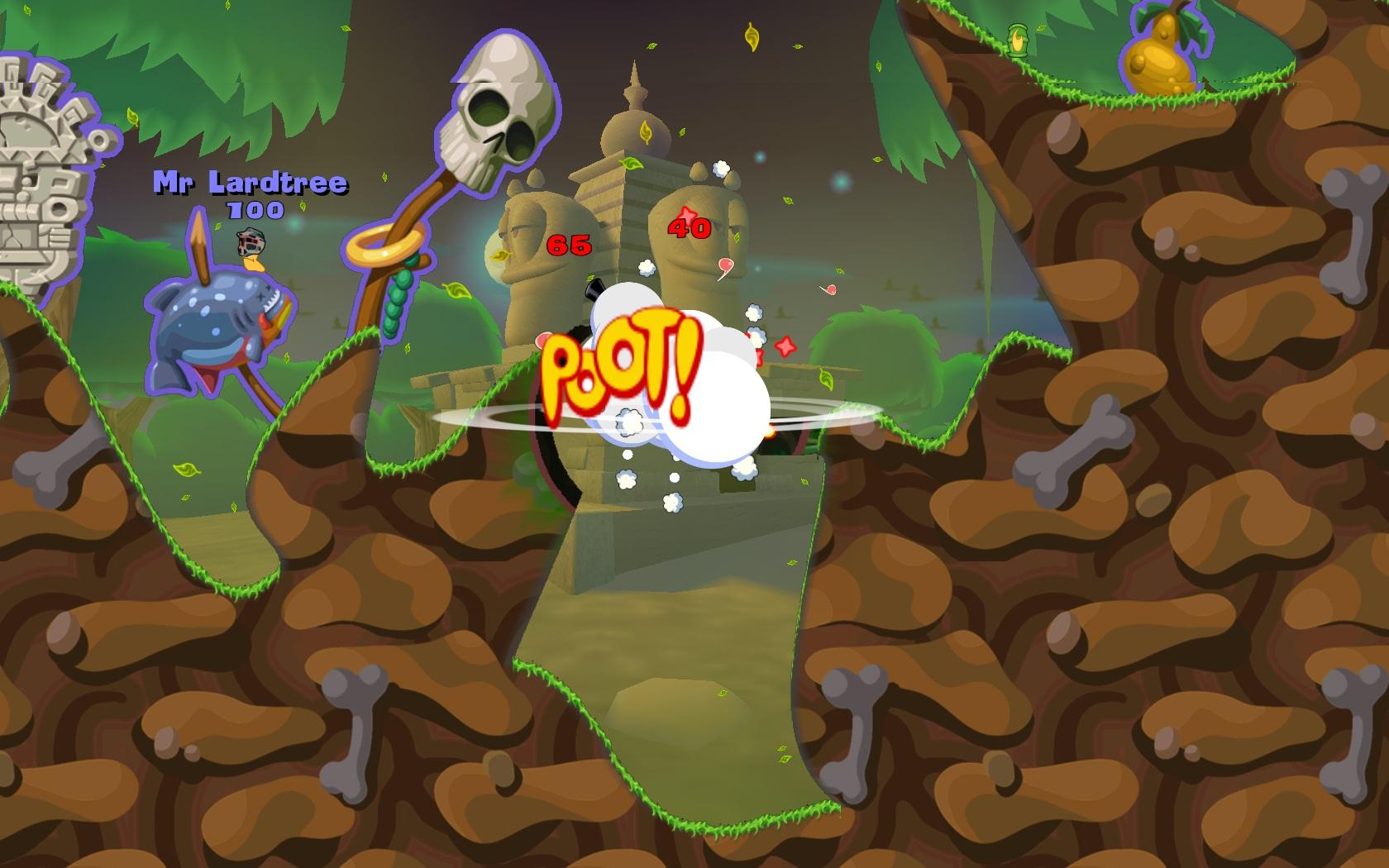
The visual overhaul in Worms Reloaded centers on 13 HD graphical themes. According to the official description, these themes combine with random level generation so the game is marketed as never playing the same game twice. The landscape artwork is based on what the description calls the most loved Worms game ever made — a framing reference rather than a verifiable claim about quality, but it signals that the visual direction draws deliberately on series heritage.
The game supports widescreen displays and offers an optional blur effect for backgrounds. The 16 specially designed forts give Forts mode a dedicated set of purpose-built structures rather than relying on procedurally generated terrain. Together with the HD landscape artwork, these choices give the game a more polished presentation layer than a raw terrain-simulation approach would. The revised physics mentioned in the official description sits alongside the new high-definition full-color graphics engine as one of the two core technical upgrades of this edition.
Controls and Platform Notes
The PC-specific control scheme includes user-defined controls that ship with classic settings as the default. Function keys provide fast access to common weapons, which matters in a turn-based game where cycling through a 47-item arsenal between shots would otherwise slow match pace. The game works with compatible USB gamepads. The official description also states that the game runs on all modern Windows operating systems — but this is a store-page claim from the time of release and has not been independently verified for current Windows versions. Players on current hardware should treat that statement as dated marketing text rather than a compatibility guarantee.
Starting Guidance Drawn from the Documented Systems
For a new player, the documented systems suggest a logical entry order. Training Mode offers three tutorials and three firing ranges — the firing ranges are specifically set up for practicing trajectory and weapon timing without match pressure. After that, the 35-mission Campaign provides progressive exposure to different weapons and objectives, while the Warzone Campaign's 30 additional missions are explicitly tuned for advanced players and should be approached after the main campaign.
For multiplayer, BnG is the most constrained mode and the easiest to learn, since it limits the arsenal to bazooka and grenade. Forts mode adds the dimension of defensive terrain, and Rope Racing changes the objective from elimination to movement. Players who want to explore the creation side can begin with the landscape editor and scheme editor, which are described as fully featured and allow importing custom levels for online play with friends.
At a Glance
The table below summarizes the core identifying facts about Worms Reloaded as documented in the official source.
Worms Reloaded's design identity comes from the breadth of its systems rather than a single headline feature. A 47-weapon arsenal, 65 structured single-player missions, a four-player multiplayer suite across several distinct modes, and a landscape-and-scheme editing toolchain that lets players build their own rule sets all sit on top of the same turn-based artillery foundation. The editorial interest lies in how those pieces interlock: the editor feeds custom maps into online play, campaign completion funds cosmetic and functional unlocks, and the AI personality system gives solo play a range of opposition styles beyond a simple difficulty slider. What the source does not document — specific control bindings beyond the general description, recommended settings for current hardware, and modern compatibility testing — is a gap that only hands-on research could close.
Scroll sideways to see the full table →
| Field | Value |
|---|---|
| Game title | Worms Reloaded |
| Release year | 2010 |
| Developer | Team17 Digital Ltd |
| Publisher | Team17 Digital Ltd |
| Genre | Strategy |
| Platforms | Windows, macOS, Linux |
| Weapons and utilities | 47 |
| Campaign missions | 35 |
| Warzone Campaign missions | 30 |
| Bodycount mode | 1 worm vs. endless spawning enemies |
| Training tutorials | 3 campaigns and 3 firing ranges |
| Multiplayer | Up to 4 players, online and local |
| AI personality types | 7 |
| HD graphical themes | 13 |
| Designed forts | 16 |
| Custom levels | 70+ (some shared from classics) |
| Speech banks | 70+ (50 remastered, 20+ new) |
| Hats | 70+ |
| Landscape editor | Yes, with bridges and custom level import |
| Scheme editor | Yes, with random objects and fire hazard |
| Achievements | Reduced count on Mac and Linux vs. Windows |
Sources & further reading.
- Worms Reloaded — official game profile Retrieved Oct 12, 2026
First published .