 THE GAME ARCHIVE
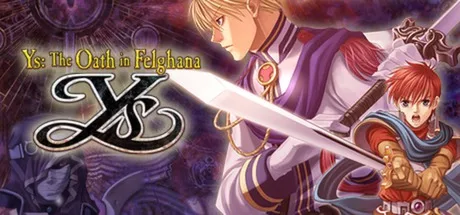
Ys: The Oath in Felghana is an action RPG built around fast-paced combat and paired with an intricate puzzle-filled world. On Windows it presents itself as a compact, aggressive adventure: you fight through monster-held land, read terrain as a puzzle, and measure progress by the sections of the map that open up. Nihon Falcom developed the game and XSEED Games published this English edition, which the official store description calls a complete 3D reimagining of the 16-bit console classic Ys III: Wanderers From Ys and identifies as based on the original 2005 PC release.
The pitch names three things that define play: tight controls, Metroidvania-style exploration elements, and intense combat with epic screen-filling boss battles. A thrashing, percussive arranged soundtrack runs underneath. The game is documented as an action, adventure and role-playing title, so combat, exploration and story framing are meant to work together rather than as separate modes.
Premise: A Homeland Changed
Adol Christin and his companion Dogi make an unannounced visit to Dogi's homeland of Felghana after an eight-year absence and find things dramatically changed. Hordes of violent monsters roam the outskirts of town, a long-dormant volcano has sprung back to life, and the new lord of the land has begun mercilessly and inexplicably extorting money from long-suffering citizens. While Dogi seeks out his former combat master for answers, Adol tends to the townsfolk and becomes embroiled in political conspiracies, ancient legacies and unthinkable taboos.
Because the premise pairs monsters and extortion with Dogi's search and Adol's errands, the game's story setup points toward two kinds of activity: fighting through monster-held land and dealing with the people and powers around town. The official description does not spell out a route order or quest checklist, so the useful reading is structural. Felghana supplies both the threats that populate exploration and the social reason to push deeper into it.
Core Combat: Fast, Tight, and Built Toward Bosses
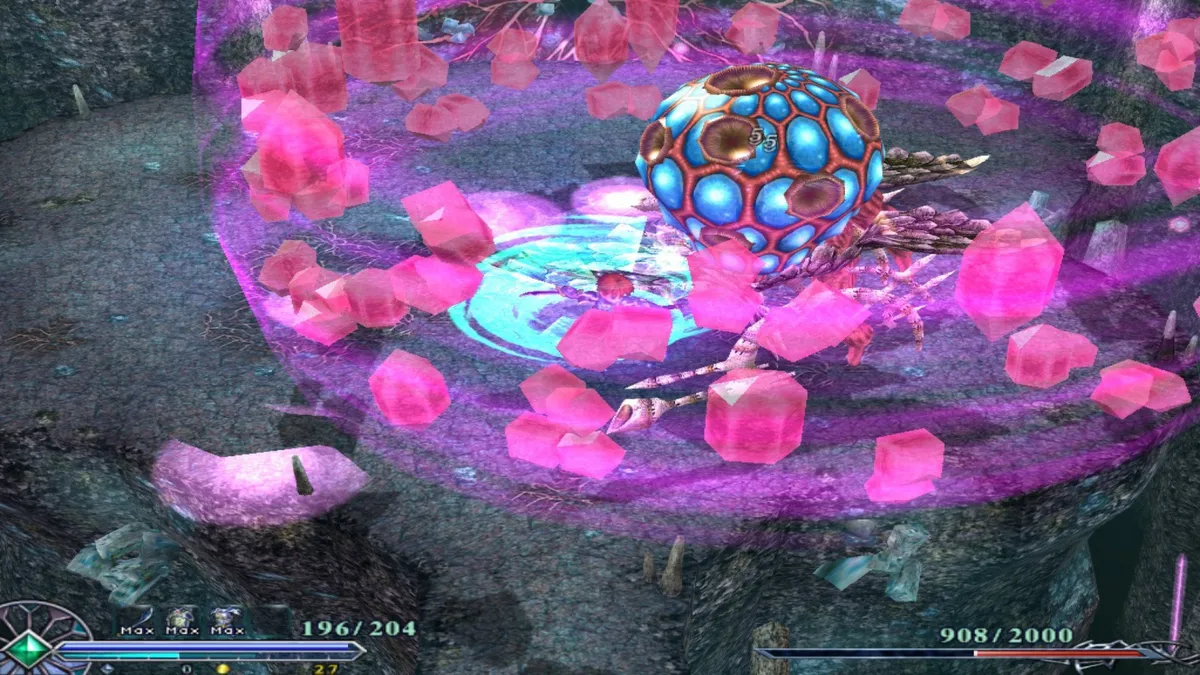
The Oath in Felghana is described as a fast-paced action role-playing game with tight controls. Combat is the core activity, and the official language sets a deliberate arc: intense encounters with ordinary threats build toward epic screen-filling boss battles. That scale contrast is part of the design, and it matters for how a player should read each area. Roaming monsters establish the rhythm and pressure; the boss battles test whether the player can sustain that rhythm against a much larger, more demanding opponent.
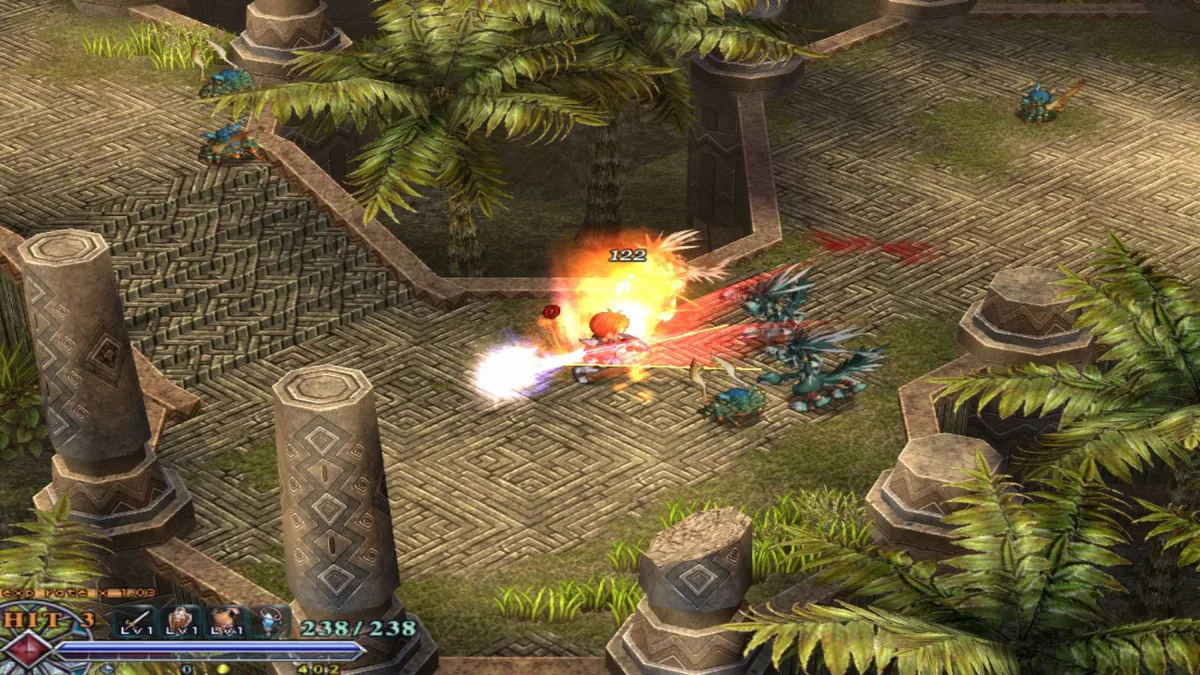
The supported evidence does not document specific attack buttons, combo counts or dodge frames. What it does establish is the intended feel: combat is quick, and control responsiveness is treated as a defining feature. In practice, then, the documented loop is to engage monster hordes while moving through the world, then face the large-scale encounters that cap the action. Because the same combat system carries the whole game, the boss fights are the clearest place where the tight controls are meant to pay off.
Exploration: A Puzzle-Filled World That Opens Up
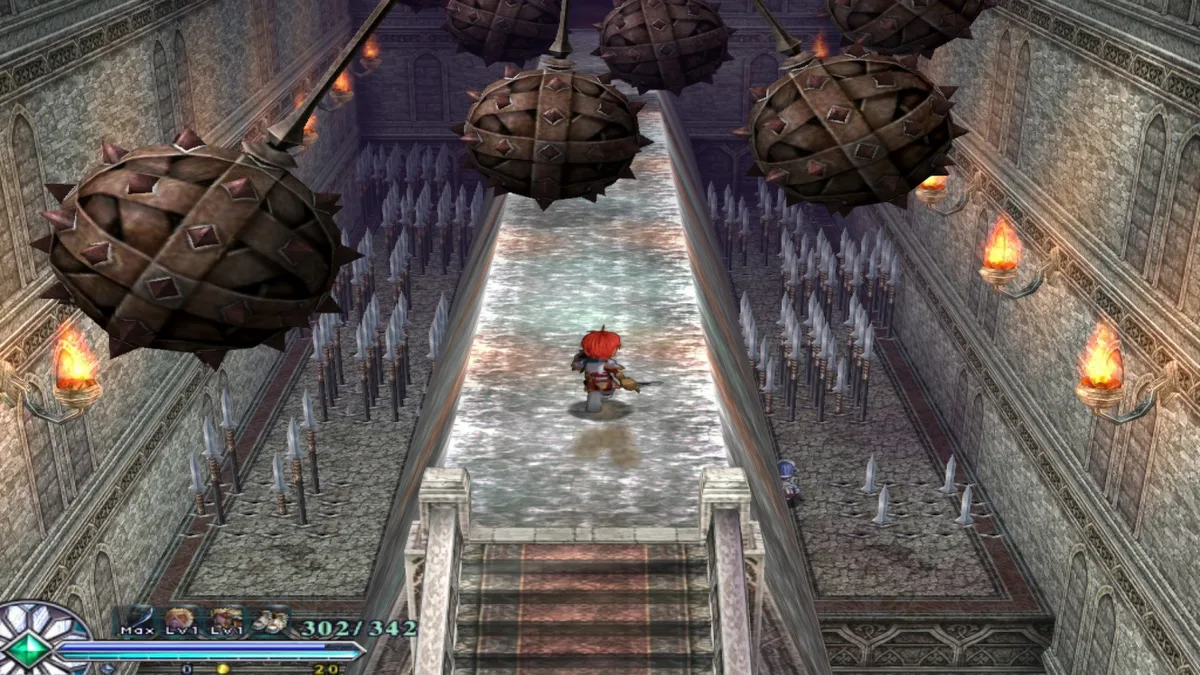
The world is described as an intricate puzzle-filled environment, and exploration is explicitly Metroidvania-style. That combination is the most useful way to understand the moment-to-moment structure: the land is not a set of corridors to rush through but a space whose obstacles and layout are meant to be solved. The same description that supplies the puzzle framing also supplies the exploration framing, so progress is tied to how the player reads and works through the environment rather than to combat alone.
The official text does not list the specific tools, keys or gates that unlock particular areas. It does state that the game is a complete 3D reimagining of Ys III, which places this version's exploration in a rendered 3D space while retaining the exploration and puzzle structure. For a player, the documented expectation is to treat the map as something to interpret and open, not just to cross, with combat continuing in the areas being explored.
Boss Battles and the Unlockable Challenge Modes
Boss battles are framed as epic and screen-filling, which makes them the game's showcase encounters. Beyond the campaign, two modes extend that focus: the unlockable Time Attack mode and the unlockable Boss Rush mode. The official description presents them as modes for anyone looking to show off boss-taming abilities, which is a clear signal about what they reward. They are not alternate story paths; they are challenge formats that put the player's handling of major fights under scrutiny.
The source does not detail unlock conditions or the number of fights in each mode, so the practical advice is simply that these are optional additions for players who finish the main content and want more from the boss encounters. The main campaign remains the place where combat, exploration and puzzle-solving combine; Time Attack and Boss Rush isolate the boss-fighting side of that combination.
Difficulty and Progression: Six Tiers From Very Easy to Inferno
The game offers six difficulty levels ranging from Very Easy for casual players to Inferno for true old-school gaming masters. That is the documented difficulty structure, and it frames difficulty as a player-facing choice that covers the whole experience rather than a single adjustable element. The source does not describe separate difficulty scaling for Time Attack or Boss Rush, so the safest reading is that the six tiers describe the main game's challenge range.
Because the range runs from Very Easy to Inferno, the six levels are a meaningful design statement: the same fast combat, puzzle-filled exploration and screen-filling bosses are intended to be playable across a wide spread of player skill and patience. For a new player, the existence of this range suggests choosing a tier deliberately before starting rather than treating difficulty as an afterthought. The source documents no further progression system such as experience levels or skill trees, so the six tiers and the unlockable modes are the supported progression-shaped features to plan around.
Presentation and Controls on Windows
The Windows edition supports standard keyboard and mouse controls and also offers gamepad support, so input is a player-side choice between two documented options. Visually, the game provides adjustable high-resolution PC graphics with original blood effects intact. The soundtrack is a thrashing, percussive arranged score, and the official description notes that it has been heralded by many as one of the best of all time.
These presentation details matter to play in a limited but real way. Adjustable high-resolution graphics belong to the PC version's setup, and the retained blood effects are part of the same visual package. The percussive arranged soundtrack is presented as a companion to the fast combat and boss encounters rather than as a separate feature. The source does not specify performance settings, resolutions or remapping options, so those should not be assumed.
Starting Guidance From the Documented Systems
Choose a difficulty deliberately at the start. The official range runs from Very Easy for casual players up to Inferno for true old-school gaming masters, and the source presents this as the main tuning choice before play. A first run aimed at learning the combat rhythm and the puzzle-filled layouts has every documented reason to sit lower on that range; a run aimed at the hardest test has a clearly labeled top end.
Treat exploration as puzzle-solving rather than downtime between fights. The world is described as intricate and puzzle-filled, and exploration is Metroidvania-style, so the documented expectation is that opening and interpreting the environment is a core activity. Combat and exploration are paired in the same description, which means neither should be skipped or rushed past; the monsters are part of the land being worked through.
Plan to return to the boss-focused content after the campaign. Time Attack and Boss Rush are unlockable modes for showing off boss-taming abilities, so they are documented as post-campaign or unlockable additions rather than first-run necessities. The main path is where the six difficulty levels and the combined combat-exploration loop apply. Controller versus keyboard and mouse is a documented input choice, so use whichever is available and comfortable.
Edition Notes and Official Access
This is the English-language Windows edition of a game based on the original 2005 PC release and described as a complete 3D reimagining of Ys III. It is officially available in English with Steamworks features. The supplied release year for this edition is 2012, while the original game it is based on dates to 2005; keeping those two dates separate avoids confusing the PC re-release with the earlier version.
The edition's Steamworks additions include over 30 unique Steam Achievements and Steam Cloud support, alongside the adjustable high-resolution graphics, original blood effects, gamepad support and standard keyboard and mouse controls. These are features of the English PC release, not part of the 2005 original's documented description. The game's documented platform is Windows.
Scroll sideways to see the full table →
| Documented feature | What the source states |
|---|---|
| Core combat | Fast-paced combat with tight controls |
| World design | Intricate puzzle-filled world; Metroidvania-style exploration elements |
| Boss encounters | Intense combat with epic screen-filling boss battles |
| Difficulty | Six levels from Very Easy to Inferno |
| Extra modes | Unlockable Time Attack and Boss Rush |
| Steam features | Over 30 unique Steam Achievements; Steam Cloud support |
| Controls | Standard keyboard and mouse; gamepad support |
| Presentation | Adjustable high-resolution PC graphics with original blood effects intact; thrashing, percussive arranged soundtrack |
| Lineage | Complete 3D reimagining of Ys III; based on the original 2005 PC release |
Sources & further reading.
- Ys: The Oath in Felghana — official game profileRetrieved Oct 26, 2026
First published .