 THE GAME ARCHIVE
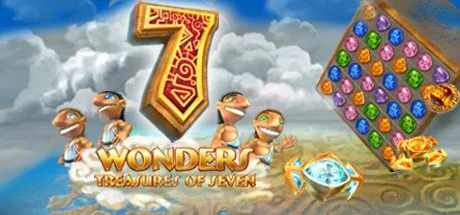
Matching Runes to Break Blocks and Reveal the Keystone
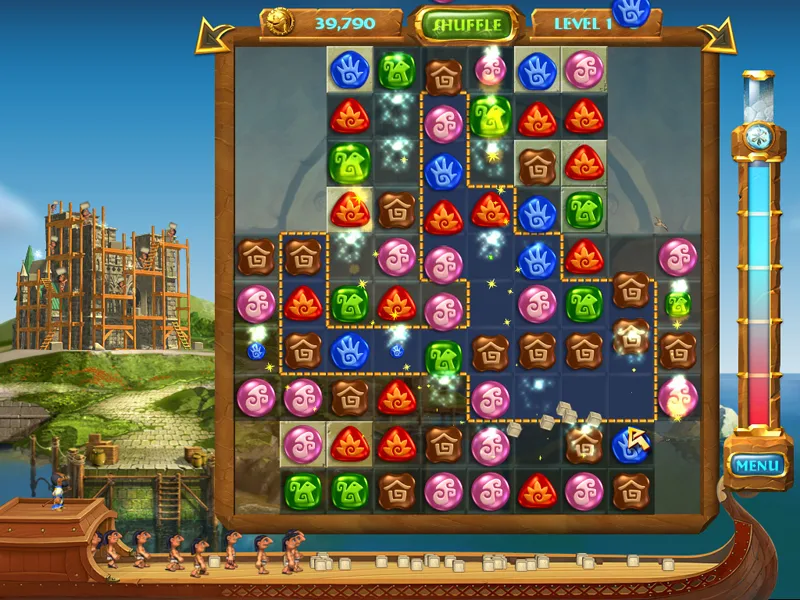
Each round of this puzzle game begins on one face of a cube, where runes are matched to break away the surrounding blocks. Clearing blocks exposes two things hidden beneath the face: a lock and a keystone. The runes function as the first step of the round, since breaking blocks is what opens the way to the goal objects. Without matching runes, neither the lock nor the keystone becomes available, so the block-clearing work directly sets up the rest of the level.
Once the keystone is revealed, it becomes the object that must reach the round's lock. The blocks removed during rune matching leave pathways across the cube face, and the keystone travels along those pathways rather than across solid blocks. Moving it is tied to rotating the cube face, so the paths already created determine where the keystone can go. Reaching the lock with the keystone completes the round, and the same sequence repeats across all six sides of the cube.
Rotating the Cube Face to Move the Keystone
On each round's face, the keystone is moved by rotating the cube face itself. Rotation is the movement mechanic rather than a separate action for the keystone, and the face turns to carry the keystone from one position to another. Because the keystone follows the pathways left behind after the blocks were broken away, rotation only sends it where those cleared routes allow it to go. Solid blocks that remain are not part of that route, so the order in which the pathways were created on the face determines what the rotation can accomplish.
The cube is three-dimensional and has six faces, and progressing through the game requires rotating them. That face rotation serves the round's goal: steering the keystone along the created pathways until it reaches the level's lock. Completing the round therefore requires the face to be turned in a way that lines the keystone up with the route to the lock. The same pattern of breaking blocks, revealing the lock and keystone, and turning the face to move the keystone repeats as the player works to conquer all six sides.
Pathway Puzzles and Conquering All Six Sides
The pathway puzzles in this game are tied to the rotatable board itself. Each level presents its own route to work out, and the board can be turned to reshape how the cleared paths connect. Solving those route puzzles is what carries progress from one level to the next. Rotating the board is not only a way to navigate; the same revolving motion is documented as strengthening power-ups, so turning the board serves both the puzzle-solving goal and the power-up system at once.
The game's overall objective is to defeat all six sides of the cube through sequential puzzle completion. That means the pathway puzzles are not isolated screens; each solved level advances the run toward the next side, and the work continues until every side has been conquered. The board rotation and power-up strengthening feed into the same sequence, giving the six-sided campaign a single structure: solve the level's pathway, turn the board as needed, and move on until all six sides are done.
From Outer Cube to Inner Cube: Compass, Map and the Hidden City
After the six faces of the outer cube have been mastered, play shifts to the inner cube. There the player collects pieces used to build a compass, an instrument treated as the means of navigating the inner cube's structure. This stage follows the outer-cube work rather than replacing it: the rune matching, keystone movement, and face rotation of each round feed into a longer progression that eventually carries the player inward.
The map and the compass are each tied to the ending. The map is the artifact used to reveal the hidden city's layout, while the compass is the navigation tool of the inner cube, and reaching the final objective requires combining the two. Hidden in that arrangement is the closing chain of play: inner-cube exploration yields compass pieces, the compass joins with the map, and the hidden city is uncovered.
Building Nine Wonders Through Sequential Cube Rotations
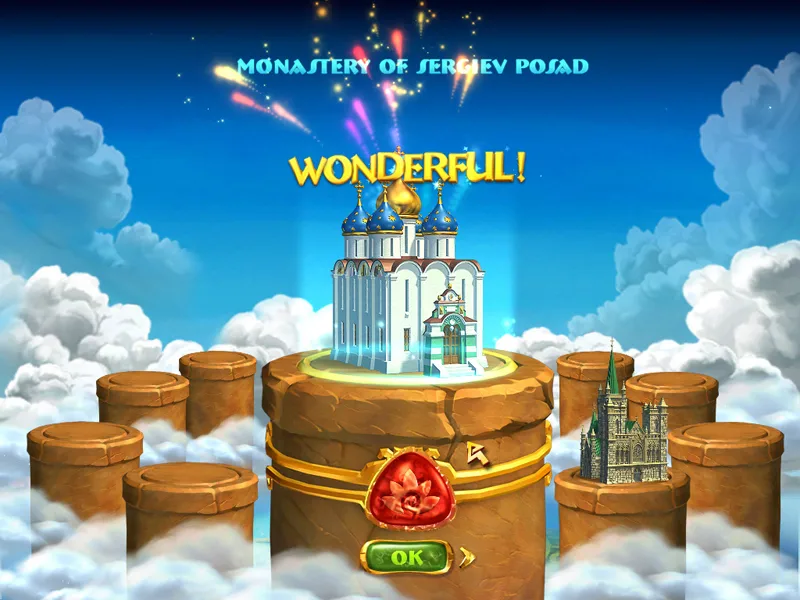
The campaign's destination is a set of nine distinct structures drawn from historical wonders, and each one is assembled as the puzzle work advances rather than chosen from a menu. A round follows a fixed chain: match runes to break blocks, uncover the lock and the keystone, then turn the cube face so the keystone travels the cleared pathways to the lock. Conquering all six sides of the outer cube completes that phase, after which play moves inward to the inner cube, where pieces gathered there go toward building the compass.
The board is built to rotate, and that turning motion does double duty. When the face is revolved to carry the keystone toward its lock, the same motion strengthens power-ups, so a rotation made for the pathway puzzle also feeds the power-up system. These pathway puzzles are solved one level at a time, turning the board as each route requires, and each solution carries progress forward. The compass belongs to the inner-cube stage, serving as the navigation tool after the outer faces have been mastered.
Sources & further reading.
- 7 Wonders: Treasures of Seven — official game profile Retrieved Oct 21, 2026
First published .