 THE GAME ARCHIVE
The Shape of the Fight
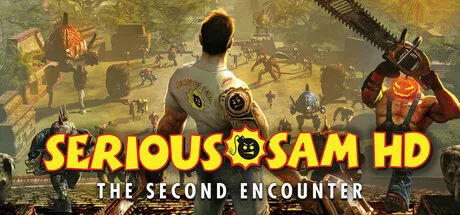
Serious Sam HD: The Second Encounter is an arcade first-person shooter built around pushing through themed arenas while waves of enemies close in from every side. The official profile describes it as a visually upgraded remake of the classic game, keeping the frantic single-player action and adding newly developed modes alongside the familiar cooperative play, plus competitive Versus and Team modes for as many as 16 players. What the player actually does stays consistent across those modes: move through a space, manage a crowd of attackers, and make weapon and positioning decisions under pressure. The modes differ in who is on the other side of that pressure — the game's enemies, your teammates, or other players.
Three Worlds, One Running Fight
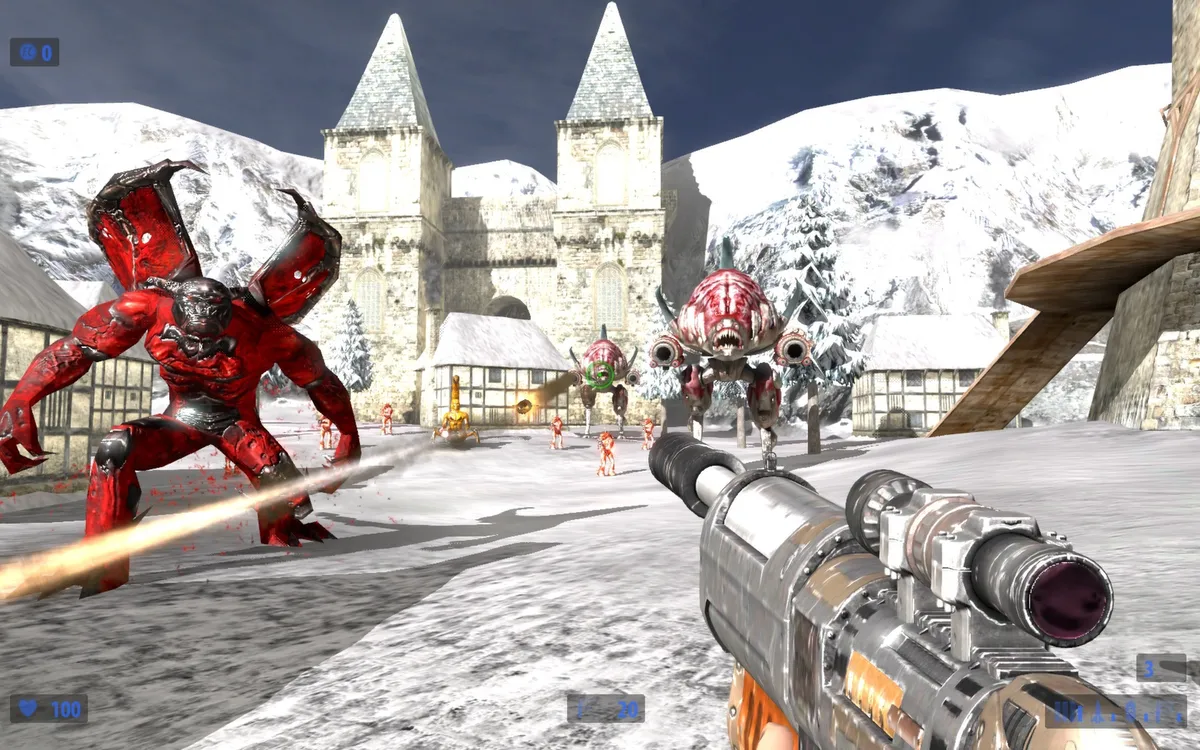
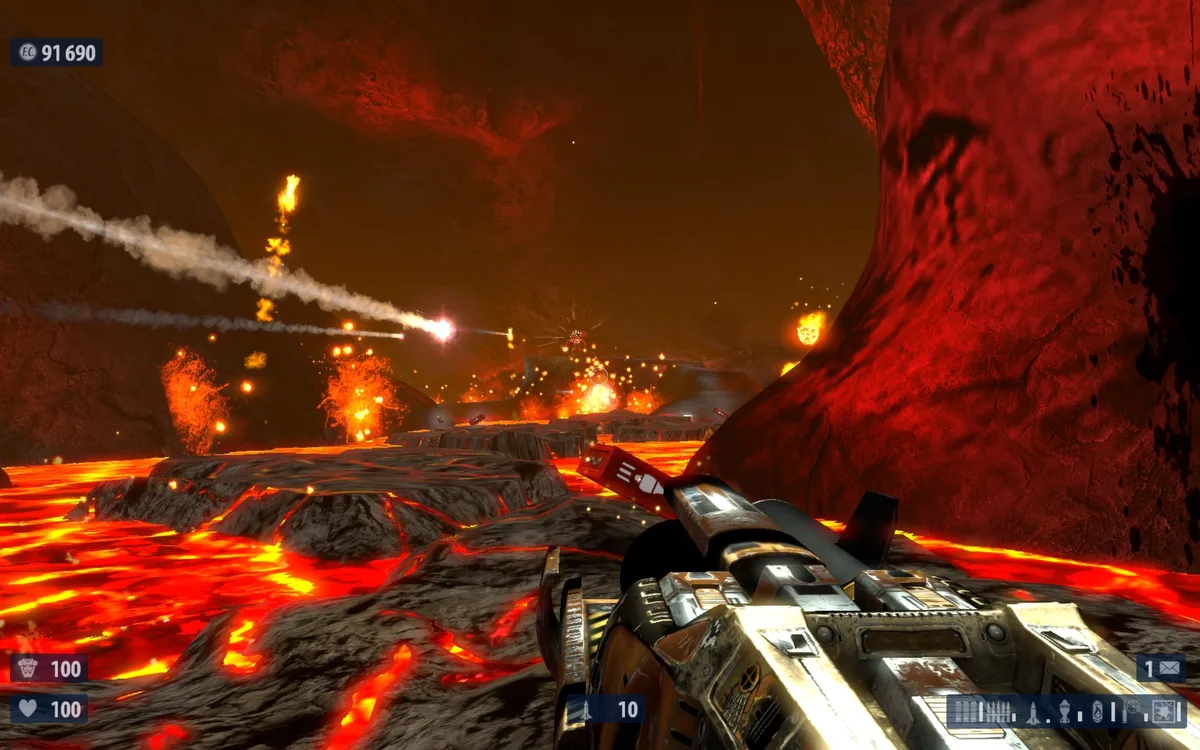
The single-player campaign is organized around three distinct worlds: South America, ancient Mesopotamia and medieval Europe. That structure matters because each region is a separate visual and combat setting rather than a variation on one backdrop. The player's route moves from one world to the next, and the profile frames the campaign around mayhem across those three spectacular worlds. Within each, the core loop is the same: keep moving, read the incoming enemy mix, and clear the space before the next group arrives. Because the campaign is documented as a single coherent sequence, the three settings are effectively three extended chapters of one running fight rather than disconnected skirmishes.
Enemy variety is the main lever the campaign pulls to keep that loop from flattening. The profile lists 27 nightmarish warriors in Mental's army, drawing on returning favorites from The First Encounter — the Beheaded Kamikaze, Syrian Werebull and Kleer Skeleton — alongside 5 new enemies and 3 new bosses. For the player, that means the enemy set changes what a good response looks like. A roster that combines recognizable returning types with new additions gives each world a chance to reintroduce familiar threats and then test the player against less familiar ones, while boss battles mark the points where the campaign expects the player to have mastered the mix so far. The documented count of 27 enemies and bosses, with 3 of them bosses, sets the scale of that escalation.
Secrets as a Second Layer of Play
Secrets are described as a documented layer of the single-player experience, not a minor extra. The profile states that the game hides over 130 secrets across the environments, more than 15 of them brand new to this version. That number is large enough to change how a player moves through a level: clearing a room is one task, and searching the same space for hidden items is another. The secrets are spread across South America, ancient Mesopotamia and medieval Europe, so thorough secret hunting means committing to exploration in every region rather than in one favorite area. For a player who wants to see everything the campaign offers, the practical approach is to treat exploration as part of the combat route — checking side paths and out-of-the-way corners before moving on — rather than as a separate activity afterward.
Arsenal and Power-Ups: What the Player Chooses Between
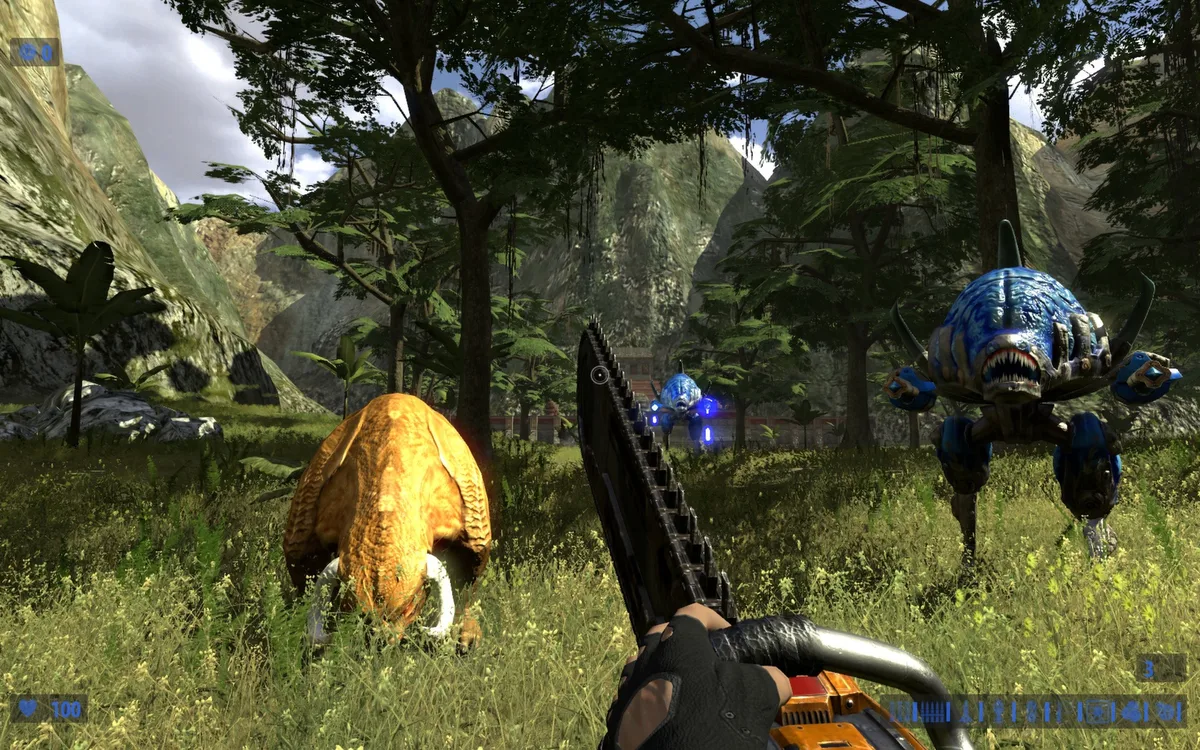
This version's headline addition to the arsenal is three new toys: the Sniper Rifle, the Flamethrower and the Chainsaw. The profile emphasizes that they join a huge existing arsenal rather than replace it, which is the key point for how play feels. More weapons in a shooter with a 27-strong enemy roster means more moment-to-moment choices about which tool to bring up as a threat closes in. Power-Ups are the other layer: the profile says they are used to additionally increase fighting and agility skills. Because they temporarily boost the player rather than the enemy, they create timing decisions — when to spend a boost relative to a hard push or a boss — on top of the weapon-selection decision. The documented system is therefore a two-part loadout: permanent weapon variety plus temporary skill boosts.
Co-Op: Classic Play and Two New Campaign Modes
Classic Co-Op Mode is the familiar cooperative option, and the profile sizes it at up to 16 players in campaign cooperative mode. The player does not go through the three worlds alone in this mode; the same campaign content is played as a group. That changes the practical problem from surviving every angle by yourself to coordinating a larger body of players through the same waves and boss encounters. Two additional cooperative modes, Coin-Op and Survival, are described as newly developed and also support up to 16 players in the campaign game. They sit alongside Classic Co-Op rather than replacing it, giving groups a choice of how they want to play the campaign together.
Survival Mode is a separate challenge that shares a name with the cooperative Survival mode but is not the same thing. In the standalone Survival Mode, players try to stay alive as long as possible against continued enemy attacks on specially designed survival maps. That is a different goal from the campaign's structure of moving from world to world and reaching boss fights: instead of a route, the player faces a map built for endurance. The cooperative Survival variant is presented as part of the campaign-based co-op set, while the standalone survival mode is a distinct mode of its own. Reading the two as interchangeable would misrepresent how each is documented.
Versus and Team Play: Deathmatch Maps and Beast Hunt
Versus Mode sets players against one another across more than eight deathmatch maps, a mix of classic arenas and brand-new ones, with room for up to 16 players. Two further versus variants, Last Man Standing and Instant Kill, are listed as new to this version and change the rules of those matches; My Burden is listed alongside them. Team Modes form a parallel competitive track: Team Deathmatch, Capture the Flag and Last Team Standing put teams against other teams. For the player, the distinction is straightforward — Versus is free-for-all combat with variants that adjust the conditions, while Team Modes require coordinating with teammates toward a shared objective such as a flag capture or team survival.
Beast Hunt and Team Beast Hunt are the unusual entry in the competitive set: players fight against other players or teams while also playing campaign levels. That means the arenas are the same environments the single-player campaign uses, and combat against other players happens inside them. The player's decision-making changes accordingly: reading a campaign space for routes and cover now serves a player-versus-player goal, and the familiar scenery becomes a battleground where the people being fought are other players rather than the enemy roster. Team Beast Hunt applies the same idea with teams. It is flagged as new to this version rather than carried over from the Classic game, which is the key edition difference for competitive play.
Steam Features and Recorded Progress
The Steam feature set adds 50 achievements, labeled as not seen in the Classic game. Leaderboards record scores in both single-player and cooperative play, so the same scoring layer follows a lone player through the three worlds and a group through co-op. Steam Cloud stores the player profile on the Steam Cloud servers, and the documented contents are bindings, the last played level and campaign progress. That profile list is what makes Cloud useful in practice: control setup, where the player left off, and how far the campaign has advanced can all travel with the player rather than being tied to one machine. These are separate from the mode rules, but together they form the progression and persistence layer around the campaign.
Getting Started: What the Modes Ask of You
For a new player, the cleanest path into the game is the single-player campaign, because it establishes the enemy roster and the pacing that the co-op and competitive modes build on. The campaign is where the returning foes, the five new enemies and the three bosses are encountered together, and where the 130-plus secrets can be found. From there, Classic Co-Op with up to 16 players is the direct way to bring that same campaign to a group. Players who want endurance rather than a route should look to Survival Mode, and players who want to fight other people should choose between Versus (deathmatch-style, with Last Man Standing and Instant Kill variants) and Team Modes (Team Deathmatch, Capture the Flag and Last Team Standing). Beast Hunt sits between those categories by using campaign levels as player-versus-player battlegrounds.
Secret hunting rewards a specific habit: explore before you move on. The game places over 130 secrets across all three worlds, so treating each room and side path as a possible hiding place is more productive than rushing from one fight to the next. The same logic applies to weapons and Power-Ups — because the three new toys join a huge arsenal and Power-Ups additionally raise fighting and agility skills, the practical skill is switching deliberately rather than defaulting to one gun. In co-op the pressure changes with more players on the same campaign content, and in Versus the map knowledge built from the campaign becomes an advantage.
What This Version Adds
The edition distinction that matters most for players is which modes are marked as new to this version. Survival Mode, the additional Coin-Op and Survival cooperative modes, Beast Hunt and Team Beast Hunt, the extra versus variants My Burden, Last Man Standing and Instant Kill, and the Steam features including 50 achievements are all labeled as not seen in the Classic game. Classic Co-Op and the core campaign are presented as carried over. For anyone comparing this release with the original, that split is the practical difference: the three-world single-player campaign and its secrets are the shared foundation, while the mode list and Steam integration are what this version adds around it.
Scroll sideways to see the full table →
| Feature | Documented detail |
|---|---|
| Release year | 2010 |
| Developer / publisher | Croteam / Devolver Digital |
| Platform | Windows |
| Campaign worlds | South America, ancient Mesopotamia, medieval Europe |
| Secrets | Over 130, including over 15 new to this version |
| Enemies and bosses | 27 total; 5 new enemies, 3 new bosses |
| New weapons | Sniper Rifle, Flamethrower, Chainsaw |
| Co-op | Classic Co-Op, Coin-Op and Survival co-op; up to 16 players |
| Competitive | Versus on 8+ deathmatch maps; Team Modes; Beast Hunt and Team Beast Hunt |
| Steam features | 50 achievements, single-player and co-op leaderboards, Steam Cloud |
Sources & further reading.
- Serious Sam HD: The Second Encounter — official game profile Retrieved Oct 21, 2026
First published .