 THE GAME ARCHIVE
Running the Railway: Schedules, Tracks, and Rolling Stock
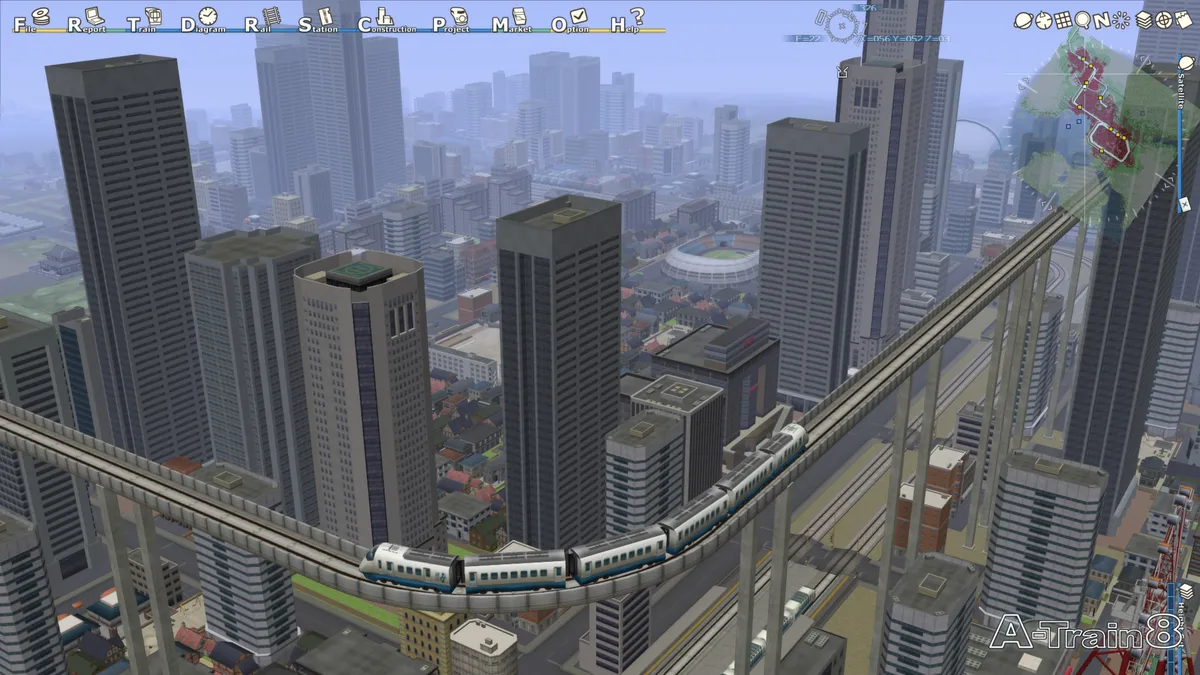
In A-Train 8, you manage train schedules to keep operations efficient and citizens satisfied, and every decision takes effect immediately. The default roster offers eleven trains, from commuters to freighters to lightning-fast magnetics, each with its own mix of speed, cost, maintenance, and capacity. These trade-offs shape both service quality and your budget as you work toward the goal of earning one trillion dollars as the owner of a new railway company. Track planning is equally deliberate: every line you lay must be planned carefully because track costs vary, and laying track over water is not cheap.
These documented rules interact directly: schedule management depends on the rolling stock you choose, since speed, capacity, and maintenance affect how well you can run efficient operations, while track planning forces you to weigh construction costs against the routes your trains will use. The eleven default trains give you commuter, freight, and magnetic options, so matching each type to its role is part of the same decision chain. All of this serves the stated objective of earning one trillion dollars, tying railway operations to your broader financial strategy.
Building the City: Commuters, Structures, and Landmarks
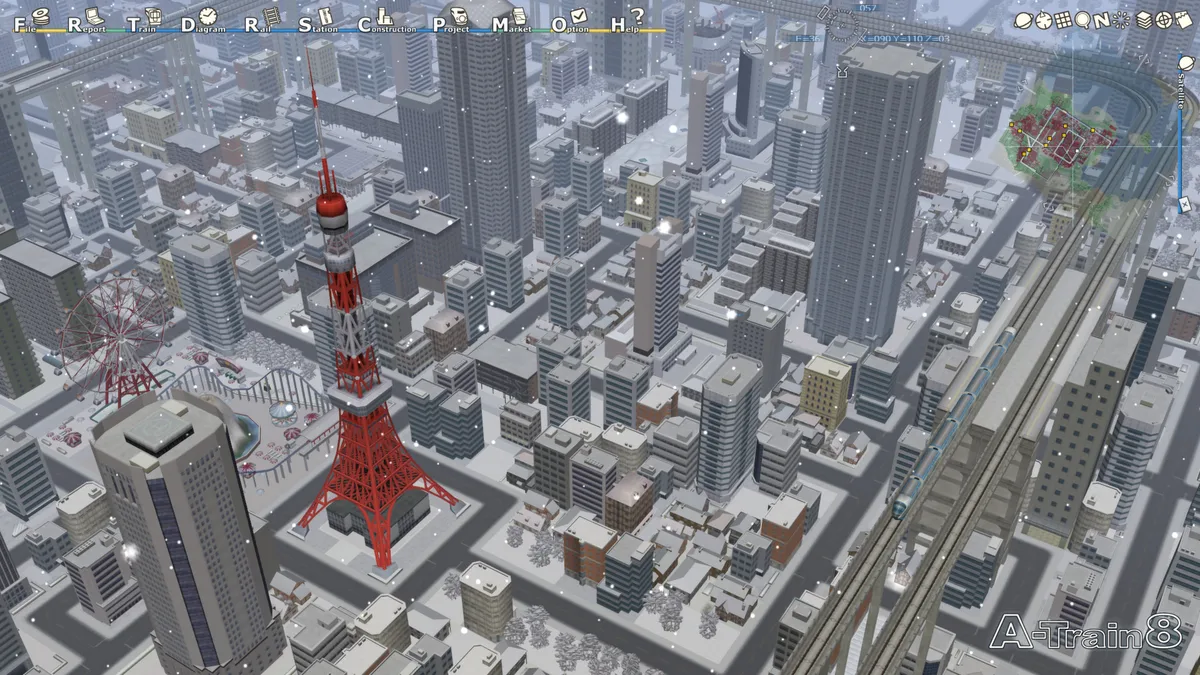
Building placement in A-Train 8 is a direct lever on the city's growth. Constructing the right kind of buildings in the right area brings in more commuters and pushes city development forward, so a win-win outcome depends on matching structure type to location. The building roster is broad: dozens of options cover hotels, factories, high rises and residential buildings, and you can go further with 60-story skyscrapers, parks, airports and even amusement parks. Each placement is intended to feed the commuter base your railway then serves.
Monuments sit alongside ordinary construction as a way to give a city a distinctive identity. You can place iconic landmarks including the Eiffel Tower, Big Ben and the Colosseum, stamping a unique character on the area you are developing. These choices are part of the same development loop: the right buildings in the right places increase commuters and advance the city, which in turn supports the wider objective of keeping city development moving through effective railway management. The scenario cities themselves begin with problems such as uncompromising terrain, underdeveloped infrastructure and poor management waiting to be addressed.
The Market: Stocks, Loans, Real Estate, and Reports
The market side of A-Train 8 gives you equity and debt financing as routes to expansion funds. You can buy and sell stocks, take out loans, and sell real estate when you need capital. These actions sit alongside the railway and construction work rather than replacing it, so a company short on cash can raise money through the market instead of waiting on fares alone. The stated goal frames all of this: as the owner of a new railway company, you pursue one trillion dollars while managing schedules, developing railways, and constructing buildings.
Financial information is delivered through a set of reports rather than a single figure. You have complete access to your company's balance sheet, railroad statistics, city trends, and stock and real estate reports, and these documents are constantly updated during the simulation. That means buying stocks, taking a loan, or selling property can be checked against the same ongoing records that track railroad statistics and city trends, so the balance sheet, stock reports, and real estate reports together describe how the company stands.
Time, Weather, and Terrain: The Pressures on Your Network
Time in A-Train 8 passes continuously, and that continuous clock reaches both your trains and your construction work. Schedules are therefore not static paperwork: the passing hours govern when services run and when building projects advance. Weather adds a second, less predictable pressure. Conditions change constantly, with snow and rain able to arrive at a moment's notice, and those weather conditions affect train and construction schedules. A network planned around clear-sky assumptions can be caught out when a sudden storm or snowfall interrupts the rhythm you built around your rolling stock and your building placements.
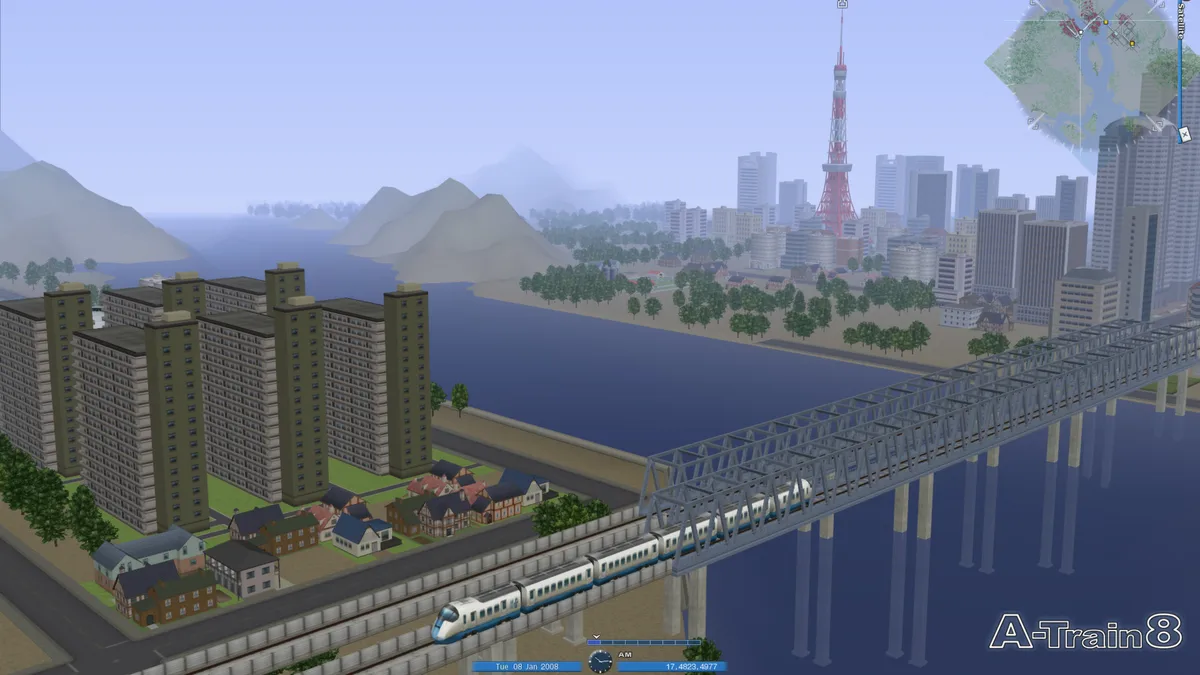
Terrain is the third constraint on where your network can go. Certain areas are not ideal for development, and laying track over water is not cheap, so the map itself rules out some expansions or makes them costly. Because every track your company lays must be planned carefully, the interaction is direct: a route crossing water or difficult ground raises the construction bill before a single train runs, while poor schedule management and overextending can cost you commuters and hit the company's bottom line. Managing the network means balancing the continuous clock, shifting rain and snow, and the limits of the land together.
Scenarios and Map Construction Mode
A-Train 8 ships with ten default scenarios, and choosing one drops you into a pre-constructed city facing a significant problem to solve. Each scenario is built around a different element of challenge, so working through them is the documented way to learn the game and eventually master it. The problems vary by city: uncompromising terrain, underdeveloped infrastructure, and poor management all appear as conditions to address. Because no two scenarios share the same challenge structure, switching between them changes the puzzle you face rather than only the starting capital.
Map Construction Mode is the route to custom maps. You begin with a large swath of flat land and reshape it in the terrain editor, with complete control over elevation and water so the finished map carries its own look and its own difficulty. Inside this mode construction costs neither money nor materials, so you can build a large city from scratch before simulating a single day. Once the map suits you, you set the starting funds for the new simulation, then run it in Game Mode as a real company.
Sources & further reading.
- A-Train 8 — official game profileRetrieved Oct 28, 2026
First published .