 THE GAME ARCHIVE
Working the Fields: Cultivation and Choosing Seeds
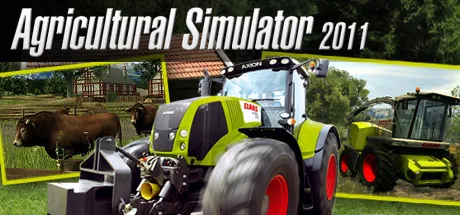
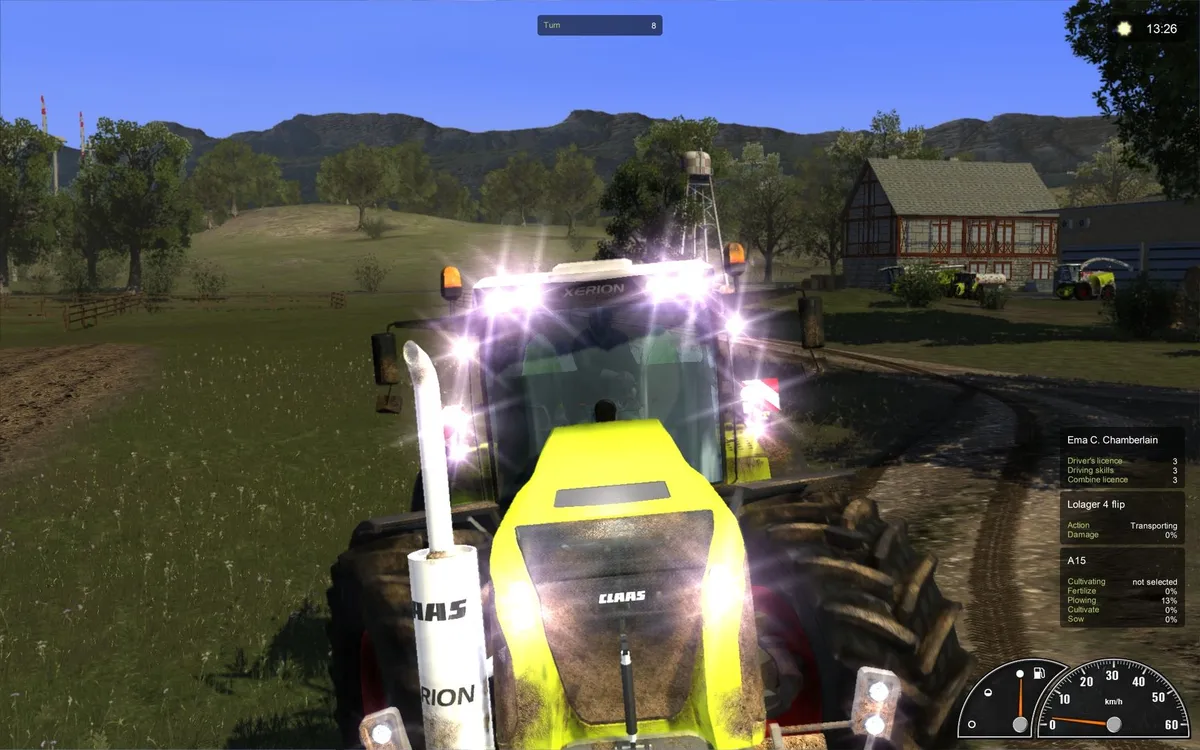
Fields in Agricultural Simulator 2011 are worked with CLAAS machines, and the base work starts with cultivation before a crop goes in. The game sets you as a classic farmer in a mountain area, with grain and other resources to grow, cattle to breed, and farm products to handle. To put a field into production, you select from the available grains — barley, rye, or wheat — or choose canola or corn. That decision feeds directly into the rest of the farm, since the harvest can be diverted to animal food, held back as new seed, or sold on the market.
Because more powerful machines let you farm bigger areas, the crop decision is tied to equipment purchases: selling products funds better equipment, and careful investment is required to maximize the crop. Overextending yourself leaves no room to upgrade the farm or buy more land. Market prices are the other constraint; you watch them so the work does not end in losses. The same harvest serves three purposes — animal feed, next season's seed, and market goods — so the seed choice and the selling plan have to be weighed together.
CLAAS Machinery and the Equipment Ladder
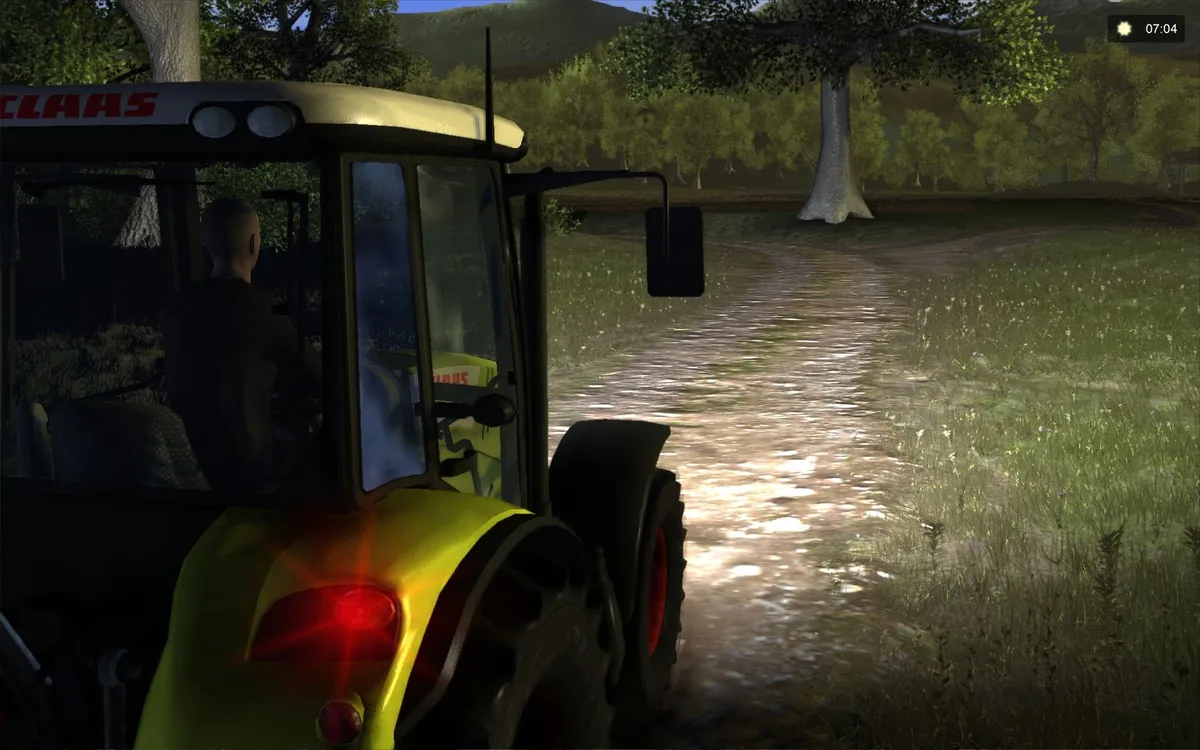
Equipment in Agricultural Simulator 2011 is bought from the CLAAS line, and the store description frames machinery as one of the farm's main investments alongside crops, livestock and other improvements. The equipment ladder is what connects spending to scale: stronger machines let you work larger areas, so each purchase changes how much ground you can bring into production. Buying power comes from harvests sold on the market, which puts equipment purchases and selling decisions on the same ledger.
The stated risk is careless investment: the description warns that the striving farmer must invest carefully to maximize the crop, because overstretching means being unable to upgrade the farm and buy more land. That makes the machine ladder a sequence of gates rather than a shopping list, since upgrade capacity and land purchases both depend on keeping expenditure within the farm's means. In practice, the choice is when to step up to a more powerful CLAAS machine and when to hold money back so the farm itself can grow.
Livestock, Stables and Animal Trading
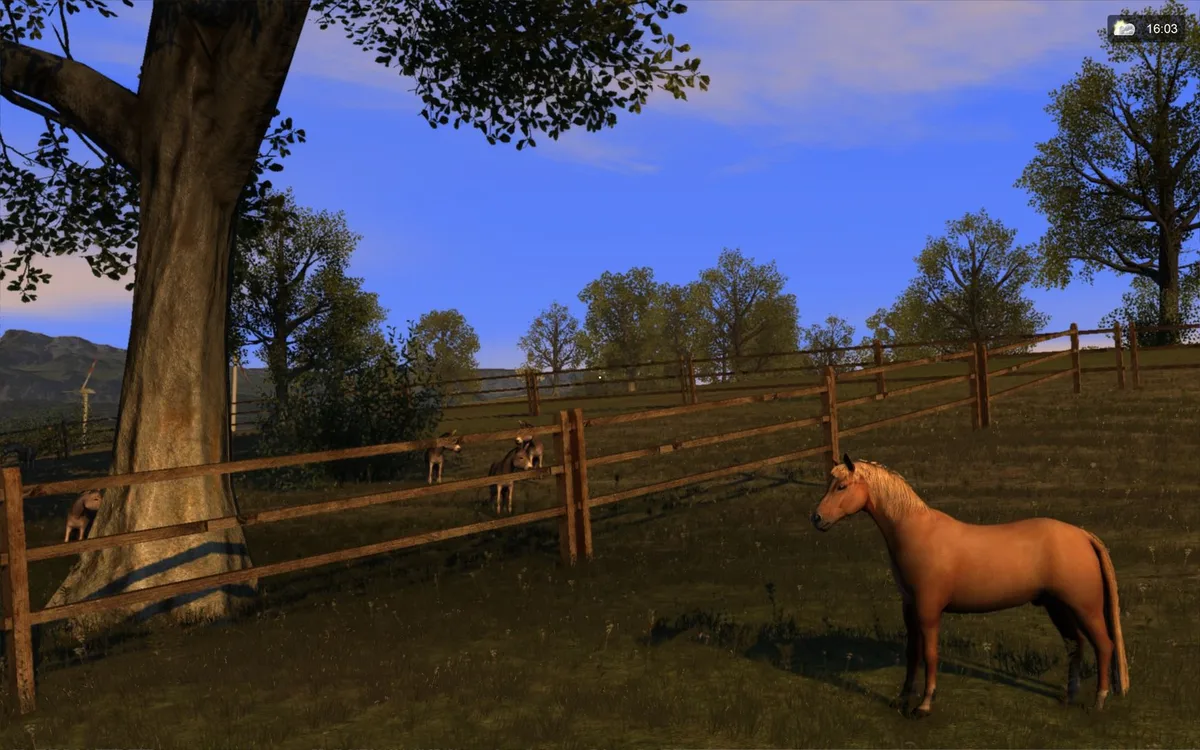
Livestock forms a second production pillar alongside crops. You breed cows, horses, sheep, hens, and geese, and you may also keep game animals on the farm and sell them profitably as food. Each species belongs to the stable side of the operation, where the harvest can be diverted to animal food. Breeding is not passive: when everything works well, the animals prosper, and you can sell their offspring on the market. That market outlet links livestock to the same selling decisions that govern grain, so a healthy herd or flock becomes another source of farm income.
Keeping animals productive depends on proper feeding, daily care of the stables, and attention to their well-being. Those routines run alongside hired help: workers can be brought in to balance your workload, and you can invest in their further education. The stable work is therefore a recurring set of tasks rather than a one-time purchase, and the same labor pool supports the wider farm. Selling offspring is the payoff, but it follows from the daily care and feeding that keep the animals prospering and the herd growing.
Market Prices, Selling and Hired Help
Selling is the point where the farm's harvest and livestock output turn back into operating money. The guidance is to watch market prices continuously so that the work does not end in losses, and proceeds from sold products are then invested in better equipment. Cultivated grain, animal food held back, and income all compete for the same harvest, so the selling plan sits alongside seed choice. Offspring from cows, horses, sheep, hens and geese, and game animals kept on the farm and sold profitably as food, join the same market outlet.
Hired help is the workload lever. Workers can be brought in to balance the labor, and money can be put into their further education, which makes the workforce an ongoing investment rather than a single hire. This matters because proper feeding, daily care of the stables, and the animals' well-being are recurring routines, and the same pool of labor supports the fields and the stables. Wages and training spending therefore draw on the same funds that market sales and careful equipment investment are meant to protect.
Cooperative Farming and Extended Edition Controls
The Extended Edition adds a cooperative farming option: players manage the farm together with friends, and the mode works either online or offline. When played online, a chat feature lets participants coordinate while working the farm. The same edition also reworks the helper system, so workers hired to balance the workload are supported by the revised helper mechanics described for the expansion. These additions sit alongside the crop, livestock and selling routines that make up the core farm management.
Control options in the Extended Edition now include joystick and gamepad support, and the keyboard control scheme is fully configurable, so players can set their own key bindings for farm work. Vehicle physics and movement were also reworked for the expansion, changing how machines handle in the fields. The helper system was improved as well, giving hired labor a revised role in daily farm operations. These control and vehicle changes apply across the farming tasks, from field work to managing the stables and products.
What the Extended Edition Adds to the Farm
The Extended Edition rebuilds the technical foundation of the farm rather than adding a new crop cycle. It ships an optimized, faster engine aimed at higher performance, and the vehicle models, physics and movement have been reworked and improved, so the CLAAS machines a farmer drives to cultivate and harvest behave differently from the base game. New visual effects and graphic options arrive alongside a day and night sky that can be configured, while an improved 3D map redraws the terrain the operation sits on.
The map is not only cosmetic: more streets, a gas station and a new village have been added, and new places to sell your products appear on it, giving the market side of the farm more outlets to visit. Players can farm together with friends in a cooperative mode that runs either online or offline, and the online version now includes a chat feature for coordinating the work. Joysticks and gamepads are supported, the keyboard control scheme is fully configurable, AI traffic has been improved, and a new helper system revises how hired labor assists around the farm.
Sources & further reading.
- Agricultural Simulator 2011: Extended Edition — official game profile Retrieved Oct 21, 2026
First published .