 THE GAME ARCHIVE
One Colony, Three Ways to Play
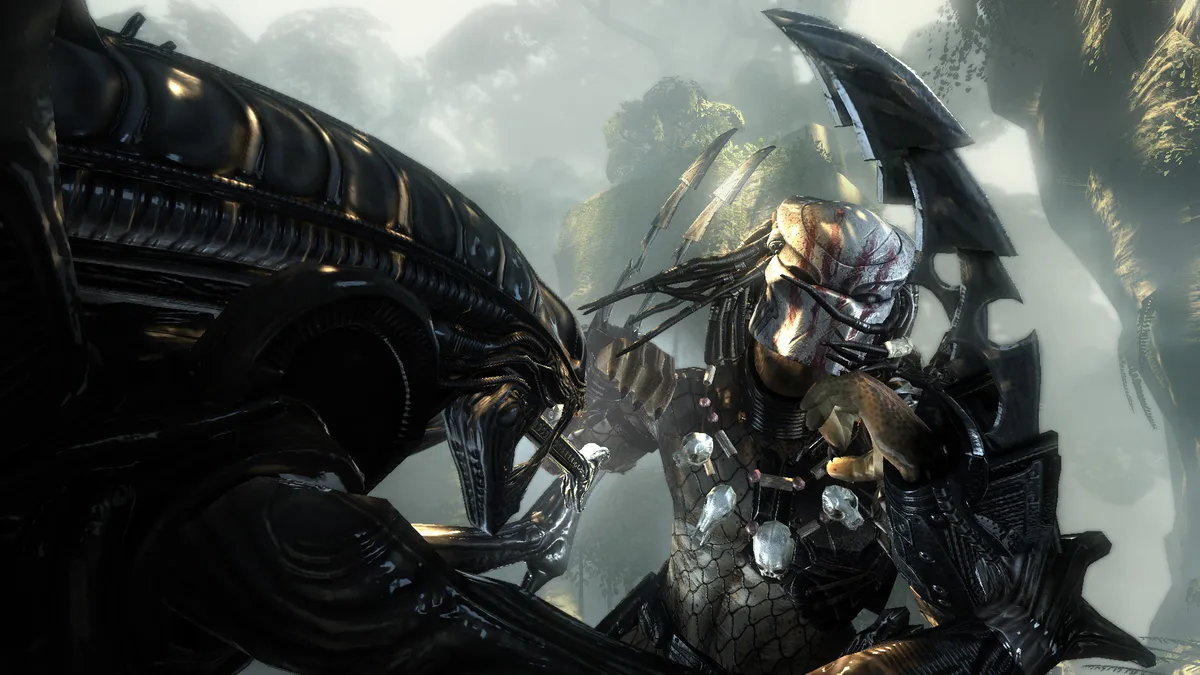
The colony called Freya's Prospect anchors the action, and the terrain surrounding it shapes each encounter: deadly jungles and swamps rather than clean corridors. This is the shared stage for a first-person game built around three roles. The Marine, the Predator, and the Alien each function as a playable faction, and the wording describing the design pairs survival with hunting and predation. Rather than one neutral perspective, the game expects you to alternate between the hunted and the hunter depending on which faction you take up and where in those overgrown, waterlogged environments the fight unfolds.
Structurally, the game ships with three separate single-player campaigns, one for each faction, so the Marine, Predator, and Alien paths are documented as distinct runs rather than a single story you switch between mid-mission. Alongside the campaigns, the three-way multiplayer mode sets the Marine, Predator, and Alien against one another in the same match, which is where the survival-and-hunting framing becomes a contest between all three sides at once. The colony and its jungles and swamps remain the setting for both the solo campaigns and the multiplayer fighting.
The Marine: Light, Guns, and Claustrophobia
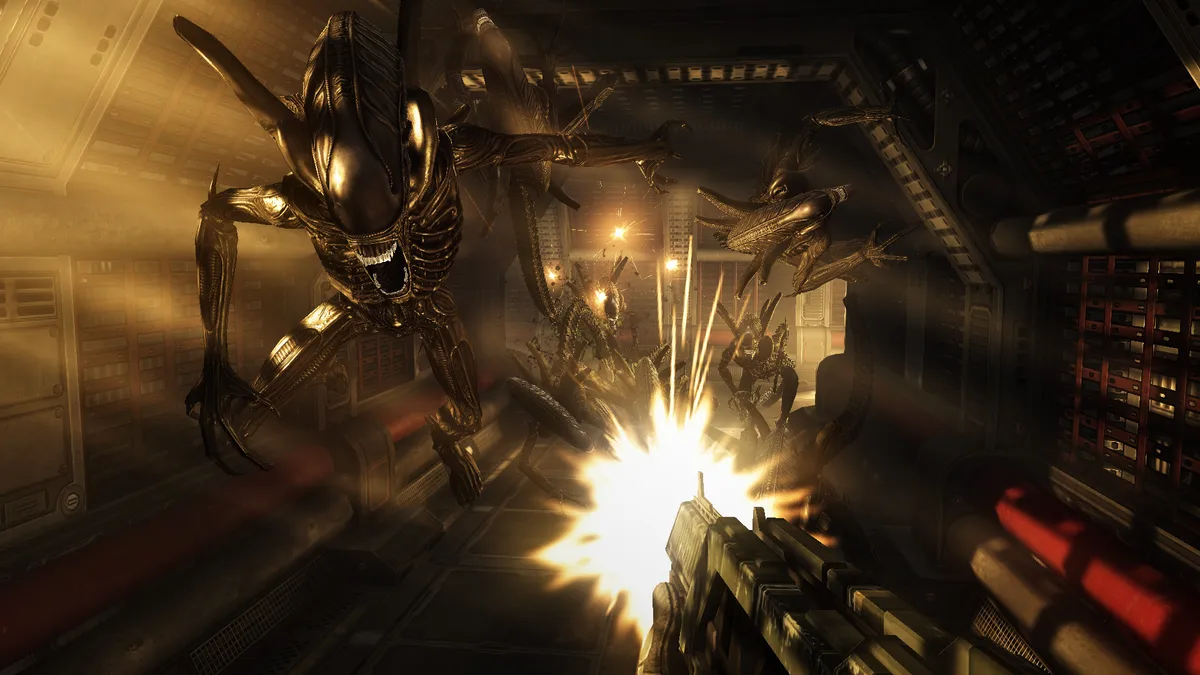
Playing as the Marine in Aliens vs. Predator means entering cramped, light-limited spaces where visibility is scarce and the surroundings press in. The Marine campaign is built around a claustrophobic, terrifying experience in which light works as a survival resource, yet there is never enough of it. These conditions shape how the Marine moves through the colony and its deadly jungles and swamps: limited illumination leaves threats hard to spot and routes difficult to read, so the player spends much of the run navigating under-lit areas rather than open, well-lit ground.
The Marine's answer to those dark, close environments is firepower. As a member of the United States Marine Corps, the last line of defense for humanity, the Marine is armed to the teeth with the very latest high-explosive and automatic weaponry. This loadout of explosives and automatic guns is what the faction leans on while pushing through the claustrophobic, light-starved spaces of the colony, pairing scarce illumination with heavy armament: the player advances through constrained, dim terrain and relies on explosive and rapid-fire weapons to clear what the darkness conceals.
The Predator: Treetops, Tracking, and Close Combat
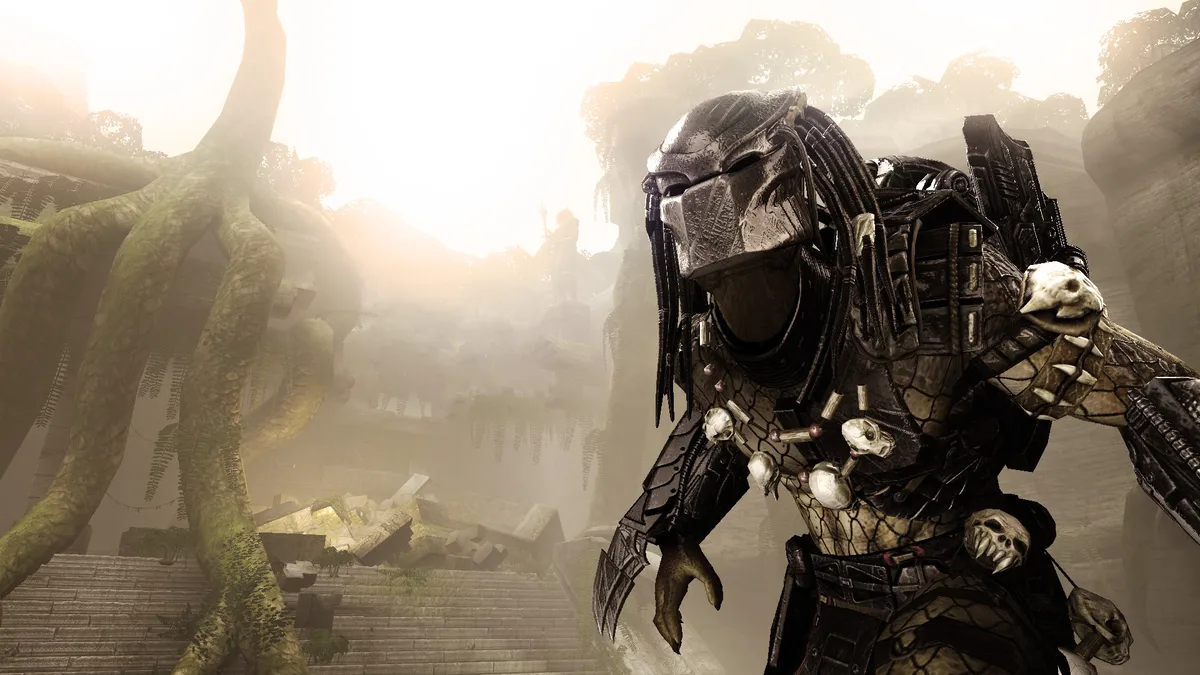
As the Predator, movement begins above the fight. The character stalks from the shadows and from the treetops, passing athletically through the canopy to set up ambushes on victims below. The tracking equipment supports this hunting pattern, helping the Predator locate prey before dropping from an elevated position. Rather than holding ground in the open jungle, the Predator uses vertical terrain to choose when and where an ambush begins, leaving the target with little warning once the approach from above is complete.
The Predator carries an array of powerful, exotic weapons and tracking equipment, yet those tools do not replace direct fighting. Honor dictates that the Predator must get in close and take trophies face to face, so the documented rules push the confrontation into close-quarters combat despite the advanced arsenal. The result is a two-stage pattern: stalk and ambush from the treetops and shadows using tracking gear, then close the distance and finish the hunt at melee range, where the trophy is claimed directly rather than at a distance.
The Alien and the Three-Way Hunt
The Alien is the monster in the dark, built to swarm forward with countless others of its kind. Its jaws snap like a steel trap and its claws work like blades. This swarming behavior shapes the collective movement of the species: multiple Alien units press ahead together in the darkness rather than operating alone, so the strength of the faction comes from numbers advancing as a group. In the three-way hunt, that swarm is one of the three sides contesting the colony and its jungles and swamps. The three-way multiplayer mode pits all sides off against each other in a series of unique online matches, so the fight becomes tooth against claw against pulse rifle. That same mode is where the Alien's collective, multi-unit swarm attacks meet the Marine and the Predator in one contest. Matchmaking, meanwhile, relies on game statistics and skill information that the Steam Cloud stores, setting players against opponents through that stored record.
Swarming and collective movement are the Alien's documented combat behavior: the species moves forward with countless others, attacking in a group rather than as a single entity. Jaws like a steel trap and claws like blades define the creature's close-in armament. Set against the Marine's automatic and explosive weapons and the Predator's tracking-driven ambushes, the Alien's numbers give the three-way fight its third angle, since the dark monster arrives in force. The online three-way modes stage this contest between all sides, and the matching of opponents draws on statistics and skill information held in the Steam Cloud. That pairing means the Alien swarm, the Marine's guns, and the Predator's close-quarters code all converge in the same matches, with the stored skill record feeding who faces whom.
Sources & further reading.
- Aliens vs. Predator™ — official game profile Retrieved Oct 17, 2026
First published .