 THE GAME ARCHIVE
Puzzle Quest: Challenge of the Warlords, released for Windows in 2008 by developer Infinite Interactive and publisher D3Publisher of America, is a casual game that puts a match-three puzzle grid at the center of a role-playing adventure. Instead of clearing tiles for a score alone, every swap serves a fight: the store description frames the game as classic puzzle action backed by an epic story of good versus evil, in which you challenge your match-three skills against computer opponents to save the Kingdom of Etheria from the evil Lord Bane. The distinctive move is that puzzle outcomes become combat effects, money and experience, so the board is the battlefield as much as the menu screen.
Match-3 Battles Against the Computer
Battles in Puzzle Quest are resolved through classic match-three puzzle play against computer-controlled opponents. You swap adjacent tiles on a grid to line up three or more of the same kind, and each successful match triggers an effect tied to that tile type. The store description frames this as challenging your match-three skills to save Etheria, and the contests are explicitly head-to-head battles rather than solo puzzles. That framing matters for how you read the board: every line you make is a move in a shared contest, and the opponent is working the same kind of grid toward its own ends.
Two tile types carry concrete combat rules. Matching skull tiles inflicts damage on other players, making them the direct offensive action in a battle. Experience tiles grant additional experience instantly when matched, functioning as a separate reward channel alongside damage. Because both effects come from the same match-three grid, your tile choices determine whether a turn deals harm or builds your character. The documented objective remains to save Etheria from Lord Bane, and these tile interactions are the mechanics through which battles against computer opponents unfold.
Crystals, Spells and Disruption
Crystals on the grid are not a single interchangeable resource. Making matches of different crystal types builds your inventory of spells, so the color you clear determines which magical options accumulate for your character. That makes each swap a decision about which spells you are working toward, not merely a way to remove tiles. The crystal matches and the resulting spell inventory are documented as linked mechanics: the store description treats crystal matches as the input that populates the spell list.
Once spells are in the inventory, the documented battle rule is to outscore opponents and then unleash spells. The stated effect of unleashing them is disruption: spells interfere with an opponent's matching chances and lower their totals. So the described loop runs from crystal matches to spell inventory to a disruptive cast that hampers the rival's board work, alongside the goal of outscoring them. This is the described way spell play interacts with the head-to-head contest against computer opponents, and it gives the board a second strategic layer: every crystal you clear is partly a deposit toward a future disruption.
A Campaign of More Than 150 Quests
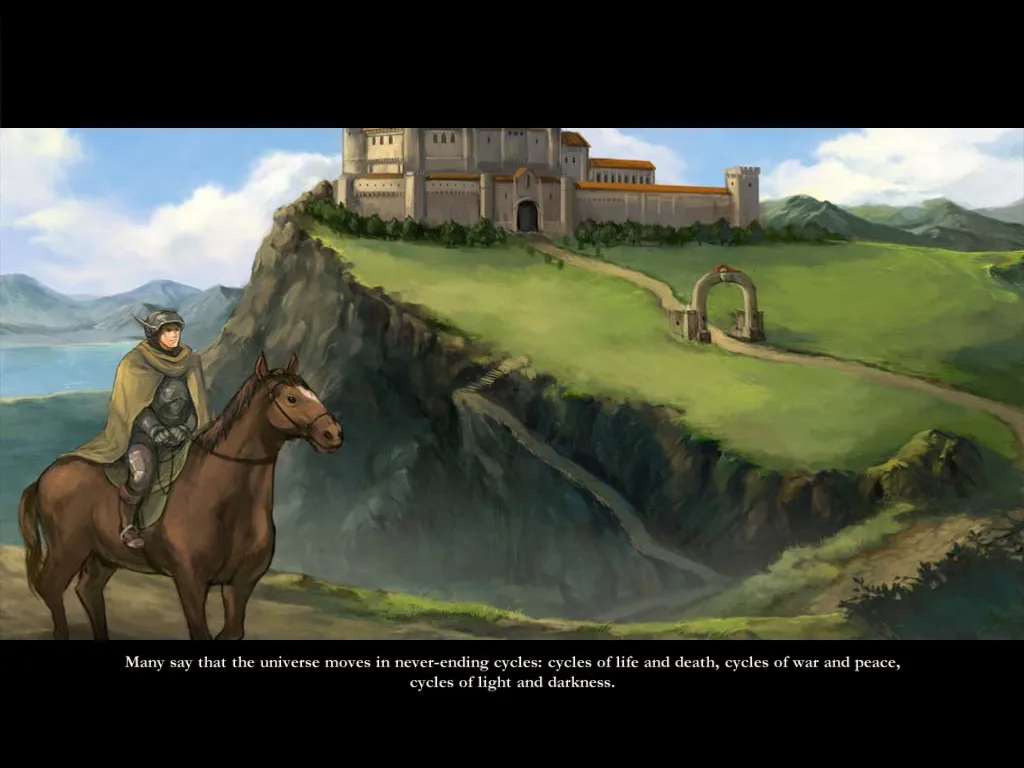
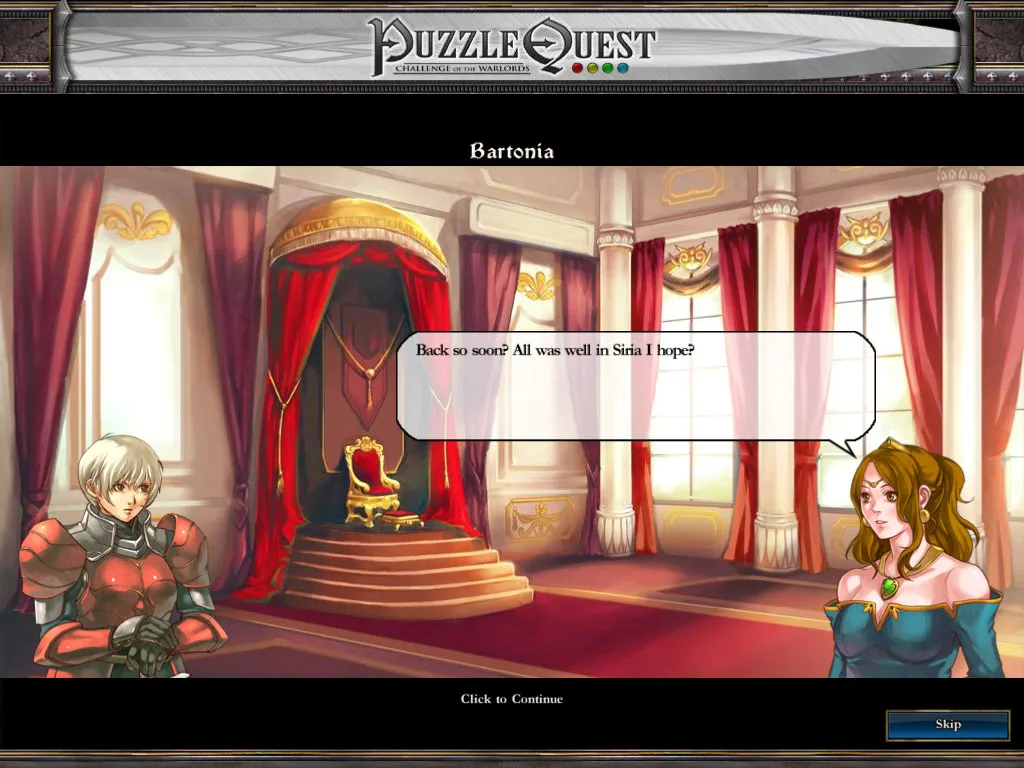
The Windows version of Puzzle Quest: Challenge of the Warlords structures its main progression around a single-player campaign comprising more than 150 challenging quests. Exploring the expansive kingdom of Etheria is the frame for that sequence, so the quest list is the campaign's spine rather than a side activity. Building your heroic character by winning head-to-head battles is the documented route forward through those quests. Quick-play mode sits apart from the campaign as a separate way to play classic match-three without the quest structure: it is where the description places you in a direct outmatch-the-opponent contest rather than a storyline.
Gold, Gear and an Empire to Build
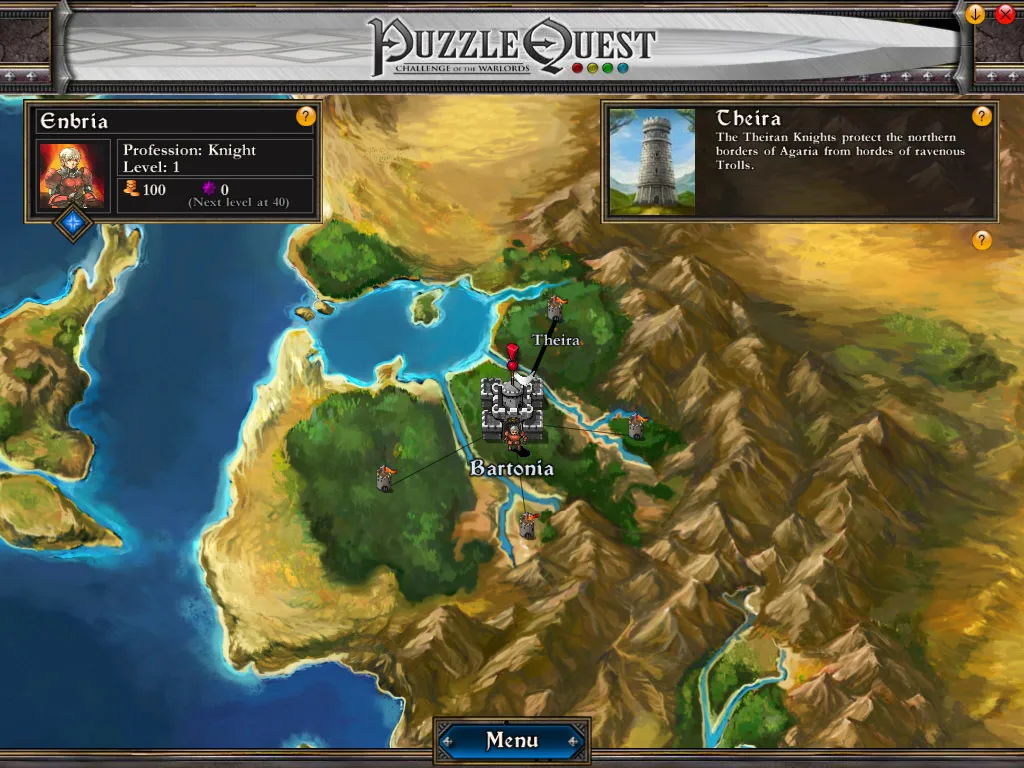
Alongside the quest sequence runs a layer of empire growth. You build your empire as you capture cities, build castles and gain a party of companions that will aid you in battle. These actions expand your holdings and bring helpers into fights, so the map grows into a network of captured cities and constructed castles while companions join your cause. In practice this gives the campaign a second progression track running parallel to character development from battle wins: the board decides individual fights, and the empire layer decides what resources and allies you carry into the next one.
Gold feeds equipment. Earning money with each gold title lets you buy helms, weapons, armor and more, so the income channel converts board play into purchases. During battles, experience tiles additionally grant experience instantly, adding a second reward channel on the grid itself. The campaign cycle therefore links quest progress to income, equipment purchases and battle experience, with the party of companions from your empire aiding you in battle. The practical takeaway from these documented rules is that gold matching is a long-term investment while experience matching is an immediate character payoff, giving you a reason to read the board differently depending on whether you are shopping for gear or trying to grow.
How to Read the Board
The documented rules imply a few priorities worth carrying into any battle. Skull matches inflict damage, and crystal matches of different types build your spell inventory, so the choice between attacking now and banking magic is the core tension on the grid. Unleashing stocked spells to disrupt an opponent's matching chances and lower their totals is the described payoff for having built that inventory, which argues for treating crystal matches as setup rather than filler. Experience tiles grant experience instantly, making them a quick character-building option, while gold titles feed the money you spend on helms, weapons and armor. Because the same swaps serve damage, spells, experience and money, the board is always asking which of those four outcomes you currently need most.
- Quick reference: Title — PuzzleQuest: Challenge of the Warlords; Release year — 2008; Platforms — Windows; Developer — Infinite Interactive; Publisher — D3Publisher of America, Inc.; Genre — Casual; Campaign — single-player, more than 150 quests; Alternate mode — Quick-play.
Sources & further reading.
- PuzzleQuest: Challenge of the Warlords — official game profile Retrieved Oct 17, 2026
First published .