 THE GAME ARCHIVE
Recycling Wreckage Into Weapons: The Core Loop
In A.R.E.S.: Extinction Agenda, the recycling system turns defeated enemies into a resource pipeline. Destroying enemies yields recyclable parts, which are gathered during combat aboard the Zytron-infected space station. These parts are not junk; they are the raw material for the game's core loop. The recycle menu is where the conversion happens, allowing you to transform collected wreckage into finished items such as repair kits, ammo, and weapon upgrades. Because the menu is central to progression, every enemy encounter doubles as a supply run, and the parts you salvage directly determine what you can fabricate before the next fight.
The recycle menu's output spans consumables and permanent combat improvements. Repair kits restore damage, ammo keeps weapons firing, and weapon upgrades improve your arsenal using the same recycled materials. This links survival and offense to the salvage you collect: spending parts on health or ammunition trades away material that could otherwise become an upgrade, while investing in upgrades may leave fewer resources for immediate recovery. The manual frames the recycle menu as playing a very important role, and the design makes that clear by routing repair kits, ammo, and weapon upgrades through the same conversion step, so each decision at the menu shapes what A.R.E.S. carries into the station's next stretch.
Aiming, Healing, and Calling Down the Cannon
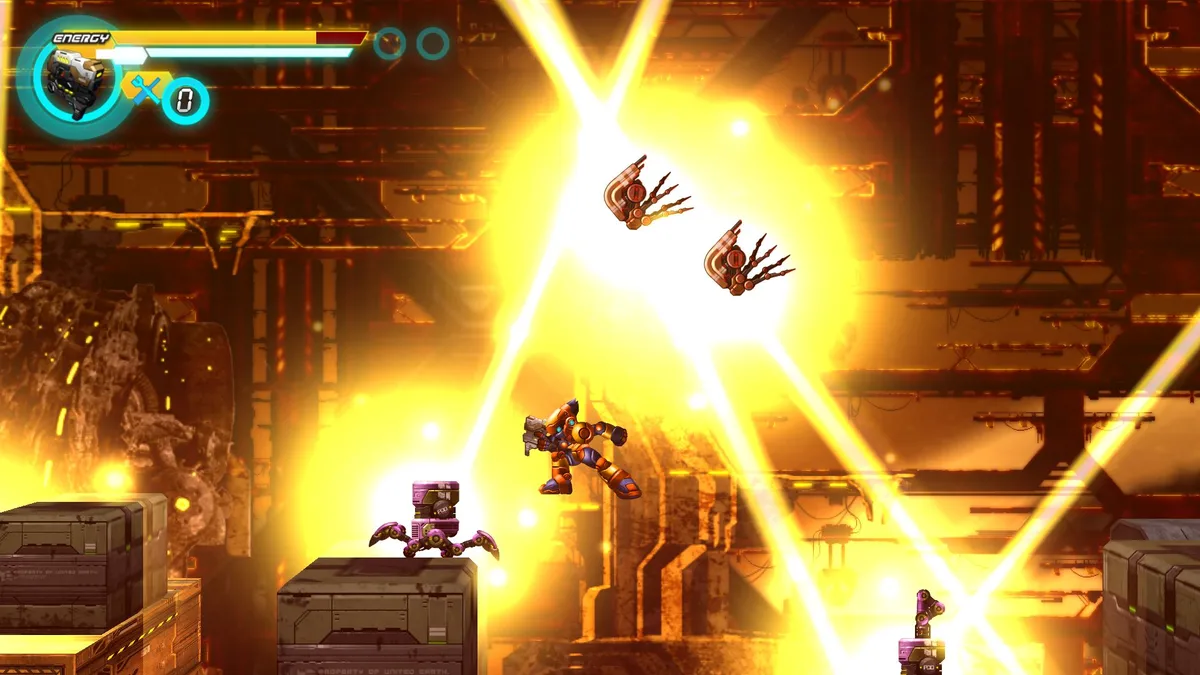
The upper-left corner of the screen clusters the information A.R.E.S. needs mid-firefight. The energy bar tracks how much life the robot has left, while the repair kit count shows how many kits are on hand; using one replenishes that energy bar, so healing is tied to a consumable count rather than a regenerate-over-time system. A weapon readout shows the currently equipped gun, and the grenade section shows the selected grenade type alongside how many of each type remain, so switching between explosive options is visible at a glance rather than hidden behind a menu.
Aiming is anchored by a visible reticle that indicates where shots will land, and the manual treats aligning shots with it as a core control. A separate Valkyl bar tracks how charged Valkyl's cannon is; once that bar fills, A.R.E.S. can call on Valkyl to fire her cannon, which deals significant damage to every enemy on screen. The two systems sit on different meters: the reticle governs moment-to-moment shot placement, while the Valkyl bar gates a screen-wide attack that only becomes available at full charge.
Two Difficulties, From Normal to the SS Rank
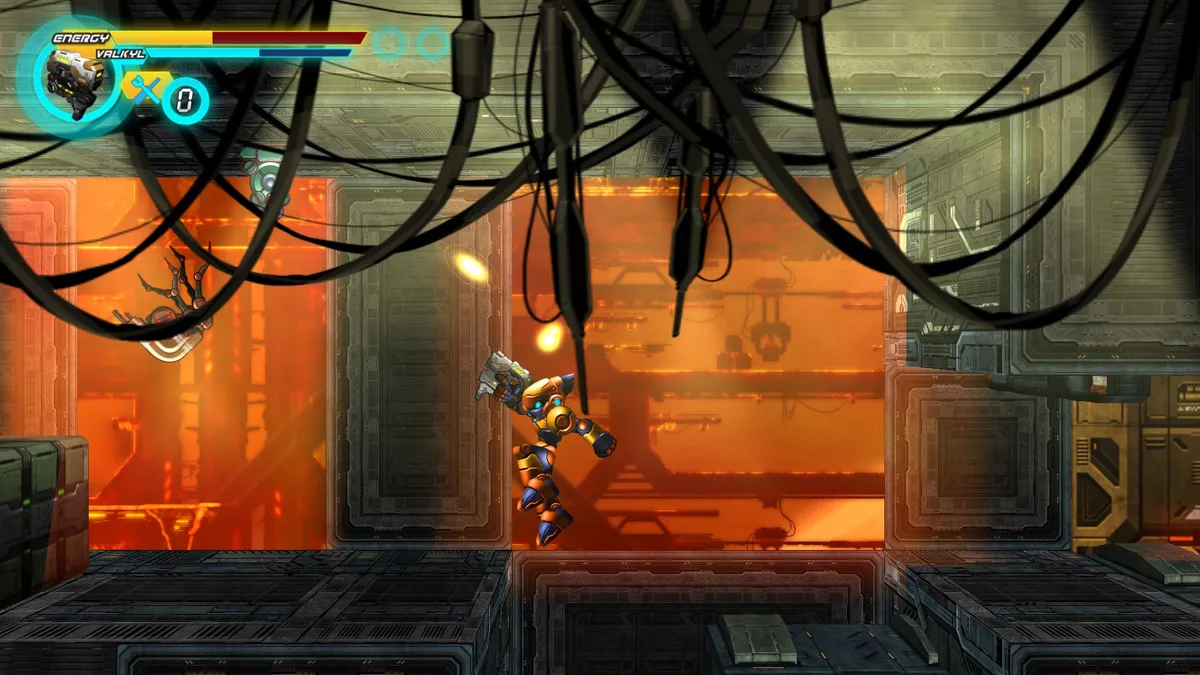
The difficulty selection sets which stage ranks are reachable. On Normal, bosses present reduced difficulty, but boss fights award no score, and the top rank a stage can grant is A. Hard makes bosses significantly harder while adding score from boss encounters, and there the highest possible stage rank rises to SS. The rank ceiling is therefore tied to the chosen difficulty rather than to performance alone, so the same stage can top out at different grades depending on which setting is active.
Hard also governs secret access: playing on that setting is how all of the secrets become unlockable. The setting is not fixed at the start. The options menu inside the pause menu lets you change difficulty at any time during play, so a stage that feels too easy or frustrating can be adjusted without abandoning the run. Selecting a difficulty triggers the intro cutscene and begins the first level, which introduces the core mechanics and controls.
Boss Fights, Stage Select, and the Database Menu
The recycle menu also serves as a navigation hub: in its upper-right corner, you can open the stage select menu to change levels or the database menu to view character biographies. This placement ties level replay and lore browsing to the same interface used for crafting, so between missions you can jump to another stage or read up on the cast without leaving the recycling screen. The stage select option lets you revisit or move between levels, while the database option collects bios of the characters encountered during the rescue mission aboard the Zytron-infected space station.
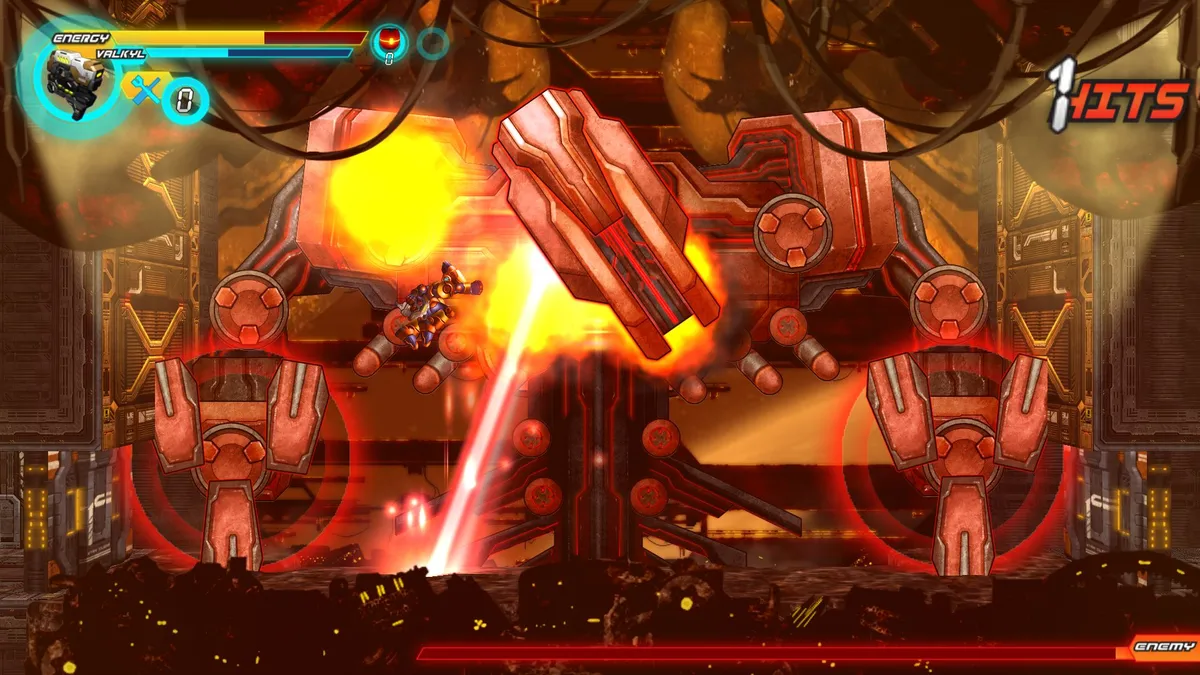
Boss encounters follow a distinct combat pattern: colossal opponents appear with attack routines you must learn in order to defeat them. During these battles, a boss energy bar appears at the bottom of the screen, showing how much life the boss has left; the manual advises keeping up fire as long as any energy remains in the bar. That bar sits apart from A.R.E.S.'s own upper-left energy display, so the screen tracks both combatants' remaining life separately while you watch for the boss's pattern and respond to it.
Sources & further reading.
- A.R.E.S.: Extinction Agenda — official game profile Retrieved Oct 21, 2026
- A.R.E.S.: Extinction Agenda — official game profile — publisher-supplied gameplay manual Retrieved Oct 21, 2026
First published .