 THE GAME ARCHIVE
Connecting Falling Atoms: The Core Puzzle Action
AVSEQ presents itself as an audio-visual sequencer puzzle game, and its central act is connecting falling atoms. The atoms descend, and the player's task is to link them together. Doing so does not simply clear the screen; it unlocks near-endless varieties of music at each stage. The falling atoms therefore serve as the input for the music that follows, turning each connection into a step toward new audio arrangements rather than a disposable matching action.
The objective tied to that action is unlocking those near-endless varieties of music at every stage. Each level is structured as a music sequencer, so the atoms the player connects feed into a system of possible audio permutations. The documented figure for a level is 22 tredecillion possible audio permutations, which the developers state they calculated rather than invented. Connecting atoms and unlocking music are thus two halves of the same puzzle: the connections drive the sequencer, and the sequencer supplies the variety.
Every Level Is a Music Sequencer
In AVSEQ, the falling atoms and the music are tied together through the level itself: each stage is built as a music sequencer, so the atoms the player links feed directly into a system of possible audio arrangements. The stated total is 2.2300745198530623×10^43 possible audio permutations, or 22 tredecillion, a figure the developers say they calculated rather than fabricated. Linking atoms is therefore the input, and the sequencer provides the range of musical outcomes that the player uncovers as those connections are made.
The puzzle action and the audio result are documented as two parts of one system rather than separate features. The game is described as an audio-visual sequencer puzzle game, and connecting falling atoms is the action that unlocks near-endless varieties of music at each stage. Because every level carries its own sequencer with the 22 tredecillion permutation total, the connections made during play determine which arrangements emerge from that stage's set. The broader catalog record lists a Steam product date, which is not evidence of the original game release.
Generative Music Unlocked Through Play
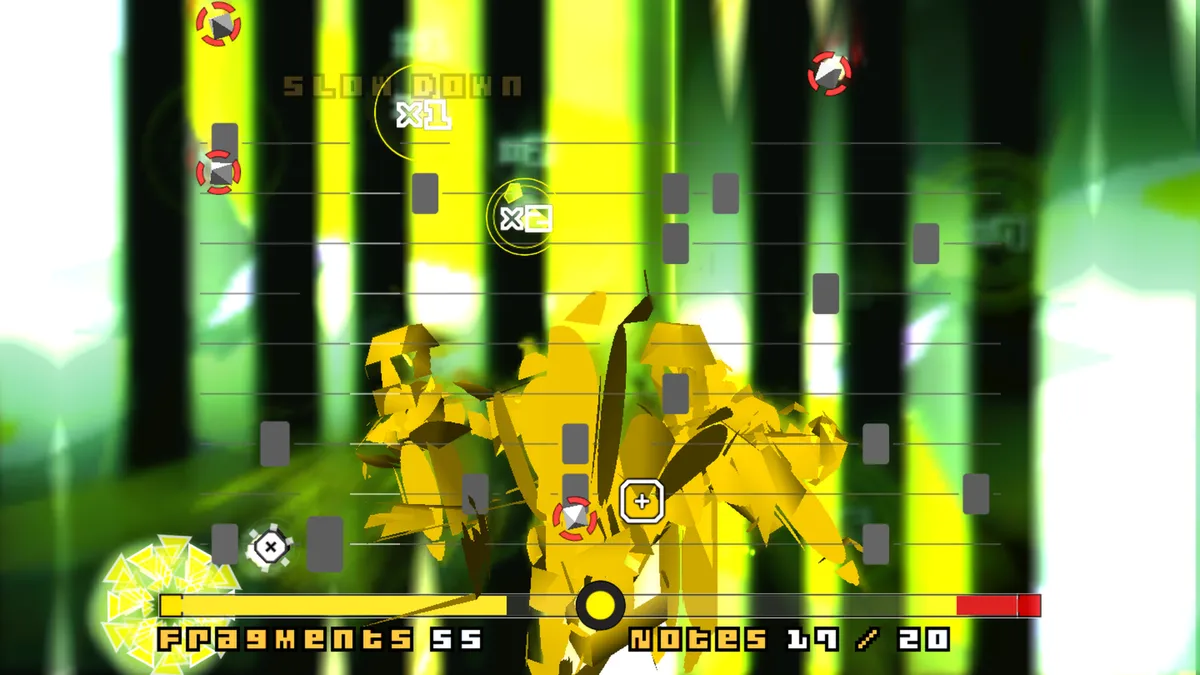
AVSEQ frames its play around a clear loop: atoms fall, the player connects them, and each connection feeds the music of that stage. Because every level functions as a music sequencer, the audio output is not a fixed track but a set of arrangements drawn from that stage's system. The stated total is 22 tredecillion possible audio permutations, a figure the developers say they calculated rather than invented. The connections made during play therefore act as inputs to the sequencer, and the music unfolds from those inputs.
The objective attached to the puzzle action is unlocking near-endless varieties of music at each stage, so the connecting of atoms and the surfacing of new audio arrangements are treated as one system rather than two separate features. Each level's sequencer carries the 22 tredecillion permutation total, and the player's links determine which arrangements emerge from that stage's set. The game is also described as created by a designer working in procedural systems, with an infinite freeplay mode listed among its features. The catalog lists a Steam product date, which is not evidence of the original release.
Infinite Freeplay Mode
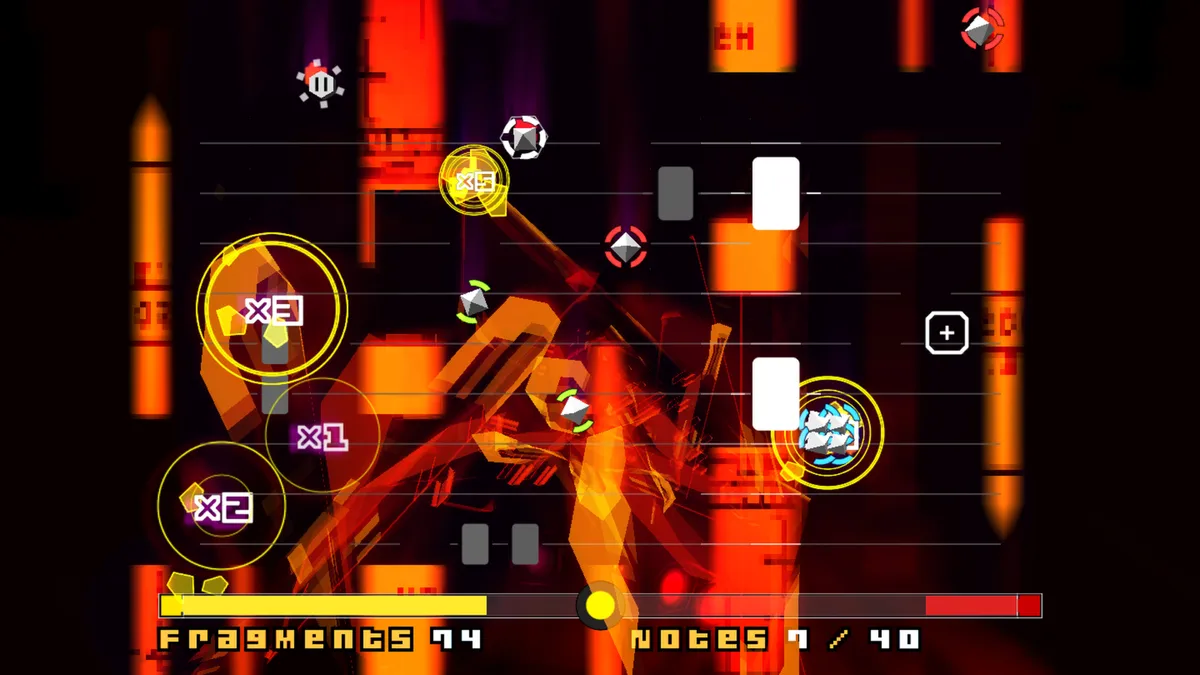
Infinite freeplay mode appears among the listed features of AVSEQ, a game presented as an audio-visual sequencer puzzle game. In that framework, the player connects falling atoms to unlock near-endless varieties of music at each stage. Each level functions as a music sequencer holding 22 tredecillion possible audio permutations, a total the developers say they calculated rather than invented. The freeplay feature therefore sits alongside the same connecting action that drives each stage's set of audio arrangements.
The generative music design is credited to a designer working in procedural systems, and that procedural foundation is what the freeplay mode draws on. Connections between descending atoms feed a stage's sequencer, which determines which arrangements emerge from the permutation total. The catalog record lists a Steam product date, but that is a store record rather than evidence of the original release year. In freeplay, the same rules apply: atoms descend, the player links them, and the sequencer converts those links into generative audio permutations for that stage.
Procedural Design Behind the Sequencer
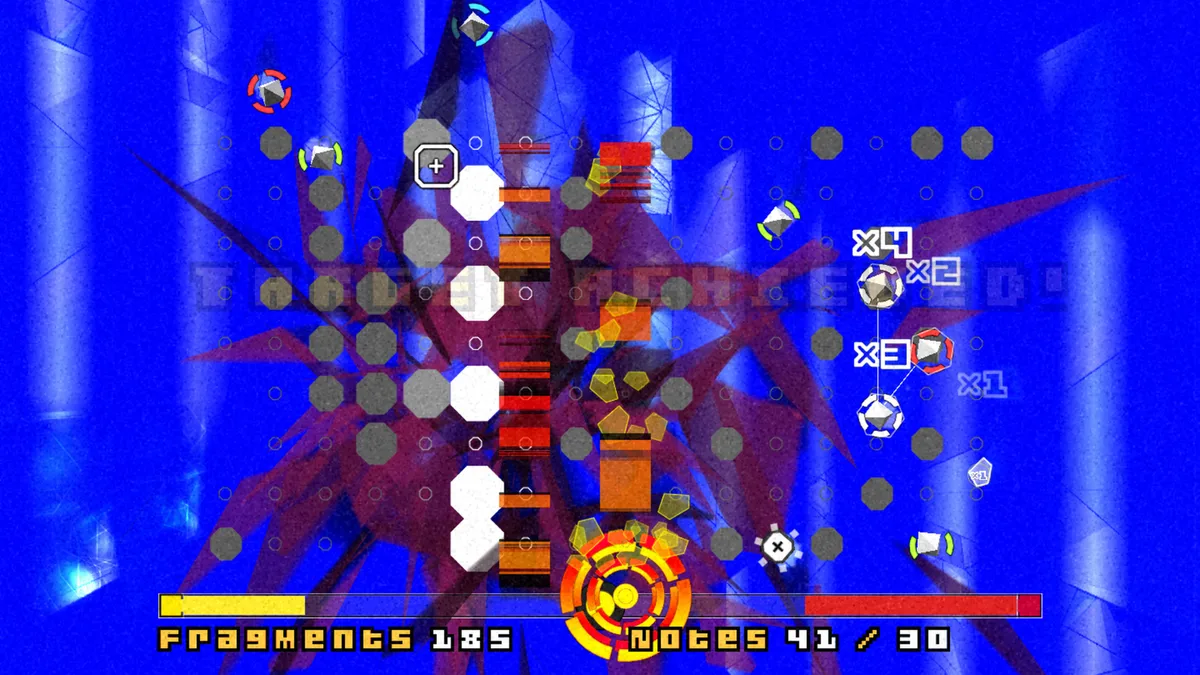
The procedural side of AVSEQ is credited to Tom Betts, identified as a designer working in procedural systems. That background connects directly to the documented structure: every level of the game is a music sequencer rather than a fixed track, and the stated total is 22 tredecillion possible audio permutations. The developers say they calculated this figure rather than inventing it. Because the permutations belong to each stage's sequencer, the arrangements that emerge are drawn from that stage's own set, giving the connecting action a defined musical output.
The documented rules interact in a single loop: atoms fall, the player links them, and those links feed the stage's sequencer, whose permutation total determines the range of possible arrangements. Near-endless varieties of music are unlocked at each stage through this connecting action, and generative unlockable music is listed among the key features alongside an infinite freeplay mode. The catalog record lists a Steam product date, which is a store record and not evidence of the original release year, so the procedural design should be read through the game's own description of its sequencer levels.
Sources & further reading.
- AVSEQ — official game profileRetrieved Oct 26, 2026
First published .