 THE GAME ARCHIVE
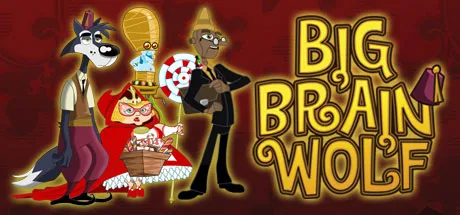
An Asthmatic Vegetarian Wolf With a Genie Exam to Pass
Big Brain Wolf hands the player the role of an asthmatic vegetarian wolf who is studying to become a genie. That premise is not a framing gag bolted onto a generic quiz: the official store description calls the game a point-and-click adventure made for puzzle lovers, and solving puzzles is the documented action the wolf performs as he travels. In the course of his adventures he meets a large cast of famous, funny characters, and those encounters form the narrative context around the sixty different puzzles he must solve.
What distinguishes the design is how it splits its thinking work into two connected layers. One layer is the campaign itself: sixty challenging puzzles and enigmas spread over twenty puzzle-filled scenes within a five-chapter story. The other is a set of six brain training exercises, designed by neuroscientists, that are highly replayable and earn the player precious hints for the more difficult puzzles. The exercises therefore are not decorative. They are the documented route by which the player earns assistance for the obstacles the adventure throws at them.
The catalogue record lists the game under Adventure, Casual, and Strategy, which fits the hybrid described on the store page: an adventure the player moves through by solving problems, with a separate exercise system feeding back into those problems. It was released as a 2009 title on Windows, developed by Frima and published by Frima and Éditions RSG.
The Core Loop: Scenes, Puzzles, and Hints
The loop the source describes has three moving parts. First, the wolf arrives in one of the twenty puzzle-filled scenes. Second, the player solves the puzzle or puzzles waiting there. Third, that solving is the documented action that moves the wolf onward. Because the scenes sit within a five-chapter story, the puzzle work is partitioned into story segments: each chapter gathers scenes, and each scene gathers puzzles, so the campaign reads as a sequence of distinct problem sets rather than one undifferentiated pile of challenges.
The hint economy is what turns this from a straight line into a decision. The brain training exercises earn hints; the hints exist to help with the more difficult puzzles. That gives the player a genuine choice at a wall: keep pushing on the hard enigma with what they know, or break off into the training exercises to build up help, then return. The exercises are also described as highly replayable, which matters to that choice: a player who has already completed them once is not locked out of earning more assistance.
The puzzles themselves are specified as challenges and enigmas, and the sixty count is framed as sixty different puzzles rather than the same puzzle repeated. Nothing in the source prescribes a single solution method across all of them, so the safest reading is that the puzzle types vary within the adventure frame. The point-and-click structure means the wolf is the player's avatar in those scenes and the interplay with the famous characters is the wrapper around the problem-solving.
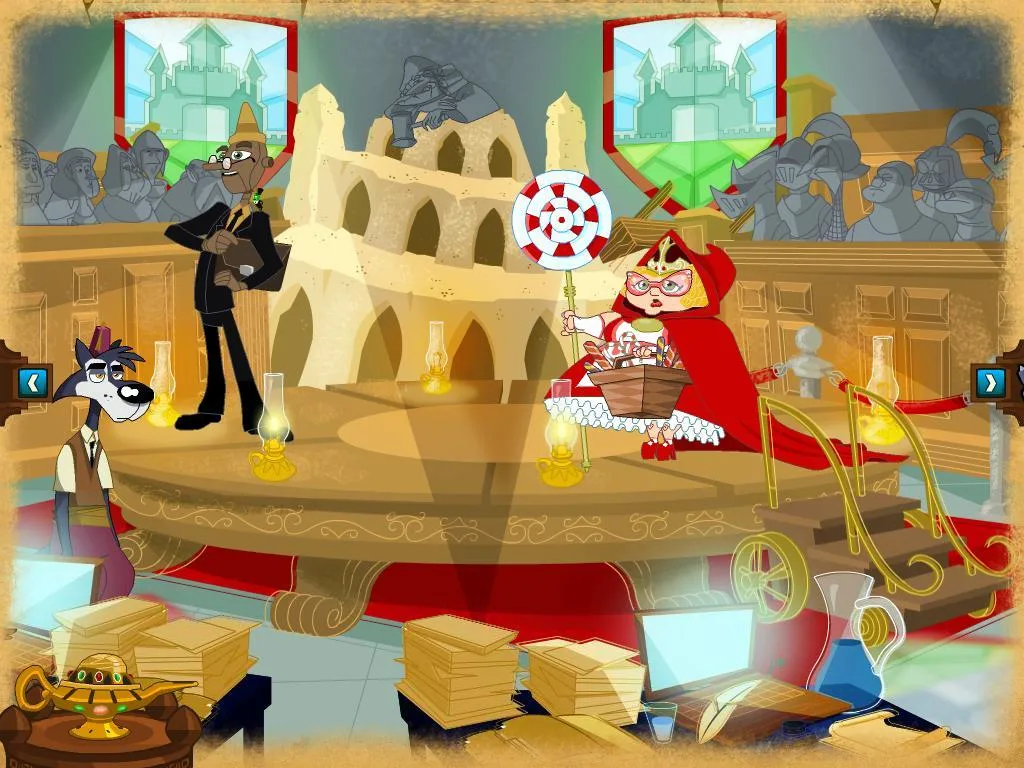
Sixty Puzzles Across Twenty Scenes and Five Chapters
The campaign's advertised shape is 60 different challenging puzzles and enigmas, arranged across 20 puzzle-filled scenes that span a 5-chapter captivating story. Read together, those numbers set the rhythm of a playthrough. A player who wants to finish the story works through five chapter blocks; within them, twenty scenes each wait on puzzle solutions; across the whole run, sixty distinct challenges stand between the wolf and his genie ambitions. The counts also mean the game front-loads variety rather than length in any one scene, at least as the marketing describes it.
This structure also gives the hint economy its strategic texture. Because puzzles are distributed across scenes and chapters, a player who hits a hard enigma in one scene can step back into the repeatable exercises and come forward again with help in hand. The source does not state which puzzles are hardest or how hints are consumed. What it does establish is the reason they exist: they are the reward for the training activities and the tool for the more difficult puzzles in the campaign.
The chapter framing also keeps the premise present. The wolf is studying to become a genie, and the story's famous characters populate the adventure as he works through the challenges. The catalogue's Adventure label matches this arrangement of scenes, characters, and problems, while the Casual and Strategy labels sit comfortably with a game whose whole proposition is solving puzzles with an assist system attached.
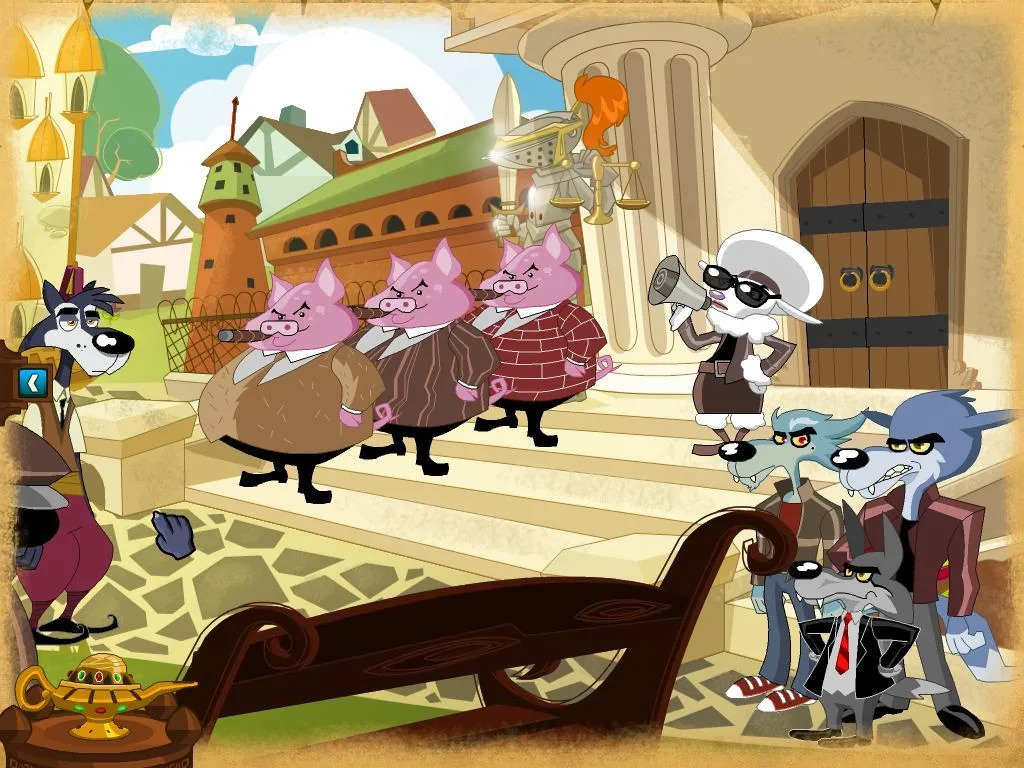
Brain Training as a Hint Engine
The training suite is a fixed set of six exercises, and the store description gives them real provenance: they were designed and approved by the neuroscientists of Brain Center International. They are also explicitly framed as replayable, which is the property that makes them function as an economy rather than a one-time tutorial. A player who runs dry on hints can go back to the exercises they already know and earn more support for the tougher puzzles ahead.
This second layer is why the game can fairly be described as a brain training product and a puzzle adventure at once. The adventure supplies the sixty different puzzles and enigmas; the training exercises supply the assistance. For the player, that means the game rewards curiosity about the exercises and not just patience with the campaign. Someone who engages with the brain training side is, by the documented rules, better equipped for the difficult stretches of the wolf's journey.
The exercises also give the game its replay rationale after the story ends. Since they are highly replayable and the source does not tie them to a single pass, a finished player still has something to return to. Beyond that, the source only promises precious hints for the more difficult puzzles; it does not specify how many hints each exercise yields or what a hint looks like in play.
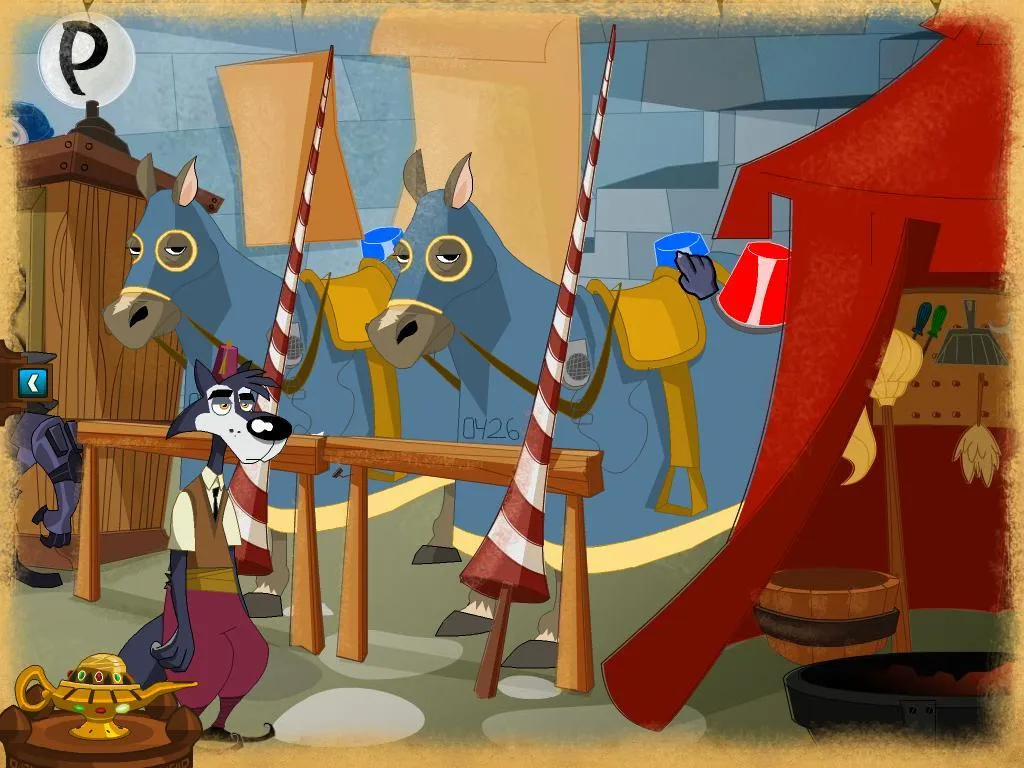
Achievements, Soundtrack, and What the Source Leaves Open
Around the campaign and the exercises, the store description lists 10 Original STEAM achievements and a great original soundtrack by a jazz quartet. Those items round out the package but do not change the play loop: the achievements are listed as a separate set, and the source does not spell out the names or unlock conditions of the ten goals, nor connect any of them to specific scenes, puzzles, or exercises.
What the source establishes about play is therefore specific but bounded. The wolf is the single-player point-and-click avatar; sixty different puzzles and enigmas are the work; twenty scenes inside five chapters are the structure; six replayable, neuroscientist-designed exercises are the hint source. The source does not describe individual puzzle mechanics, interface controls, difficulty settings, or a full walkthrough of any chapter. Those gaps matter for a player planning a run, and they are recorded as unresolved rather than filled in with guesswork.
In terms of official access, the game is documented as a 2009 Windows title from developer Frima with Frima and Éditions RSG as publishers, and its Steam product page is the cited official source for this profile. The catalogue lists only Windows among the platforms it records, and nothing in the supplied material describes remakes, ports, or a broader current package.
Scroll sideways to see the full table →
| Item | Detail |
|---|---|
| Title | Big Brain Wolf |
| Developer | Frima |
| Publishers | Frima, Éditions RSG |
| Catalogued release year | 2009 |
| Catalogued platforms | Windows |
| Listed genres | Adventure, Casual, Strategy |
| Campaign puzzles | 60 different challenging puzzles and enigmas |
| Structure | 20 puzzle-filled scenes spanning a 5-chapter story |
| Brain training | 6 replayable exercises designed and approved by Brain Center International neuroscientists |
| Earned resource | Precious hints for the more difficult puzzles |
| Achievements | 10 Original Steam achievements |
| Soundtrack | Original soundtrack by a jazz quartet |
Sources & further reading.
- Big Brain Wolf — official game profile Retrieved Oct 21, 2026
First published .