 THE GAME ARCHIVE
Silverfall: Earth Awakening is a 2008 Windows action RPG from Monte Cristo, published by Focus Entertainment, that asks the player to explore the new territories of Nelwë in a heroic-fantasy world where nature and technology collide. The publisher's store description frames the campaign around important choices that lead the hero to side with one force or the other, and the publisher-supplied manual shows how that choice sits inside a broader action-RPG loop: click-to-act combat, a Power resource that gates the heavier actions, four skill and four attribute points per level, and a skill tree whose lower tiers keep feeding the higher ones. Multiplayer extends the game to up to eight players.
This feature explains the gameplay documented in the cited publisher material rather than offering a hands-on impressions piece; it has not been hands-on tested. That matters because the manual is the authority for the control scheme, gauge behaviour and progression rules described below.
Click-to-Act Basics and Mouse-Driven Movement
Silverfall: Earth Awakening builds its baseline interaction around the left mouse button, which covers nearly every routine action. Clicking open ground moves the character to that spot; clicking a monster attacks it with the currently selected basic action; clicking a loose object picks it up. The same button opens or breaks safes, boxes and doors, and starts conversations with characters. Holding the left button keeps the current action running, so the player can sustain movement, a basic attack or a spell without repeated clicking. Every complex action, by contrast, sits on the right mouse button. Those actions are more destructive than basic ones, and each use is limited by the amount of Power the character has, so heavier attacks and spells spend a resource that simpler actions do not. At the very start of the game no complex actions are available at all; they become usable only once points have been added to active skills.
Keyboard play is supported alongside the mouse. The A and D keys turn the character right and left, W and S move forward and backward, and Q and E sidestep several paces. Camera control is split between mouse and keyboard as well: holding the mouse wheel down and turning it moves the camera in the chosen direction, and turning the wheel zooms in or out. On the keyboard, Home and End toggle the camera views around the character, Delete and Page Down turn the camera around the character, and Insert and Page Up zoom the camera in and out.
Shortcuts organise the two action layers. Simple actions occupy slots 1 to 3 and complex actions slots 4 to 8. To switch from one simple action to another — say, from firing a bow to using a sword when the enemy is at close range — the player clicks the shortcut icon for the new simple action or presses the keyboard key shown beneath it, then clicks the enemy again; the character automatically equips the weapon matching the requested action and performs the new attack.
Power, Life and the Cost of Complex Actions
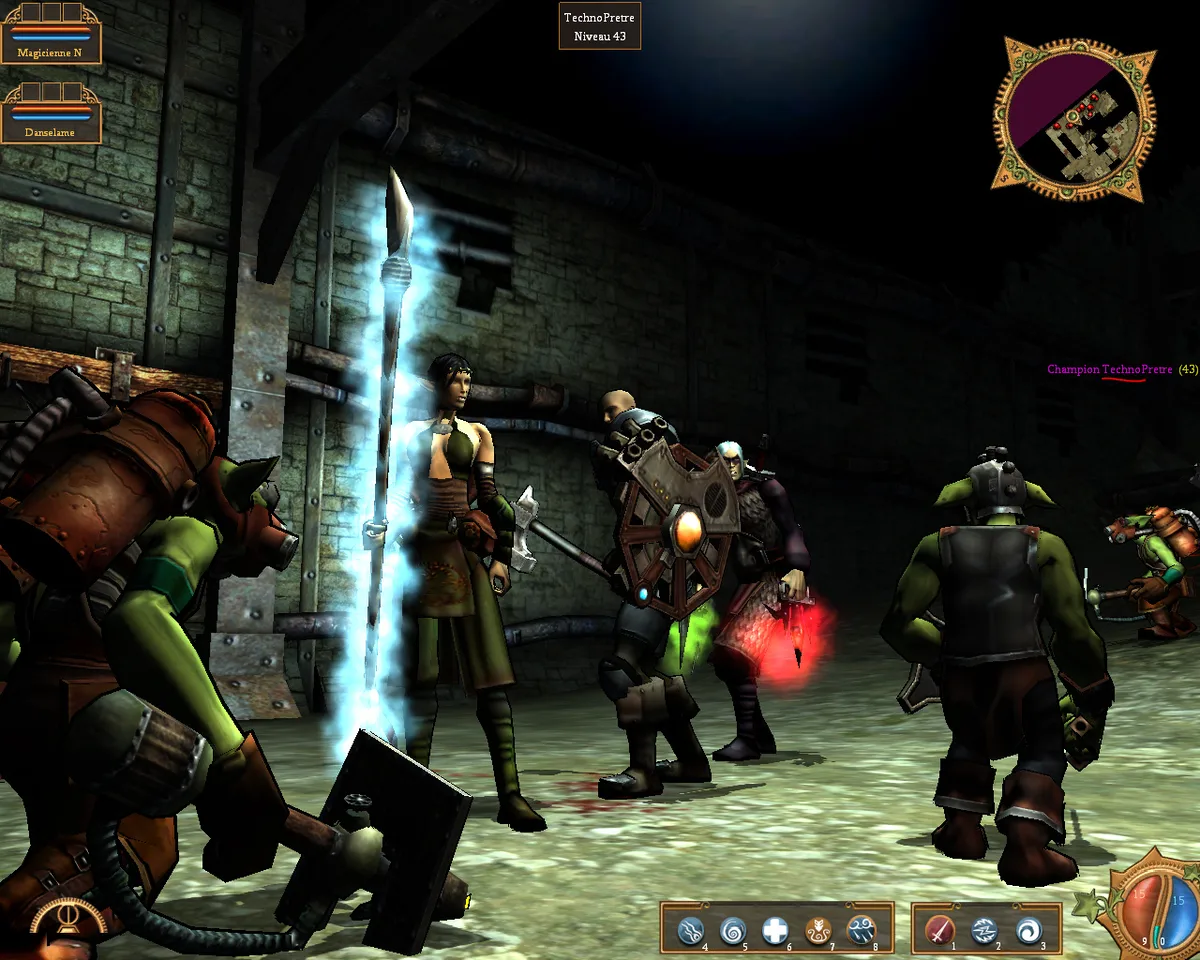
Because complex actions are more destructive than basic ones, the Power pool becomes the limiter on how often a player can lean on the heavier options. A demanding attack or spell can be carried out only while enough Power remains, while the simpler basic actions stay outside that cost. This makes the resource a pacing device rather than a second health bar: the player works through combat with stronger tools, spends Power to do so, and keeps the cheaper left-click options as the dependable fallback.
The Power gauge regenerates automatically as long as the character avoids actions that consume Power, and drinking a Power potion is the manual way to refill it faster. Clicking the Power gauge or using the 0 shortcut makes the character drink a Power potion immediately. The number above the gauge counts the Power potions left in the bag, and the small white figure beneath it shows the keyboard shortcut for the quick drink. The Life gauge follows a parallel pattern: harm lowers it, health potions or spells restore it, and doing nothing lets it rise gradually. The top number shows healing potions held, and the lower figure marks their quick-drink shortcut. Power points and regeneration also evolve during play according to the Intelligence score and certain skills.
Levels, Skill Trees and Buying Points Back
Each fight or successfully completed quest grants experience points, and accumulating them raises the character's level. Every new level awards four skill points and four attribute points to allocate as the player likes. The skills panel shows plus signs beside skills that can currently be raised, along with the number of points still to distribute; skills without a plus sign have unmet prerequisites. Moving the mouse over a skill icon opens a floating window explaining which skill to choose or what must be done to unlock an inaccessible one, and clicking the plus beside a chosen icon invests a point.
Skill levels run to a maximum of ten, and higher levels make a skill more efficient, so a level-ten attack spell causes far more damage than a level-one version. Before a skill can climb toward its maximum, its prerequisites must be met; these may call for a higher level in another, lesser skill or for a certain character or loyalty level, and a skill whose prerequisite is missing appears red in the information window. Two systems keep old investments relevant. Synergy bonuses mean that even skills acquired at first level give bonuses to the last skills of the same family, so each invested point remains useful at any character level. Sages found in every town of Nelwë then allow skill and attribute points to be bought back for gold, with the price depending on how many points are returned, so a player can revise a profile or correct a mistake.
The practical consequence is that a character build is less a single irreversible choice than a budget. Because every level supplies both skill and attribute points, and because the sage network offers a priced route back out of a bad allocation, the interesting decision is rarely whether to spend points but where the next four go — into a weapon mastery that compounds with a family of techniques, or into prerequisites that unlock something further up the tree.
Nature or Science: Alignment, Races and Character Creation
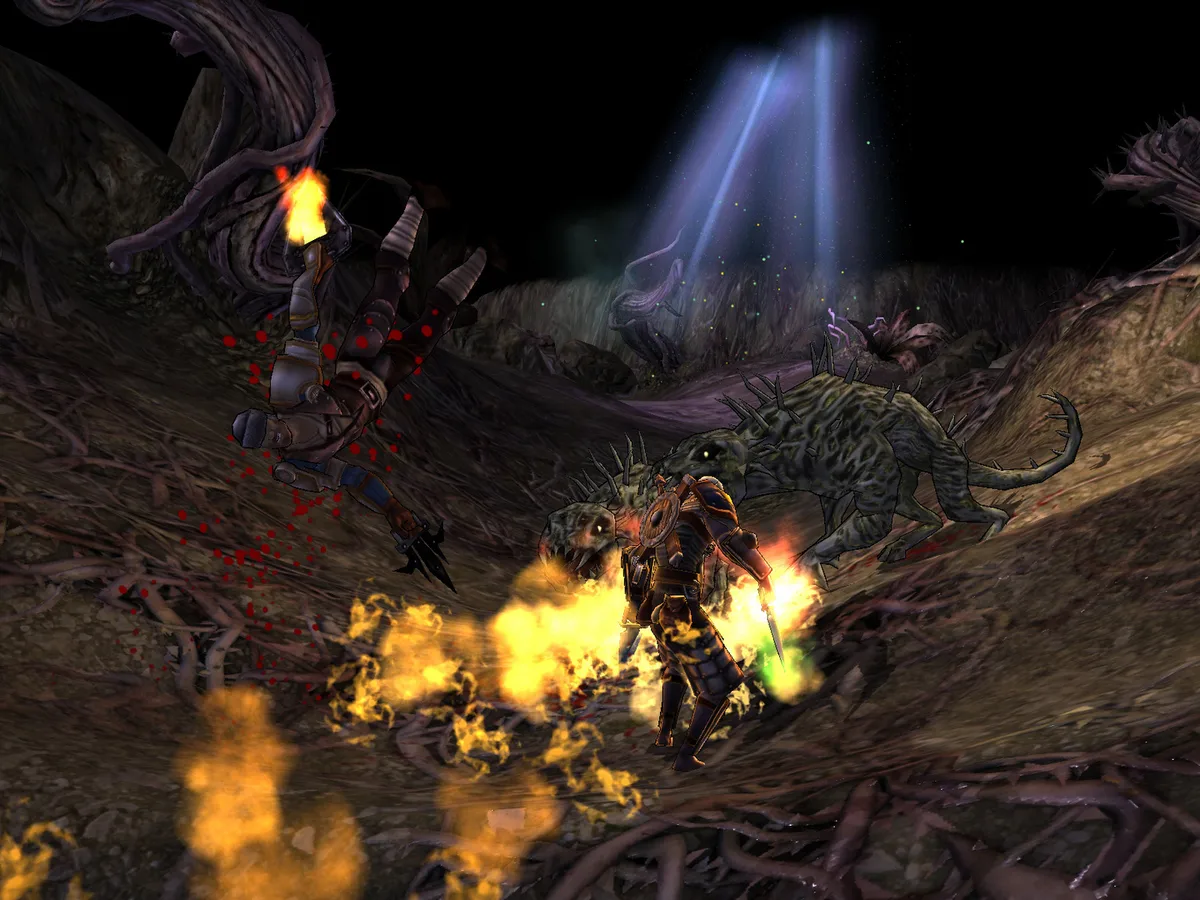
Character creation opens with six playable races: Elves, Goblins, Trolls, Humans, Dwarves and Lizardmen. Dwarves are small but extremely resistant to both magic and physical damage and fight as fierce defensive combatants, while Lizardmen combine grace and agility with expertise as archers and highly skilled swordsmen. The store description presents the stocky, lucky Dwarves and the agile, treacherous Lizardmen as the two new races alongside the four returning ones, and frames the campaign as a fight against an array of creatures and formidable bosses to save the realm of Nelwë. Players also choose gender and appearance.
The starting-level choice depends on ownership. If the player owns the base game Silverfall alongside Earth Awakening, a further window offers either beginning at level 1 and playing the entire Silverfall campaign before the add-on, or starting the new add-on scenario at level 45. With only Earth Awakening, play starts automatically at level 45.
Starting at level 45 presents several character-type development profiles, each with a set of basic equipment, so a new hero need not assign every skill and attribute point by hand at the outset. In the same window the player decides whether the character follows the path of nature or technology. That initial choice determines which alignment skills are available, the appearance of the player's city, and whether certain companions follow the character. Alignment can later be modified through quests, so the opening decision steers early options rather than locking the hero permanently; players who find the chosen specialisation unsuitable can also reassign points before progressing a level, that is, before reaching level 46.
Melee and Shooting Skills in Detail
Skills split into passive ones that function continuously from the moment they are learned and active ones such as combat techniques, used instead of a normal attack, and spells. The melee panel gathers close-combat skills — offensive and defensive techniques plus mastery of the weapons tied to them — and includes postures such as berserk or defensive. Master of small arms raises the effectiveness of one-handed weapons, Master of heavy weapons does the same for two-handed arms, and Hand to hand is a basic attack that passively increases all melee abilities. Berserker is a savage hand-to-hand attack that damages armour and does not allow parrying.
Shooting skills cover ranged armed combat, again pairing weapon-type abilities with techniques attached to those weapons. Aiming stance delivers a long-range attack fired from that stance, while Weakening shot is possible only with a firearm and is a special shot that reduces the enemy's attributes. The weapon-and-technique split is the reason the two mouse buttons cooperate: a player who has invested in a ranged technique can keep a bow attack on a simple-action slot and a costlier complex action on the right button, swapping simple actions when the enemy closes to melee range.
Race-specific development deepens these choices. In the Lizardman line, Duellist, equipped with one or two one-handed weapons, increases both damage and the chance to parry; Sharpness adds part of the Agility value to Strength when calculating melee damage; Swiftness raises Agility; Toad technique temporarily increases size, raising both power and vulnerability levels; and Treachery grants an extra damage bonus on critical hits inflicted with a weapon.
Death Rules and Up to Eight-Player Multiplayer
Death is handled differently depending on the chosen mode. In normal mode, a fallen character returns to the village with all equipment and companions intact, and the only penalty is having to travel back to the point of death. In difficult mode and beyond, the character leaves a corpse at the death location holding every item, and a gold-based insurance option provides a way to recover from the loss. Mode selection is therefore a choice about how much a defeat costs in travel time and belongings, and it changes the weight of every risky pull in a way that the click-to-act combat otherwise leaves to Power management alone.
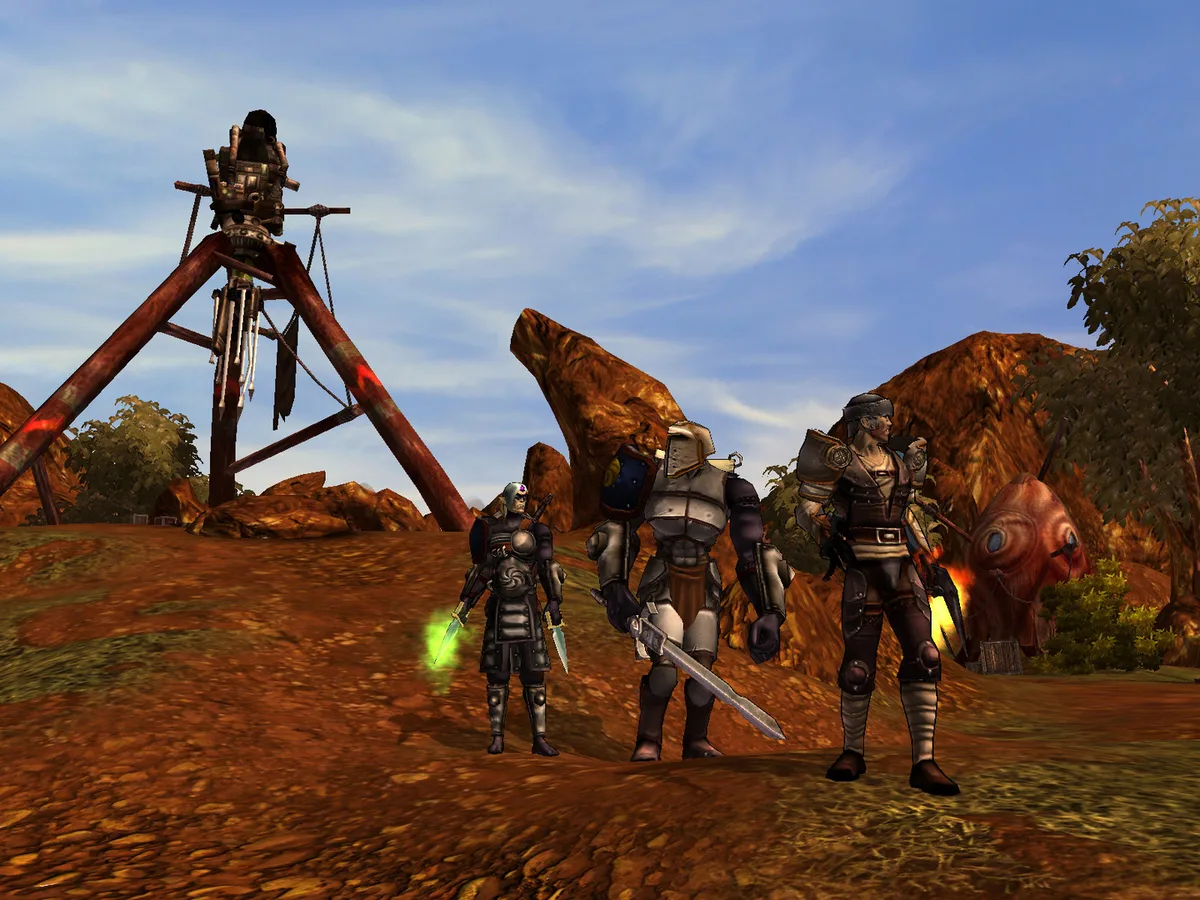
Multiplayer supports up to eight players over a local area network, and cooperative or player-versus-player play via the Internet. The eight-player ceiling is documented for LAN play, and the cooperative and PVP modes are documented for Internet play; the source material does not specify both modes for both connection types, so the safe reading is that the game is built around an eight-player limit and an online split between cooperation and competition.
Key Systems at a Glance
The documented rules condense into a handful of numbers worth keeping straight. The most consequential early decision is not which button to press but where the four points from each level go, since a complex action is unusable until active skills have been raised and a skill stays capped until its prerequisites are satisfied.
Reading the manual as a system rather than a control list clarifies what makes Silverfall: Earth Awakening distinctive in its own terms: two mouse buttons split basic and Power-hungry actions, ten-level skills that keep feeding their families through synergy, sages as a priced reset valve, and an alignment split that touches skills, city appearance and companions. Those are concrete mechanics a player can plan around, and they are the parts of the game this feature can describe with confidence from the publisher's own documentation.
Scroll sideways to see the full table →
| System | Documented rule |
|---|---|
| Left click | Move, basic attack, pick up, open/break, talk; hold to continue |
| Right click | Complex actions; power-limited, unavailable at start until active skills are raised |
| Points per level | 4 skill points and 4 attribute points |
| Skill cap | 10 levels; prerequisites required, with synergy bonuses from lower skills |
| Starting level | Level 1 (with base Silverfall) or automatic level 45 for the add-on |
| Multiplayer | Up to 8 players via LAN; cooperative or PVP via Internet |
Sources & further reading.
- Silverfall: Earth Awakening — official game profile Retrieved Oct 21, 2026
- Silverfall: Earth Awakening — official game profile — publisher-supplied gameplay manual Retrieved Oct 21, 2026
First published .