 THE GAME ARCHIVE
What the Player Does in Blacklight: Tango Down
Blacklight: Tango Down is an Action game from Zombie Studios and Ignition Entertainment on Windows, and its play splits along one clear line. On one side is “NetWar,” an online battlefield where players fight tomorrow’s conflicts with or against friends in the gritty Blacklight universe. On the other are four Black Ops missions that can be fought cooperatively or alone. Both sides feed a single progression loop: gain experience, collect stats, unlock items, and improve abilities.
What makes the game distinctive in the documented material is how tightly its combat toolkit is tied to that loop. The Hyper Reality Visor is used to locate enemies and take them out, while earned weapon attachments and items and improved abilities are folded into the same reward pool. Customization runs across character and weaponry from among thousands of combinations, with firearms modifiable in how they shoot, look, and feel. The practical result is a shooter where detection, loadout choice, and rank progression are presented as one connected system rather than separate features.
NetWar: Seven Online Modes Across Twelve Maps
NetWar is the name the game gives its online battlefield, described as a hyper-realistic space for fighting tomorrow’s conflicts. Within it, players make their stand across seven game modes and 12 different maps, and online battles support up to 16 players. Those three figures work together as the frame of every online session: the mode sets the rules of the match, the map sets where it unfolds, and the 16-player ceiling sets how many combatants share that space at once. The store text also frames NetWar as a place to fight with or against friends, so team allegiance is part of the setup around those same mode and map choices.
The documented material does not itemize which of the seven modes is which, nor does it name the 12 maps, so a reader cannot be told from this source whether any given mode is team-based, free-for-all, or objective-driven. What can be stated is the scale and the layering: seven rule sets, 12 locations, and a lobby cap of 16. That structure means a player’s session is defined by two simultaneous selections, and the same map can host different rules depending on which of the seven modes is running. Online combat is characterized as intense, in line with the co-op side of the game.
Black Ops Missions: Four Operations, Co-op or Solo
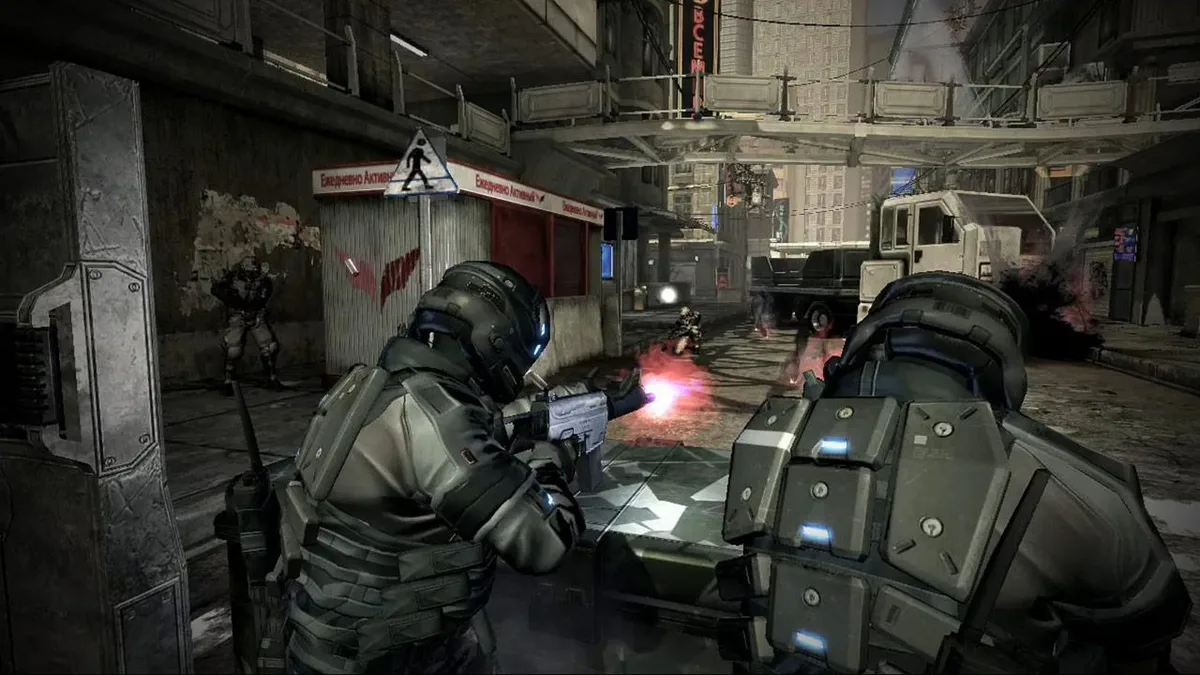
Black Ops missions are the second pillar, separate from the NetWar online battles. There are four of them, and the documented rules let a player fight through each one either cooperatively or alone. The objective is simply to complete these operations: they are framed as intense missions inside the Blacklight universe rather than as lobby-based competitive contests. Because the same four-mission set is offered both ways, the co-op-or-solo decision is a choice about how to approach identical content rather than a choice between two different modes.
The important design connection is that Black Ops play is not a sideline to progression. The store text places the four missions directly beside the instruction to gain experience, collect stats, and unlock items, and it groups earning new weapon attachments and items and improving abilities with that same mission play. A player who prefers the cooperative or solo route therefore still advances the same unlock path used in online play. Since combat is described as intense in both multiplayer and co-op, the four missions carry the same combat framing rather than a lighter or separate style.
The Hyper Reality Visor and the Combat Loop
The Hyper Reality Visor is the documented tool for locating enemies before taking them out. It is presented as a step inside the combat loop rather than a passive display: engage the visor, find where opponents are positioned, then act on that information to eliminate them. That sequencing matters because it ties detection to offensive play. The visor’s payoff is the takedown it enables, not avoidance or stealth, and the store text keeps it in the same sentence as earning attachments and improving abilities, so the detection tool sits alongside customization as part of the soldier’s developing kit.
The visor’s documented use runs through the same combat framework that spans the online modes and the cooperative or solo missions, inside the gritty Blacklight setting where players fight tomorrow’s conflicts with or against friends. Because the source gives no separate visor rules for co-op versus competitive play, the reasonable reading is one shared detection mechanic applied across both. What the material does not supply is cooldown timing, range, a battery or energy cost, or any countermeasure, so the reader should treat the visor as a stated locate-then-eliminate tool rather than assume specific limitations.
Seventy Ranks and the Unlock Climb
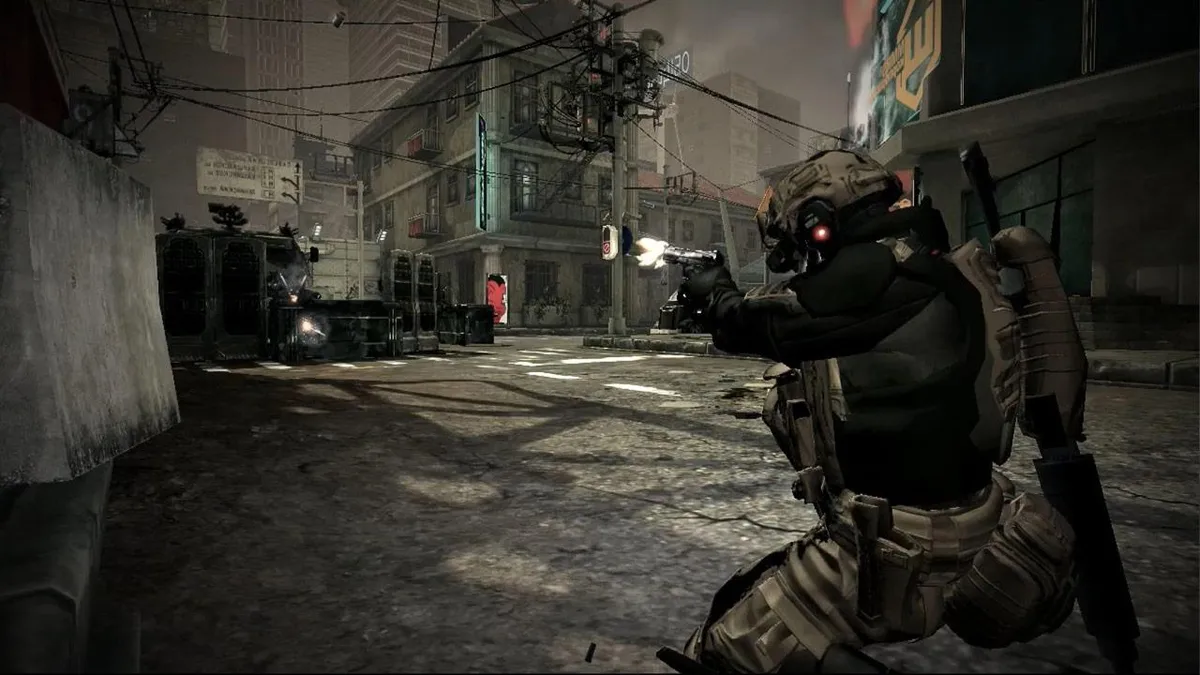
Progression runs through a rank ladder of 70 levels. Ranking up is the structural spine: the store text pairs the 70 ranks with improving abilities, and the same passage supplies the inputs, gaining experience and collecting stats, and the outputs, unlocking items. The documented loop is therefore earn, unlock, equip, repeat, with 70 ranks marking how far that climb extends. Because experience and stats are described as accruing during play generally, both the NetWar modes and the four Black Ops missions appear to feed the same ladder.
The unlock pool is described as covering weapon attachments, items, armor, and camos, and improved abilities are grouped into the same reward set. That grouping is what makes the climb meaningful for a player: the point of ranking up is not a number but access to equipment categories that change how a character and a firearm are built. The source lists the categories without specifying which rank grants which attachment, item, armor piece, or camo, so exact unlock timing at each of the 70 levels is not documented here.
Thousands of Weapon and Armor Combinations
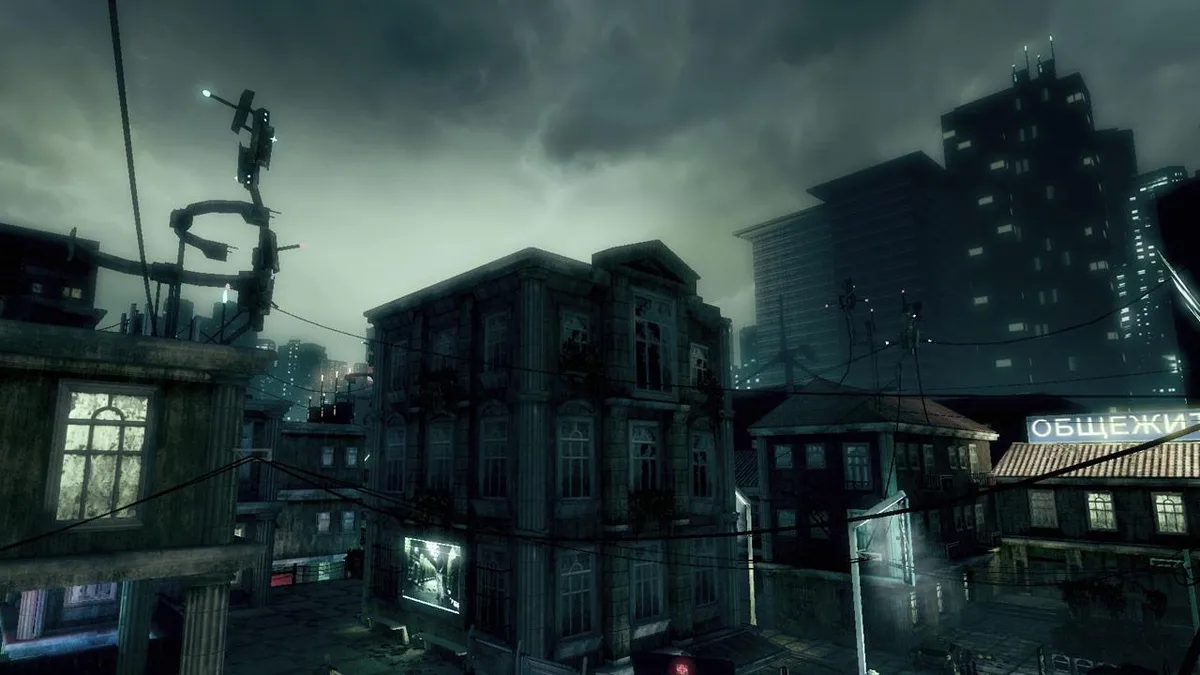
Weapon and armor customization sits on top of the unlock structure. Players customize character and weaponry from among thousands of combinations, and firearms can be modified in how they shoot, look, and feel. Those modifications are the practical use of earned attachments and items: a new attachment changes a firearm’s performance or appearance, while armor and camos change the character build. Because the combinations number in the thousands, the same unlock pool supports many distinct loadouts across the 70-rank progression rather than a single fixed kit.
The design implication is that loadout choice is where the systems meet. A player who has ranked up has more attachment and armor options to combine, and the visor-based locate-and-eliminate loop rewards a build that suits how that player hunts. The source does not state that any combination performs better than another or that camouflage confers a gameplay benefit, so the combination count should be read as breadth of options rather than as a guaranteed competitive edge.
Source-Backed Starting Guidance
Because all supported play feeds one unlock path, the documented material supports a simple plan. A newcomer can use the four Black Ops missions, solo or with others, since they are explicitly framed as a place to gain experience, collect stats, and unlock items while building skills toward the wider game. Practical in-match advice drawn from the visor text is to make detection a deliberate step: engage the visor, locate enemies, and then take them out rather than committing before checking. Beyond those two points the source gives no starting weapon, no recommended mode order, and no difficulty guidance, so no such recommendation is made here.
Scroll sideways to see the full table →
| Documented element | Detail |
|---|---|
| Online battlefield | NetWar |
| Online modes | Seven |
| Multiplayer maps | 12 |
| Online player capacity | Up to 16 |
| Black Ops missions | Four, cooperative or solo |
| Rank ladder | 70 levels |
| Detection tool | Hyper Reality Visor |
| Customization pool | Thousands of weapon and armor combinations |
Sources & further reading.
- Blacklight: Tango Down — official game profile Retrieved Oct 20, 2026
First published .