 THE GAME ARCHIVE
Earning Star Player Points on the Pitch
Star Player points accumulate through several distinct on-pitch actions. A player who completes an accurate pass caught by a teammate in the targeted square earns 1 point. Scoring a touchdown is worth 3 points, while a successful interception after an interception roll earns 2. Casualties also pay 2 points, but only when the player blocks an opponent or is blocked himself; injuries caused by the crowd, chainsaws, bombs, or the Stab skill are excluded from this total.
The MVP award adds a separate 5-point bonus at match's end, granted to one randomly selected player from each team who was eligible to play. The Stab skill sits outside this economy entirely: a player may use it instead of throwing a block, forcing an unmodified armor roll on the victim. If the roll beats the victim's armor value, an injury roll follows that ignores all modifiers, including Niggling injuries, yet the resulting casualty awards no Star Player points. When Stab is used during a Blitz action, the player cannot continue.
Improvement Rolls and Player Advancement
Every player begins as a Rookie with no Star Player points. The Star Player Points table sets the thresholds that mark each experience level, and reaching a new level entitles that player to an Improvement roll. The first arrives at 6 points, when the player becomes Experienced; each subsequent level grants another roll. Level names run through the table's ranks, from the lower tiers up to Star at 76–175 points and Super Star at 176 and above. Improvements are worked out at the end of the match, once the accumulated points are tallied.
On an Improvement roll a coach may take a new skill or raise a characteristic. Skill choices must come from the Normal skill categories permitted for that player, which are listed on the roster pages; a Human Catcher, for example, may draw from the General or Agility lists. Characteristic results differ by roll: one result of 10 raises Movement or Armor Value by 1 point or grants a new skill, 11 raises Agility, and 12 raises Strength. Each new skill must be recorded on the team roster, and skills can never be removed once taken.
Special Play Cards and the Good Karma Deck
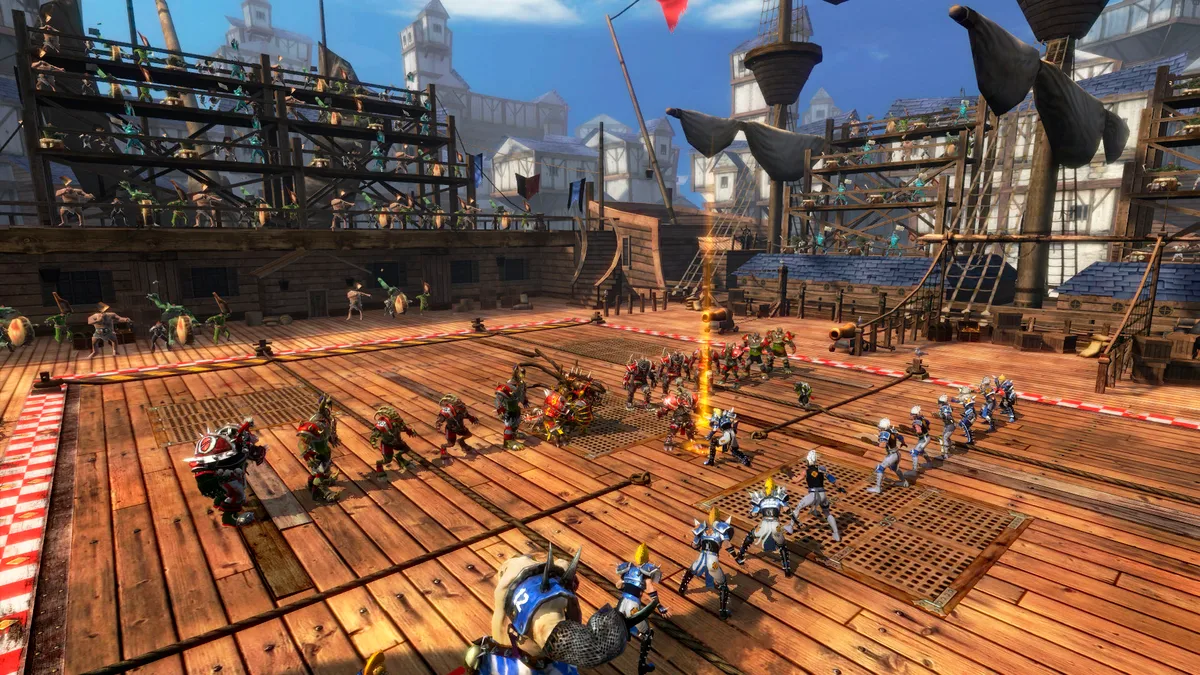
The Good Karma deck gives coaches a route to tactical cards through gold: spending 100,000 gold pieces draws one card at random from a pool of 26. These Special Play Cards deliver concrete effects rather than passive bonuses. Banana Skins knocks down a chosen opposing player who is standing in a tackle zone of one of your players, with an armor and injury roll following as normal. If that player was carrying the ball, the knockdown does not cause a turnover. Chainsaw instead grants a skill, widening what a player can do on the pitch.
Timing governs when these cards may be played. One tactical play is declared at the beginning of your turn before any player takes an Action, and is played before moving your turn marker. The Free Turn effect is played after your turn has ended or your kick-off to an opponent is resolved, but before the opponent's turn begins. During that immediate free turn, a die is rolled after each Action, and a result of 1 ends the turn without a re-roll. The opponent then begins a free turn under the same rules. Fan Uproar, meanwhile, makes the crowd drown out the opposing coach and on-pitch signals.
Skills That Rewrite a Block
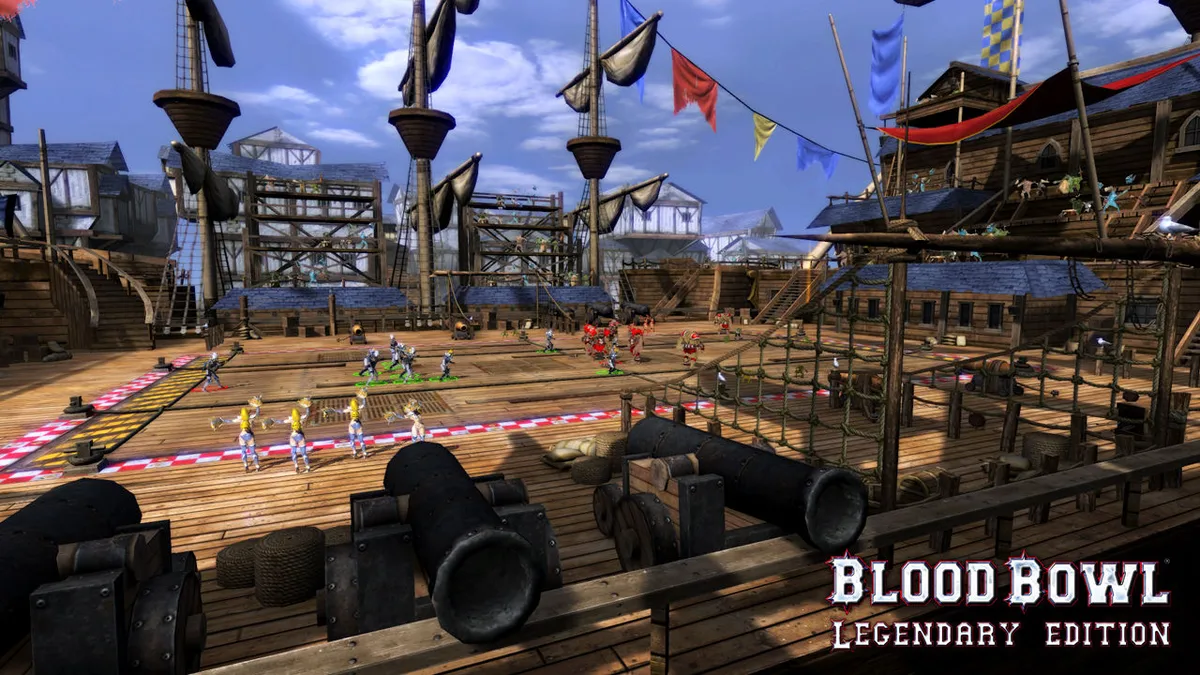
Frenzy is a General skill that, unless another rule overrides it, must always be used. A player with Frenzy must follow up a block whenever he can, and after choosing a Pushed or Defender Stumbles result he immediately throws a second block against the same opponent, provided that opponent is still adjacent. The skill cannot be combined with its opposite: a player with Frenzy can never learn or gain Grab through any means, and a player with Grab can never learn or gain Frenzy.
Grab applies only during a Block Action: if the block produces a push back, the player may place the opponent in any empty square adjacent to him instead of following the standard pushback rules. The skill fails when no empty adjacent square exists, and during a Block or Blitz Action Grab and Side Step cancel each other out, restoring the normal pushback rules. Juggernaut, a Strength skill, applies to Blitz Actions: the opponent cannot use Fend, Stand Firm or Wrestle against that player's blocks, and a Both Down result may instead be treated as Pushed.
Injuries, Regeneration and the Cost of a Casualty
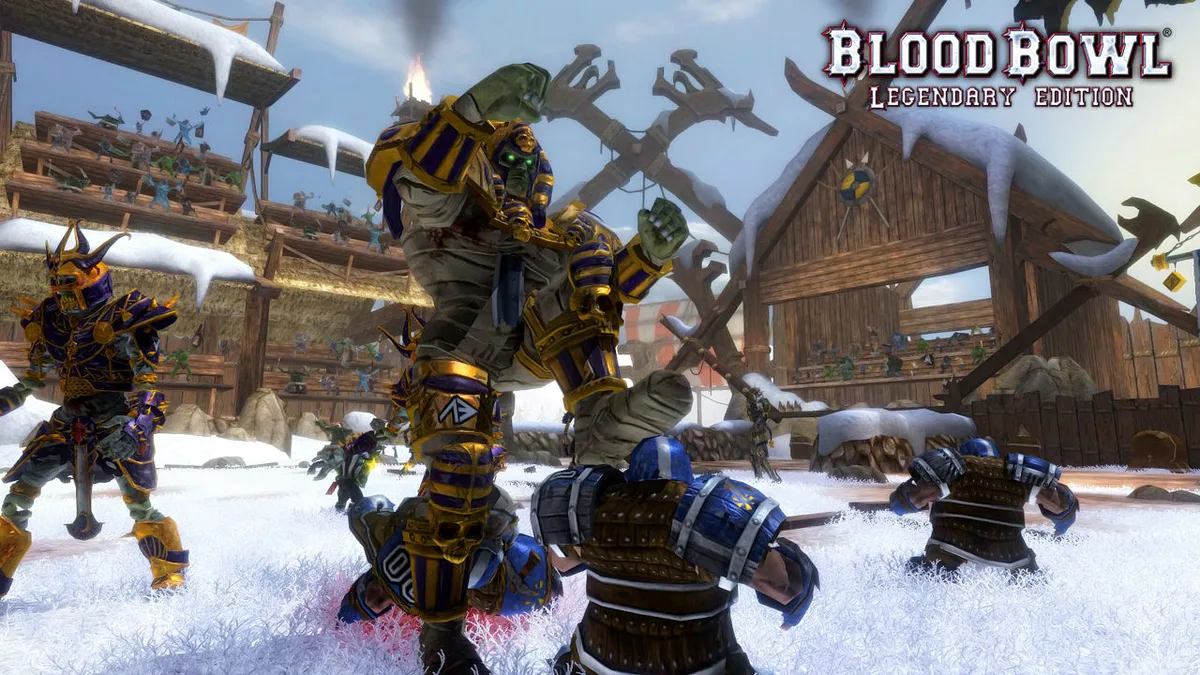
Injury resolution in Blood Bowl runs on rolls, and the Regeneration trait changes what happens after the damage is done. A player with Regeneration who suffers a Casualty result on the Injury table rolls a single die once the injury is determined and after any Apothecary roll, where one is permitted. A result of 1 to 3 means the player keeps the injury. A result of 4 to 6 means the player heals after a short period of reorganization and is instead placed in the Reserves box. Regeneration rolls cannot be re-rolled. The opposing player still collects Star Player points for inflicting the Casualty as usual.
A second route to injury bypasses the blocking game altogether. The Stab skill lets a player attack an opponent with a stabbing attack instead of throwing a block, making an unmodified Armor roll against the victim; if the score is less than or equal to the victim's Armor value the attack has no effect, while a score that beats it wounds the victim and triggers an Injury roll. That Injury roll ignores all modifiers from any source, including Niggling injuries. If Stab is used as part of a Blitz action, the player cannot continue.
Story Mode, Online Leagues and Team Building
Story mode in Blood Bowl - Legendary Edition lets players experience the sport's origins and play its most legendary matches in iconic stadiums. This mode is one of the new additions in the Legendary Edition, alongside new stadiums. For competitive play, Blood Bowl can be played online, where you create your team, improve it, and lead it to the top of the official rankings. You can also develop your own private internet league to organize your own tournaments, giving coaches a structured environment for sustained competition.
Team building and management operate through the league framework, where team values govern player purchases and upgrades. Treasury management and player worth follow specific rules, and team re-rolls are available for critical actions with defined limits and uses. These re-rolls are distinct from player re-rolls, and both are detailed in the competition rules. The interplay between treasury, team value, and re-roll allocation shapes how a coach assembles and maintains a roster across a season or tournament.
Sources & further reading.
- Blood Bowl - Legendary Edition — official game profile Retrieved Oct 18, 2026
- Blood Bowl - Legendary Edition — official game profile — publisher-supplied gameplay manual Retrieved Oct 18, 2026
First published .