 THE GAME ARCHIVE
Classic Chess: Standard Rules, Special Moves and Piece Promotion
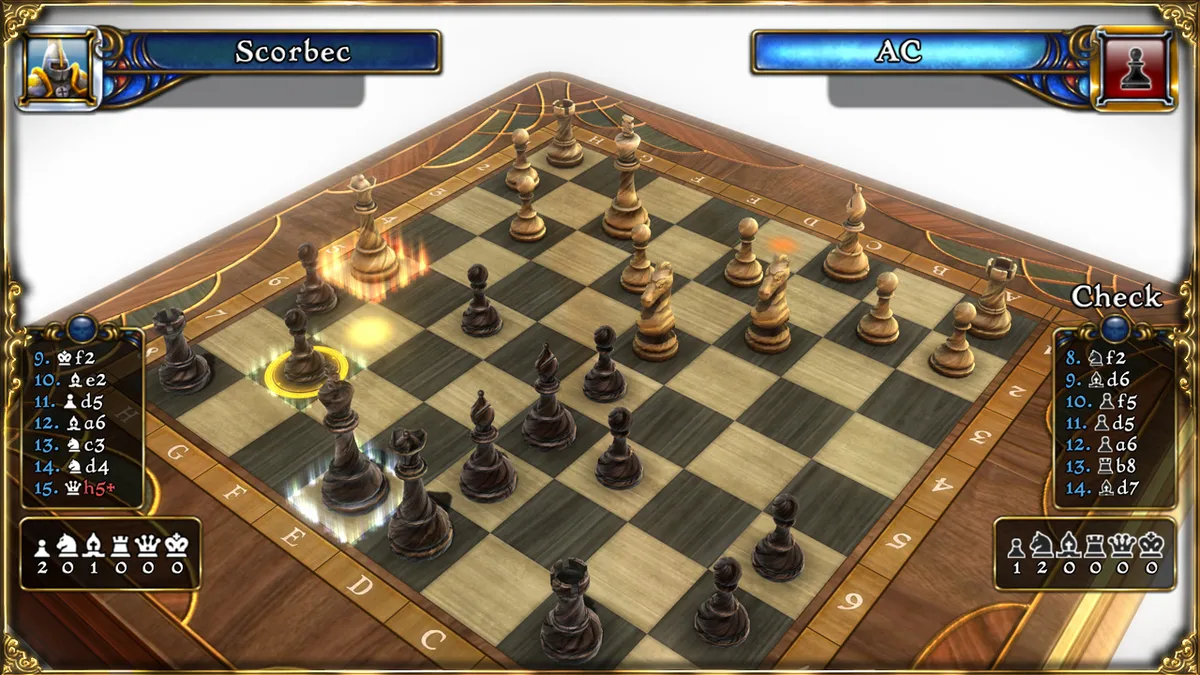
Classic mode in Check vs Mate presents traditional chess matches governed by standard rules and normal piece movement. For players who already know the basics and do not want a story or complex variants, this mode lets them begin a conventional game immediately. Two special moves are documented as part of the rule set. Castling switches the positions of the King and a Rook in a single move, moving the King toward relative safety. En passant is also recognized, covering the case in which a pawn captures an opposing pawn that has just advanced two squares from its starting position.
Pawn promotion also operates within classic play. A pawn that advances all the way to the opposite side of the board can be promoted to a Queen or another major piece, changing the balance of material at the end of a game. The manual's advice links this outcome to pawn structure: keep pawns close together on adjacent files so they protect one another, and in the middle game and endgame watch for weak spots in the pawn line and reinforce them with other pieces. Handling those pawns carefully, the guidance notes, may allow one or more of them to reach the far side and be promoted.
Battlefields and Duels: Real-Time Piece Combat
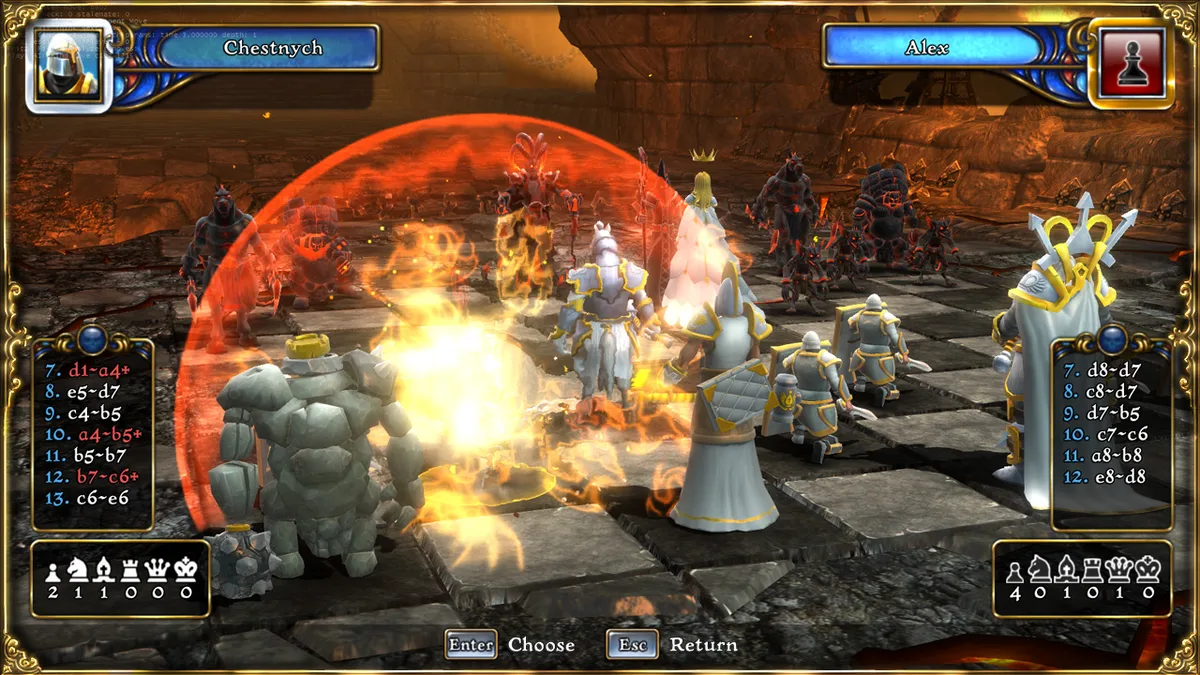
Battlegrounds converts the chessboard into an arena where the player controls main pieces in third-person combat, using basic strikes and special attacks against enemy pieces while the AI handles the rest of the army. The composition of each side depends on the main piece's value and current health: a Queen at full health, for instance, fights alongside a stronger force than a wounded Bishop. The keyboard layout assigns movement to the cursor keys or WASD, with fast attacks on Enter or the left mouse button and a strong attack on Ctrl or the right mouse button once the Rage bar is full. Blocking sits on Shift, dodging on Space; moving while dodging shifts the dodge in the matching direction.
Duel shifts the camera to a side view for a one-on-one fight between two pieces, styled after hand-to-hand fighting games. Attacks launch through Quick-Time Events, a reaction-and-timing minigame: hitting the right buttons at the right moment makes the piece strike, and the mode recognizes two strike kinds, with a simple strike landing on an opponent who misses the button. Every precise press fills the Rage bar, while misses or a strong attack drain it, so timing both feeds and spends the same meter. Gamepad users can toggle Xbox 360 controller vibration and invert the Y-axis for camera control.
Campaign Missions: Two Sides, Fifteen Battles, Escalating Rules
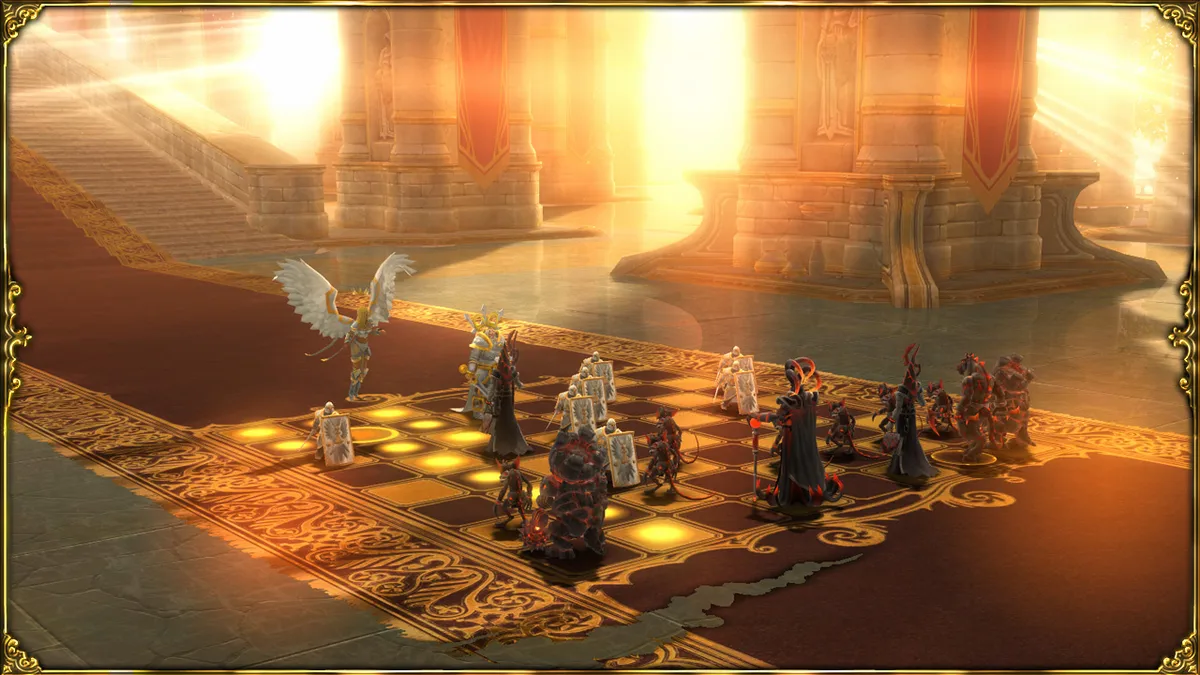
Campaign mode presents two story-driven paths, one for Order (White) and one for Chaos (Black). Each path consists of 15 missions played consecutively on different boards. Every mission is a chess game with predefined rules and starting positions, so the tactical problem changes from one battle to the next. Completing a mission unlocks the next one, and the campaign continues in sequence. The early missions give the player an advantage over the AI, but the difficulty level increases as the campaign progresses. The final missions use a complete set of pieces and a very strong opponent, so the player must adapt to a fuller board and tougher resistance.
Later missions add new gameplay elements beyond standard chess: time limits, control points, and fog of war. Time limits add pressure and require faster decisions. Control points introduce objectives beyond checkmate, such as capturing and holding specific areas on the board. Fog of war conceals parts of the battlefield, so the player must act with incomplete information. These rules are introduced as the campaign progresses, layering new constraints onto the predefined starting positions and changing how each mission must be approached.
Lessons, Puzzles and Variant Setups
A tutorial mode works through chess fundamentals in a fixed run of nine lessons, beginning with general rules and then turning to strategic tips for individual pieces and to specific situations that come up during a game. The lessons are arranged as a progression, so each one builds on what came before, and they address both newcomers and more experienced players working on piece play. The instruction covers special rules, including castling and en passant, alongside advice on how to use each type of piece.
Minigames add a separate puzzle track: twenty levels with three difficulty settings, where the starting pieces change from one level to the next. Within a level, crystals appear on the board and the objective is to collect a set number of points before the move allowance is used up. A further puzzle mode gives a two-minute timer and asks for the correct move in a single turn. Correct answers earn bonus time and start a new puzzle, while incorrect moves shorten the timer, so the aim is to solve as many as possible before time expires.
Online and Local Rivals: LAN, Quick Matches and Head-to-Head
Check vs Mate's multiplayer menu organizes competition around three basic options for facing a friend or another opponent. A LAN/WAN game connects players through a local network or a client-to-client connection entered by IP address. Quick Match finds a match and starts play right away, while Create Match builds a game from the host's own preferences. Custom Match instead picks a game from a list of available sessions, so players can select a specific opponent's setup rather than generating their own.
A further option, Head-to-Head, starts a local multiplayer game for two players sharing the same PC. Choosing it opens a screen where basic settings are predefined before the game begins, which means the players determine the terms of the local match before play rather than during it. Fog of War changes what each side can see when it is turned on: the board is hidden except for the player's own pieces, pawns included, and the squares those pieces can reach. The King may move onto an attacked square and can be captured on the opponent's next turn, so planning the King's next move carefully matters. Pieces that check the King or have just captured an opponent's piece appear as ghosts.
Sources & further reading.
- Check vs Mate — official game profileRetrieved Oct 27, 2026
- Check vs Mate — official game profile — publisher-supplied gameplay manualRetrieved Oct 27, 2026
First published .